Why a Single IMAX Ticket in Seoul Is Selling for $70: Korea’s Movie Scalping Problem Comes for Christopher Nolan
A blockbuster frenzy hits Korea’s most coveted movie screen
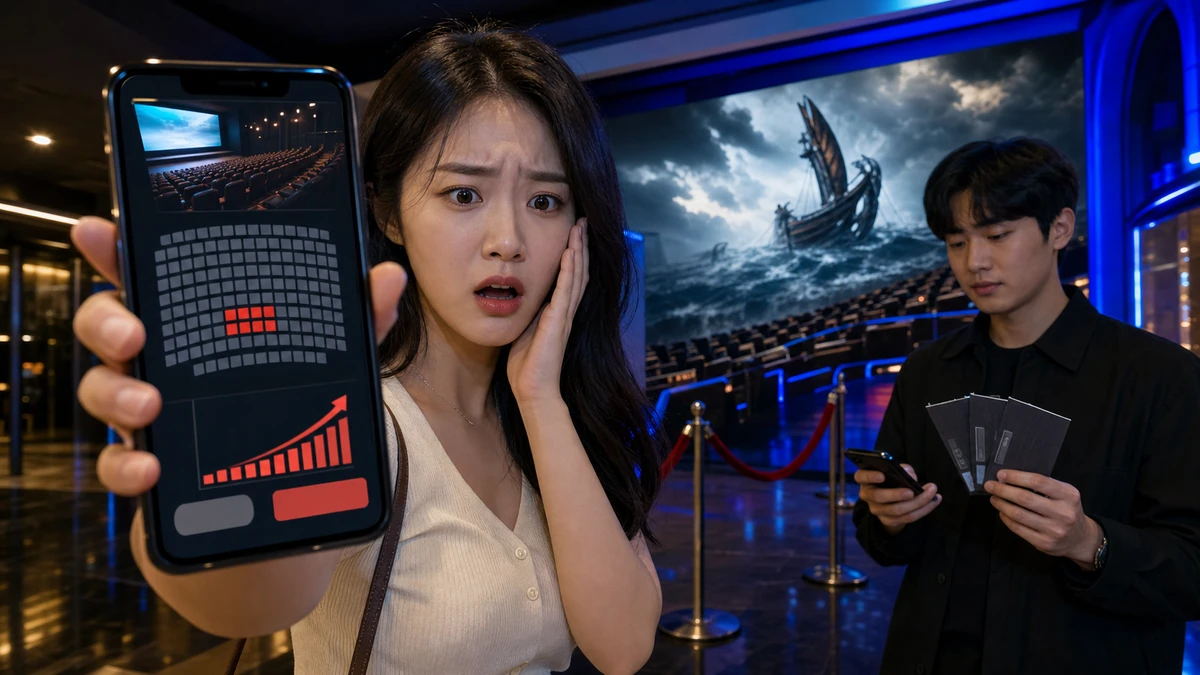
In South Korea, where moviegoing is often treated less like a casual night out and more like a high-stakes cultural event, a new controversy is unfolding around one of the world’s most anticipated films. Tickets for Christopher Nolan’s new movie, "The Odyssey," are being offered on Korean resale platforms for as much as 100,000 won — roughly $70 — even though the face value for the same seat is about 17,000 won, or around $12.
The eye-popping markup is not for a premiere, a meet-and-greet or some collector’s package. It is for a standard commercial screening, albeit at one of the most sought-after movie auditoriums in the country: the IMAX theater at CGV Yongsan I’Park Mall in Seoul. Among Korean film fans, the venue is so famous it has its own nickname, "Yong-A-Maek," shorthand that reflects both local slang and the near-mythic status the theater has acquired online.
To American readers, think of it as a cross between opening night at Lincoln Center, an advance screening at the TCL Chinese Theatre and the kind of online frenzy that surrounds Taylor Swift ticket drops. The point is not simply to see the movie. It is to see it first, in the best possible format, from the best possible seat, in the country’s most famous auditorium for blockbuster filmmaking.
That combination — global director, premium format, limited seats and intense online fan culture — has created a textbook resale market. On used-goods platforms such as Junggonara and Bunjang, sellers have posted tickets above face value, with the most desirable Yongsan IMAX seats carrying the steepest premiums. What might once have looked like a harmless ticket transfer between moviegoers now resembles a miniature version of the scalping economy long associated with concerts and major sporting events.
The result is a debate that extends beyond one movie. It raises questions about fairness, access and whether South Korea’s entertainment industry is prepared for a secondary market that increasingly monetizes fan obsession before audiences even reach the theater.
Why this particular theater matters so much
For those unfamiliar with South Korea’s movie culture, the scramble may sound excessive. But Yongsan is not just another multiplex. It is widely regarded as the country’s flagship screen for large-format releases, especially Hollywood blockbusters by directors whose work is considered essential viewing in IMAX. Nolan, whose films have long been marketed around their scale, visual ambition and premium-screen credentials, fits squarely into that category.
In the United States, premium moviegoing has grown too, from IMAX and Dolby Cinema to dine-in chains and luxury recliners. But in South Korea, certain auditoriums have developed a more concentrated symbolic power. Fans trade advice online about optimal rows, center-seat geometry and even the acoustic sweet spots for major releases. Getting a prime seat at Yongsan can become a competitive exercise that begins the moment advance booking opens.
The theater’s reputation has been built over years of blockbuster releases that turned ticketing into a sport. Online communities track booking times with the intensity of sneaker drops or Comic-Con badge sales. For many fans, especially those who follow Nolan, Marvel, "Dune" or other visually spectacular franchises, the screening format is part of the product itself. An IMAX presentation is not viewed as a minor upgrade. It is the definitive version.
That distinction matters because it helps explain why a seat can become detached from its original ticket price and reimagined as a premium commodity. A standard seat at a neighborhood theater may be interchangeable. A center section ticket at Yongsan IMAX for a hyped release is not. In the minds of both buyers and sellers, it becomes a scarce experience with a market value of its own.
Even using the highest regular ticket price cited for these screenings — 21,000 won, or about $15 — a resale listing at 100,000 won still represents a markup of nearly five times face value. The premium is not subtle. It is the entire point of the transaction.
From fan enthusiasm to a resale marketplace
The Korean news coverage around these listings has framed the issue as a sign that movie scalping is no longer confined to live concerts and sports arenas. That is a significant shift. Film tickets, unlike seats for a one-night-only concert, have traditionally seemed less vulnerable to resale abuse because movies play multiple times and often across many screens. But premium-format screenings challenge that assumption.
Scarcity is the engine of every secondary market. In this case, scarcity is shaped by several layers at once: a famous director with a devoted following, a limited number of IMAX showings, a single especially prestigious location and a hierarchy of preferred seats within that auditorium. When those factors pile up, a movie ticket starts behaving less like ordinary admission and more like a limited-release asset.
That dynamic is hardly unique to South Korea. Americans have watched similar economics play out when Ticketmaster queues collapse under demand for Beyoncé, Bruce Springsteen or Swift. Sports fans know it from playoff games and rivalry matchups. What is different here is the object being resold. A movie ticket still carries a democratic aura, the old idea that cinema is one of the most accessible forms of mass entertainment. When that ticket begins circulating at luxury prices, the symbolism changes.
Instead of fans rewarding the filmmakers or theaters driving the excitement, third-party resellers capture the value created by anticipation. The passion surrounding the film becomes profit for people who may have purchased seats not to attend, but to flip them. That transforms the mood around an opening from celebration to resentment, especially for fans who logged in expecting a fair shot at the advertised price.
It also introduces a more uncomfortable reality: access to a major cultural event can be quietly redistributed according to who can afford the markup. A 17,000-won ticket is one thing. A 100,000-won ticket is another entirely. The difference is not just monetary; it is social. It turns participation in the release-day conversation into something more exclusive than the original seller or theater likely intended.
What this says about Korea’s entertainment culture
South Korea has become one of the world’s most closely watched entertainment markets, producing global phenomena in music, television and film. That visibility has also spotlighted the intensity of Korean fan culture, which often combines digital savvy, deep loyalty and a high tolerance for competitive booking systems. Whether it is K-pop merch, limited-edition pop-up events or hard-to-get fan meeting tickets, scarcity has become part of the modern entertainment economy.
The movie business has increasingly borrowed from that logic. Premium screens are marketed as elevated experiences, not just upgraded projections. In Korea, where audiences are highly engaged and theater chains have invested heavily in specialized formats, moviegoing can take on the same status-driven energy that Americans might associate with opening weekend for a Marvel film or the release of a new iPhone.
That does not mean Korean movie fans are uniquely obsessive. If anything, the episode reveals how universal fan behavior becomes when digital marketplaces make every scarce item tradable. What stands out in Korea is how quickly and visibly those markets form, often on mainstream resale platforms where everything from sneakers to concert goods to household items may be listed side by side.
The nickname culture surrounding famous venues also matters. Yongsan IMAX is not just a place; it is a brand within a brand, instantly recognizable to local fans. That kind of cultural shorthand can intensify demand because it turns attendance into a form of status signaling. Saying you saw a major Nolan release at Yongsan IMAX means something specific to Korean cinephiles, much the way saying you attended Sundance, opening night on Broadway or a sold-out NFL playoff game conveys social meaning in the United States.
At the same time, South Korea’s entertainment economy has repeatedly confronted questions about fairness in access. K-pop fans have fought bots and bulk resellers. Sports fans have complained about inflated secondary markets. The appearance of movie tickets in that same ecosystem suggests the problem is broadening rather than disappearing.
The legal and ethical gray zone
One reason the issue is difficult to solve is that not every ticket transfer is abusive. People get sick. Plans change. Friends cancel. There is a meaningful difference between reselling a ticket at cost because you can no longer attend and buying up prime seats with the intention of making a profit. But in practice, that line can be difficult to police.
Korean commentators cited in local coverage have argued that the film industry may need stronger rules to curb excessive resale markups on movie tickets. The reports did not point to a specific bill or legislative timeline, but they made clear that the discussion is evolving beyond simple annoyance. The concern is structural: if blockbuster demand repeatedly feeds informal resale markets, theaters and platforms may need clearer standards to distinguish legitimate transfers from price gouging.
The United States offers an imperfect comparison. Here, ticket resale is both normalized and controversial, especially in live entertainment. States have different laws, and enforcement tends to be inconsistent. Consumers often accept resale as part of the system, even while resenting bots, dynamic pricing and fees. Korea may now be approaching a similar crossroads for certain film releases, particularly when premium formats create a level of scarcity closer to a live event than a typical movie run.
The ethical questions are broader than legality. Movie theaters market themselves as public-facing cultural spaces, and cinema still carries an egalitarian image: anybody can buy a ticket and join the audience. Resale inflation undercuts that image by introducing a wealth filter after the fact. It tells regular customers that the published ticket price is not really the final gatekeeper. Speed, insider know-how and willingness to pay a premium matter more.
That erosion of trust can have long-term consequences. If fans begin assuming that hot-ticket screenings will immediately be harvested by resellers, advance booking becomes less exciting and more adversarial. The relationship between theaters and their most dedicated audiences suffers, even if the theater itself is not profiting from the markup.
Why Hollywood should pay attention
For Hollywood studios and American filmmakers, the incident is a reminder of how important South Korea has become as a tastemaking market. Korean audiences are among the most enthusiastic in the world when it comes to premium presentation formats and cinephile-driven discussion. A movie that becomes an event there can generate global social media buzz, favorable early word of mouth and the kind of visual proof — packed premium screenings, sold-out seats, viral booking battles — that reinforces a film’s prestige.
Nolan in particular occupies a special place in that ecosystem. His films are often treated not just as releases, but as tests of theatrical spectacle. That reputation gives his work unusual power to expose pressure points in the moviegoing business. If people are willing to pay concert-level resale prices for a prime IMAX seat, it says something important about the current value of theatrical exclusivity.
It also helps explain why the future of movie theaters may depend less on ordinary screenings than on elevated experiences that feel difficult to replicate at home. For years, theater owners have argued that premium formats justify the trip, the cost and the commitment. Korea’s resale market is offering a more extreme version of the same argument: not all screenings are equal, and some are valuable enough to flip.
That may be good news for the perceived cultural importance of movie theaters, but it is not necessarily good news for accessibility. A thriving premium market can energize theatrical business while also locking out younger viewers, casual fans and anyone unwilling or unable to pay inflated prices. In that sense, the Korea story mirrors a larger global tension in entertainment: scarcity can create buzz, but too much scarcity can breed resentment.
Studios, exhibitors and ticketing platforms all have reasons to watch closely. If the pattern spreads, they may need stronger anti-resale safeguards, more transparent transfer systems or seating policies that reduce the incentive to hoard prime spots for profit. Otherwise, every major release with a devoted fan base could become a replay of the same drama.
A warning sign for the next era of moviegoing
At first glance, a few overpriced IMAX listings on Korean resale apps might look like a niche problem confined to one country’s especially enthusiastic movie fans. But the episode points to something larger. As the film industry leans harder on event cinema — big directors, big formats, big opening weekends — it may also inherit the same secondary-market distortions that have plagued concerts and sports for years.
South Korea is often an early indicator of where fan-driven entertainment culture is headed because its audiences are digitally organized, highly engaged and quick to turn cultural enthusiasm into online market behavior. When a movie ticket at a single Seoul theater begins selling like a premium collectible, it is worth asking whether the same logic could take hold elsewhere.
For now, the Korean debate centers on a simple but important question: what should count as a fair transfer, and what should count as exploitation? If that distinction remains blurry, future blockbuster releases will likely produce the same cycle — tickets snapped up within minutes, prime seats reappearing at absurd prices and ordinary moviegoers forced to decide whether cinematic excitement is still worth the hassle.
That is the real significance of the "Odyssey" ticket flap. It is not only about one theater, one director or one set of listings. It is about how the economics of fandom are changing around the movies, and how even one of the most familiar cultural rituals — buying a ticket, finding your seat and watching the lights go down — can become another battleground over access, status and who gets to profit from collective anticipation.
In an age when the entertainment industry keeps insisting that certain experiences must be seen in the theater, South Korea’s scalping controversy delivers a sobering counterpoint: if the best version of the theatrical experience becomes too scarce or too expensive, the audience may still show up — but not everyone will get in on equal terms.
Comments
Post a Comment