A Box Office Hit in Korea Is Exposing a Bigger Fight Over IMAX, Local Film Protection and the Future of Moviegoing
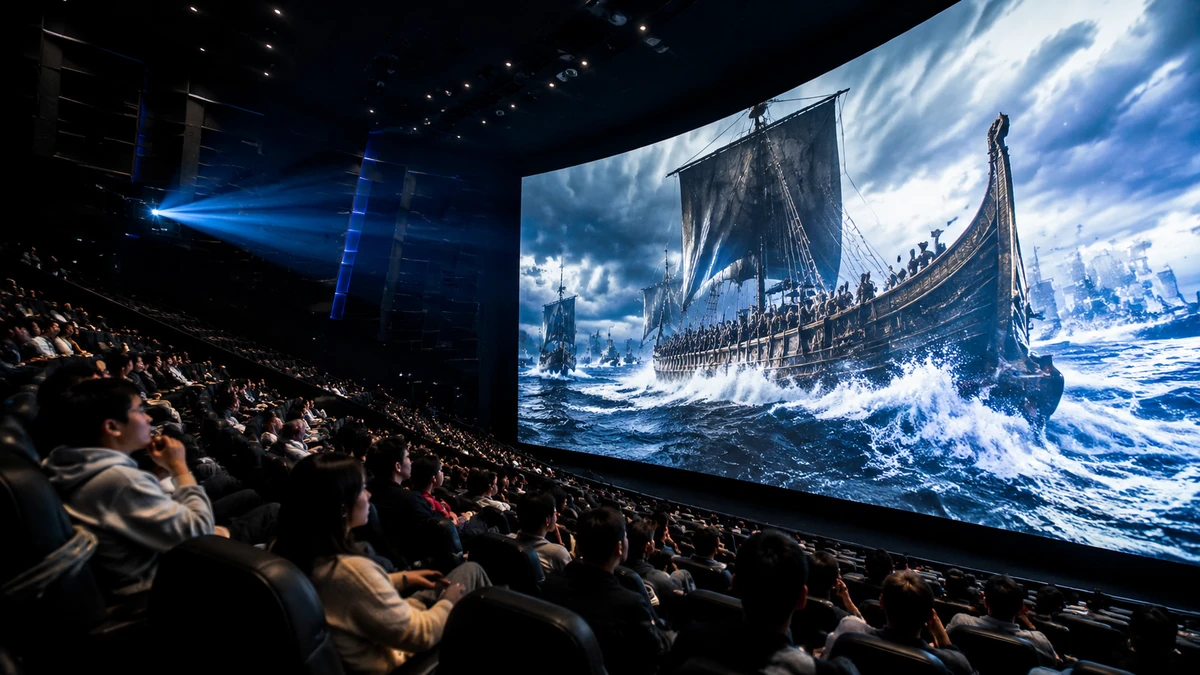
Image to help understand the article
A blockbuster’s success is forcing a harder question
South Korea’s summer box office has found a jolt of life in "Odyssey," a film that, according to Korean box office data cited by Yonhap News Agency, drew about 6.049 million admissions through its 17th day in theaters. On its face, that is a straightforward hit story: a single movie pulls large crowds, energizes exhibitors and gives the industry a badly needed sign that audiences will still turn out in large numbers for the right title.
But the more revealing number may be smaller. Roughly 630,000 of those admissions came from IMAX screenings, the highest such total for any film released in South Korea this year. In other words, about one in 10 ticket buyers did not simply choose the movie. They chose a format. They paid for a particular kind of screen, sound and immersive presentation that has become central to how modern audiences decide whether a trip to the theater is worth leaving the couch for.
That distinction matters because it shifts the conversation from what people are watching to how they want to watch it. In the streaming era, theaters around the world have leaned heavily on premium large formats such as IMAX, motion-based systems such as 4DX and other special auditoriums that promise something Netflix, Disney+ or a home TV cannot replicate. South Korea is no exception. If anything, the strong IMAX turnout for "Odyssey" suggests the country is further along in treating premium viewing not as a niche choice for hardcore fans, but as a core part of the mainstream box office.
And that is where the policy fight begins. In South Korea, so-called screen quota rules require theaters to devote a minimum number of days to domestic films. According to the Korean reporting summarized here, those obligations also apply to special-format theaters such as IMAX and 4DX. That means even if audience demand for "Odyssey" remains strong, exhibitors may not be able to keep it in premium auditoriums as long as they otherwise would, because they also must satisfy mandatory exhibition days for Korean films.
That tension is turning one hit movie into a case study in a broader question facing the global theatrical business: When premium screens become a distinct marketplace of their own, should governments and theaters treat them the same way as ordinary screens? South Korea, long one of the world’s most sophisticated movie markets, is now confronting that question in unusually visible form.
Why IMAX demand matters more than the raw 6 million figure
Big audience totals have always been the most obvious measure of theatrical success. A movie sells a lot of tickets, and the headline writes itself. But the "Odyssey" numbers point to a second metric that may now matter nearly as much: format-specific demand.
Premium screens are limited by design. There are fewer IMAX auditoriums than standard screens, and each day offers only so many showtimes. So when 630,000 people choose IMAX for a single title, that does not just indicate popularity. It suggests scarcity, intentionality and a willingness to pay more or plan ahead for a viewing experience seen as superior to a conventional screening. In practical terms, these are often the most motivated customers in the marketplace.
That is significant for theater chains because premium formats do more than fill seats. They help justify the economics of physical moviegoing at a time when studios and exhibitors alike are still trying to stabilize habits that were shaken by the pandemic and accelerated by streaming. A normal ticket can be replaced at home, at least for many consumers. An IMAX or 4DX experience is harder to reproduce. When audiences decide a specific film must be seen in a specific format, theaters gain leverage.
The "Odyssey" run appears to show exactly that dynamic. The film’s box office strength did not stop at general interest in the title itself. It expanded into what marketers would call experience consumption: buying not just the story, but the event. Americans will recognize the pattern from recent U.S. releases that became de facto premium-format appointments, when audiences held out for IMAX, Dolby Cinema or 70 mm engagements rather than settling for the first available standard show. In those cases, the format becomes part of the movie’s identity.
That matters because theaters do not program premium screens the same way they program ordinary ones. A standard auditorium can cycle through more titles with less controversy. A premium screen is a strategic asset. Whoever gets that screen gets not only ticket sales, but status, visibility and often the most committed audience segment. So when Korean exhibitors face legal requirements that may pull a hit out of IMAX earlier than demand alone would dictate, they are not merely adjusting schedules. They are deciding how to allocate the most valuable real estate in the building.
South Korea’s screen quota debate is not about whether to protect local film
One of the most important points in the Korean discussion is what the debate is not. This is not, at least based on the reporting summarized here, a simple argument for abolishing screen quotas. South Korea’s screen quota system has long been tied to a larger national project: ensuring that Hollywood dominance does not crowd out local production and that Korean audiences continue to have meaningful access to domestic films in their own theaters.
For Americans, the closest analogy may be public policy aimed at preserving local journalism, independent music venues or U.S.-based manufacturing in sectors vulnerable to global concentration. The idea is not hard to understand. Left entirely to market forces, larger international players often overwhelm smaller or nationally rooted ones. South Korea has spent decades building one of the world’s most successful film industries, and policies that protect exhibition opportunities have been part of that ecosystem.
That context matters especially because Korean film is not a minor cultural sector. It is a major creative industry with global influence, from arthouse auteurs to commercial blockbusters, and it exists alongside the broader Korean Wave, or Hallyu, that includes K-pop, streaming dramas, beauty brands and fashion. Protecting theatrical space for Korean films is therefore not just a nostalgic gesture. It is wrapped up in questions of industrial policy, cultural identity and national soft power.
The dispute, instead, is about whether the current method of counting mandatory exhibition days adequately reflects how audiences actually use premium screens. If IMAX and 4DX now function as something closer to a separate market segment, some in the industry appear to be asking whether the same quota calculation should apply to those formats in exactly the same way it applies to standard auditoriums. A viewer choosing a regular screening and a viewer seeking out IMAX may both be buying tickets to the same film, but they are not making identical consumer choices.
That is the policy dilemma. If Korea relaxes or recalculates premium-screen obligations, foreign hits could occupy those auditoriums longer, potentially narrowing access for Korean films in the most in-demand formats. But if the country insists on identical rules across all screen types, exhibitors may be unable to satisfy proven audience demand, leaving money on the table and frustrating consumers who specifically want the premium experience.
In other words, the tension is not between culture and commerce as abstract opposites. It is between two legitimate goals: protecting domestic cinema and responding to the way modern audiences actually buy movie tickets. "Odyssey" has simply made that contradiction harder to ignore.
What this means in the United States
For American readers, the Korean dispute lands at a moment when U.S. theaters are also relying heavily on premium formats to sustain attendance. While the United States does not have a national screen quota system for domestic films, the business logic of premium exhibition is instantly familiar. U.S. chains have spent years expanding IMAX, Dolby Cinema, ScreenX, 4DX and other higher-priced options because the conventional multiplex seat has become a harder sell in an age of home streaming and large living-room screens.
That makes South Korea’s debate worth watching not because the United States is likely to copy its quota system, but because it highlights a pressure point that American studios, theater chains and audiences already understand: premium screens have become a bottleneck. When only a limited number of auditoriums can deliver the experience audiences want, programming choices become strategic and politically charged, even without government mandates.
In the U.S., that pressure often surfaces in industry fights over how long one studio release should dominate IMAX or other premium screens before making way for the next tentpole. In practical terms, Americans have seen how a movie can keep drawing crowds in a premium format while another major release is waiting in line. The Korean case adds a different dimension. There, the competition is not just studio versus studio. It is market demand versus cultural policy.
That has implications for U.S.-Korea business ties as well. American entertainment companies have long viewed South Korea as both a profitable market and a trendsetting one. Korean audiences are highly engaged, technologically sophisticated and influential in shaping global pop-culture conversation. If premium-format demand in Korea becomes constrained by quota scheduling, that affects how American distributors think about release strategies, box office ceilings and format-specific marketing in one of Asia’s most important markets.
There is also a consumer angle. U.S. fans of blockbuster filmmaking increasingly track premium-format availability the way music fans once tracked limited tour dates. They swap screening tips, compare aspect ratios and plan travel around special engagements. Korean moviegoers doing the same for "Odyssey" suggests that theatergoing cultures in Seoul and Los Angeles may now resemble each other more than either resembles the older multiplex model, where a standard screening was good enough for most people.
For American companies, the lesson is not simply that Korea has an unusual regulation. It is that premium exhibition is now central enough to the movie business that rules built for a standard-screen era may no longer fit audience behavior. U.S. exhibitors are unlikely to face Korean-style quotas, but they will face the same underlying question: If premium screens are the engine of theatrical urgency, how should scarce access to them be managed?
From screen count to experience economy
The deeper trend here extends beyond one country and one title. The old theatrical model focused heavily on broad availability: how many screens, how many daily showings, how quickly a hit could expand. The emerging model is increasingly about curated scarcity. Not every seat matters equally. Some seats, in the right auditorium for the right title, matter much more than others.
That helps explain why the Korean reporting frames the issue not as a one-day scheduling hiccup but as a structural challenge. If a blockbuster can sell more than 600,000 IMAX admissions in just over two weeks, then premium formats are no longer a sideshow. They are becoming part of the core box office architecture. A theater can technically keep showing a movie in regular auditoriums while losing the ability to offer the format audiences most want. From an accounting perspective, the movie remains available. From the audience’s perspective, the preferred version may effectively be gone.
That gap between formal availability and meaningful availability is increasingly important. Modern moviegoers, especially younger ones and dedicated franchise audiences, often organize their viewing around perceived optimal conditions. A premium auditorium is not just a luxury add-on; it is, for some releases, the product itself. This is particularly true for event films built around scale, sound design, motion effects or spectacle-driven world-building. The Korean debate over "Odyssey" suggests that the industry is still catching up to that reality.
There is an irony here. Special formats were once treated as enhancements, a bonus layer on top of the real business of ordinary theatrical exhibition. Now they may be the place where the future of exhibition is most clearly being negotiated. Theaters need them because they drive higher engagement and revenue. Audiences increasingly expect them for certain titles. Regulators and policymakers, however, may still be applying frameworks designed for a world in which one screen was much like another.
South Korea is not alone in confronting this shift, but it is confronting it in a particularly visible and measurable way. Because the country has a formal mechanism for protecting domestic film, the clash becomes legible in public policy terms rather than remaining an internal scheduling issue handled quietly between studios and chains. That makes Korea an especially useful case study for the global industry.
Why this matters for Korean cultural policy and the Korean Wave
It would be a mistake to see this only as a technical argument about theater operations. The outcome matters for how South Korea balances two pillars of its cultural strategy: protecting domestic creative industries at home and projecting cultural influence abroad.
Korea’s entertainment success over the past decade has been built on both openness and support. Korean creators have thrived in global markets, but they have also benefited from a domestic ecosystem robust enough to produce stars, genres and storytelling styles that travel well overseas. Theatrical film is one part of that ecosystem, even as streaming has changed consumer habits.
That is why the special-screen issue is delicate. If premium formats become dominated by foreign tentpoles, Korean films may lose access to the most commercially powerful and symbolically prestigious venues in the multiplex. Over time, that could shape audience expectations, marketing budgets and even the kinds of films producers believe are worth making. A system that protects ordinary screens while ceding premium formats could create a two-tier exhibition culture in which Korean films remain present but not always positioned where demand and visibility are strongest.
On the other hand, if the rules are so rigid that theaters cannot respond to demonstrated audience demand for premium screenings, Korea risks undercutting the very theatrical vitality the industry is trying to preserve. A healthy movie culture needs audiences to feel that theaters deliver something they cannot get elsewhere. If consumers find that the format they want disappears despite continued demand, frustration can push them away from cinemas altogether.
That is why the debate described in the Korean coverage appears to be focusing on recalibration rather than repeal. The policy question is not whether Korean films deserve protection. It is whether premium auditoriums should be counted, scheduled or regulated in a more nuanced way that reflects their distinct role in the market. That may sound technical, but technical rules often decide real cultural outcomes.
What to watch next
The first practical question is whether demand for "Odyssey" in IMAX and other special formats remains strong enough to keep pressure on theater operators. A short-lived spike would support the argument that the current system can absorb occasional hits. Sustained demand, however, would strengthen the case that special-format scheduling needs a different formula.
The second question is whether the discussion expands beyond this single film. Industry debates often sharpen around one especially vivid example, then fade if no broader coalition forms. But the Korean reporting suggests this issue touches a structural fault line: theaters revived by a hit, premium demand clearly measured and quota obligations that do not necessarily bend with audience behavior. If more releases produce similar patterns, the case for policy review will become harder to dismiss.
The third question is whether Korean officials, exhibitors and filmmakers can frame this as a problem of precision rather than ideology. Culture-policy arguments can quickly devolve into false choices: nationalism versus globalization, art versus commerce, local industry versus audience freedom. The more useful framing may be narrower and more pragmatic. If special-format screens operate differently, should the rules governing them be more tailored?
For the United States and other international markets, the value of watching Korea lies in the clarity of the challenge. The theatrical business is no longer just trying to attract viewers. It is trying to match viewers with the exact experience they believe justifies a ticket purchase. That shift changes the economics of exhibition, the politics of programming and the cultural stakes of who gets access to premium space.
"Odyssey" may be remembered as a hit on its own merits. But its larger significance may be that it made visible a new phase in moviegoing, one in which the fight over cinema’s future is not only about which films get made or how many people show up, but about which experiences remain available when audiences want them most. In South Korea, that fight now runs through IMAX screens, domestic-film protections and the increasingly complicated question of how to sustain both a national cinema and a modern theatrical marketplace at the same time.
Comments
Post a Comment