An 18th-Century Korean King Still Speaks to Modern America: What Yeongjo’s Reforms Reveal About Power, Polarization and the State
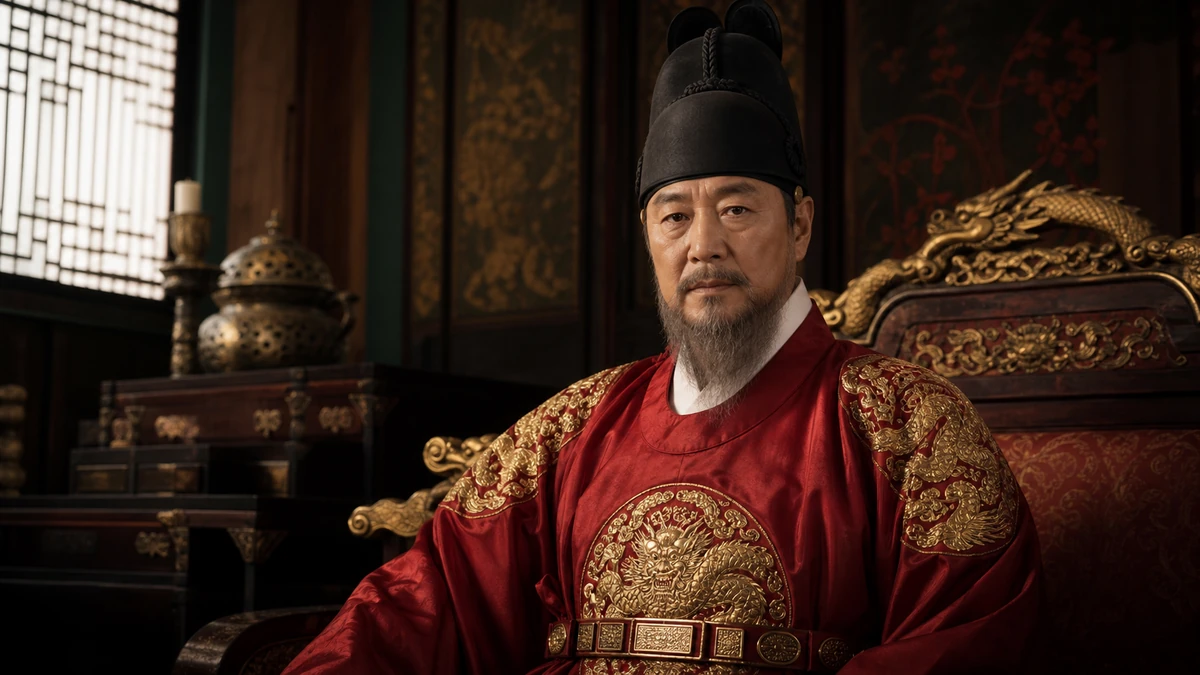
Image to help understand the article
A king from Korea’s past, and a very modern political story
In the long arc of Korean history, few rulers loom as large as King Yeongjo, the 21st monarch of the Joseon Dynasty. He reigned from 1724 to 1776, making him the longest-serving king in the dynasty and one of its most consequential. To many Koreans, Yeongjo is remembered as a reform-minded ruler who tried to stabilize a fractured political system, reduce burdens on ordinary people and restore confidence in the state after years of elite infighting. For American readers, the broad outline may sound surprisingly familiar: a leader rises under a cloud of legitimacy questions, faces a deeply polarized political establishment, attempts to govern through moderation and spends much of his rule trying to keep rival factions from tearing the system apart.
The Korean account of Yeongjo’s life is not just a royal biography. It is a case study in how governments survive prolonged partisan warfare, how reform can be both real and incomplete, and how leaders who promise balance often depend on the very power structures they claim to tame. In that sense, Yeongjo’s story belongs not only to Korea’s past but also to the larger global conversation about governing divided societies.
Yeongjo was born in 1694 as Prince Yeoning, the son of King Sukjong and a royal consort, not the queen. That family background mattered. In hereditary monarchies, rank at birth could shape a person’s political horizon for life. He was close enough to the throne to be drawn into palace politics, but not so close that succession came naturally. His rise unfolded amid intense disputes over who should inherit power and under what terms. Those disputes were not abstract constitutional arguments. They were tied to factional loyalties, personal survival and, at times, life-and-death purges.
The summary of his rule highlights the two themes for which Yeongjo is best known: the policy of political balancing known as tangpyeong, often translated as “impartiality,” and the military tax reform called the Gyunyeok Act, which cut a major burden on commoners. Together, they explain why he is remembered as a ruler who sought practical change rather than grand ideological transformation. But they also show the limits of top-down reform in a society where elite rivalries were deeply entrenched.
For readers in the United States, it helps to think of Yeongjo not as a distant, ornamental king but as a political operator working inside a rigid, highly stratified system. He was trying to lower the temperature of factional conflict without dismantling the system that produced it. That tension is what makes his reign so compelling today.
Born into factional warfare
To understand Yeongjo, Americans need some context about Joseon, the dynasty that ruled Korea for more than five centuries, from 1392 to 1910. Joseon was governed by a Confucian bureaucratic order in which scholar-officials competed for office, influence and royal favor. In theory, that system prized learning, ethics and service. In practice, it often hardened into factional blocs, or 붕당 in Korean, usually rendered in English as political factions. These factions were not political parties in the modern democratic sense. They did not campaign for votes. But they did organize around ideology, family ties, regional identities and court alliances, and their feuds could define the state.
By the time Yeongjo came of age, Joseon politics had become consumed by rivalry between major factions, especially the Noron and Soron groupings. These labels are sometimes translated as “Old Doctrine” and “Young Doctrine,” but those terms can sound more coherent than they were. What matters is that they represented competing elite networks with different views of succession, loyalty and power. As often happens in polarized systems, a policy disagreement could quickly become a moral accusation, and a moral accusation could become a purge.
Yeongjo’s older half brother, King Gyeongjong, sat at the center of the succession struggle. Gyeongjong’s political position was unstable, and he had no heir. Noron figures supported elevating Prince Yeoning as successor, while rival forces viewed that push with suspicion, arguing that it masked a broader bid to seize control of the court. The result was a cycle of accusation and retaliation that devastated the political class. Senior officials were executed. Families were exiled. Yeongjo himself, still a prince at the time, lost much of his support base and even faced threats to his life.
This is one reason Yeongjo’s later governing style matters. He had seen early, at close range, what happens when political factions stop treating one another as rivals and start treating one another as existential enemies. That experience seems to have informed his later effort to keep opposing camps inside a shared governing framework, even if he never fully escaped the logic of favoritism and punishment.
There is also an element of personal insecurity that shaped his reign. In royal systems, legitimacy is not just a legal question. It is emotional, symbolic and often weaponized by enemies. Yeongjo’s proximity to the throne was always matched by vulnerability to claims that he did not belong there. Those claims would follow him long after his coronation.
The legitimacy problem that never really disappeared
When Gyeongjong died suddenly in 1724 after an illness marked by abdominal pain and severe digestive distress, rumors spread quickly. Accounts that he had recently consumed foods including marinated crab, honey, persimmons and ginseng tea fueled later suspicion that his death was unnatural. In the politically charged climate of the time, this became more than gossip. It developed into a poison narrative: the idea that Yeongjo had somehow benefited from, or even caused, his brother’s death.
There were also ugly attacks on his lineage, including claims that he was not truly the son of King Sukjong. Such rumors were not unusual in palace politics, where birth and bloodline were political currency. But the persistence of these allegations mattered. A ruler who must constantly defend his right to rule governs differently from one whose legitimacy is secure.
Americans may hear echoes here of the way conspiracy theories can become a permanent feature of public life even when they are unproven or implausible. In modern democracies, those theories often revolve around elections, citizenship or hidden influence. In 18th-century monarchies, they attached themselves to bloodline, succession and palace intrigue. The mechanics are different, but the political effect is similar: legitimacy becomes unstable, and instability reshapes policy.
After taking the throne, Yeongjo initially moved against the faction that had led earlier purges of his allies. That was partly revenge, partly survival. Yet he also appears to have grasped that total victory for one faction would only set the stage for the next round of retaliation. This is where his signature political doctrine, tangpyeong, entered the story.
Tangpyeong is often described as an impartial personnel policy, but that understates its significance. It was an attempt to keep rival factions in circulation rather than allow one side to monopolize office. Yeongjo did not abolish factional politics. He managed it. He sought to balance appointments, restrain hard-liners and preserve the king’s own role as arbiter above the fray. In American terms, it was less a nonpartisan revolution than a controlled power-sharing arrangement imposed from the top.
That approach was pragmatic and, in some respects, sophisticated. But it had an obvious weakness: it depended on the ruler’s authority and judgment. If the king favored one side too much, the whole balancing project looked like camouflage. If he moved too cautiously, he appeared weak. And if the underlying mistrust ran too deep, balance itself could look illegitimate. The source summary notes that many historians judge Yeongjo’s tangpyeong policy as ultimately unsuccessful in fully resolving the structural problem. That is a crucial point. Moderation can reduce conflict without curing the disease that causes it.
Tangpyeong, or the limits of governing from the middle
Yeongjo’s bid to moderate factional warfare deserves attention because it speaks to a dilemma that is hardly unique to premodern Korea. How do you stabilize a system in which every appointment is read as a victory or defeat for one tribe? How do you tell bitter rivals that they must coexist inside the same governing order when each fears annihilation if the other gains too much ground?
Yeongjo’s answer was neither democratic compromise nor pluralism in the modern liberal sense. Joseon remained a monarchy, and the king remained the central decision-maker. But within those limits, he tried to build what might be called an equilibrium state. He rejected demands from hard-liners who wanted total punishment of their enemies. He also exiled or marginalized extremists within his own support base when they threatened the balance he was trying to maintain. In 1727, according to the summary, he carried out a political reordering that pushed hard-line Noron figures out of office in order to make room for a more stable arrangement.
This was not idealism for its own sake. It was statecraft under pressure. Yeongjo had reason to believe that concentrated factional rule was dangerous, not only for his own throne but for the survival of orderly government. His solution was what Korean historians sometimes describe as a more gradualist or moderate version of tangpyeong: not the destruction of factions, but the disciplined management of them under royal authority.
Still, the policy’s limitations are impossible to ignore. The same reign that promoted balance also saw repeated punishments, purges and selective rehabilitation. Yeongjo pardoned and restored figures connected to the faction that had helped him rise. He punished hard-line opponents again when anti-royal pamphlets appeared and when exam essays mocked him as a false ruler. In other words, he governed as a balancer, but also as a monarch with a long memory and real political debts.
For Americans, the closest analogy may be leaders who campaign as bridge builders but once in power discover that institutions reward tribal loyalty more than procedural fairness. A centrist reputation can coexist with sharp uses of state power. In fact, the two sometimes depend on each other. The promise of stability often requires selective coercion against those deemed destabilizing.
That does not make Yeongjo a hypocrite so much as a realist. It does, however, complicate any attempt to cast him as a simple philosopher-king. His reign suggests that political moderation is often less about consensus than about controlled containment. It can buy time. It can reduce bloodletting. It can create space for reform. But it may not erase the underlying resentments that feed division in the first place.
Rebellion, punishment and the politics of memory
Those resentments burst into open revolt in 1728 with the rebellion led by Yi In-jwa, one of the most serious early challenges to Yeongjo’s rule. The uprising drew support from hard-line elements alienated by the post-succession order and sought to enthrone another royal claimant. It also weaponized the most politically damaging accusation against Yeongjo: that he had usurped the throne after Gyeongjong’s suspicious death.
The rebels did not just take up arms. They fought a memory war. By invoking Gyeongjong and circulating claims of poisoning, they tried to turn public grief and doubt into political fuel. That tactic, too, feels modern. Historical interpretation is often inseparable from political struggle, whether the battlefield is a campaign trail, a classroom or, in this case, provincial strongholds in 18th-century Korea.
The rebellion spread beyond its starting point and was serious enough that government officials were killed in the fighting. Local scholar-gentry in some areas organized volunteer forces to support the state. Yet after the revolt was crushed, Yeongjo imposed broad punishments on the southeastern Gyeongsang region, branding it effectively as a disloyal area and restricting opportunities for its scholars to enter officialdom. The source notes that this remained controversial because not everyone in the region had supported the uprising. Some local elites had explicitly refused to join the rebels and later protested being collectively stigmatized.
That decision reveals a harder edge to Yeongjo’s rule. A monarch remembered for balance and reform could still practice collective political discipline. The logic is recognizable: when legitimacy is fragile, leaders sometimes overcorrect, using regional or social punishment to deter future dissent. The cost is long-term grievance. What may seem like stabilizing justice in the short term can become a source of resentment for generations.
This part of Yeongjo’s reign matters because it resists a tidy narrative. He was not merely a reformer confronting reactionary forces. He was also a sovereign protecting his throne through exclusion, rehabilitation of allies and strategic intimidation. The contradiction does not cancel his achievements. It helps explain them. State reform in a fragile order is often inseparable from state coercion.
The reformer’s case: why ordinary people remember the Gyunyeok Act
If Yeongjo had only been a manager of factional conflict, he might remain mainly a subject for specialists. What broadens his relevance is that he also pursued reforms that touched everyday life. The most prominent was the Gyunyeok Act, a military tax reform that reduced a major burden on commoners from two bolts of cloth to one. In the Joseon system, many ordinary people met defense obligations through tax payments rather than direct service. By halving that payment, Yeongjo eased pressure on households and signaled that the state could be both disciplined and responsive.
For American readers, the key point is not the textile measure itself but what it represented. In a preindustrial agrarian society, small shifts in state extraction could mean the difference between subsistence and crisis. Cutting a tax burden was not a symbolic gesture. It was a meaningful intervention in household economics. The source also credits Yeongjo with efforts to investigate and relieve famine-stricken populations, encourage agriculture and impose curbs on excess and waste, including through restrictions on alcohol consumption and by modeling frugality in his own court life.
These measures fit a classic East Asian ideal of kingship: the ruler as moral guardian of the people’s livelihood. Confucian political thought did not separate ethics from administration. A good ruler was expected not only to keep order but also to cultivate social well-being through personal restraint, fair taxation and attentiveness to suffering. In that context, Yeongjo’s image as a frugal monarch mattered politically as much as fiscally.
The summary also points to administrative and legal reforms, including changes to harsh punishments and the revival of the shinmungo, a complaint drum that allowed subjects to appeal grievances directly to the throne. To modern American ears, that may sound ceremonial, but it reflected a longstanding principle: if local officials failed or abused their power, the sovereign should remain accessible, at least in theory, as the final source of justice. That principle appears in many political traditions, including Western ones, where appeals to a higher authority have long served as a check on local corruption.
Even Yeongjo’s support for publishing books and organizing knowledge belongs in this reform profile. Long reigns are often remembered not only for laws but for the informational systems they build. A state that standardizes texts, promotes administrative learning and encourages institutional memory is strengthening itself beyond a single generation.
None of this means Yeongjo was a social revolutionary. Joseon remained deeply hierarchical. Class divisions, inherited status and regional inequities endured. But his reforms show a ruler trying to make the system more governable and less punishing without overthrowing its foundations. That combination of conservatism and adjustment helps explain his durability.
What this means for the United States
For American readers, a story about an 18th-century Korean monarch may seem remote from the concerns of the United States. In fact, it lands at a useful intersection of politics, culture and the U.S.-Korea relationship. South Korea is one of America’s closest allies in Asia, a major economic partner and a cultural force whose influence now extends from K-pop and film to beauty, food and streaming television. As American interest in Korea grows, so does the need to understand the country beyond contemporary headlines. Figures like Yeongjo are part of the deeper historical grammar that helps explain Korean political culture, institutional memory and public debates about leadership.
That matters in practical ways. American companies operating in Korea, from entertainment firms to tech manufacturers, increasingly work within a society that prizes both rapid modernization and historical continuity. U.S. audiences consuming Korean historical dramas may recognize royal intrigue and reform themes without fully grasping the Joseon-specific meaning of factional politics, legitimacy and Confucian governance. Stories like Yeongjo’s offer a bridge. They show that Korean history has its own internal logic, not merely a local version of European monarchy or Cold War-era development.
There is also a business and media angle. In the United States, Korean historical content has found a growing audience on streaming platforms. American viewers who embraced contemporary Korean storytelling through projects like “Parasite” or “Squid Game” have also shown curiosity about period dramas, where the stakes are often succession, bureaucracy, family honor and state reform. Yeongjo is exactly the kind of figure who fits that transnational appetite: morally complex, politically embattled and historically important. For U.S. entertainment companies, that continued interest underscores how Korean history itself has become part of the broader export ecosystem known as the Korean Wave, or Hallyu.
Politically, Yeongjo’s story also speaks to an American conversation about polarization. The United States is not Joseon Korea, and any one-to-one comparison would be sloppy. But American readers will recognize a society in which rival camps harden into identity blocs, legitimacy becomes contested and moderation is praised rhetorically while punished structurally. Yeongjo’s reign is a reminder that reducing polarization is not the same as resolving it. Systems can survive years of factional conflict and still emerge brittle, distrustful and vulnerable to renewed crisis.
For Washington, historians’ attention to Korean statecraft also has soft-power value. Strong alliances are not sustained by security guarantees alone. They deepen when countries learn how the other understands authority, justice and historical memory. In that sense, taking figures like Yeongjo seriously is not antiquarian curiosity. It is part of understanding an ally whose modern democracy was built atop a much older administrative and intellectual tradition.
Why Yeongjo matters now
The renewed attention to Yeongjo reflected in the Korean source is not just about commemorating a long-dead king. It reflects a contemporary appetite for historical figures who can help make sense of present anxieties: political division, distrust of elites, the burden on ordinary citizens and the challenge of reforming institutions without breaking them. Yeongjo offers no clean lesson. That may be precisely why he remains useful.
He shows that legitimacy, once damaged, rarely heals completely. He shows that moderation can be necessary and insufficient at the same time. He shows that tax relief and administrative reform can build durable public memory even when political reconciliation falls short. And he shows that rulers who present themselves as arbiters above faction often remain deeply entangled in the structures of factional power.
For American readers accustomed to seeing Korean history only through the lenses of Japanese colonialism, the Korean War or today’s technology and pop culture boom, Yeongjo’s reign opens a wider frame. Korea’s past includes sophisticated debates about governance, moral authority, taxation, bureaucratic balance and the responsibilities of the state. Those debates do not belong only to museums or university departments. They remain alive in the way Korea narrates itself and in the stories that reach global audiences.
In the end, Yeongjo’s legacy rests on a paradox. He was a stabilizer whose rule never escaped instability, a reformer who worked within hierarchy, and a king of impartiality who could still punish widely and remember slights deeply. Yet that very paradox may explain his endurance in Korea’s historical imagination. He was not the architect of a perfect order. He was a ruler wrestling, with mixed success, against the oldest problem in politics: how to preserve a state when the people who run it no longer trust one another.
That is not just Korean history. It is a human story, and in today’s United States, it is an uncomfortably familiar one.
Comments
Post a Comment