Australia’s Fury Over Gaza Aid Worker Deaths Puts New Pressure on Israel and Raises Wider Questions for the U.S.
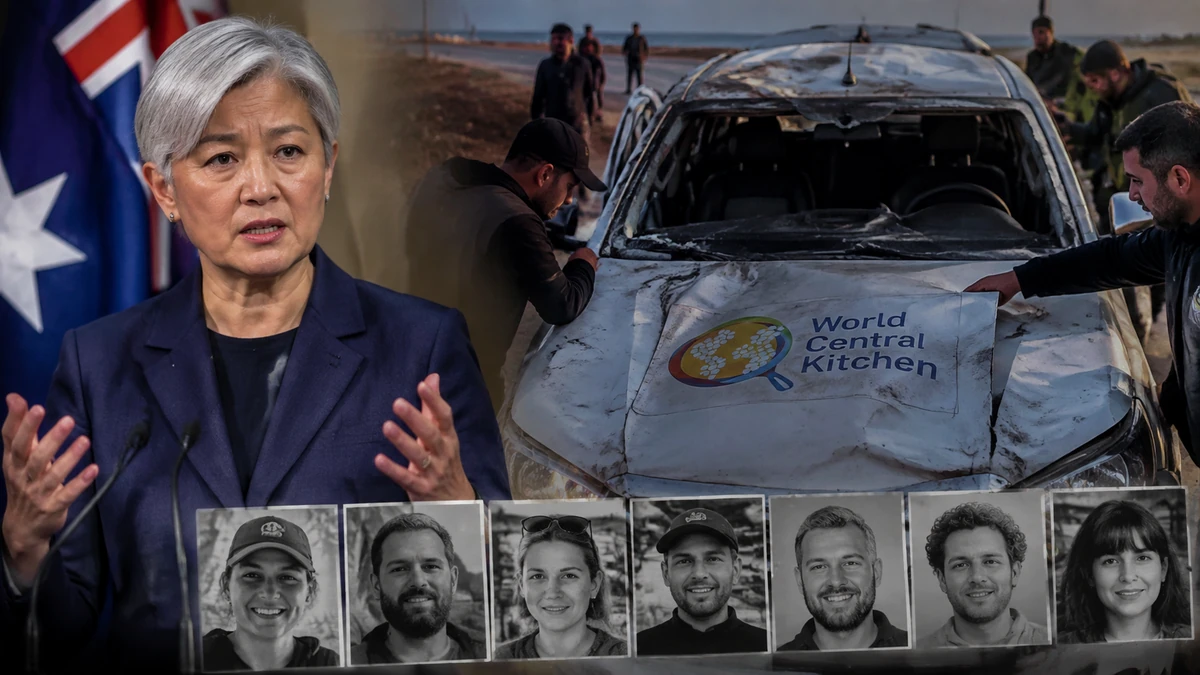
Image to help understand the article
A diplomatic dispute with global implications
Australia’s sharp response to Israel’s decision not to open a separate investigation into the 2024 deaths of seven World Central Kitchen workers in Gaza is more than a bilateral spat. It is a reminder of how the war in Gaza continues to ripple far beyond the Middle East, pulling close U.S. allies into disputes over accountability, humanitarian law and the protection of civilians in war zones.
Australian Foreign Minister Penny Wong said she was “outraged” by Israel’s decision and planned to summon Israel’s ambassador in Canberra, according to the Korean news summary citing Australia’s Foreign Ministry. At the center of the dispute is the April 1, 2024, strike in Gaza that killed seven employees of World Central Kitchen, or WCK, the high-profile aid group known globally for delivering meals in disaster zones and conflict areas. Among the dead was Australian citizen Zomi Frankcom.
That single fact — that one of the victims was Australian — helps explain the unusually blunt tone from Canberra. Governments routinely protest when their citizens are killed abroad, especially in a military operation carried out by a friendly nation. But the broader significance lies in what Australia is saying the case represents: not simply a tragedy, but a test of whether countries at war can credibly investigate civilian deaths tied to their own military actions, particularly when those deaths involve international aid workers engaged in humanitarian relief.
For American readers, the episode may sound familiar. The United States has repeatedly confronted similar questions in Iraq, Afghanistan and elsewhere: When a military kills civilians or noncombatants by mistake, what level of inquiry satisfies allies, victims’ families and the wider public? Is an internal review enough? When does a friendly government’s explanation stop looking like accountability and start looking like self-protection? Those questions are now being pressed not by a traditional adversary of Israel, but by a Western partner that, like the United States, has generally maintained strong ties with Jerusalem.
The clash also underscores a larger shift in the politics of the Gaza war. Early debates often centered on military strategy, hostage negotiations or ceasefire diplomacy. Increasingly, however, attention has moved toward the mechanics of accountability: who investigates, what standards apply, and whether humanitarian groups can operate safely at all. In that sense, Australia’s protest is not just about one decision. It is about whether the rules meant to protect civilians and aid workers during war still carry real force when they are tested by one of the most scrutinized conflicts in the world.
Why the World Central Kitchen case resonates far beyond Australia
World Central Kitchen is not a marginal relief group known only to aid insiders. Founded by celebrity chef José Andrés, the organization has built a powerful public profile by delivering food rapidly after hurricanes, earthquakes, wildfires and wars. In the United States, it is one of the rare humanitarian organizations whose work is recognized across political and cultural lines, in part because its mission is concrete and easy to grasp: feed people in crisis, fast.
That visibility made the April 2024 strike especially shocking. In many wars, the deaths of aid workers are reported in grim, sometimes anonymous terms. The WCK case was different. The victims were affiliated with a globally recognized brand of humanitarian action, one that many Americans associate with disaster relief in places as varied as Puerto Rico, Ukraine and Maui. The killings therefore cut through the abstraction that often surrounds distant conflicts. They made the dangers facing relief personnel tangible to audiences well beyond the Middle East.
The case also crystallized a central contradiction of modern warfare. Humanitarian organizations are encouraged by the international community to enter conflict zones and help civilians survive. Yet those same zones are increasingly crowded with drones, airstrikes, shifting front lines and fragmented command structures that make even clearly marked aid operations vulnerable. The promise of humanitarian access often collides with the reality of military operations carried out in chaotic, compressed battlespaces.
That contradiction matters because aid workers occupy a distinctive place under international norms. They are not merely civilians in the ordinary sense. They are civilians performing a globally valued function: delivering food, medicine and basic survival support to people trapped by war. When they are killed, the issue is not only personal loss or diplomatic fallout. It raises a systemic question: Can humanitarian relief continue if the people doing the work cannot trust the safeguards that are supposed to protect them?
Australia’s anger reflects that broader concern. By framing the issue as one of insufficient accountability rather than unfortunate wartime error alone, Canberra appears to be arguing that the aftermath matters as much as the strike itself. In other words, the real damage may not stop at the deaths of seven workers. It extends to the message sent to every aid organization trying to decide whether it can safely operate in Gaza or in future conflicts.
The accountability debate at the center of the dispute
The Korean summary describes the core disagreement in straightforward terms: Australia believes Israel’s decision falls short of what is needed to establish responsibility. That dispute goes to the heart of a long-running international argument over wartime investigations. In almost every major conflict, governments insist they have processes to review incidents and assess whether mistakes were made. Critics often counter that investigations controlled by the same state whose forces carried out the strike rarely inspire public confidence, especially when results are limited, delayed or narrow in scope.
What makes accountability credible is not simply whether some review took place, but whether outsiders can see that the process was independent, transparent and capable of producing consequences. Those standards are difficult to meet in wartime. Militaries guard operational secrecy. Governments worry about legal exposure. Political leaders fear domestic backlash if they appear to concede wrongdoing. Yet without those elements, even a technically completed review may fail the basic test of legitimacy in the eyes of allies and the public.
That is why this case is escalating into a diplomatic issue rather than remaining a closed military matter. Australia is not treating the deaths as an internal Israeli concern because one of the victims was Australian and because the victims were working for an international aid group. When a citizen dies overseas in circumstances tied to a military action by a partner nation, the home government has political and moral reasons to demand more than procedural closure. It has to show voters, families and the international community that it pressed for answers.
This is not a uniquely Australian dilemma. It is part of a wider problem in contemporary war: the gap between legal process and public trust. A state may say it has met its obligations. Other governments, aid organizations and victims’ relatives may still see a process that is too insular to be persuasive. Once that credibility gap opens, the consequences can extend well beyond a single case. Alliances become strained. Humanitarian groups become more reluctant to cooperate. Calls for outside scrutiny grow louder.
In practical terms, the argument over whether a “separate investigation” should occur also reflects a deeper divide over what justice looks like in wartime. Is the goal to learn lessons and improve procedures? To identify and punish individual wrongdoing? To reassure allies that mistakes will not be repeated? Often, different actors want all three, but states under wartime pressure tend to emphasize institutional learning while critics demand visible accountability. The tension between those models helps explain why cases like this rarely fade quickly, even when governments hope they will.
What this means for the United States
For the United States, the dispute carries implications on several levels: diplomatic, political, legal and cultural. America is Israel’s most important ally and military backer, and it is also home to World Central Kitchen, one of the most recognizable humanitarian organizations operating in conflict zones today. That dual connection makes the case especially resonant for U.S. audiences.
First, the episode reinforces pressure on Washington to think not only about the strategic goals of allies, but about the operational consequences of war for humanitarian groups with deep American ties. WCK is not just another international nongovernmental organization from a U.S. perspective. It is part of a distinctively American style of civic response — entrepreneurial, media-savvy, personality-driven and built around rapid deployment. Americans who may not follow every diplomatic turn in the Gaza war still know José Andrés, or at least know the type of relief effort he represents. When such a group loses workers in a strike, the incident lands differently in the American political conversation than a less familiar tragedy might.
Second, the case adds to a broader U.S. debate over how to balance alliance commitments with demands for humanitarian safeguards. Washington has faced growing scrutiny over civilian harm issues across multiple administrations. The questions raised by Australia’s protest are not abstract for U.S. policymakers. They intersect with concerns Congress, advocacy groups, legal scholars and parts of the American public have repeatedly raised: What standards should apply when allies using U.S.-supported systems or operating within U.S.-backed security frameworks are linked to civilian deaths? What form of review is enough? When should Washington publicly press for more?
Third, the controversy may matter to American aid groups, contractors and companies operating in high-risk environments. Modern conflict zones often involve a dense network of actors — nonprofits, logistics providers, food suppliers, security consultants and international agencies. If confidence in deconfliction procedures and post-strike accountability erodes, the ripple effects can reach far beyond one battlefield. U.S.-based organizations may rethink deployment, insurance, staffing and coordination in war zones. The result is not only moral concern, but a practical challenge to America’s broader role in humanitarian response.
There is also a domestic political dimension. In the United States, debates over Israel and Gaza have become intertwined with larger arguments about America’s global role, the laws of war and the credibility of Western democracies when they speak about human rights. Australia’s protest could amplify those debates by showing that concern over accountability is not limited to activists or governments traditionally critical of Israel. It is also coming from a U.S.-aligned democracy with its own citizen among the dead.
Finally, there is a softer but still important cultural point. Americans tend to understand war partly through institutions and personalities they recognize. World Central Kitchen is one of those rare bridges between foreign conflict and domestic identification. In that sense, this is not only a foreign policy story. It is also a story about how Americans see their own humanitarian ideals reflected — and endangered — abroad.
Why humanitarian worker safety is becoming a defining issue of this war
The Australian response highlights a larger trend that may outlast this individual dispute: the growing centrality of aid worker safety in how wars are judged internationally. In past eras, public attention often focused primarily on front-line combat, battlefield victories or diplomatic summits. Today, global reaction is shaped just as much by who can deliver food, who can evacuate the wounded and whether relief organizations can function without becoming casualties themselves.
That change reflects both technology and media. Civilian harm in war is no longer filtered solely through official statements and delayed reports. It appears in near real time, often accompanied by names, faces and organizational identities. When the victims belong to a globally recognized charity, the emotional and political impact is magnified. The result is that the treatment of aid workers has become a proxy for broader judgments about whether a military campaign is being conducted within accepted humanitarian bounds.
Gaza has intensified that trend because the enclave’s humanitarian crisis is so severe and because access is so tightly contested. In such conditions, aid groups are not peripheral actors. They are central to survival itself. That gives attacks on humanitarian personnel an outsized significance. Each incident can change not just the immediate operating environment, but the willingness of international actors to remain engaged.
For relief agencies, the lesson is sobering. Even strong branding, international visibility and coordination efforts may not guarantee safety in dense urban warfare. For governments, the lesson is equally serious. If humanitarian missions become too dangerous, the consequences are not limited to one organization’s risk profile. Civilian suffering deepens, international pressure increases and allied governments may begin to challenge not only tactics, but the credibility of official explanations after the fact.
The pattern extends beyond Gaza. Around the world, conflicts are increasingly fought in populated areas where distinctions between military and civilian activity are harder to maintain in practice, even if they remain clear in law. Aid convoys, hospitals and food distribution sites can become entangled in military calculations or swept into targeting errors. That makes accountability after such incidents more important, not less. If prevention fails, trust depends on what happens next.
Australia’s stance suggests that more governments may be willing to elevate these concerns diplomatically, especially when their own citizens are affected. That, in turn, could shift the politics of conflict oversight. Rather than treating harm to aid workers as tragic but secondary, states may increasingly frame it as a primary test of whether wartime conduct remains compatible with international expectations.
What to watch next in the Israel-Australia standoff
The immediate question is whether Australia’s protest remains a pointed diplomatic objection or develops into a more sustained pressure campaign. Summoning an ambassador is a serious step, though not an extraordinary one. It signals that Canberra wants to turn private dissatisfaction into formal state-to-state protest. What matters next is whether that protest is followed by continued public pressure, coordination with like-minded governments or calls for a more robust investigative mechanism.
Another key question is whether this case broadens beyond the specific death of an Australian national into a wider coalition concern about humanitarian protection in Gaza. If other allies conclude that existing accountability processes are insufficient, Israel could face growing pressure from partner nations, not just from international organizations or political opponents. That would represent an important shift in the diplomatic landscape surrounding the war.
It is also worth watching how humanitarian organizations respond. Aid groups often have to balance moral witness with practical access. Condemning unsafe conditions too forcefully can strain working relationships with the authorities controlling access. Saying too little, however, risks normalizing unacceptable danger. If the perception spreads that high-profile cases still do not produce adequate accountability, some organizations may alter their operations, reduce presence or demand stronger protections before scaling up work.
For the United States and other Western allies, this episode may become part of a larger recalibration in how they discuss support for partners engaged in prolonged urban warfare. Public debate is increasingly moving from broad declarations of solidarity or concern toward more technical but crucial questions: What are the rules for protecting civilians? Who investigates when those rules appear to fail? And what degree of transparency is necessary to preserve international legitimacy?
Those questions do not produce quick or politically comfortable answers. But they are likely to shape the next phase of trans-Atlantic and Indo-Pacific discussion about Gaza more than any single news cycle will. Australia’s response matters precisely because it reflects that evolution. It is not only anger over one case, however justified that anger may be. It is a signal that allied patience can wear thin when wartime errors involving civilians and aid workers are seen as insufficiently examined.
In that sense, the real significance of this dispute may lie in what it reveals about the changing standards democracies face from one another. Allies are still allies. Strategic relationships still endure. But the expectation that partners must provide persuasive answers when civilians die — especially when those civilians are aid workers and one is your own citizen — is becoming harder to dismiss. For Washington, Canberra and other capitals watching closely, the message is plain: in modern war, accountability is no longer a side issue. It is part of the battlefield itself.
Comments
Post a Comment