Before K-pop, There Was Queen Min: How a 19th-Century Korean Royal Helped Push Korea Toward the Modern World
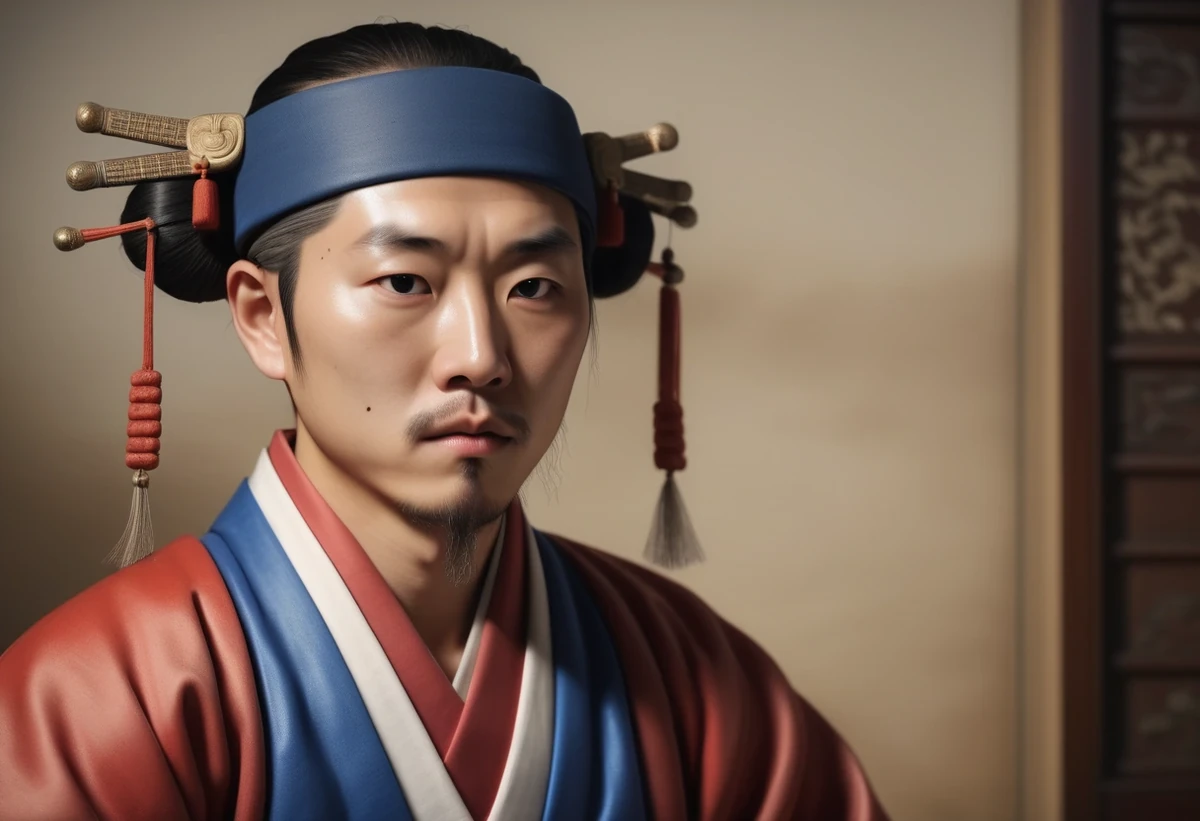
Image to help understand the article
A royal life that still shapes how Koreans understand modernity
Long before South Korea exported K-pop, Oscar-winning films and hit Netflix dramas, the Korean Peninsula was wrestling with a much older question: how to open itself to the outside world without losing control of its own identity. One of the most important figures in that debate was Queen Min, later known by her posthumous title Empress Myeongseong, a royal consort whose rise in the late 19th century helped reshape the politics of the Joseon Dynasty and set Korea on a path toward gradual modernization.
A recent Korean historical account revisits her early life, from her birth in 1851 in what is now Yeoju, southeast of Seoul, to her emergence as a central political actor in the court of King Gojong. For American readers, the easiest comparison may be to think of her not simply as a queen in the ceremonial sense, but as a consequential political strategist operating inside a rigid, male-dominated power structure at a moment when her country faced internal division and mounting foreign pressure.
In Korea, Myeongseong remains one of the most studied and debated figures of the late Joseon period. She has been celebrated as a defender of the nation, criticized as a factional operator and reinterpreted again and again in scholarship, television dramas, school textbooks and public memory. That tension is part of what makes her significant. Her story is not just about palace life. It is about how states modernize, who gets to control that process and how women can wield power even inside institutions built to exclude them.
The Korean summary at the center of this story places special emphasis on her beginnings: a girl named Ja-young, born into a prestigious but not especially wealthy branch of the Min clan, educated in the Confucian classics and historical texts, and shaped early by family loss. That background matters. In the political culture of 19th-century Korea, elite lineage opened doors, but scholarship, kinship networks and survival instincts often determined whether a person could actually exercise power. Myeongseong would eventually do all three.
Her life also speaks to a broader historical pattern that Americans will recognize from other parts of the world: when entrenched political systems begin to crack under pressure, reform rarely arrives cleanly. It comes through compromise, factional struggle, uneven institutional change and constant arguments over whether opening to foreign powers means adaptation or surrender. That was the dilemma facing Joseon Korea in the 1870s and early 1880s, and Myeongseong became one of its key architects.
From provincial noblewoman to queen at the center of power
Myeongseong was born on Nov. 17, 1851, according to the Korean account, in a private home in Yeoju, in present-day Gyeonggi Province. Her childhood name was Ja-young, and she came from the Yeoheung Min clan, one of the established aristocratic lineages of the Joseon court. In Korean history, family lineage was not just a social marker. It was a political currency. Aristocratic clans supplied officials, marriage partners and factional alliances that could define national policy for generations.
Still, her family’s prestige did not guarantee comfort. The account notes that although she descended from a distinguished line connected to Queen Inhyeon, her household was not affluent. Her father, Min Chi-rok, held office but later lived in Yeoju caring for ancestral graves, a reminder of how status in Joseon could coexist with financial limits. Several siblings died young, and after her father died when she was 9, Ja-young moved to Seoul with her mother. In a Confucian society where family structure and male guardianship were central, that kind of early instability could have left her vulnerable. Instead, the record portrays her as intellectually serious, self-possessed and unusually attentive to history and statecraft.
She reportedly read texts such as the “Sohak,” or “Lesser Learning,” the “Classic of Filial Piety,” and “Naehun,” a manual of moral instruction for women. For a modern American audience, those books may sound like a combination of moral education, household ethics and civic discipline. But one detail stands out: she was said to have taken a particular interest in history, including how states were governed well or badly and how institutions rose and fell. That is the kind of detail historians watch for, because it suggests that her later political interventions were not accidental products of court intrigue alone. They were rooted in a worldview shaped by reading and observation.
Her path to the throne began in 1866, when the Joseon court sought a bride for the young King Gojong. The royal selection process, carefully documented in court records, drew from eligible girls between ages 12 and 17. Ja-young advanced through the rounds and was ultimately chosen. For Americans accustomed to thinking of royal marriage as romantic myth or celebrity spectacle, it is worth stressing that this was above all a political act. Marriage in the Joseon monarchy was a state decision with lasting implications for factional balance, succession and access to the king.
Once she entered the palace, however, her position was far from secure. Gojong, still a teenager, reportedly favored another consort, Lady Yi, and the king’s father, the powerful regent Heungseon Daewongun, loomed over the court. From the beginning, then, the new queen faced the classic predicament of many consorts in dynastic politics: formal status without guaranteed influence. Her response was not retreat. It was coalition-building.
How she helped end the regency and expand the king’s authority
If there is one pivotal shift in this period, it is the transfer of practical power away from the regent and toward the king and queen. The Korean account presents Myeongseong as a major force behind that change. She built ties with relatives and with political figures alienated by the Daewongun, including members of rival elite factions and Confucian scholars angered by his policies. In other words, she assembled a broad anti-regency coalition.
To understand why that mattered, Americans may think of a system in which a president has formally taken office but a dominant unelected power broker still controls core decision-making. That was not an exact parallel, but it gets close to the political problem. Gojong was king, yet his father had long exercised authority as regent. As Gojong came of age, the question was whether he would truly rule or remain overshadowed.
Myeongseong appears to have recognized that the king’s personal authority and her own political survival were linked. The summary says she backed scholar-official Choe Ik-hyeon, who in 1873 argued that it was improper for the Daewongun to continue ruling in the name of an adult king. When opposition forces tried to punish Choe, she protected him and helped restore him to office. This was not just patronage. It was a strategic use of court personnel and ideological argument to delegitimize the regency.
The symbolic turning point came when she and Gojong closed the private gate connecting the Daewongun’s residence, Unhyeongung, to the palace. In practical terms, that ended his routine access and signaled that the old arrangement was over. His 11-year dominance had been broken. Myeongseong had helped engineer one of the most consequential internal realignments of late Joseon governance.
That success, however, came with a cost that remains part of her contested legacy. As the summary notes, after driving the Daewongun from power, she elevated members of the Min family and allied figures, prompting later criticism that one form of factional domination had been replaced by another. That is a familiar pattern in political history, whether in Asia, Europe or the United States: reform coalitions often promise institutional correction but still rely on loyal networks to consolidate power. The result can be both real change and renewed accusations of favoritism.
In Myeongseong’s case, both descriptions may be true at once. She helped bring about the king’s direct rule while also deepening the influence of her own kin group. Historical actors rarely fit neatly into the categories of hero or villain. More often, they are nation-builders using the political tools available to them, even when those tools reproduce the very habits they claim to correct.
Opening Korea, but on her own terms
The most consequential part of Myeongseong’s political life may be her role in Korea’s gradual opening to the outside world. According to the Korean account, she was initially cautious about opening the country but gradually accepted the need for engagement after the 1876 Treaty of Ganghwa, which forced Joseon into a new diplomatic and commercial relationship with Japan. That treaty is often treated as one of the watershed moments in modern Korean history, because it marked a decisive breach in the older isolationist order.
Yet the summary makes an important distinction: Myeongseong did not embrace a radical or wholesale opening. She favored a gradualist path. In practical terms, that meant supporting reform-minded officials, promoting new institutions and technologies, and exploring foreign relationships while resisting what she saw as excessively pro-Japanese or destabilizing approaches. In American terms, she was less a revolutionary than an incrementalist operating under extreme pressure.
That nuance matters because public discussion of 19th-century Asian modernization often falls into a false binary. Countries are described either as “closed” and backward or “open” and enlightened. The Korean evidence here suggests something more complicated. Myeongseong appears to have been searching for controlled adaptation: enough reform to strengthen the state, enough caution to preserve sovereignty and social order.
Inside the palace, she pushed Gojong to create the Tongni Gimu Amun, an office intended to manage state affairs and reform initiatives, while abolishing the Samgunbu military body revived under the Daewongun. She supported dispatching study missions to Qing China and Japan to learn industrial methods and weapons production. Those missions reflected a larger East Asian pattern of the era: elites looking abroad not out of admiration alone, but out of strategic necessity.
One especially striking detail for American readers is her reported interest in “Joseon Strategy,” a text by the Chinese diplomat Huang Zunxian that argued, among other things, for closer ties with the United States. The summary says that in 1881 she quietly directed Korean envoys to seek Qing support for establishing relations with Washington. That was a significant move. It suggests that even before the formal U.S.-Korea treaty of 1882, influential figures at the Korean court saw America not simply as a distant power, but as a possible strategic counterweight in a region increasingly shaped by Japan, Qing China and other imperial interests.
At the same time, her reform line triggered fierce conservative backlash. Confucian scholars launched anti-foreign petitions, and palace intrigue deepened. This again is a pattern familiar in many societies. Modernization creates winners and losers, and those who believe moral order or social rank is under threat often resist not only the policy but the legitimacy of the people pushing it. Myeongseong’s version of reform was gradual, but even gradual reform can look radical to those determined to preserve the status quo.
What this means for the United States
For Americans, this story is about far more than a distant court drama. It speaks directly to the roots of the U.S.-Korea relationship and to the way American audiences consume Korean history today, often through the lens of contemporary soft power rather than 19th-century geopolitics. The Korea many Americans know is the country of BTS, “Parasite,” “Squid Game,” Samsung and Hyundai. But the foundations of modern Korean statecraft were laid in a far more precarious era, when the court was deciding whether and how to engage the outside world, including the United States.
The Korean account is especially notable because it highlights Myeongseong’s apparent support for exploring ties with Washington before formal diplomatic relations were established. That matters in the American context because it reframes the U.S.-Korea relationship as something with deeper historical roots than the Korean War alliance alone. Many Americans understandably begin the story of U.S.-Korea ties in the 1950s. In reality, the relationship reaches back into the late 19th century, when Korean officials were already evaluating the United States as part of a broader survival strategy.
There is also a clear market and cultural angle. As Korean historical content finds larger international audiences, stories like Myeongseong’s are increasingly relevant to U.S. media companies, publishers, streaming platforms and museums. American viewers have shown they will engage not only with contemporary Korean entertainment but with layered historical narratives, especially when those stories involve palace politics, gender, national identity and foreign pressure. In that sense, Myeongseong’s life sits at the intersection of history and today’s global content economy.
Her story also maps onto debates Americans know well. When should a country open its markets or institutions to foreign influence? How do leaders modernize without being accused of selling out national traditions? Which elites benefit when reform is managed from the top? Those questions are as American as they are Korean. The comparison is not exact, but the tension is recognizable, whether one thinks of U.S. battles over industrialization, immigration, globalization or the role of entrenched political families.
For U.S. businesses with deep stakes in South Korea, including automakers, chipmakers, streaming platforms and consumer brands, historical literacy is more than a cultural courtesy. It helps explain why sovereignty, foreign pressure and strategic autonomy remain such sensitive themes in Korean public life. Modern South Korea is one of America’s closest allies in Asia, but it is also a country with a long memory of external coercion and unequal treaties. Myeongseong’s era sits near the beginning of that modern memory.
And for American fans of Korean culture, there is a final takeaway: the global appeal of Korean storytelling did not emerge from nowhere. It draws power from a national history marked by repeated confrontations with modernity, empire, reform and resistance. Myeongseong’s life is one of the earliest and clearest examples of that struggle being lived in real time.
A woman navigating patriarchy, faction and violence
Part of what keeps Myeongseong central to Korean historical memory is that her story also functions as a study in how women exercised power under severe structural constraints. Joseon was a deeply Confucian society in which political authority was overwhelmingly male and public virtue was tied to gender hierarchy. Queens had ceremonial importance and dynastic responsibilities, but direct political agency was always contested and often framed as dangerous when it became too visible.
That makes Myeongseong’s ascent all the more notable. The Korean account depicts her not as a passive royal figure, but as someone who learned the court, built alliances, shielded supporters and helped set policy. Even her educational background matters here. The same moral texts meant to shape elite women into proper daughters, wives and mothers did not prevent her from becoming a skilled political operator. If anything, they may have given her fluency in the ethical language of the state she later used to intervene within it.
Her position was never secure. She endured the death of an infant son, ongoing rivalry with the Daewongun and a court environment in which succession, favor and family interest were bound together. By 1882, those tensions erupted into the Imo military mutiny, fueled in part by unequal treatment between newly trained troops and older soldiers. The summary says that when armed forces hostile to her faction stormed the palace, she fled in disguise with the help of court allies and escaped Seoul. The image is dramatic, but the significance is larger than drama. It shows how rapidly high politics in late Joseon could collapse into physical danger.
For an American audience, this is another reminder that “modernization” is often narrated too neatly. It can sound like a sequence of reforms and treaties. In reality, it frequently unfolds amid conspiracies, assassinations, mutinies and sudden reversals. Myeongseong was trying to change the orientation of the Korean state while operating in a system where the losers of political struggle could literally face death. That does not excuse every choice made by her faction, but it does help explain the intensity with which those choices were made.
It also helps explain why she still evokes such strong reactions. To some, she represents patriotic resistance and strategic intelligence. To others, she embodies the return of kin-based elite domination under a different banner. Both readings persist because her career was inseparable from the contradictions of the age. She pushed change, but not democratic change in the modern sense. She challenged entrenched authority, but through court politics and family alliances. She sought opening, but carefully and selectively.
Why her legacy matters now
The renewed attention to Myeongseong’s early political role says as much about present-day Korea as it does about the 19th century. South Korea continues to debate how its modern history should be told: who counts as a reformer, what kind of foreign engagement preserved the nation and when elite leadership should be praised or interrogated. Those debates have only intensified as Korean historical content circulates globally and domestic audiences revisit older national narratives with new expectations about gender, class and state power.
For English-speaking readers, the most useful way to understand Myeongseong may be to see her not as a marble statue from a distant monarchy, but as a political actor in a transitional state. She belonged to an old order, yet helped push that order toward selective reform. She worked inside aristocratic structures, yet altered the balance of power within them. She recognized the need for external engagement, yet resisted surrendering the pace and direction of change to others.
That is why her story remains so resonant in a world still debating globalization, sovereignty and strategic dependence. Countries large and small continue to ask variations of the same questions Joseon faced in her lifetime: How do you modernize without losing control? How do you build alliances without becoming subordinate? Who benefits when reform is gradual, and who pays when it is delayed?
In the United States, where Korea is often viewed through the lenses of security policy or pop culture, Myeongseong offers a more historically grounded perspective. She reminds American readers that modern Korea was not simply shaped by foreign powers acting upon it. Koreans themselves argued, maneuvered and made choices about what kind of opening they wanted and what kind of state they hoped to preserve. That agency matters.
It is also why this 19th-century royal continues to feel contemporary. The arguments around her life are, in many ways, the arguments of the modern world: reform versus backlash, sovereignty versus dependence, ideals versus networks and symbolism versus power. Myeongseong did not resolve those tensions. No leader could. But she helped define them at a moment when Korea’s future was still taking shape — and when the United States was first entering that story.
Comments
Post a Comment