Image to help understand the article
Korean food’s next phase in America is not novelty. It is routine.
For years, Korean culture entered the United States in waves that felt distinct and easy to label: first cult-favorite films, then K-pop arena tours, then prestige television, then beauty products filling shelves at major retailers. Food followed the same path at first, often treated as something exciting, trendy or a little exotic — a weekend restaurant choice, a YouTube cooking obsession, a specialty grocery run for the adventurous. What companies such as South Korea’s CJ Group are betting now is that the next chapter looks much more ordinary, and far more powerful.
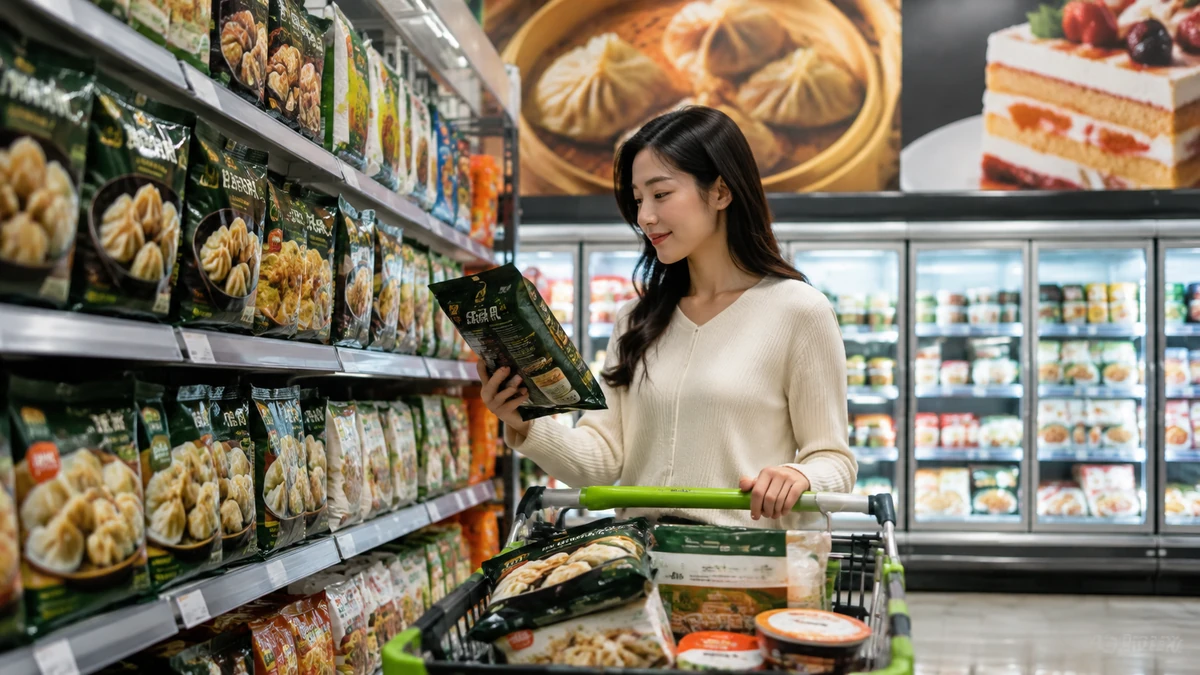
That is the real significance of CJ’s latest push in the U.S. market. The company says its food business in the Americas rose 10% in the second quarter from a year earlier, driven by sales of global flagship products including Bibigo dumplings and cooked rice through major online and offline channels. Behind that topline number is a broader strategy: make Korean food less of an event and more of a default option for busy American households, office workers, students and families making weekly grocery decisions.
CJ is doing that through two of its best-known consumer brands. Bibigo, the packaged food label most familiar to U.S. shoppers, is expanding through local manufacturing, broader distribution and products that fit how Americans actually shop and eat. Tous les Jours, CJ Foodville’s bakery chain, is tackling the market from a different direction, using brick-and-mortar stores to introduce a Korean-style bakery experience in a format that feels approachable to mainstream U.S. customers.
This is a bigger story than one company’s quarterly momentum. It is an example of how K-food — a term used to describe Korean food products and food culture in global markets — is maturing in the United States. Instead of relying only on Korean diaspora communities, specialty H Mart-style shopping trips or the halo effect of Korean entertainment, companies are trying to build durable everyday demand. If that effort succeeds, Korean food in America may start to look less like sushi did in its early years — a cuisine many Americans once saw as unfamiliar — and more like Mexican food, Greek yogurt or sriracha: once niche, now integrated into the national pantry.
CJ’s U.S. strategy also reflects a larger shift in global consumer business. Exporting a popular product is one thing. Building factories, supply chains, retail access and brand loyalty inside the United States is something else entirely. It suggests confidence not just in a momentary Korean Wave boost, but in the staying power of Korean tastes in American life.
Why Bibigo matters beyond the freezer aisle
At the center of CJ’s U.S. growth story is Bibigo, a brand that has become one of the clearest ambassadors for Korean food in mainstream American retail. The company says it now operates 20 factories in the United States producing Bibigo items including dumplings, cooked rice, sauces, noodles and seaweed snacks. That local production footprint matters for practical reasons — shorter supply chains, lower shipping burdens and more consistent inventory — but it also says something important about how Korean food is being positioned.
Products made closer to the consumer tend to be products meant for repeat purchase, not occasional discovery. In other words, CJ is not acting like a company that expects Americans to buy Korean food only when they are feeling adventurous. It is building like a company that expects households to keep Korean-style dumplings in the freezer alongside pizza rolls, ravioli or chicken nuggets; to stock microwaveable rice as a weekday convenience; and to reach for Korean sauces as readily as teriyaki, salsa or barbecue sauce.
That distinction may sound subtle, but it is foundational in the food industry. A cuisine truly breaks into the American mainstream not when people recognize it, but when they stop thinking of it as foreign every time they buy it. Greek yogurt became normal. Hummus became normal. Sriracha became normal. The same transition is what Korean food companies are now chasing — not awareness alone, but habit.
Bibigo dumplings are a useful case study because they sit at the intersection of familiarity and difference. Americans already understand dumplings in many forms, whether through Chinese potstickers, Italian ravioli, Eastern European pierogi or soup dumplings that have become staples in urban food culture. Korean mandu, the dumpling style Bibigo popularized, can therefore enter the market through a recognizable format while still carrying a distinct flavor profile and Korean identity. That makes it easier for consumers to try once and easier for them to buy again.
The same logic applies to cooked rice, sauces and snack products. These are categories Americans already purchase regularly. Korean companies do not need to teach consumers from scratch why a dumpling or sauce belongs in the home. They need to convince them that the Korean version deserves a permanent place in rotation. CJ’s growth suggests that effort is working, at least enough to validate more investment.
From export model to American operating model
For decades, many Asian food brands entered the U.S. market through a straightforward playbook: manufacture at home, export abroad and sell first to immigrant communities already familiar with the products. That model still matters, and diaspora consumers remain central to the success of many international food brands. But CJ’s current posture in the United States shows how far Korean food companies have moved beyond that stage.
Local production is the clearest sign. According to the company, its 20 American plants are producing key products domestically. For a food company, that changes nearly everything: pricing flexibility, response time, packaging adjustments, product development, retailer relationships and resilience against shipping disruptions. In an era when supply chain fragility has repeatedly rattled global business — from pandemic-era bottlenecks to freight volatility and geopolitical risk — producing inside the United States is not just a growth move. It is a hedge.
It also allows for more precise localization. That word can sometimes sound like corporate jargon, but in the food business it is a make-or-break skill. American consumers vary widely by region, age, income, household size and cultural background. A product that performs in Los Angeles, where Korean food has deep roots and wide visibility, may need a different marketing message in suburban Texas or the Midwest. A flavor that works in a Korean grocery chain may need different packaging cues, serving suggestions or heat expectations at a national supermarket chain.
The Korean article describes CJ’s strategy as moving beyond the idea of K-food as a “special experience” and toward everyday food culture. That shift depends on understanding the rhythms of American consumption: convenience, value, familiarity and the increasing demand for food that feels both globally interesting and easy to prepare. Frozen foods, ready-to-heat rice and adaptable sauces are perfectly suited to that environment, especially for consumers who want restaurant-adjacent flavor without restaurant prices.
This is where CJ’s strategy becomes more than a story about Korean popularity. It becomes a story about how global food companies compete in the United States at all. The companies that last are usually the ones that do not insist consumers adapt to them completely. Instead, they preserve enough of their identity to stay distinctive while removing just enough friction to encourage repetition. CJ appears to be trying to strike exactly that balance: Korean enough to stand out, familiar enough to become a routine purchase.
Tous les Jours and the business of selling a food experience
If Bibigo is about bringing Korean flavors into the American home, Tous les Jours is about shaping how Americans encounter Korean food culture in physical space. That matters because the Korean bakery phenomenon is not always intuitive to U.S. audiences who have never visited Seoul, where bakeries often function as all-day social hubs — part coffee shop, part dessert stop, part grab-and-go breakfast counter, part gift destination.
Tous les Jours gives CJ a way to translate that experience for Americans. Unlike packaged food, a bakery does not just sell taste. It sells atmosphere, routine and identity. Customers are not only buying bread or pastries; they are learning what a Korean-style bakery feels like. In practical terms, that can include a broader range of soft breads, cream-filled pastries, cakes designed for celebrations, visually polished displays and a café culture that sits somewhere between a neighborhood bakery and an Asian dessert shop.
That experiential layer is important in the American market because food adoption often happens through multiple channels at once. People may first notice Korean flavors on social media, encounter them in a restaurant, buy them later in a grocery store and then begin to associate them with a broader lifestyle or cultural brand. Tous les Jours allows CJ to participate in that cycle in a way that frozen food alone cannot.
The strategy also mirrors how many successful food brands have expanded in the United States. Starbucks did not just sell coffee beans. It normalized a coffeehouse habit. Chipotle did not invent Mexican food for Americans, but it reshaped how fast-casual diners interacted with it. Trader Joe’s built an empire partly by curating a sense of discovery around globally inspired items made easy for U.S. shoppers. In that sense, Tous les Jours is part of a familiar American commercial playbook, even if its culinary roots are Korean.
For Korean food companies, this matters because the battle for the U.S. market is no longer only about distribution. It is about brand meaning. A consumer who knows Bibigo as the frozen dumpling brand but never forms a wider emotional connection to Korean food may still buy selectively. A consumer who also understands Korean bakery culture, watches Korean dramas, recognizes Korean flavors and associates the country with quality, style and modernity is much more likely to become a repeat, cross-category customer. The bakery, then, is not just an add-on. It is part of the ecosystem.
What this means for the United States
For American consumers and companies, CJ’s expansion is a sign that Korean food is entering a more competitive and commercially serious stage in the U.S. market. The significance goes beyond whether one brand sells more dumplings this quarter. It points to a deeper realignment in American grocery aisles, restaurant districts and consumer expectations.
First, it means Korean food is increasingly moving out of the “international” niche and into the broader packaged-food economy. That matters for U.S. retailers, which are always looking for products that can deliver growth in crowded categories. If Bibigo dumplings, rice and sauces continue to gain traction, major chains have reason to allocate more shelf space not only to CJ but to Korean products more broadly. The same thing has happened before with other global cuisines once they proved they could drive repeat purchases outside ethnic enclaves.
Second, it raises the competitive bar for American food companies. U.S. brands have spent years globalizing the American pantry by borrowing from international flavors — think gochujang sauces, Korean barbecue marinades or kimchi-inspired menu items. As Korean companies deepen their U.S. footprint, American competitors may face pressure not just from Korean-inspired domestic products, but from Korean firms that own the cultural credibility and increasingly have the manufacturing scale to match. That can reshape partnerships, private-label strategies and menu development across the industry.
Third, it reinforces how closely culture and commerce now interact in the U.S.-Korea relationship. South Korea’s influence in America is no longer confined to entertainment headlines about K-pop stars, Oscar-winning directors or streaming hits. Food is becoming one of the most durable consumer touchpoints between the two countries because it creates repeat, everyday contact. Watching a Korean drama is one kind of engagement. Putting Korean dumplings in your freezer every week is another. The latter is less glamorous, but in business terms it may be more enduring.
Fourth, this trend matters for American audiences because it reflects the broader diversification of what counts as mainstream American food. The United States has always remade itself through immigration, adaptation and commercial reinvention. Pizza, tacos, bagels and ramen all traveled complicated paths before becoming familiar. Korean food is now traveling its own version of that route. For many Americans, especially younger consumers used to discovering cuisines through TikTok, Costco runs and streaming culture, Korean flavors do not feel marginal at all. They feel current.
That does not mean every Korean brand will succeed, or that cultural popularity automatically converts into grocery dominance. Food remains brutally competitive, margins are tight and consumer tastes can shift quickly. But from a U.S. perspective, CJ’s investment suggests Korean food is no longer being treated as a temporary craze. It is being built into the architecture of American consumer life.
Why the Korean Wave is turning into a food business model
The rise of K-food in America cannot be separated from the broader Korean Wave, often referred to by the Korean term “Hallyu,” which describes the global spread of South Korean popular culture. For American readers unfamiliar with the term, Hallyu covers everything from BTS and Blackpink to films such as “Parasite,” TV dramas such as “Squid Game,” skincare trends and now, increasingly, food. But food occupies a special place in that ecosystem because it translates cultural interest into repeat retail behavior.
Music and television can create curiosity. Food can monetize that curiosity in the most practical way possible. A fan who watches a Korean drama and notices convenience-store meals, spicy noodles or elaborate bakery scenes may be more inclined to try Korean products if they are available at Target, Walmart, Costco or a neighborhood supermarket. Once those products are easy to find and easy to prepare, curiosity becomes trial, and trial can become habit.
The Korean article points to this dynamic by framing K-food as a new global growth engine for South Korea’s food industry. That is an important distinction. Korean cultural exports are no longer just soft power in the abstract. They are feeding industrial strategies. Companies like CJ are not merely benefiting passively from Korean popularity; they are trying to convert it into long-term infrastructure — factories, logistics, store networks and category leadership.
That is a sophisticated stage of globalization. Plenty of countries export culture. Fewer are able to consistently turn cultural appeal into broad consumer-market penetration. South Korea has become unusually effective at linking entertainment, lifestyle and packaged goods in ways that reinforce one another. In the U.S. market, food may be one of the clearest examples of that flywheel in action.
Still, cultural momentum alone is not enough. Americans may love Korean dramas and still pass over a product if the price feels too high, the packaging is confusing or the flavor seems intimidating. That is why CJ’s stated focus on localization is so central. It is not abandoning Korean identity; it is reducing the barriers that keep interest from becoming routine consumption. The companies that win in the American food business are usually the ones that understand this distinction best.
What to watch next
The key question now is not whether Korean food has arrived in the United States. It clearly has. The more important question is what form its mainstreaming will take over the next several years. Will it remain concentrated in a few high-performing categories like dumplings, instant noodles and sauces? Or will companies such as CJ successfully broaden American demand across bakery, snacks, ready meals and pantry staples?
CJ’s North American food sales reached 4.9136 trillion won last year, up about 48% from 3.3286 trillion won in 2020, according to the figures cited in the Korean report. That growth points to real momentum, but sustaining it will require more than riding a cultural trend. The company will need to keep expanding distribution, fine-tuning products for U.S. consumers and defending its space as competitors — both Korean and American — move into similar territory.
Another factor to watch is whether Korean food in America becomes broader or more diluted. Mainstream success often brings trade-offs. A cuisine can gain enormous reach while losing some of its specificity in the process, as flavors are toned down, ingredients swapped or formats simplified for larger audiences. That is not unique to Korean food; it is the history of nearly every cuisine that has scaled in the United States. The challenge for brands such as Bibigo and Tous les Jours will be preserving enough authenticity to remain credible while adapting enough to keep growing.
There is also the question of who controls the story. As Korean flavors become more commercially valuable, American companies will continue launching Korean-inspired products, often without deep ties to Korean culinary traditions. Some of those products will broaden exposure. Others may flatten the culture into a marketing label. CJ’s expansion suggests Korean firms want to remain central players, not just sources of inspiration for domestic copycats.
For U.S.-Korea economic ties, that matters. When South Korean companies invest in American production, retail networks and consumer markets, the relationship moves beyond trade statistics and defense headlines into everyday commercial integration. That can strengthen ties in quieter but more durable ways. Americans may not think of a freezer-bag dumpling purchase as part of international relations, but consumer habits often reveal geopolitical closeness more clearly than speeches do.
In the end, CJ’s U.S. push is not just about selling more food. It is about claiming a place in the American routine. If Bibigo becomes a standard freezer staple and Tous les Jours becomes a familiar bakery stop, that would mark a meaningful shift in how Korean culture lives in the United States — not as a passing fascination, but as part of the weekly grocery list. In a consumer market as crowded and competitive as America’s, that may be the strongest evidence yet that K-food has entered a new era.
Comments
Post a Comment