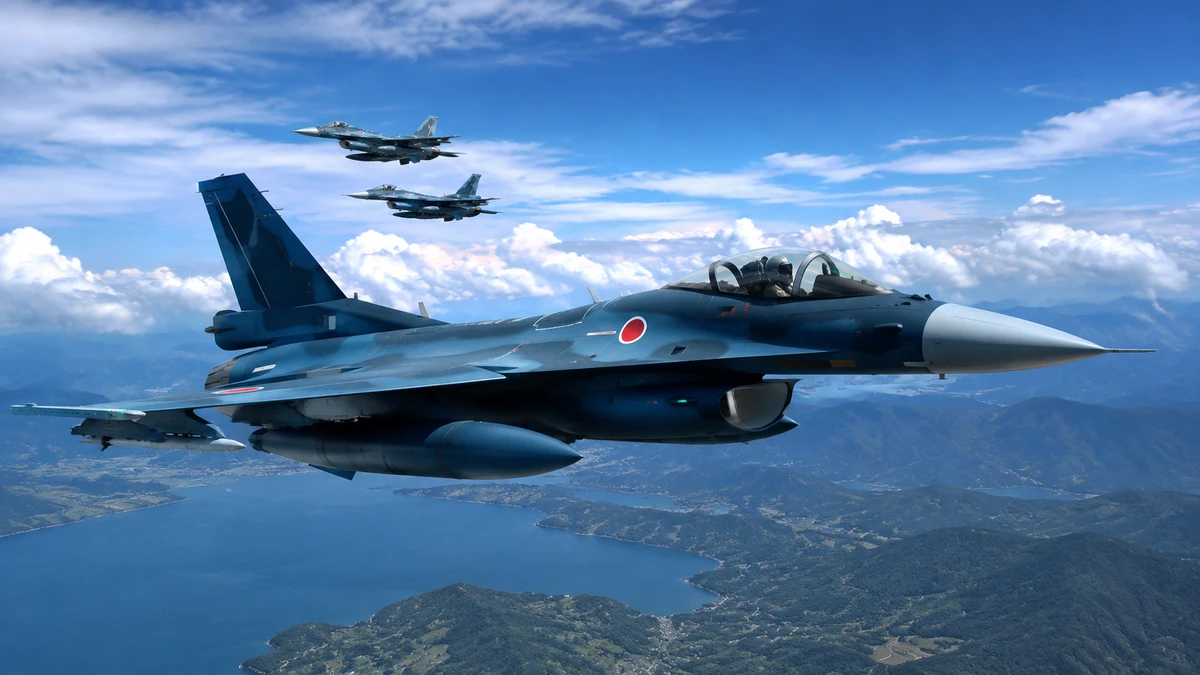
Japan Weighs Sending F-2 Fighters to India in New Defense Cooperation Push
Japan is considering sending its F-2 fighter jets to India for the first time as part of a proposed joint military exercise, a move that could mark a new stage in defense cooperation between two major Asian powers. The plan, reported by Japan’s Asahi Shimbun, is being discussed as Japanese Defense Minister Shinjiro Koizumi prepares for a potential trip to India and Australia later this month.
The possible deployment reflects a broader shift in Asia’s security landscape, where countries are increasingly expanding military exchanges through joint training, technology cooperation and strategic dialogue. While the proposal remains under discussion and no final decision has been announced, the potential F-2 deployment highlights Japan’s growing interest in using defense cooperation as a tool of international engagement.
For many American readers, the move may seem unusual because Japan’s military posture has historically been shaped by the restrictions that followed World War II. Japan’s Self-Defense Forces, created in 1954, operate under a constitutional framework that emphasizes defense rather than traditional military power projection. In recent years, however, Japan has gradually expanded security partnerships with countries that share concerns about regional stability.
A New Chapter in Japan-India Military Relations
The possible F-2 fighter deployment builds on years of growing military ties between Japan and India. The two countries have already conducted fighter aircraft exercises, including a 2023 joint training event held in Japan involving their air forces.
Joint military exercises are common among major powers and serve several purposes beyond combat preparation. They allow pilots and military personnel to practice communication procedures, understand each other’s operational methods and build trust between forces that may need to cooperate during future crises.
India has maintained defense partnerships with a wide range of countries, including the United States, France, Russia and Japan. As one of the world’s largest military powers and a country with a strategically important location in the Indian Ocean, India has sought to strengthen relationships that improve interoperability and expand its defense capabilities.
Japan, meanwhile, has been increasing security cooperation with countries across the Indo-Pacific region. The term “Indo-Pacific” has become a major focus in international diplomacy, referring to the connected strategic importance of the Indian and Pacific oceans. Both Japan and India view stability in this region as a key priority.
The F-2 Fighter: A Symbol of Japan’s Aviation Capabilities
The F-2 is one of Japan’s most advanced domestically operated fighter aircraft. Developed through cooperation between Japan and the United States, the aircraft is based on the American F-16 design but includes Japanese-developed technologies, particularly in areas such as radar systems and materials.
The aircraft has long represented Japan’s effort to maintain advanced aerospace capabilities while operating within its postwar defense framework. The potential overseas deployment would therefore carry symbolic importance, demonstrating how Japan’s military assets can be used in international partnerships.
However, sending fighter aircraft abroad involves complex planning. Unlike sending military personnel for a short exchange, deploying fighter jets requires coordination on logistics, maintenance, airspace arrangements, security procedures and diplomatic agreements. Fuel supplies, spare parts and technical support must all be carefully planned before such an operation can take place.
Because of these challenges, the current discussions should be viewed as an exploration of possibilities rather than a confirmed deployment. Officials from both countries would need to resolve practical and political issues before any aircraft could arrive in India.
Asia’s Defense Partnerships Are Becoming More Diverse
The Japan-India discussions come at a time when Asian countries are increasingly relying on military exercises and defense partnerships to strengthen regional security networks. These efforts do not necessarily mean countries are preparing for conflict; many governments describe them as ways to improve communication, disaster response and crisis management.
For Japan, deeper cooperation with India is part of a broader strategy to strengthen relationships beyond its traditional alliance with the United States. Japan has expanded defense exchanges with countries including Australia, Southeast Asian nations and European partners as regional security concerns have grown.
India has also become a central player in these regional networks. Its location between the Middle East and East Asia gives it strategic importance for maritime security, trade routes and regional diplomacy.
The potential F-2 exercise would represent another example of countries moving toward more frequent and sophisticated military cooperation. Modern defense partnerships increasingly involve not only weapons systems but also shared training standards, information exchange and long-term strategic relationships.
Implications for the Indo-Pacific Security Environment
The proposed fighter deployment is being closely watched because it reflects changing security dynamics across the Indo-Pacific. Countries in the region have been increasing cooperation amid concerns about military competition, territorial disputes and the balance of power.
Although reports have linked the move to broader regional security concerns, including competition involving China, Japanese and Indian officials have emphasized defense cooperation and military exchanges rather than describing the exercise as directed against a specific country.
For neighboring countries, including South Korea, developments such as Japan-India defense cooperation are part of a wider transformation in regional security relationships. However, there is currently no indication that South Korean government agencies are involved in the proposed F-2 deployment or related discussions.
The significance of the plan lies less in one individual training exercise and more in what it represents: a growing willingness among Asian countries to share military experience and develop closer operational ties.
A Test of Japan’s Expanding Defense Diplomacy
If the F-2 deployment moves forward, it would become an important example of Japan’s evolving approach to defense diplomacy. The country has been carefully balancing its pacifist traditions with a desire to play a larger role in regional security cooperation.
For India, the exercise could provide another opportunity to work with an advanced Asian partner and strengthen its network of international defense relationships. For Japan, it would demonstrate that its air capabilities can support partnerships beyond its own territory.
The next steps will depend on diplomatic discussions between Japanese and Indian officials, including potential talks between Defense Minister Shinjiro Koizumi and Indian Defense Minister Rajnath Singh. Until agreements are finalized, the F-2 deployment remains a proposal under consideration.
Still, the discussion itself reflects a larger trend: Asian nations are building new forms of cooperation through military exchanges, technology partnerships and strategic dialogue. The possible arrival of Japanese F-2 fighters in India would be a visible sign of that changing landscape.
Comments
Post a Comment