K-Beauty Moves From Tourist Souvenir to Everyday U.S. Shopping as Olive Young Enters 580 Sephora Stores
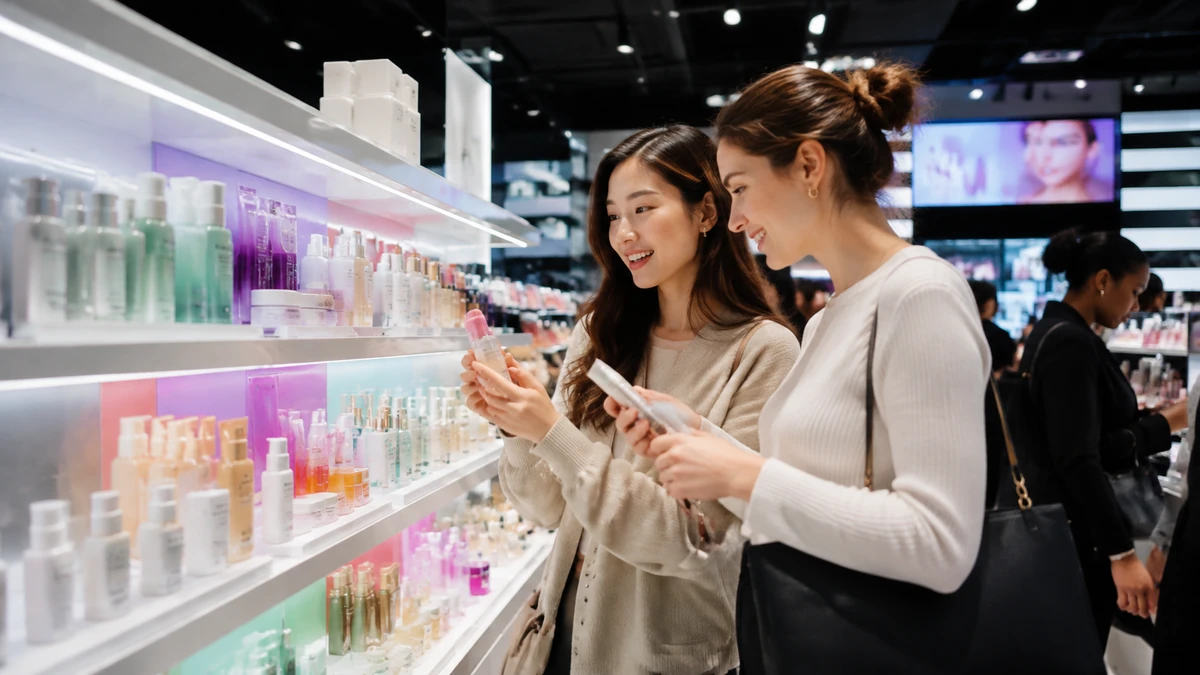
Image to help understand the article
K-beauty’s American expansion reaches a new stage
For years, American consumers who wanted to try the latest Korean skin care products often had to behave like hobbyists: order from overseas websites, wait for shipping, decode unfamiliar brand names and hope that what looked promising on social media would work in real life. That is why CJ Olive Young’s latest move in the United States matters. According to South Korean broadcaster YTN, Olive Young, South Korea’s largest beauty and health retailer, has opened dedicated K-beauty shelves in 580 Sephora stores across the United States, along with Sephora’s online marketplace.
On its face, that sounds like a retail rollout. In practice, it signals something bigger about the changing place of Korean beauty in the American market. K-beauty is no longer being positioned only as a novelty imported by die-hard fans of Korean pop culture, nor merely as a souvenir category for tourists returning from Seoul. It is being placed inside one of the most recognizable premium beauty shopping environments in the United States, where mainstream American consumers already browse for skin care, makeup and fragrance as part of their regular routines.
The distinction matters because distribution is often what separates a cultural trend from a durable business category. Americans may discover a product through TikTok, YouTube or a celebrity endorsement, but many still prefer to touch, test and compare before they buy, especially in beauty. A dedicated presence in hundreds of Sephora locations gives Korean products something that online buzz alone cannot provide: legitimacy through proximity. If a shopper can sample a serum on a lunch break, compare it with a French or American brand on the next shelf and reorder it online later, K-beauty becomes less of a niche import and more of an ordinary purchase decision.
In that sense, Olive Young’s move is less about one chain adding more inventory and more about a Korean retail model adapting itself to American habits. In South Korea, Olive Young is known not just as a store but as a discovery platform, a place where shoppers can compare multiple brands in one visit. Foreign tourists often treat it as a must-stop destination in Seoul, a kind of beauty playground where trends become visible in real time. The company is now trying to reproduce that discovery function in the United States, not by rapidly building its own large physical footprint, but by embedding itself inside an established American retail network.
That is a practical strategy, but it is also a revealing one. It suggests that the next phase of K-beauty in the United States may be defined less by splashy branding and more by smart access: who gets seen, where consumers encounter products and how easily curiosity turns into a repeat purchase.
Why Olive Young chose Sephora instead of building a large store network
Olive Young’s choice to work through Sephora rather than rely on a major expansion of its own stores says a great deal about how foreign brands now enter the American market. The United States is vast, fragmented and expensive. Building brand awareness here is hard enough; building a nationwide brick-and-mortar retail footprint from scratch is much harder. By using Sephora’s store network and e-commerce platform, Olive Young gains immediate access to shoppers across the country without the years of investment that would be required to build standalone locations at scale.
Kim Sung-yong, a team leader in Olive Young’s global business-to-business division, told YTN that the company prepared the partnership as a way to expand customer touchpoints in the U.S. market, given its limited number of self-operated stores there. That comment gets to the heart of the strategy. The goal is not simply shelf space. It is discoverability.
That may sound like a marketing buzzword, but in beauty retail it has real economic meaning. The category thrives on trial, comparison and impulse. A consumer may come in looking for mascara and leave with a toner after seeing a display, trying a texture and reading a brief product claim. For a Korean brand that lacks decades of name recognition in the United States, getting into that moment of spontaneous exploration can be more valuable than running expensive campaigns aimed at persuading consumers to search for it by name.
There is also a cultural translation advantage here. For many American shoppers, the phrase “K-beauty” is familiar, but the details are not. Some know Korean beauty through sheet masks, “glass skin” tutorials or the broader global rise of Korean pop culture, including K-pop and Korean dramas. But many do not know how brands differ from one another, which ingredients matter or how a product fits into an everyday routine. A dedicated in-store section organizes Korean beauty not as scattered individual items but as a coherent category that shoppers can approach with less confusion.
That matters because Olive Young is not a single beauty brand. It is, in effect, a curator and distributor. Its business strength in South Korea has been gathering many products in one place and helping consumers compare them. If that model works in the United States, it could change how K-beauty reaches mainstream shoppers. Instead of each Korean company fighting alone for recognition in a crowded American market, an intermediary like Olive Young can present Korean products as a broader ecosystem, giving smaller brands a better chance of being seen.
The physical-plus-digital pairing is especially important. The store shelf lets consumers test texture, shade or finish. The online marketplace extends access beyond the neighborhoods where Sephora stores are located and allows repeat purchases after initial discovery. In other words, the partnership is designed not just to generate curiosity but to sustain behavior. That is often the difference between a trend and a category.
What this means for the United States
For American consumers, retailers and beauty companies, Olive Young’s Sephora launch is a sign that Korean beauty has moved into a more mature phase of competition. This is no longer just about imported products riding the wave of Korean cultural popularity. It is about Korean companies competing within the infrastructure of the American beauty business itself.
That has implications for several parts of the U.S. market. First, it raises pressure on American and European brands sold in the same aisles. K-beauty’s appeal, as cited by beauty reviewers mentioned in the Korean report, often comes down to a combination that resonates strongly in the United States right now: innovation, visible results and prices that feel more attainable than prestige luxury. In a consumer environment where shoppers remain price-conscious, products that promise efficacy without luxury-level sticker shock can be especially disruptive.
Second, it gives U.S. retailers another reason to lean into category curation. American shoppers increasingly buy beauty through a mix of channels: big-box stores, specialty beauty chains, drugstores, direct-to-consumer websites and social commerce. In that crowded environment, retailers need stories they can tell on the sales floor. A dedicated K-beauty section gives Sephora a merchandising narrative, not just a pile of products. It also gives shoppers a framework similar to how American bookstores once grouped “world literature” or grocery stores created natural foods sections before those products became fully mainstream.
Third, the move reflects the deepening commercial side of U.S.-South Korea ties. Americans often experience the Korean Wave, or hallyu, through entertainment first: BTS, Blackpink, Oscar-winning films, hit streaming shows and Korean restaurants in cities and suburbs across the country. But cultural familiarity often opens the door to consumer spending far beyond entertainment. Skin care is one of the clearest examples. A fan who first encountered Korean culture through music or television may be more willing to try Korean cosmetics, but mass retail availability is what turns that interest into regular commerce.
There is also a broader lesson for American companies. Korean firms have become adept at using trend speed as a competitive advantage, rapidly identifying what consumers want and packaging it in ways that feel contemporary rather than clinical. U.S. beauty brands, especially larger legacy players, may have to respond not only on product quality but on pace: how quickly they reformulate, how nimbly they test new concepts and how effectively they talk to younger, online-native consumers who trust peer reviews as much as traditional advertising.
Finally, the move matters for American audiences because it expands consumer choice in a multicultural market. The United States is not a one-skin-type market, a one-price-point market or a one-routine market. The more established K-beauty becomes inside major retail channels, the more likely it is that American shoppers will encounter products designed around different textures, layering habits and ingredient philosophies. Some of those ideas may remain niche. Others may end up reshaping the broader U.S. beauty conversation, much as Korean sunscreens, essences and cushion compacts helped influence American skin care habits in earlier years.
A more inclusive K-beauty is emerging for American shoppers
One of the more revealing parts of the Korean report is that it does not present the U.S. market as a single undifferentiated audience. Alongside Olive Young’s wide-net retail strategy, it points to a more targeted approach from smaller Korean companies. The brand Wallglow, for example, is aiming at Black and Hispanic consumers, with a plan to develop K-beauty strengths tailored to shoppers with darker skin tones and higher melanin levels.
That is important because one of the long-running criticisms of global beauty marketing, including in Asia, has been the tendency to flatten skin diversity or assume a narrow default consumer. American beauty culture, by contrast, has spent years grappling publicly with representation, shade range, inclusive imagery and product performance across a wide spectrum of skin tones. If K-beauty wants to keep growing in the United States, it cannot simply export what succeeded in Seoul and assume the same formulas, shades or messaging will connect everywhere.
The more promising approach is the one suggested in the report: begin with local consumer needs rather than treat the American market as a passive recipient of Korean trends. That does not mean abandoning what makes K-beauty distinct. It means applying Korean product development strengths to a more diverse customer base. In practice, that could mean considering how ingredients perform on different skin types, how certain finishes appear on deeper skin tones or how marketing language addresses consumers who do not see themselves reflected in older K-beauty stereotypes.
This is where the U.S. market can influence Korean companies as much as Korean companies influence the U.S. market. America’s consumer base is large, diverse and vocal. Brands that succeed here often do so because they learn to speak to multiple communities at once without treating any of them as an afterthought. If Korean beauty companies absorb that lesson, the result may be a more global form of K-beauty, one less tied to a narrow visual ideal and more adaptable to different routines, identities and budgets.
That shift would be good business, but it would also mark a cultural evolution. K-beauty first entered many Western conversations through highly stylized images and aspirational routines. Its next stage may be more practical, more inclusive and more embedded in everyday life. In the United States, where beauty shoppers are used to demanding products made with them in mind, that transition may prove essential.
Why K-beauty keeps growing even when consumers are cautious
The Korean report notes a tension that will be familiar to many Americans: shoppers are under pressure. Inflation has changed spending habits across the United States, and consumers have become more selective about what feels worth the money. The report cites broader strain on U.S. retail spending and notes that even large American retailers have felt the effects of weaker consumer sentiment. Yet K-beauty exports to the United States still rose 11.8% last year and climbed 27.3% in the first half of this year.
Those numbers suggest that K-beauty’s American growth is not just a byproduct of easy spending during a boom period. It appears to be holding up in a more demanding environment, which is often a stronger test of category resilience. When consumers grow cautious, they do not necessarily stop spending altogether. Instead, they become choosier. They look for products that seem to offer visible benefit, high perceived quality and a price that does not feel excessive.
That value equation helps explain why K-beauty can remain attractive even when household budgets tighten. In the Korean report, beauty influencers pointed to sensory feel, glow, innovation, effectiveness and reasonable pricing. Those are not abstract brand values. They are purchase drivers. A serum that feels elegant, delivers a noticeable result and costs less than many prestige competitors can do well even in a tougher market, particularly if reviewers help validate the experience.
American beauty consumption has long had a split personality: part aspiration, part pragmatism. Consumers will splurge on something they believe works, but they also love a smart find, the product that feels premium without premium pain. Korean beauty often fits that sweet spot. It benefits from an image of technical sophistication while remaining, in many cases, accessible enough for experimentation. That makes trial easier, and trial is often the first step toward loyalty.
There is a second reason the category may be resilient: routines. Skin care is not identical to luxury fashion or a one-time electronics purchase. Once consumers incorporate a cleanser, toner, moisturizer or sunscreen into daily use, replenishment becomes habitual. The challenge is winning the first purchase. Dedicated Sephora shelves are built for exactly that challenge. They take a product category that may have been discovered through online reviews and place it within a trusted, habitual shopping ecosystem.
That combination of price, performance and accessibility helps explain why K-beauty has outgrown its early image as a curiosity driven mainly by packaging and internet hype. For a segment of American consumers, it is now part of the practical math of beauty shopping.
From fandom to infrastructure: What to watch next
The deeper story here is that K-beauty in America is moving from fandom to infrastructure. In earlier stages of the Korean Wave, U.S. consumer interest often followed a familiar arc: cultural fascination first, limited product access second and then niche communities that traded recommendations online. What Olive Young’s Sephora partnership represents is a later stage, when access becomes organized enough to support consistent sales and long-term category growth.
That does not mean every Korean product will succeed, or that mainstream placement guarantees loyalty. If anything, broader distribution may intensify competition. Once Korean brands are placed next to well-established American, European and Japanese products, they have to win on performance, relevance and clarity, not just novelty. The shelf can open the door, but it cannot do all the work.
Still, several trends are worth watching. One is whether more Korean retailers and brand aggregators follow Olive Young’s model, acting not merely as exporters but as curators of a national beauty category abroad. Another is whether major U.S. retailers beyond Sephora deepen similar partnerships or create more specialized Asian beauty zones of their own. If they do, K-beauty may become more normalized in suburban America, not just coastal cities or online communities.
A third question is how far localization goes. The Wallglow example suggests that Korean companies understand that American diversity is not optional background information; it is central to the market. If more brands invest seriously in products for different skin tones, climates, routines and price sensitivities, they may find a more durable path to U.S. growth than companies that rely on aesthetic buzz alone.
And then there is the broader U.S.-Korea relationship, which increasingly includes not only military alliance and semiconductor cooperation but also a dense network of consumer and cultural exchange. Beauty is not geopolitics, but it is part of how countries become legible to one another in everyday life. When Korean skin care moves into ordinary American shopping trips, it reinforces the idea that South Korea is not just a distant exporter of hit songs and electronics. It is a country whose consumer brands are learning how to compete, adapt and become familiar inside the American mainstream.
That may be the most important shift of all. The story is not simply that Korean products are on more shelves. It is that K-beauty is becoming easier to discover, easier to compare and easier to buy in the places where Americans already shop. In retail, that kind of convenience can be more powerful than hype. And in the long run, it is often what turns a wave into a fixture.
Comments
Post a Comment