Image to help understand the article
Monsta X Takes a Major K-Pop Moment to Istanbul’s Global Stage
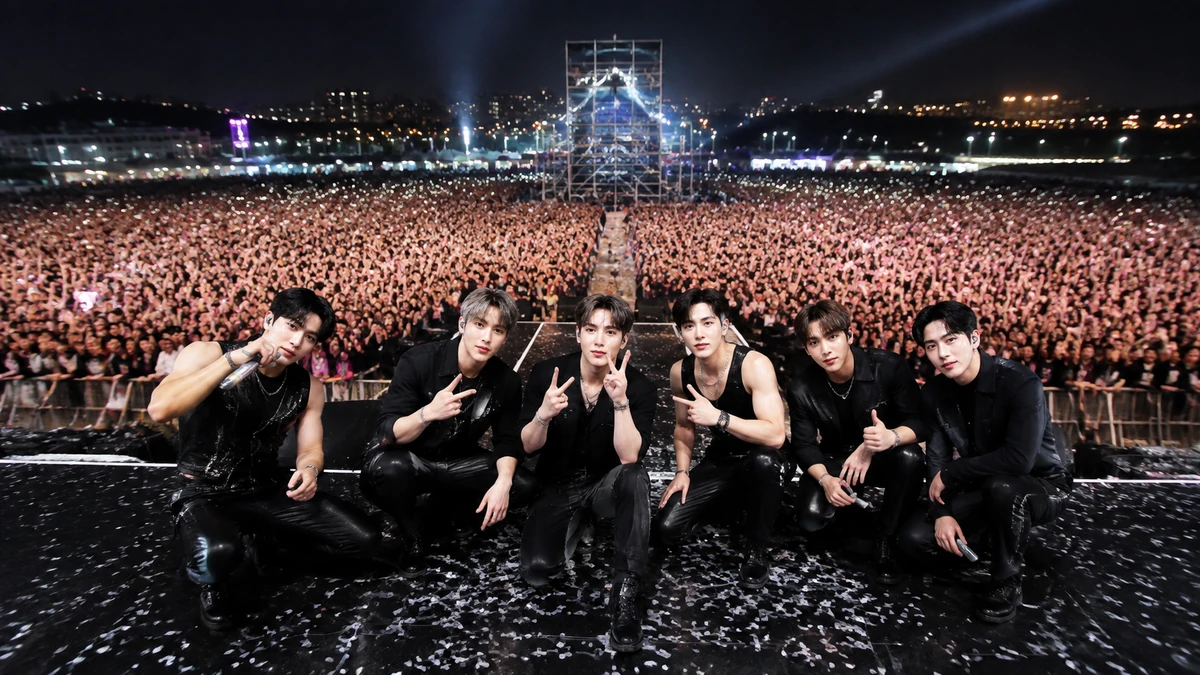
South Korean boy group Monsta X performed before an estimated 60,000 people at the Istanbul Festival in Turkey on Aug. 15, delivering another example of how K-pop has moved beyond its traditional Asian markets and become part of the international live music landscape.
The group performed at Festival Park Yenikapı in Istanbul, a city known for connecting Europe and Asia through centuries of trade, migration and cultural exchange. For K-pop, a genre that has grown from a regional entertainment industry into a worldwide cultural force, Istanbul provided a symbolic location: a crossroads where different audiences and musical traditions meet.
According to Starship Entertainment, Monsta X opened the performance with one of its signature songs, “DRAMARAMA.” The crowd responded by singing along in Korean, demonstrating the unusual relationship that has developed between K-pop artists and international fans. Many listeners outside South Korea do not speak Korean, but they often learn lyrics, choreography and fan traditions as part of their connection to the music.
The performance included other popular tracks such as “Rush Hour,” “Love Killa” and “The Dreaming.” Known for powerful choreography, strong stage presence and a performance style built for large venues, Monsta X used the festival setting to showcase the qualities that have helped K-pop groups attract audiences worldwide.
Why K-Pop Fans Around the World Sing in Korean
One of the most notable features of K-pop’s international growth is that language has not become the barrier many traditional music industry observers once expected. American pop music has historically dominated global markets partly because English became the international language of popular culture. K-pop has challenged that pattern by building a global audience around a different model: music, visuals, performance and fan participation working together.
For international audiences, attending a K-pop concert is often more than simply listening to songs. Fans participate in coordinated chants, learn dance moves, collect merchandise and follow artists through online communities. These practices create what many fans describe as a shared cultural experience rather than a standard concert.
Monsta X’s fan community, known as “Monbebe,” played a central role in the Istanbul performance. The name refers to the group’s official fandom and represents a broader trend in K-pop: organized fan communities that maintain strong relationships with artists across borders. Similar fandom structures have helped groups build dedicated audiences in North America, Europe, Latin America and the Middle East.
The Istanbul concert also highlights how K-pop fandom differs from older models of global music expansion. Instead of relying only on radio airplay or local television exposure, Korean entertainment companies have developed digital-first strategies using social media, streaming platforms and direct communication with fans.
Festival Performances Show K-Pop’s Expansion Beyond Dedicated Concert Tours
While K-pop groups have long held successful international tours, festival appearances carry a different significance. A solo concert usually attracts existing fans, while a major festival places an artist in front of a wider audience that may include people discovering the performer for the first time.
This distinction matters as K-pop continues competing in a global music market that includes American pop stars, European electronic music acts and regional artists from around the world. Festival stages provide opportunities for artists to demonstrate their appeal beyond their established fan bases.
Monsta X’s Istanbul appearance reflects a broader shift in how Korean artists participate in global entertainment. Instead of viewing overseas markets only as destinations for album sales or tours, companies increasingly see international events as long-term relationship-building opportunities.
The group’s success overseas has been built over years of activity since its debut, with a reputation for energetic performances and a dedicated international following. The Istanbul appearance was not simply a one-night event but part of a larger pattern in which Korean artists continue to establish themselves in different cultural environments.
Istanbul’s role as a meeting point between continents also adds cultural significance to the performance. A Korean group performing for tens of thousands of fans in Turkey represents a connection between East Asian popular culture and a region that has often been viewed separately from the main K-pop markets of East Asia, North America and Western Europe.
What Monsta X’s Istanbul Performance Means for the United States
For the U.S. music industry, Monsta X’s festival appearance is another reminder that the global center of popular music is becoming increasingly diverse. American audiences first encountered the modern K-pop wave through breakthrough moments such as BTS and BLACKPINK reaching major U.S. charts, performing at major venues and building large fan communities across the country. The continued expansion of groups like Monsta X shows that K-pop’s international presence is not limited to a small number of superstar acts.
The American market remains one of the most important targets for Korean entertainment companies because of its size, influence and role in global music trends. U.S. streaming platforms, music media and concert markets often shape international perceptions of successful artists. At the same time, Korean companies have demonstrated that global success can be built through strategies different from traditional American music industry approaches.
For American concert promoters and entertainment companies, K-pop’s growth offers lessons about fan engagement. Korean artists often maintain highly active relationships with audiences through digital platforms, behind-the-scenes content and organized fan communities. These approaches have influenced how artists around the world think about building loyalty in an era when streaming has changed how music is consumed.
The Istanbul performance also reflects the expanding network of cultural exchange between South Korea and the United States. K-pop is one of the most visible parts of South Korea’s broader cultural influence, often referred to as the Korean Wave, or “Hallyu.” This term describes the international popularity of Korean entertainment, including music, television dramas, film and digital content.
For U.S. audiences, the key trend to watch is whether K-pop continues moving from a specialized global phenomenon into a permanent part of mainstream entertainment. The growing presence of Korean artists at international festivals suggests that the genre is increasingly being treated not as an alternative category, but as a major component of the global music ecosystem.
The Business Behind K-Pop’s Global Growth
The success of K-pop overseas is supported by a carefully developed entertainment system that combines music production, visual storytelling, choreography and global marketing. Unlike many traditional music industries where artists may rely heavily on domestic popularity before expanding internationally, Korean entertainment companies often plan for overseas audiences from the beginning.
Large-scale performances such as the Istanbul Festival appearance require significant coordination, including international logistics, translation, promotion and fan communication. These events also create economic activity beyond ticket sales, benefiting local venues, tourism businesses and related industries.
The rise of global K-pop festivals also reflects changes in the live entertainment market. After the disruption caused by the COVID-19 pandemic, audiences around the world have shown strong demand for in-person cultural experiences. International festivals have become important platforms for artists seeking to connect directly with fans.
For Korean entertainment companies, overseas performances provide valuable opportunities to strengthen brand recognition. A successful concert in a new market can lead to future tours, partnerships and increased interest in Korean music catalogs.
Looking Ahead: K-Pop’s Next Global Frontiers
Monsta X’s Istanbul performance illustrates how K-pop continues to expand geographically and culturally. The group’s ability to perform for a large audience in Turkey shows that Korean music is reaching communities far beyond the markets where the genre first became popular.
The future growth of K-pop will likely depend on maintaining the close connection between artists and fans while continuing to explore new regions. As more international listeners discover Korean music through streaming platforms and social media, artists will have more opportunities to perform in places that were once considered outside the traditional global music circuit.
The image of thousands of Turkish fans singing Korean lyrics at a major festival captures one of the defining features of the Korean Wave: culture traveling across borders through shared enthusiasm rather than simple translation. Monsta X’s Istanbul stage was not only a concert performance but also a reflection of how global audiences are redefining what international pop music can look like.
For American observers, the message is clear: K-pop’s influence is no longer measured only by chart rankings or individual hit songs. Its impact can also be seen in packed festival grounds, multilingual fan communities and the growing acceptance of Korean artists as major participants in the worldwide music industry.
Comments
Post a Comment