Image to help understand the article
Pyongyang’s latest message is less about military detail than political theater
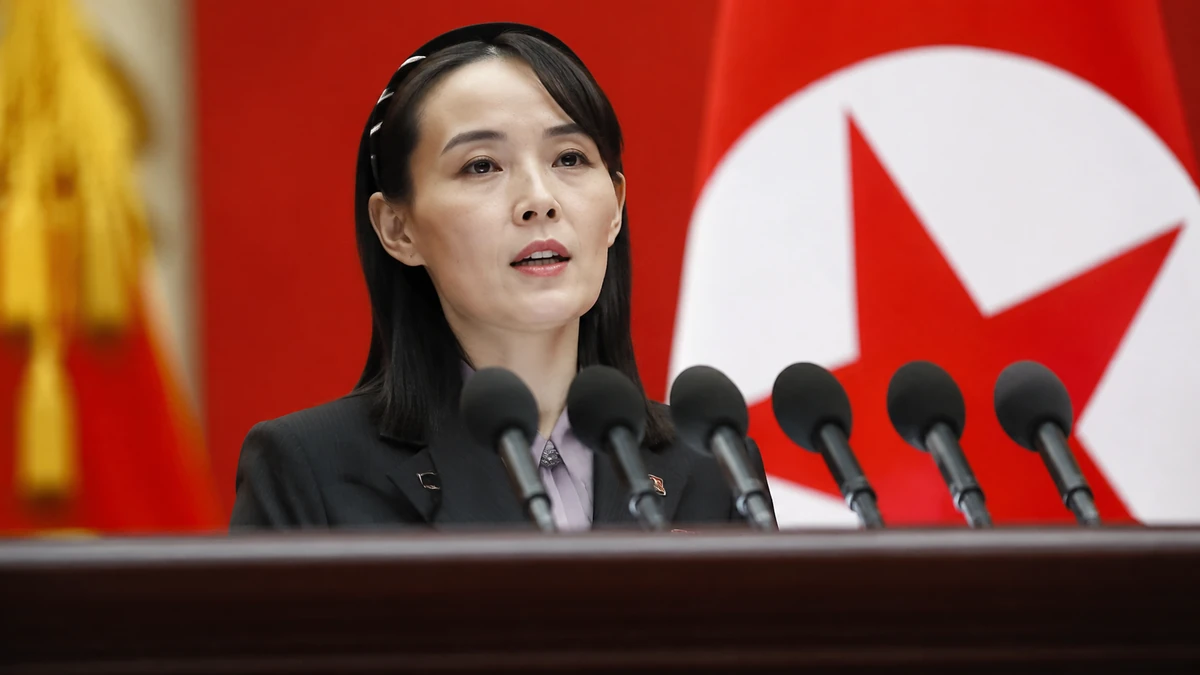
North Korean official Kim Yo Jong has responded to the reported scaling back of joint U.S.-South Korea military exercises with a familiar mix of ridicule, propaganda and strategic messaging. In a statement released through North Korea’s state media on the night of Aug. 20, Kim mocked Seoul over the idea that it could no longer carry out the kind of military drills she described as “war games,” and she framed the change as evidence that South Korea remains dependent on decisions made in Washington.
That matters because joint exercises between the United States and South Korea are never just military events. They are also political signals, both to North Korea and to the wider region. When the scale, format or tone of those exercises changes, all sides quickly try to define what the change means. In this case, Pyongyang moved fast to portray the adjustment not as a technical or policy decision, but as proof that South Korea lacks autonomy and that the U.S.-South Korea alliance is uneven at its core.
Kim’s language, as summarized in South Korean reporting, was especially pointed. She reportedly referred to the reduced drills as a “half exercise with the main body cut off” and an “empty-shell exercise with the yolk removed,” colorful insults meant to belittle both the exercise itself and the government that agreed to it. For American readers, the rhetoric may sound theatrical, but that is precisely the point. North Korean statements often rely on dramatic, personalized language to dominate the narrative and to turn even limited policy changes into ideological ammunition.
What stands out here is that the statement does not appear to focus on the actual military value of the drills. The summary provided does not include specific details about how much the exercises were reduced, what units were affected, or how Washington and Seoul explained the decision. Instead, Kim’s statement appears designed to exploit the symbolism of the decision-making process itself: if former President Donald Trump ordered a reduction, as the summary says, then Pyongyang can cast Seoul as a passive player forced to adjust its security posture at Washington’s command.
That is a classic North Korean move. Rather than debating troop numbers, readiness or command structures, Pyongyang shifts attention to hierarchy, pride and legitimacy. The target is not only South Korea’s military planning but also the political psychology of the alliance.
Why the decision-making chain matters more than the drill size
The most important theme in Kim Yo Jong’s statement is not simply that the exercises were scaled back. It is that she repeatedly highlighted who made the decision. By emphasizing a directive from Trump and depicting Seoul as the actor that had to obey, she tried to construct a story in which South Korea does not fully control its own defense policy.
That distinction is crucial. Alliances, especially military alliances, always involve coordination, compromise and joint decision-making. The United States maintains a treaty alliance with South Korea that dates to the aftermath of the Korean War, and for decades the two countries have synchronized their military planning because deterrence on the Korean Peninsula depends on interoperability. In practical terms, that means many major defense decisions are naturally made in consultation. Pyongyang’s propaganda challenge is to recast that reality as subordination rather than cooperation.
For American audiences, there is a useful analogy here. U.S. alliances with NATO countries also involve shared planning, defense integration and constant consultation. But adversaries often try to portray those arrangements as evidence that Washington dictates terms to its partners or that allies are freeloaders without real agency. On the Korean Peninsula, North Korea uses a similar playbook, but with sharper language and a more direct effort to weaken South Korea’s public confidence in the alliance.
The summary of the Korean story makes another important point: the available facts support only a narrow set of conclusions. We know that the exercises were reduced. We know that Kim issued a mocking public statement. But we do not know from the material provided how extensive the reduction was, whether it affected live-field components, command-post elements or force participation, or what follow-up response may come from Washington or Seoul. That information gap matters, because it makes the propaganda battle easier to wage. When specifics are limited, symbolism grows larger.
That is likely why Kim used repeated, vivid phrasing instead of technical argument. The goal was not to produce a military assessment. It was to create an image: South Korea, once eager for “war games,” now unable to conduct them as before; the United States as the real decision-maker; and North Korea as the actor standing outside the alliance and jeering at its internal imbalance. It is political language aimed at strategic doubt.
What this says about North Korea’s broader communication strategy
Kim Yo Jong has become one of Pyongyang’s most recognizable public voices, particularly when North Korea wants to issue a message that is sharp, personal and carefully calibrated. Her statements often blend insult with statecraft. They are meant to unsettle opponents, energize domestic propaganda and test how far rhetorical pressure can shape the public conversation in Seoul, Washington and beyond.
In this case, the summary suggests North Korea had at least two layers in mind. First, it tried to diminish the military significance of the exercise by calling it hollowed out and incomplete. Second, it tied that alleged weakness to a broader claim that South Korea has handed over national defense to outside powers. That second layer is the more consequential one.
North Korea has long tried to drive wedges between Washington and Seoul by presenting South Korea as dependent, divided or constrained by U.S. strategy. Sometimes that message is aimed at progressive audiences in the South who are skeptical of military escalation. Sometimes it is aimed at conservative audiences, in the hope that it will provoke overreaction or heighten anxiety about deterrence. Often, it is meant for both: stir up the debate, force South Koreans to argue over alliance management, and make every policy adjustment look like a sign of weakness or betrayal.
The language also reflects a persistent North Korean effort to separate military reality from political interpretation. A scaled-back drill does not automatically mean a weakened alliance. A change in exercise structure does not automatically mean lower readiness. But if Pyongyang can persuade observers that any reduction equals loss of will, then it gains an informational advantage even without changing facts on the ground.
That is why analysts tend to distinguish between rhetoric and action. Harsh rhetoric can raise tensions in the diplomatic sphere without necessarily signaling a new operational step. Based on the summary provided, there is no confirmed indication that North Korea paired this statement with a new military move or a formal diplomatic proposal. The statement appears to be exactly what it looks like: a propaganda intervention timed to exploit a development in U.S.-South Korea defense coordination.
Still, propaganda should not be dismissed as mere noise. On the Korean Peninsula, words can shape policy space. If repeated often enough, narratives about alliance weakness, loss of sovereignty or military humiliation can complicate domestic politics in South Korea and influence how outside audiences interpret the alliance.
What it means for the United States
For the United States, the significance of this episode goes beyond one set of exercises. It speaks to how American power is perceived when Washington adjusts a visible security commitment in Asia, even in limited ways. U.S. policymakers may view drill size, timing or format as flexible tools of deterrence and diplomacy. But North Korea sees those same variables as opportunities to contest the credibility of the alliance in public.
That matters for American audiences for several reasons. First, South Korea is one of Washington’s most important treaty allies in the Indo-Pacific, and U.S. troops based there are central not just to deterrence against North Korea but to the broader architecture of American security strategy in the region. Any narrative that casts the alliance as unstable or lopsided has implications that reach well beyond the peninsula.
Second, Americans have seen versions of this debate before. Under Trump, military burden-sharing, troop presence and alliance costs were often discussed in openly transactional terms. Supporters argued that allies should contribute more and that Washington should reconsider automatic assumptions. Critics warned that treating alliances like short-term business arrangements risked undermining deterrence by making U.S. commitments look negotiable. North Korea’s latest messaging taps directly into that old vulnerability: the perception that a presidential instruction in Washington can instantly reshape the military posture of a front-line ally.
Third, the American market and public are far more connected to South Korea than they were a generation ago. South Korea is not just a distant security partner. It is a major economic counterpart, a critical technology player and a cultural force in the United States through K-pop, Korean film, streaming content, beauty brands and consumer electronics. When tensions on the peninsula rise, the effects are not confined to defense specialists. They can influence investor sentiment, supply-chain assumptions and public understanding of a country many Americans now encounter through both commerce and culture.
There is also an important communication lesson here for Washington. When allied military activities are adjusted, the absence of clear public explanation can create an opening for adversaries to define the meaning first. The summary of the Korean story notes that concrete details about the reduction were not available in the provided material. That kind of vacuum is useful to Pyongyang. The less the public knows about what changed and why, the easier it becomes to portray any change as capitulation, confusion or alliance strain.
For American companies with stakes in South Korea, from semiconductor firms to entertainment platforms, this does not necessarily mean immediate disruption. But it is a reminder that security narratives matter in one of the world’s most strategically sensitive and economically integrated regions. The U.S.-South Korea relationship is now dense enough that military messaging and market confidence can no longer be treated as separate worlds.
South Korea’s challenge is to separate alliance coordination from alliance weakness
From Seoul’s perspective, the central task is not to answer every insult with an equally heated response. It is to show, consistently and credibly, that a change in exercise format does not by itself define the health of the alliance or the readiness of South Korea’s forces. That is easier said than done, because North Korea’s rhetoric is designed to trigger exactly the opposite response: emotional rebuttal, domestic polarization and overinterpretation.
The Korean summary suggests that South Korea’s best course is to focus on verifiable facts and on the underlying structure of U.S.-South Korea cooperation. That approach reflects a longstanding challenge in peninsula diplomacy. If Seoul treats every North Korean taunt as a major strategic shift, it risks amplifying Pyongyang’s narrative. But if it says too little, it can leave the field open for North Korea to shape perceptions, especially when details about defense adjustments remain sparse.
There is a deeper issue here about sovereignty and alliance politics that American readers may not always appreciate. South Korea is a wealthy democracy with a large, sophisticated military and advanced domestic defense industry. Yet because of the enduring North Korean threat and the historic role of the U.S. alliance, questions about wartime control, military integration and strategic autonomy remain especially sensitive in Korean politics. That sensitivity gives Pyongyang an opening. By mocking Seoul as unable to act independently, North Korea is not just insulting a rival government. It is poking at a recurring debate inside South Korea about how dependence, partnership and sovereignty should be balanced.
The trap for Seoul is that North Korea’s framing can make almost any move look bad. If South Korea emphasizes alliance unity, Pyongyang says that proves dependence. If South Korea emphasizes autonomy, Pyongyang can say the alliance is fraying. That is why discipline matters more than rhetorical retaliation. The goal is to keep the discussion centered on deterrence, coordination and actual policy outcomes rather than on the emotional terms of North Korea’s propaganda.
This is part of a larger trend in how modern deterrence gets contested
The broader lesson is that deterrence today is argued not only through missiles, troops and exercises, but also through narratives. What changed in this case may have been a training decision. What North Korea tried to change was the meaning attached to that decision.
That trend is not unique to Korea. Around the world, rival states increasingly exploit moments of policy adjustment to question alliance cohesion. A military redeployment, a delayed exercise, a cost-sharing dispute or a change in public language can become raw material for information warfare. In the U.S. context, Americans have seen comparable efforts by adversaries to portray NATO as divided, U.S. partners in the Middle East as unreliable, or Indo-Pacific alliances as brittle. The substance of the policy matters, but so does who gets to interpret it first.
On the Korean Peninsula, that struggle over interpretation is especially intense because history, emotion and high-stakes deterrence are always close to the surface. Joint exercises have long been controversial: Washington and Seoul see them as necessary preparation and alliance coordination, while Pyongyang denounces them as rehearsal for invasion. That gap in framing has existed for decades. What feels different in this episode is the emphasis on decision structure over military content. North Korea appears less interested in arguing that the exercise itself is provocative than in arguing that the reduction exposes South Korea’s political vulnerability.
That makes this episode more than a one-day exchange of insults. It points to a continuing contest over how alliance management is understood in public. When allies recalibrate military signaling, they now have to think not only about operational effects but about narrative resilience. Can they explain the decision clearly? Can they prevent an adversary from turning coordination into a symbol of submission? Can they reassure domestic and international audiences without escalating rhetoric unnecessarily?
Those are not abstract questions. They shape crisis stability. If publics come to believe that every adjustment is weakness, then policymakers have less room to manage tensions pragmatically. If every exercise is treated as a test of prestige, flexibility becomes harder.
What to watch next
The immediate facts in this case remain limited, and that should counsel caution. The summary does not establish the precise scale of the drill reduction, nor does it identify any new North Korean action beyond the statement itself. That means the smartest reading is also the narrowest one: a political message was issued to exploit a visible alliance decision.
Even so, several next steps will matter. The first is whether Washington and Seoul provide a fuller explanation of what changed in the exercises and why. More clarity would make it harder for Pyongyang to monopolize interpretation. The second is whether North Korea follows the rhetoric with additional pressure, such as more statements, sharper military signaling or an effort to turn this narrative into a longer campaign against South Korea’s security posture. The third is how South Korea manages the domestic debate over sovereignty and alliance trust, which North Korea clearly hopes to inflame.
For Americans, the takeaway is not that the alliance is suddenly in jeopardy. The evidence provided does not support that conclusion. The takeaway is that even small or poorly explained adjustments in joint military posture can become leverage points in a broader information struggle. North Korea understands that the symbolism of who decides can matter almost as much as what is decided.
In that sense, Kim Yo Jong’s mocking statement is best understood not as a military verdict but as a strategic communications play. It seeks to turn a change in allied exercises into a story about hierarchy, humiliation and dependence. Whether that story takes hold depends less on the insult itself than on how clearly the United States and South Korea explain their partnership in the days ahead.
Comments
Post a Comment