Seoul’s Yongsan Park Debate Highlights the Global Challenge of Balancing Housing and Urban Green Space
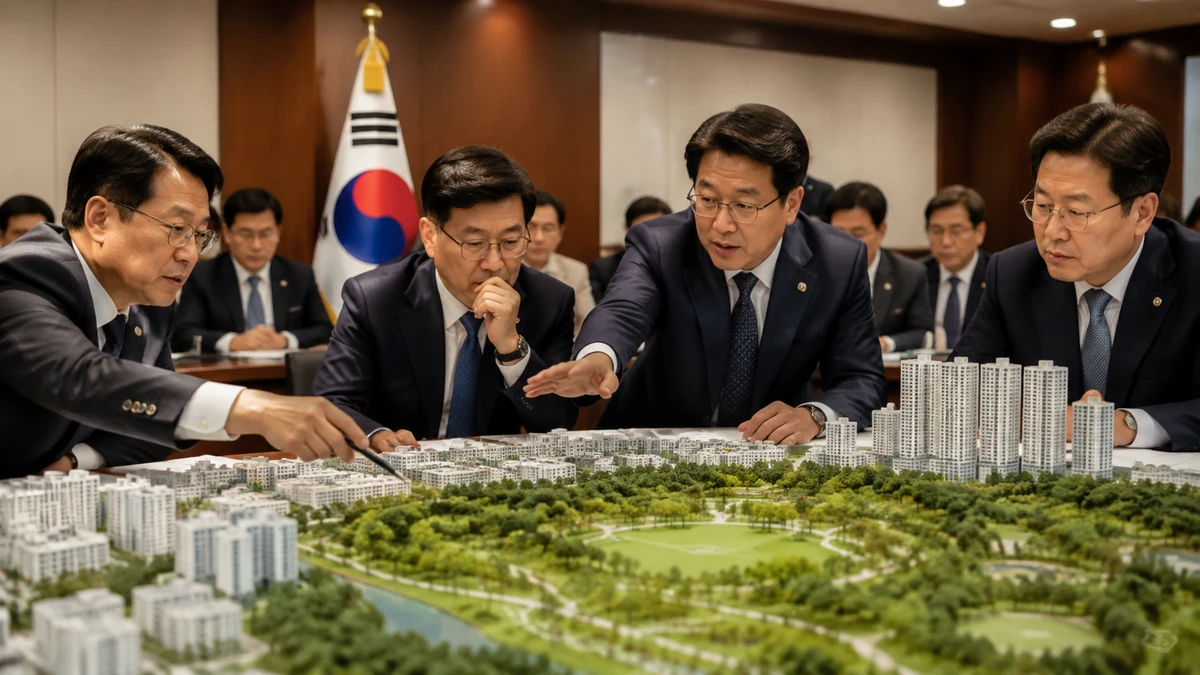
Image to help understand the article
South Korea Weighs a New Role for One of Seoul’s Most Symbolic Urban Spaces
South Korea is reopening a familiar debate facing many major cities around the world: how to create more homes in crowded urban centers without sacrificing public spaces that define a city’s quality of life.
The latest example is Yongsan Park, a large former military site in central Seoul that has become a symbol of urban transformation. The South Korean government and ruling Democratic Party discussed whether parts of the site could be considered for limited housing-related use as part of broader efforts to increase housing supply. The discussion does not represent a finalized development plan, and officials have emphasized that the entire park is not being considered for conversion into housing.
For Americans watching from afar, the debate may resemble discussions in cities such as New York, San Francisco or Washington, D.C., where officials regularly confront competing demands for affordable housing, open space and preservation of historically significant land. Seoul’s challenge reflects a broader question among global cities: When land is scarce, who decides how the most valuable urban spaces should be used?
Why Yongsan Park Matters in South Korea’s Urban History
Yongsan Park occupies a unique place in Seoul’s modern history. The area was long associated with foreign military presence, including a major U.S. military base that operated there for decades. As parts of the land have been returned and transformed into a planned public park, the site has carried expectations that it could become a major green space in the heart of the capital.
In South Korea, parks in dense urban areas often carry significance beyond recreation. They represent access to nature, public health, cultural identity and a sense that citizens have shared spaces within rapidly developing cities. Seoul is known for its high population density, extensive apartment complexes and intense competition for housing, making every large parcel of central land especially valuable.
The government’s discussion focuses on whether some areas that are no longer functioning as park space could potentially be used in limited ways while maintaining the overall green function of the site. Officials have stressed that the concept is not a plan to remove the park entirely and replace it with residential construction.
That distinction is important because South Korea’s housing challenges are not simply about building more units. Seoul’s real estate market is shaped by demand for locations near jobs, transportation networks, schools and cultural facilities. Adding homes in the wrong locations may not address the deeper pressures that drive housing prices.
The Housing Pressure Behind Seoul’s Search for New Space
The Yongsan discussion reflects a long-running structural issue in Seoul: the limited availability of developable land in the city center. Seoul serves as South Korea’s political, economic and cultural hub, concentrating government offices, major corporations, universities and entertainment industries.
As a result, demand for housing in central areas remains strong. Policymakers have repeatedly explored ways to increase supply, including redevelopment projects, increased density and the use of underutilized public land. The Yongsan Park debate is another example of officials examining whether existing urban assets can play a role in solving housing shortages.
However, the issue has also become politically contested. Opposition figures have criticized the government’s consideration of Yongsan Park, arguing that the discussion reflects broader disagreements over responsibility for South Korea’s housing policies. The debate demonstrates how real estate policy in South Korea is closely tied to politics, public trust and concerns about fairness.
For many South Koreans, housing is not only an economic issue but also a measure of social opportunity. Apartment ownership, especially in desirable parts of Seoul, has become deeply connected to wealth accumulation and financial security. Government housing policies therefore often attract intense public attention.
What Seoul’s Debate Means for the United States
The discussion surrounding Yongsan Park offers a relevant case study for the United States, where major metropolitan areas are also struggling with housing shortages and questions about land use. American cities including Los Angeles, New York and the San Francisco Bay Area have faced similar debates over whether public land, parking areas, industrial zones or other underused spaces should be converted into housing.
Unlike many American cities, Seoul has a highly centralized urban structure where economic activity is concentrated within a relatively compact metropolitan area. This creates enormous pressure on limited land. The comparison is useful because U.S. cities are increasingly examining how to build more housing while maintaining parks and public amenities.
The Yongsan case may also interest American urban planners and policymakers because it combines several issues familiar in the United States: government-owned land, historical preservation, environmental concerns and the need for affordable housing. The outcome could become part of a wider international conversation about how large cities adapt to population and economic pressures.
For companies and investors with interests in South Korea, housing policy remains an important factor in understanding the Korean economy. Construction firms, real estate developers, technology companies working on smart cities and infrastructure providers all pay attention to how Seoul manages urban growth.
The debate also highlights the continuing connection between the United States and South Korea in urban development. The history of Yongsan includes decades of U.S.-South Korea security cooperation, and changes to the site represent another chapter in how the two countries’ shared history continues to influence modern Seoul.
A Global Question: Can Cities Build More Without Losing Their Identity?
Across the world, major cities are facing a similar dilemma. London debates housing expansion while protecting historic neighborhoods. Paris examines ways to increase housing efficiency while preserving public character. New York continues discussions about balancing development with parks and community spaces.
Seoul’s Yongsan Park debate fits into this global pattern. The question is not simply whether a city can build more homes, but how it defines the value of land. A vacant or underused site may represent an opportunity for development, but it may also represent future environmental, cultural or social value.
Urban experts often argue that successful cities require both housing and livable public environments. Green spaces can improve quality of life, support public health and increase the attractiveness of neighborhoods. At the same time, cities that cannot provide enough housing risk worsening affordability problems and pushing residents away from economic opportunities.
South Korea has not announced a final decision on Yongsan Park’s future use. The current discussion remains an exploration of possibilities, with officials emphasizing the need to protect park functions while considering limited alternatives.
The Road Ahead for Seoul’s Urban Future
The future of Yongsan Park will likely depend on a broader public discussion about what Seoul needs most in the coming decades. The city must consider housing demand, environmental protection, historical meaning and citizens’ expectations for public space.
For international observers, the debate provides a window into the challenges facing one of Asia’s most dynamic capitals. Seoul’s transformation from a postwar city into a global technology and cultural center has been built through rapid development, but the next stage may require a different approach: finding balance between growth and preservation.
The Yongsan Park discussion is therefore about more than a single piece of land. It represents a question shared by cities worldwide: How can urban centers remain affordable, competitive and welcoming while protecting the spaces that make them worth living in?
Comments
Post a Comment