SEVENTEEN’s Dino Debuts a Solo Alter Ego, Using Retro Korean Pop to Reach Beyond K-pop’s Usual Playbook
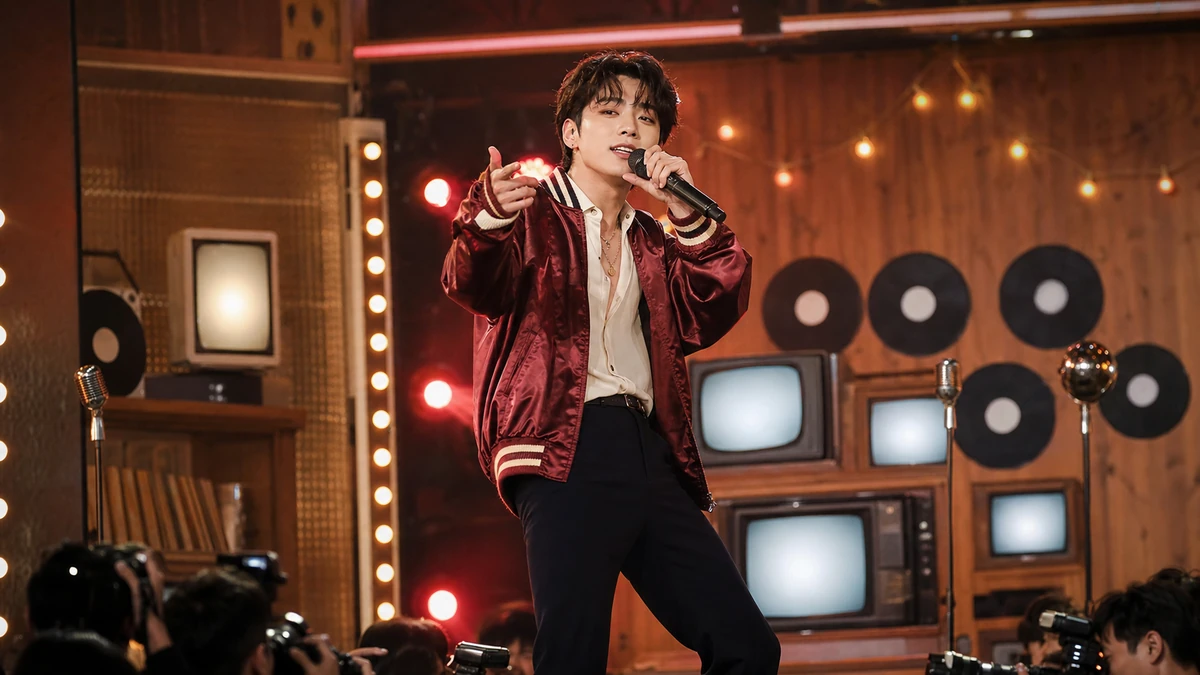
A K-pop star steps out — but not exactly alone
For most K-pop idols, a solo debut is a familiar kind of career checkpoint: a chance to trade the choreography-heavy symmetry of a group for a more personal spotlight, often with a sleek visual concept and a carefully calibrated sound. Dino of SEVENTEEN, the 25-year-old performer known to fans as the group’s youngest member, is taking a different route. When he releases his first solo mini-album, Gilboard, he is not simply doing so as Dino. He is introducing it through an alter ego called Picheolin, a character built to carry a looser, funnier and more mischievous side of himself than global audiences typically see on arena stages.
That distinction matters. SEVENTEEN has spent years building one of K-pop’s strongest reputations for polished live performance, sharp synchronization and a highly disciplined group identity. Within that system, each member has a role, and Dino has long been recognized for his dancing, technical skill and stage presence. But K-pop’s structure can also narrow what audiences expect from an artist, especially one who came up in a tightly organized idol group. By creating Picheolin, Dino is effectively making room for another register of performance — something closer to character work, comedy and storytelling, while still rooted in music.
For American audiences, the move may feel somewhat akin to a pop star creating a distinct onstage persona rather than merely changing outfits for a comeback. It is not exactly the same as an alter ego in the grand theatrical sense of David Bowie’s Ziggy Stardust, nor is it simply a comic side project. In Korean entertainment, where stars often cultivate what is called a bukae — literally a “secondary character” or side persona — the device can allow celebrities to test out a different tone, whether more absurd, more candid or more satirical than their main image allows. Dino’s new project appears to use that convention in a musically ambitious way.
The result is a solo launch that seems less interested in proving he can stand alone than in showing he can build a world. Gilboard is being framed not as a break from the artist fans know, but as an expansion of him: a project that keeps his performance credibility intact while opening space for Korean retro moods, humor and a more communal sense of fun. That is a notable gamble in a K-pop industry that often rewards clarity, branding discipline and instant digital appeal. Dino is betting that his audience — in South Korea and abroad — will follow him into something stranger, warmer and more specifically Korean.
What “Picheolin” says about modern K-pop identity
Picheolin is more than a stage name. By all indications, it is a full performance device — a way of tying together vocal delivery, body language, humor and the overall atmosphere of the music. That may sound like a small distinction, but in K-pop it can be a meaningful one. Idol branding is usually rigorous and highly managed, and solo activities often still feel like extensions of the same polished machine. What Dino appears to be doing instead is creating a character that gives him permission to be a little less controlled and a little more cheeky.
That freedom is central to why the project is drawing interest. Global K-pop fans are used to seeing multiple “sides” of their favorite stars through variety shows, livestreams and behind-the-scenes content, but those versions are usually separate from the music itself. With Picheolin, Dino is collapsing those lines. The joke, the swagger and the stage performance are part of the same artistic proposition. He is not just promoting songs; he is presenting a personality architecture around them.
There is also a broader industry story here. K-pop has become increasingly global, but that success has created a paradox. As Korean acts reach wider audiences, they often lean into sounds and formats already legible to the global market — English-language hooks, familiar pop structures and visually exportable concepts. Nothing is inherently wrong with that; it is one reason K-pop has become so commercially potent. But it can also flatten some of the local textures that make Korean popular culture distinctive in the first place.
Dino’s alter ego seems to push in the other direction. Picheolin is designed to foreground a kind of expressive freedom that is recognizable within Korea’s own entertainment history: slightly theatrical, knowingly playful and less concerned with maintaining the pristine cool that often defines contemporary idol culture. For English-speaking readers unfamiliar with Korean celebrity culture, the easiest way to understand it may be this: Dino is using a comic-performance lens to become more emotionally expansive, not less serious as an artist. The character is not a gimmick hiding weak material. It is a tool for broadening what his solo work can say and how it can feel.
That helps explain why the project is being described as one that can better express the ups and downs of life. In Korean, public discussion of emotion often invokes a wider range of feeling within one shared social mood — joy and sadness, excitement and wistfulness, humor and melancholy existing side by side. Picheolin seems built to inhabit exactly that space, where the performer can invite laughter without sacrificing sincerity.
A retro album with a specifically Korean emotional language
The title Gilboard carries more meaning than a direct English rendering would suggest. “Gil” means “road” or “street” in Korean, and the title also incorporates a Chinese character associated with good fortune, alongside the English word “board.” The combination gives the album a slightly hybrid feel before a note is even heard: part Korean, part contemporary pop shorthand, part punning concept. It evokes movement, public space and something shared rather than sealed off.
That matters because the project is being positioned not as an intimate confessional album in the Western singer-songwriter mold, but as a record meant to meet people where they are. The title suggests music that belongs out in the open — on the street, among ordinary people, amid everyday life. If much of modern idol promotion aims for immaculate, almost frictionless glamour, Gilboard hints at a messier and more public kind of contact.
The musical palette reinforces that ambition. The mini-album reportedly moves across EDM trap, city pop and new jack swing, genres with very different histories and emotional textures. For American readers, those references provide some grounding. Trap, of course, is now a global language of rhythm and swagger. City pop, while Japanese in origin as a labeled genre and widely revived online in recent years, evokes an urbane, nostalgic sheen — the kind of polished retro atmosphere that feels both cool and sentimental. New jack swing, a style that peaked in the late 1980s and early 1990s in the United States, carries a dance-friendly bounce closely associated with an earlier era of R&B-pop crossover.
What makes Dino’s project interesting is not simply that it borrows from all three, but that it reportedly uses them to express what Koreans often call hee-ro-ae-rak, a four-part phrase that roughly refers to joy, anger, sorrow and pleasure — in other words, the full spectrum of human feeling. That phrase has deep roots in East Asian cultural vocabulary and is often used in modern Korean discourse to describe life’s emotional range. In this context, the album’s genre mixing appears designed not as playlist bait but as emotional translation. Different sounds become vehicles for different shades of feeling, all filtered through a Korean retro sensibility.
Another key term here is heung. It is one of those Korean words that does not land neatly in English. It can suggest excitement, groove, buoyant energy or a kind of irrepressible social momentum. But it is not just happiness. In Korean cultural discussions, heung often refers to the force that keeps people moving, dancing or singing even when life contains hardship. It can coexist with sadness rather than cancel it out. If that sounds abstract, think of the difference between a party anthem and a song that gets a room full of people to sing together because it taps something shared and resilient. Dino has said he wanted to capture not just pleasure, but a broader emotional texture rooted in Korean retro feeling. That gives Gilboard a more layered ambition than a straightforward dance-pop release.
Why debuting a song on a national variety stage is such a notable choice
One of the most striking parts of this rollout has little to do with streaming platforms or chart strategy. Before the formal release of the title track, “Nolabose,” Dino performed it on National Singing Contest, the long-running KBS television program known in Korean as Jeonguk Norae Jarang. For readers in the United States, this was not the equivalent of dropping by a hip late-night show for a buzzy first performance. It was more like a young pop star deciding to unveil a new single on a beloved, old-school community talent program watched by families across generations.
National Singing Contest has been a staple of Korean public broadcasting for decades. It is local, multigenerational and accessible in a way that many contemporary K-pop stages are not. While the global image of Korean pop is often built on dazzling music videos, cutting-edge styling and fandom-driven online promotion, this show belongs to a different media tradition: public familiarity rather than digital spectacle, neighborhood participation rather than fan-cam precision.
That is why Dino’s choice stands out. It is unusual for an idol artist to use that kind of stage as the first major platform for a new song, especially one tied to a solo debut. But the decision also makes conceptual sense. If the title track’s mood is an invitation to play, gather and enjoy together, then premiering it in a space associated with broad public warmth rather than elite trendiness becomes part of the message. The medium matches the music.
It also helps explain what kind of audience Picheolin is trying to reach. This is not just a character for existing fans fluent in K-pop inside jokes. It is a persona designed to feel immediately legible to ordinary viewers, including older Koreans who may not follow idol promotions closely. In a media ecosystem often segmented by age and platform, that is an ambitious bridge to build. It suggests Dino is not content with a fan-service solo project. He wants to see whether a younger idol performer can tap into something larger and more culturally shared.
That choice may also resonate with international fans who have watched K-pop become increasingly sleek and globalized. There is something quietly radical about using a deeply domestic, intergenerational broadcast space to launch a project rooted in Korean retro mood. It signals that “global” and “local” do not have to be opposites. Sometimes the most exportable idea is the one most grounded in where it comes from.
“Nolabose” and the invitation at the center of the project
The album’s title track, “Nolabose,” is produced by Hitchhiker, a South Korean producer known for a flamboyant, often eccentric approach to pop. The song title roughly carries the sense of “let’s have some fun” or “let’s go play,” and that phrasing is important. It is not a declaration of solitary excellence. It is an invitation. Even without understanding the Korean language, listeners are likely to recognize the social energy embedded in that premise.
That invitation-based approach sets the song apart from a lot of contemporary pop branding, which often revolves around self-definition, dominance or individual cool. “Nolabose,” at least in the way it has been described, seems more interested in collective participation. Its role is to pull listeners into a mood rather than hold them at a distance. That is a small but significant shift in emphasis, and it aligns with the album’s larger street-facing, people-facing concept.
For international audiences, this is where performance becomes especially important. Many nuances in Korean lyrics do not survive direct translation, especially when the appeal lies in wordplay, tone or a culturally specific sense of playfulness. But body language, facial expression and stage atmosphere often travel better than language. If Picheolin’s charm is rooted in a certain shamelessness — a willingness to be silly, theatrical and disarmingly open — then the performance can communicate that even when subtitles cannot capture every detail.
There is an old lesson in pop music here: charisma is often more translatable than literal meaning. That has always been true across borders, whether for Latin pop, Japanese city pop rediscoveries, Afrobeats or K-pop itself. Dino’s project seems to understand that while still resisting the pressure to flatten its Korean identity. Instead of sanding off the local edges, it is leaning into them and trusting that rhythm, style and expressive confidence will do the rest.
The retro influence also appears to come from more than aesthetics. Dino has said he was inspired by senior Korean singers from the 1970s and 1980s, particularly their freedom of expression and strong individual presence onstage. That is a revealing point of reference. He is not simply copying vintage fashion or repackaging nostalgia. He is reaching for an older model of performerly freedom — one less bound by today’s ultra-managed idol precision, and more interested in personality as a live force.
What Dino’s solo project says about where K-pop may be headed
At a moment when K-pop is often discussed in terms of international market share, Billboard chart performance and global touring power, Dino’s solo debut offers a different angle on the industry’s evolution. The bigger story is not just that a SEVENTEEN member has launched a mini-album. It is that he is doing so by treating character, humor, generational memory and national pop texture as core artistic materials rather than side decorations.
That could matter beyond this one release. K-pop has long excelled at adaptation, absorbing influences from American hip-hop, European electronic music, Japanese pop aesthetics and more, then reworking them into a highly systematized entertainment form. What artists are now increasingly tested on is whether they can reverse the flow as well — whether they can package something more distinctly Korean without making it feel inaccessible to international listeners.
Dino’s answer appears to be yes, but only if the project is coherent. In Gilboard, the character, title, genre choices and rollout strategy all seem to point in the same direction. The alter ego Picheolin gives him a vehicle for freer expression. The retro genre blend creates a sonic framework for multiple emotional tones. The television debut on a mass-audience singing program reinforces the idea of broad public connection. And the title track’s invitation to join in underscores the communal spirit at the center of it all.
For American readers trying to understand why this matters, think of it as an artist using a solo debut not just to prove commercial independence, but to test how much local culture can be folded into global pop without losing either side. That experiment is especially compelling in K-pop, where the tension between export-ready polish and homegrown specificity has become more visible as the genre’s international footprint has grown.
Whether Gilboard becomes a major commercial turning point is almost secondary to what it represents. It suggests Dino is moving beyond the role of technically gifted idol performer and toward something broader: a narrator of mood, a curator of generational feeling and a showman willing to risk silliness in pursuit of something more alive. In an industry where perfection can sometimes come at the expense of personality, that is a meaningful artistic choice.
And it may be precisely why the project could connect. Audiences do not always need another flawlessly engineered pop release. Sometimes they respond to the sense that an artist is opening a new door — one that leads not away from their roots, but deeper into them. With Picheolin and Gilboard, Dino seems to be betting that the future of Korean pop can still be built from the textures of Korean life: its humor, its emotional contradictions, its nostalgia and its urge to invite everyone into the song.
Comments
Post a Comment