South Korea Expands Carbon Ion Cancer Therapy as Severance Hospital Broadens Access to Precision Treatment
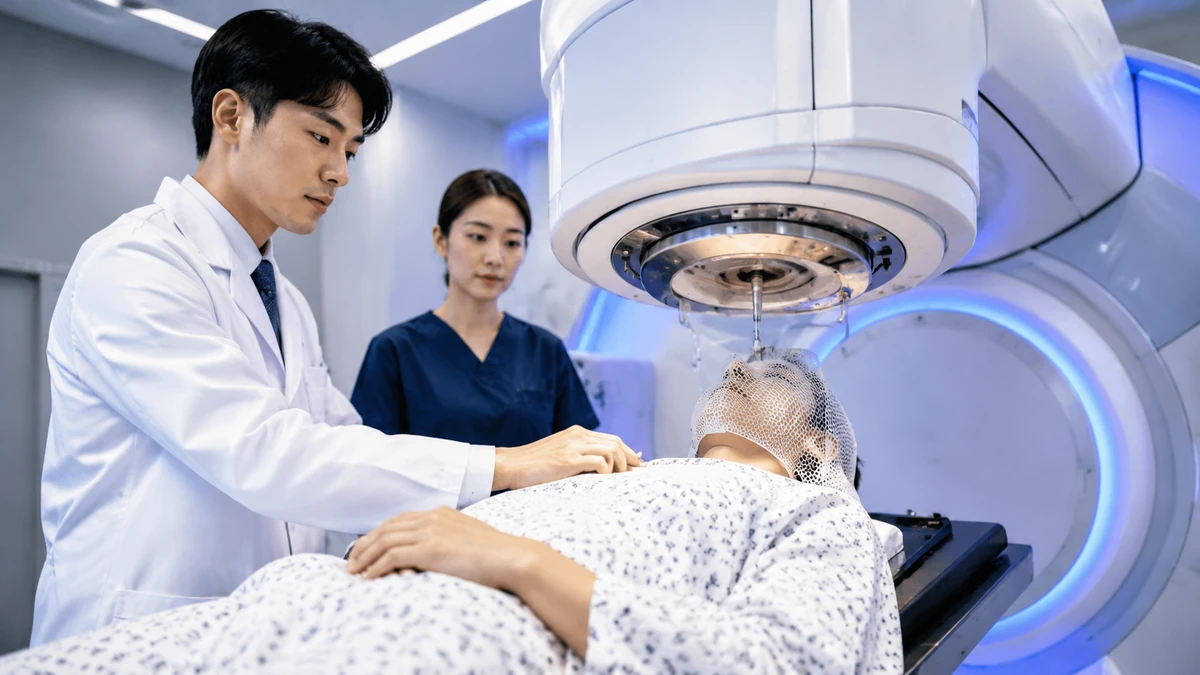
Image to help understand the article
South Korea Expands Advanced Cancer Treatment Options With Carbon Ion Therapy
South Korea is expanding the use of one of the world’s most advanced radiation treatment technologies as Severance Hospital in Seoul adds more cancer types to its carbon ion therapy program. The move reflects a broader shift in cancer care toward precision medicine, where doctors increasingly focus not only on destroying tumors but also on protecting healthy tissue and preserving patients’ quality of life.
Severance Hospital, part of Yonsei University Health System, announced that its heavy ion therapy program will now include head and neck cancers, sarcomas and recurrent rectal cancers. The expansion builds on an earlier program that focused on prostate cancer, pancreatic cancer, liver cancer and lung cancer.
Heavy ion therapy, also known as carbon ion therapy when carbon particles are used, is a form of radiation treatment that uses accelerated particles to deliver energy directly to cancer cells. Compared with conventional radiation approaches, the technology is designed to concentrate radiation doses more precisely around tumors while reducing exposure to surrounding healthy tissues.
For American readers, the concept is similar to the broader trend toward highly targeted cancer treatments seen in the United States, including proton therapy and advanced radiation systems that use imaging and computer-guided planning. The goal is not simply stronger treatment, but smarter treatment that matches the characteristics and location of each patient’s cancer.
However, experts emphasize that carbon ion therapy is not a universal solution for every cancer patient. Medical teams must consider factors including tumor location, disease progression and the patient’s overall condition before deciding whether the treatment is appropriate.
Why Adding Head and Neck Cancer, Sarcoma and Recurrent Rectal Cancer Matters
The latest expansion is significant because the newly added cancer categories often involve complex treatment challenges. Head and neck cancers develop in areas containing critical structures involved in speech, swallowing, breathing and appearance. Protecting those nearby tissues can be a major concern during treatment.
Sarcomas are relatively rare cancers that develop in bones or soft tissues. Because these tumors can occur near important organs, nerves or muscles, doctors often need to balance effective cancer control with minimizing damage to surrounding areas.
Recurrent rectal cancer presents another challenge because patients may have already received previous treatments. When cancer returns, physicians often need to carefully manage the risk of additional damage to tissues that have already been exposed to surgery or radiation.
The expansion of carbon ion therapy suggests that advanced cancer care is moving beyond a one-size-fits-all model. Modern oncology increasingly considers a patient’s long-term health after treatment, including possible side effects and daily functioning.
This approach is becoming increasingly important in countries with aging populations and rising cancer survival rates. As more patients live longer after cancer diagnoses, medical systems are placing greater emphasis on survivorship, rehabilitation and maintaining quality of life.
South Korea’s Medical Technology Ambitions and the Challenge of Access
Severance Hospital began South Korea’s first domestic carbon ion therapy program in 2023, initially treating prostate cancer patients. Since then, the hospital has gradually expanded the range of cancers considered suitable for the technology.
The development highlights South Korea’s growing investment in advanced medical infrastructure. The country has built a reputation for combining high-tech industries with healthcare services, a trend also seen in areas such as digital health, medical devices and artificial intelligence-based diagnostics.
For South Korea, advanced cancer treatment is not only a domestic healthcare issue but also part of a larger effort to strengthen its position in global medical innovation. Hospitals across Asia have increasingly attracted international patients seeking specialized procedures, although access to advanced therapies remains dependent on availability, cost and clinical suitability.
Carbon ion therapy requires major investments in specialized equipment, facilities and trained medical professionals. Building a treatment center is only the first step; hospitals must also develop clinical experience, treatment guidelines and systems to determine which patients benefit most.
The expansion at Severance also highlights a challenge facing healthcare systems worldwide: how to make cutting-edge treatments accessible while maintaining evidence-based medical standards. Advanced technologies can create new possibilities, but they must be integrated into broader cancer care systems that include surgery, chemotherapy, immunotherapy and conventional radiation treatments.
What This Means for the United States and American Cancer Care
The development in South Korea is relevant to the United States because American healthcare providers are also exploring the future of precision radiation oncology. The U.S. has invested heavily in technologies such as proton therapy, image-guided radiation and personalized cancer treatment strategies.
Like carbon ion therapy, proton therapy uses charged particles to deliver radiation more precisely than traditional X-ray radiation. Both approaches represent efforts to improve treatment accuracy and reduce unnecessary exposure to healthy organs.
South Korea’s expansion of carbon ion treatment may interest American hospitals, researchers and patients watching developments in particle-based cancer therapies. The two countries share a strong relationship in medical research and technology, with universities, healthcare companies and biotechnology firms often participating in international collaborations.
For American patients and healthcare professionals, the key question is not whether one technology will replace all others, but how different tools can become part of a more personalized cancer treatment system. Cancer care in the United States has increasingly moved toward matching therapies with specific tumor characteristics rather than relying only on broad treatment categories.
The South Korean example also reflects a global competition among advanced healthcare systems. Countries including the United States, Japan and European nations have developed particle therapy programs, and hospitals are seeking ways to improve outcomes while managing costs.
For U.S. healthcare companies and researchers, South Korea’s progress offers another example of how Asian medical centers are becoming important players in advanced healthcare innovation. Just as South Korean companies have become major forces in electronics, batteries and entertainment, the country is also seeking a larger role in medical technology.
The Global Future of Precision Oncology
The expansion of carbon ion therapy in South Korea fits into a wider transformation taking place across global cancer treatment. Precision oncology is changing how doctors approach cancer by combining information about tumor biology, location, genetics and patient health history.
In the past, cancer treatment decisions were often based mainly on where a cancer started in the body. Today, doctors increasingly consider detailed characteristics of each tumor when selecting treatments.
Radiation technology is following the same path. Advances in particle therapy, imaging and treatment planning software are allowing physicians to target tumors with greater accuracy. These developments are particularly important for cancers located near sensitive organs where treatment precision can affect both outcomes and quality of life.
South Korea’s decision to expand carbon ion therapy does not mean the technology will become the standard treatment for all cancers. Instead, it represents another step in building a wider range of options for carefully selected patients.
The next stage will depend on continued clinical research, long-term outcome data and the ability of healthcare systems to identify which patients benefit most. As precision medicine advances, the future of cancer care will likely depend less on a single breakthrough technology and more on combining multiple tools in ways tailored to individual patients.
For global audiences, including patients and medical professionals in the United States, South Korea’s expanding carbon ion therapy program offers a window into how cancer treatment is evolving worldwide: toward more targeted, more personalized and potentially less disruptive approaches to fighting disease.
Comments
Post a Comment