South Korea Men’s Volleyball Survives Five-Set Thriller Against Taiwan to Reach East Asian Championship Semifinals
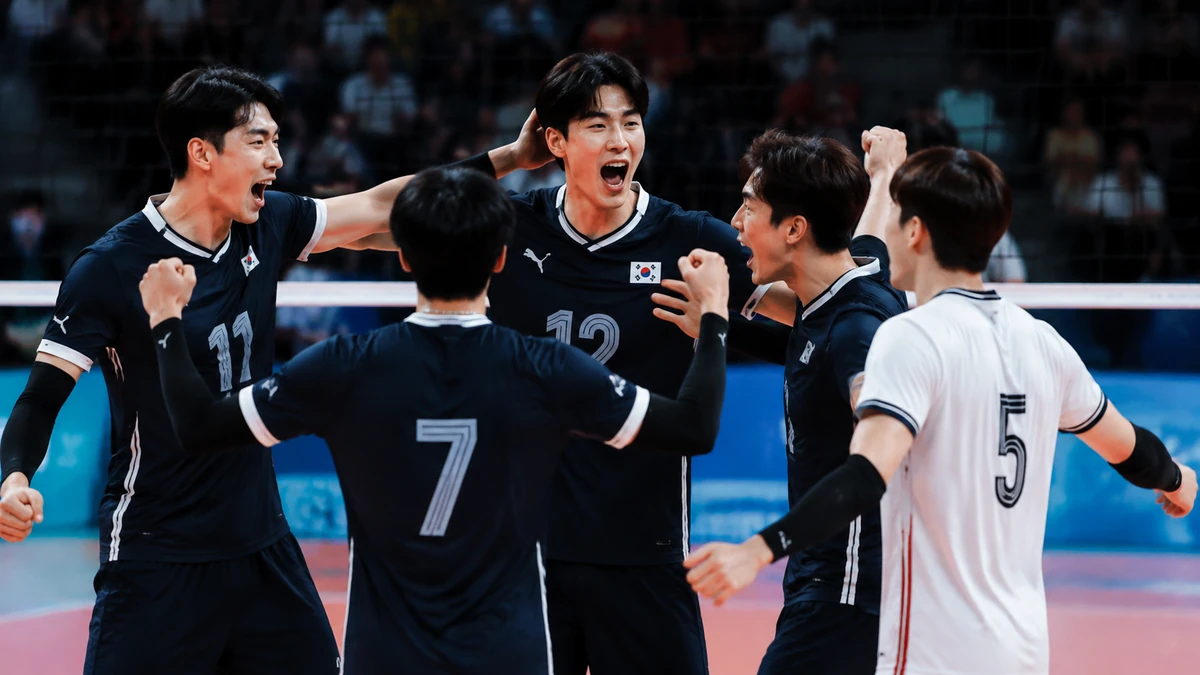
South Korea Holds Its Nerve in a Dramatic Five-Set Battle
South Korea’s men’s volleyball team secured a place in the semifinals of the 2026 East Asian Championship after defeating Taiwan in a tense five-set contest that tested the team’s composure and international experience. The South Korean squad defeated Taiwan 3-2 (25-23, 22-25, 25-22, 21-25, 24-22) on Aug. 6 at ASA Arena in Ulaanbaatar, Mongolia, delivering one of the most competitive matches of the early tournament.
For American sports audiences, the result can be compared to the type of high-pressure elimination-style battle often seen in March Madness basketball or a deciding Game 5 in a playoff series. Volleyball does not allow teams to run down the clock or protect a lead through possession management. Every rally matters, and a single serve, block, or defensive save can completely change the momentum of a match.
South Korea entered the tournament as the defending champion and showed why it remains one of East Asia’s strongest volleyball programs. Led by head coach Isanaye Ramirez, the team displayed resilience against a Taiwan side that refused to give up despite entering the match with a lower world ranking.
According to Yonhap News Agency, South Korea followed its opening victory over Japan with another win against Taiwan, moving to the top of Group B and securing its semifinal qualification. The back-to-back victories highlighted the team’s strong start in the regional competition.
A Match Defined by Momentum Swings and Mental Strength
The match between South Korea and Taiwan reflected the unpredictable nature of international volleyball. South Korea took the opening set 25-23, gaining early control in a closely fought battle. However, Taiwan responded immediately, winning the second set 25-22 and showing that it could compete with the defending champions.
South Korea regained the advantage in the third set with a 25-22 victory, but Taiwan once again answered by taking the fourth set 25-21. The match moved into a decisive fifth set, where both teams faced the pressure of a winner-take-all situation.
The final set became a showcase of concentration and endurance. Neither team was able to create a comfortable lead, and the score remained extremely close until the final moments. South Korea eventually closed out the match at 24-22, ending a dramatic battle that required players to maintain focus despite fatigue and mounting pressure.
In volleyball, winning a five-set match often reveals more than physical ability. It demonstrates how well a team handles adversity. A squad can have powerful attackers and talented defenders, but international matches are frequently decided by emotional control and the ability to recover after losing momentum.
South Korea’s victory over Taiwan showed that the team could respond when challenged. Rather than allowing Taiwan’s comeback to create panic, the Korean players remained organized and executed in the crucial moments.
Defending Champions Face a New Generation of Asian Competition
South Korea’s position in the tournament carries additional significance because the team entered as the defending champion. Winning a previous title can create confidence, but it also brings expectations. Every opponent understands that defeating the champion provides an opportunity to make a statement.
The previous year, South Korea defeated Taiwan 3-0 in the championship final. This time, however, Taiwan pushed the match to the limit, demonstrating the increasing competitiveness of Asian men’s volleyball. The result showed that past success does not guarantee future victories.
South Korea currently holds the higher international ranking, listed at No. 26 in the world compared with Taiwan at No. 59. However, rankings only provide a starting point. International tournaments often produce close matches because teams become familiar with each other’s strategies, and regional rivals frequently understand one another’s playing styles.
For American readers who may not closely follow volleyball, the sport has become increasingly global, with Asian teams developing sophisticated systems built around speed, defense, and technical precision. Countries such as Japan, South Korea, China, and Taiwan have invested heavily in volleyball development, creating a highly competitive environment in East Asia.
South Korea’s challenge is not only to win matches but also to maintain consistency against opponents that continue to improve. The Taiwan match demonstrated both the difficulty of the tournament and South Korea’s ability to overcome pressure.
South Korea Builds Momentum After Victory Over Japan
The victory over Taiwan followed South Korea’s impressive opening performance against Japan. South Korea defeated Japan 3-1 in the previous group match, giving the team an early advantage in Group B.
The rivalry between South Korea and Japan extends across many sports, including baseball, soccer, and volleyball. Matches between the two countries often attract significant attention because of their competitive history and the high level of athletic development on both sides.
By defeating both Japan and Taiwan, South Korea established itself as the early leader in its group. The team was scheduled to face Macau in its final group-stage match, but it had already secured at least second place in the group regardless of that result, guaranteeing a semifinal appearance.
The East Asian Championship features seven participating teams competing through group play and knockout rounds. For South Korea, the tournament provides an important opportunity to measure its strength against regional opponents and prepare for future international challenges.
While the semifinal opponent will depend on remaining tournament results, South Korea’s immediate achievement is clear: it has advanced and remains in contention for another championship run.
Coach Ramirez’s Team Shows Balance Between Experience and Adaptation
Under coach Isanaye Ramirez, South Korea has emphasized organization, discipline, and the ability to adjust during matches. The Taiwan game highlighted those qualities as the team faced repeated challenges but continued to find solutions.
Modern volleyball requires teams to adapt quickly. Coaches analyze opponents’ attacking patterns, serving strategies, and defensive formations throughout a match. A team that cannot adjust often loses control when momentum shifts.
South Korea’s performance against Taiwan suggested that the players are comfortable competing in difficult situations. The team did not dominate every set, but it consistently responded when facing setbacks.
The fifth-set victory was particularly valuable because close matches can provide lessons that easier wins cannot. Players gain experience managing pressure, communicating during critical moments, and trusting teammates when every point carries significant weight.
For Ramirez and his coaching staff, maintaining that focus will be essential as the tournament moves into the semifinal stage. The level of competition is expected to increase, and small mistakes become more costly as teams approach the championship rounds.
Why This Victory Matters for Korean Volleyball
South Korea has a long volleyball tradition and remains one of Asia’s notable programs. While global attention in sports is often dominated by soccer, basketball, and baseball, volleyball has a passionate following in South Korea, where professional leagues and national team competitions attract dedicated fans.
The country’s volleyball culture includes strong domestic competition through the Korean Volleyball Federation leagues, which help develop players capable of competing internationally. National team success also plays an important role in maintaining interest among younger athletes and fans.
The victory over Taiwan represents more than a single tournament result. It reflects South Korea’s continued effort to remain competitive in a rapidly developing Asian volleyball landscape. Countries across the region are improving, making every international victory meaningful.
For global volleyball fans, the match also serves as a reminder that East Asian volleyball deserves attention. The region produces technically skilled teams known for fast rallies, defensive ability, and disciplined teamwork.
South Korea’s five-set victory provided a dramatic example of those qualities. The team faced adversity, lost sets after taking the lead, and still managed to finish stronger when the match reached its most important moment.
The Road Ahead: Aiming for Another Championship Run
South Korea now turns its attention toward the semifinals, where the team will attempt to continue its championship defense. The early tournament results have created confidence, but the coaching staff will likely focus on improving areas revealed during the Taiwan match.
Five-set victories can be physically demanding, and recovery will be important as the tournament schedule continues. Players must balance the confidence gained from winning with the understanding that future opponents will present new challenges.
The semifinal stage will provide another opportunity for South Korea to demonstrate whether it can maintain the composure and teamwork that carried it through the Taiwan match. The team’s ability to handle pressure situations may become one of its biggest advantages.
For now, South Korea’s men’s volleyball team has accomplished its first major goal of the tournament: reaching the semifinals. The dramatic victory in Ulaanbaatar showed a team capable of competing through difficult moments and finishing when the stakes were highest.
As the East Asian Championship continues, South Korea remains one of the teams to watch. Its combination of experience, technical skill, and resilience has positioned the defending champion as a serious contender for another title.
Comments
Post a Comment