
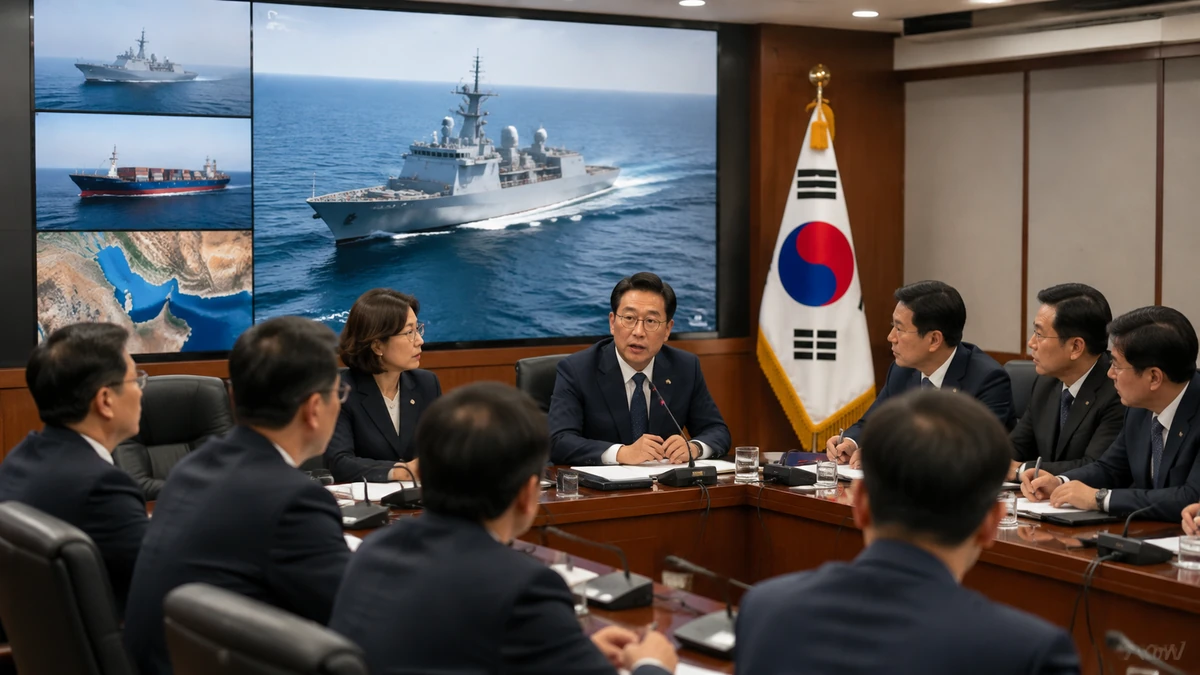
South Korea Steps Up Maritime Security Review Amid Growing Regional Risks
South Korea is reviewing safety measures for its commercial vessels and maritime workers as security concerns increase in the Red Sea and Gulf of Aden, two of the world’s most important shipping corridors. The country’s Ministry of Foreign Affairs held a joint situation assessment meeting on Aug. 6, 2026, bringing together government agencies and overseas diplomatic missions to discuss ways to protect South Korean ships, crews and business operations in the region.
According to Yonhap News Agency, the meeting was led by Cho Joo-sung, director general for overseas safety planning at the Foreign Ministry, and included officials from the Ministry of Oceans and Fisheries, the Ministry of National Defense and eight South Korean diplomatic missions located near the affected areas. The gathering reflects Seoul’s effort to address maritime risks before they directly affect its citizens and companies operating internationally.
For American readers, the issue highlights how regional conflicts and security problems can quickly affect global trade. The Red Sea and Gulf of Aden are not only geographically distant waterways; they are critical routes connecting Asia, Europe and the Middle East. Disruptions in these waters can influence shipping schedules, transportation costs and supply chains around the world.
Why the Red Sea and Gulf of Aden Matter to Global Shipping
The Red Sea is a major maritime passage linking the Indian Ocean with the Mediterranean Sea through the Suez Canal, one of the most important trade routes in the world. The Gulf of Aden, located between Yemen and Somalia, serves as a gateway for ships traveling between Asia, Africa and Europe.
For South Korea, a country whose economy depends heavily on international trade, maritime security is closely connected to economic stability. South Korean companies rely on global shipping networks to transport manufactured goods, energy resources and industrial materials. Any increase in threats along major shipping routes can create challenges for exporters, shipping companies and workers at sea.
The recent security concerns in the region involve multiple factors, including increased piracy activity near Somalia and continuing tensions affecting vessels traveling through the Red Sea. These risks have made governments and international shipping operators more focused on monitoring conditions and preparing emergency responses.
Piracy and Vessel Attacks Prompt Preventive Action
During the meeting, South Korean officials reviewed recent developments in maritime security and discussed preventive measures designed to reduce risks for Korean vessels and crews. Cho said piracy incidents in the Somalia and Gulf of Aden areas reached nine cases during the first half of the year, three times higher than during the same period last year.
Officials also expressed concern over repeated attacks targeting ships in the Red Sea. Rather than waiting for incidents to occur, South Korea’s approach emphasizes early warning systems, information sharing and coordination among government agencies.
This type of preparation is increasingly important because maritime threats are often unpredictable. A commercial vessel traveling through international waters may face challenges linked to regional conflicts, criminal activity or sudden security changes. Governments must therefore combine intelligence gathering, diplomatic communication and operational planning to protect their citizens.
Diplomatic Missions Provide Local Intelligence and Coordination
A key element of South Korea’s response is the involvement of its overseas diplomatic network. The eight Korean diplomatic missions participating in the meeting provide information from locations closer to the affected maritime areas, helping officials in Seoul better understand changing conditions on the ground.
South Korea’s embassies and diplomatic offices play a role beyond traditional government-to-government relations. In recent years, their responsibilities have expanded to include supporting citizens abroad, assisting companies operating overseas and helping coordinate responses during international emergencies.
The maritime safety review demonstrates how diplomacy has evolved in the modern global economy. Protecting citizens and businesses abroad now requires cooperation between foreign policy officials, military authorities, transportation agencies and local partners in other countries.
Maritime Security Has Direct Economic Consequences
The situation in the Red Sea and Gulf of Aden illustrates how national security and economic activity are increasingly interconnected. A disruption in one shipping region can affect businesses thousands of miles away, influencing delivery schedules, fuel costs and global supply chains.
South Korea is one of the world’s leading trading nations, with major industries including electronics, automobiles, shipbuilding and energy. Many of these sectors depend on reliable transportation networks that connect Korean ports with markets around the world.
For companies and workers involved in international shipping, safety at sea is not simply a military or diplomatic issue. It is also a business continuity concern. Ensuring that vessels can operate safely helps maintain trade flows and supports economic confidence.
A Broader Shift Toward Global Risk Management
The South Korean government’s latest meeting reflects a broader change in how countries manage international risks. In the past, foreign policy often focused primarily on diplomatic relationships and political negotiations. Today, governments are also expected to address practical challenges affecting citizens’ daily lives, including overseas safety, transportation security and economic resilience.
The meeting also shows the importance of cooperation among different government bodies. Maritime safety cannot be managed by one agency alone. Foreign ministries provide diplomatic channels, defense agencies contribute security expertise, and maritime authorities understand operational challenges facing ships and crews.
As international connections continue to grow, governments around the world face similar challenges. A security problem in one region can quickly become a global concern because modern economies rely on interconnected transportation and communication networks.
South Korea Focuses on Preparedness in an Uncertain Maritime Environment
South Korea’s review of maritime safety measures comes as governments and shipping industries continue to monitor conditions in strategically important waterways. While the immediate focus is protecting Korean vessels and personnel, the broader issue reflects a shared international challenge: maintaining safe and stable trade routes in an increasingly complex world.
The Foreign Ministry’s meeting highlights Seoul’s effort to strengthen preventive measures through cooperation, information sharing and international coordination. By involving domestic agencies and overseas diplomatic missions, South Korea is seeking to respond more effectively to risks before they escalate.
For a country deeply connected to global commerce, maritime security remains a critical part of national strategy. The developments in the Red Sea and Gulf of Aden serve as a reminder that events in distant regions can have consequences far beyond their borders, affecting economies, businesses and people around the world.




0 Comments