Extreme Heat Puts South Korea’s Food Supply Chain Under Pressure
South Korea is intensifying efforts to protect its agricultural sector as a prolonged heat wave raises concerns about livestock losses and reduced crop production. The Ministry of Agriculture, Food and Rural Affairs announced measures to strengthen on-site management at farms, focusing on preventing damage to poultry operations and greenhouse vegetable production.
The response reflects a growing challenge facing many countries: extreme weather is no longer only an environmental issue but a direct factor affecting food security, prices and supply chains. For South Korea, where densely populated cities rely heavily on a stable agricultural distribution network, protecting production sites during periods of severe heat has become a national priority.
According to Yonhap News Agency, the agriculture ministry is monitoring weather conditions and crop growth patterns while providing preventive materials, including agricultural chemicals and shade coatings designed to reduce heat stress. Officials are also expanding guidance to protect farmers and foreign agricultural workers from heat-related illnesses.
Rather than focusing only on recovering after damage occurs, the government’s strategy emphasizes prevention and maintaining production capacity during extreme weather conditions.
Protecting Chicken Farms and Greenhouse Vegetables
One of the government’s main areas of attention is South Korea’s poultry industry, particularly farms raising broiler chickens, known locally as “yukgye.” Chicken is a major part of the Korean diet and is widely consumed in popular dishes such as fried chicken, a food category that has also become an important part of South Korea’s global cultural influence.
High temperatures can create serious challenges for poultry farms because chickens are sensitive to heat stress. Farmers must carefully manage ventilation, temperature control and overall barn conditions to maintain animal health and prevent losses.
Greenhouse vegetable farms are another key focus. South Korean agriculture relies heavily on controlled growing environments, especially for vegetables such as lettuce and other leafy greens. These facilities allow farmers to produce crops throughout different seasons, but they require careful management of temperature and humidity. When extreme heat overwhelms cooling systems, crop growth and quality can suffer.
The agriculture ministry’s approach includes checking cooling and ventilation equipment while encouraging farmers to follow heat-management practices. Officials believe that strengthening individual farm-level responses can help reduce broader risks to the national food supply.
A Government Push for Field-Level Climate Response
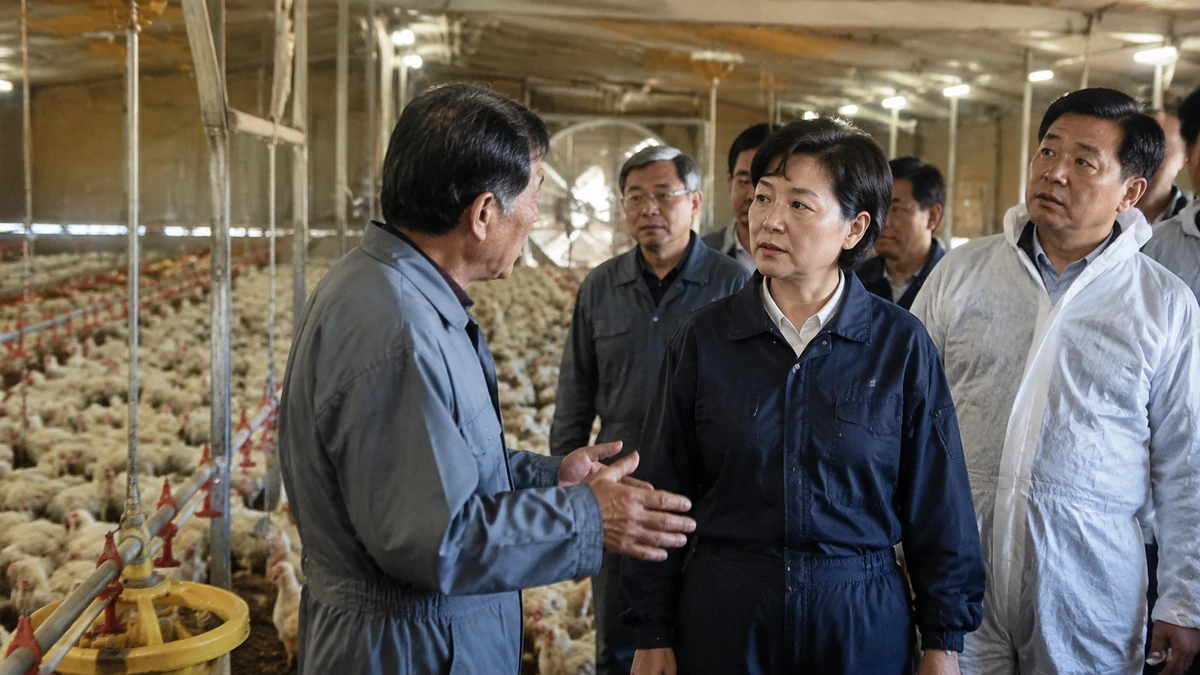
Agriculture Minister Song Mi-ryung visited a broiler chicken farm and a lettuce greenhouse in Iksan, North Jeolla Province, on Aug. 8 to inspect heat-response measures. The visit included reviews of agricultural production conditions, electrical equipment management and safety measures for both Korean farmers and foreign workers employed at farms.
Foreign workers play an increasingly important role in South Korea’s agricultural workforce, particularly in labor-intensive sectors. As temperatures rise, protecting all workers from heat-related health risks has become part of broader agricultural safety management.
The ministry said Song urged farmers and related organizations to actively cooperate with heat-response measures. She emphasized that preventing damage requires both government support and practical action at production sites.
For South Korea, these field visits are a common feature of government crisis management. Officials frequently travel directly to affected regions to assess whether national policies are being effectively implemented at the local level, particularly during periods of severe weather or agricultural emergencies.
Climate Change Is Reshaping Agricultural Strategy
The latest heat wave response highlights a broader transformation in how South Korea views agriculture. Farming is increasingly treated not only as a process of food production but also as a critical part of national infrastructure.
Changes in agricultural output can affect consumers, food manufacturers and retailers. A decline in production at farms can eventually influence availability and prices in supermarkets, restaurants and food processing industries. This connection makes climate resilience an important economic issue as well as an agricultural one.
The government’s emphasis on preventive measures, such as equipment inspections, monitoring systems and protective materials, reflects a shift toward climate adaptation. Instead of waiting for major losses, authorities are attempting to identify risks early and strengthen farmers’ ability to respond.
However, the ministry has not released specific figures on the total economic impact of the heat wave or whether consumer prices have been significantly affected. The longer-term market impact will depend on future production conditions and distribution trends.
South Korea’s Agricultural Future Depends on Adaptation
South Korea’s agricultural sector faces unique pressures because of its geography, limited farmland availability and high dependence on advanced production systems. From greenhouse technology to automated farm management, Korean agriculture has increasingly adopted technology to improve efficiency and overcome environmental challenges.
Extreme heat events are testing whether these systems can remain reliable under changing climate conditions. Cooling systems, monitoring technology and rapid government coordination are becoming essential tools for maintaining stable food production.
For farmers, the ability to respond quickly to weather risks may become as important as traditional farming skills. The success of climate adaptation efforts could influence not only agricultural sustainability but also South Korea’s broader economic resilience.
Internationally, South Korea’s experience reflects a challenge shared by many countries. As climate change increases the frequency of extreme weather events, governments and agricultural industries worldwide are looking for ways to protect food supplies while supporting farmers. South Korea’s heat-response measures offer one example of how targeted field management and preventive planning can help maintain food security in an era of climate uncertainty.
Comments
Post a Comment