Ulsan’s Prolonged Heat Warning Signals a Growing Public Health Challenge
Ulsan, a major industrial city on South Korea’s southeastern coast, has entered its 20th consecutive day under a heat wave advisory, with authorities reporting 110 heat-related illness cases requiring emergency room visits since mid-May. The prolonged stretch of extreme summer weather is highlighting how rising temperatures are becoming a broader public safety issue rather than simply a seasonal inconvenience.
South Korea has experienced increasingly intense summer heat in recent years, with government agencies paying closer attention to heat-related illnesses, workplace safety and emergency response systems. In Ulsan, the combination of high temperatures and a large industrial workforce has made heat protection a major concern, particularly for people who work outdoors or in hot environments.
Temperatures recorded in parts of Ulsan on Aug. 6 included 34.4 degrees Celsius (93.9 degrees Fahrenheit) in Samdong-myeon, 33.3 degrees Celsius (91.9 degrees Fahrenheit) in Duseo-myeon and 33.2 degrees Celsius (91.8 degrees Fahrenheit) in Maeam-dong. While these numbers may appear lower than some extreme temperatures reported elsewhere around the world, the danger increases when high humidity, prolonged exposure and physical labor are involved.
For many Americans, the situation may be comparable to heat emergencies seen during summer heat waves in cities such as Phoenix, Arizona, or parts of the Southern United States, where public officials emphasize hydration, reduced outdoor activity and workplace protections. In Korea, similar measures are increasingly becoming part of everyday life during extended periods of extreme heat.
Heat Illness Cases Linked to Workplace Exposure
The latest cases in Ulsan demonstrate the particular risks faced by workers exposed to hot conditions. Four people were transported to hospitals on Aug. 5 after developing symptoms while working at indoor and outdoor job sites. Officials classified three cases as heat exhaustion and one as heat syncope, a condition involving dizziness or fainting caused by heat-related changes in blood circulation.
Heat exhaustion occurs when the body loses excessive fluids and electrolytes through sweating and struggles to regulate its temperature. Symptoms can include heavy sweating, weakness, dizziness, nausea and fatigue. Heat syncope can occur when blood flow changes in hot conditions, leading to lightheadedness or temporary loss of consciousness.
Health experts warn that workers often underestimate early warning signs because heat-related symptoms can develop gradually. A person who continues physical activity after feeling dizzy, unusually tired or confused may face a higher risk of more serious heat-related conditions.
Ulsan is particularly vulnerable because it is one of South Korea’s key industrial hubs. The city is home to major manufacturing sectors, including automobile production, shipbuilding and petrochemical industries. Thousands of workers operate in environments where machinery, outdoor construction sites and industrial facilities can create additional heat exposure.
The recent cases have reinforced the importance of workplace heat management, including scheduled breaks, access to drinking water and adjustments to working hours during the hottest parts of the day.
A Changing Summer Routine for South Korean Residents
The prolonged heat wave is also changing daily habits across Ulsan and other parts of South Korea. Residents are being encouraged to limit outdoor activities during peak afternoon hours, monitor their health conditions and pay attention to weather alerts issued by local authorities.
South Korea’s heat warnings are part of a national weather alert system designed to help communities respond to dangerous temperatures. Similar to excessive heat warnings issued by the National Weather Service in the United States, these alerts encourage residents to take preventive action before heat-related emergencies occur.
The impact of extreme heat is not limited to people working outside. Indoor environments can also become dangerous, especially in buildings without adequate cooling systems. Public health officials continue to emphasize simple but important measures: drinking enough water, maintaining comfortable indoor temperatures and checking on vulnerable neighbors.
Older adults, young children and people with existing health concerns are often considered higher-risk groups during heat waves. However, Ulsan’s recent cases show that healthy working adults can also be affected when they spend long periods in hot conditions.
Forest Service Equipment Repurposed for Heat Wave Response
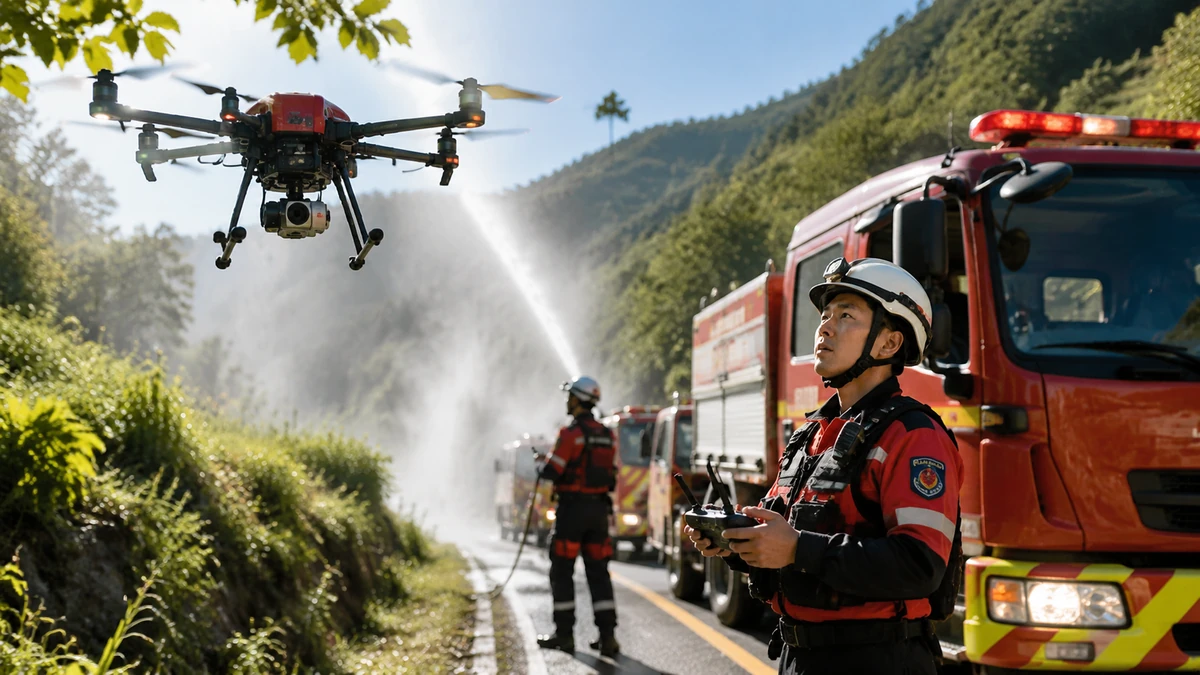
One unusual aspect of South Korea’s response has been the repurposing of wildfire response equipment for heat wave prevention. The Eastern Regional Forest Service has deployed drones and wildfire suppression vehicles, traditionally used during forest fires, to help reduce heat risks during the current summer emergency.
The agency and seven affiliated national forest management offices are conducting prevention activities across 10 cities and counties under their jurisdiction. Drones are being used to identify people working outdoors during heat warnings, allowing officials to provide warnings and encourage workers to stop or reduce activity when conditions become dangerous.
Firefighting vehicles are also being used to spray water on roads to lower surface temperatures and reduce the heat felt by people in affected areas. Officials are additionally distributing heat prevention supplies to residents and workers.
This approach reflects a broader shift in disaster management. As climate-related risks expand, governments are increasingly adapting existing emergency resources for multiple types of crises instead of limiting equipment to a single purpose.
South Korea’s experience mirrors efforts in other countries where emergency services are expanding beyond traditional disasters. Fire departments, for example, have increasingly become involved in heat rescues, cooling center operations and public education campaigns during extreme weather events.
Climate Change Forces Cities to Rethink Heat Protection
The situation in Ulsan reflects a larger global challenge: extreme heat is becoming one of the most significant climate-related threats facing urban communities. Unlike storms or earthquakes, heat waves often develop quietly, but they can produce widespread health impacts over extended periods.
For cities, preparing for extreme heat requires more than weather forecasting. It involves workplace regulations, public health communication, emergency planning and infrastructure improvements such as cooling spaces and heat-resistant urban design.
South Korea has been adapting its disaster response strategies as temperatures rise. The use of forest fire equipment for heat prevention illustrates how governments are looking for flexible solutions as traditional categories of natural disasters become increasingly interconnected.
Ulsan’s experience offers lessons for cities around the world. Communities from California to Australia and Europe have faced similar questions about how to protect residents during longer and more intense heat waves. The challenge is not only managing high temperatures but ensuring that daily life, work and public services can continue safely.
Heat Waves Become a New Test of Urban Resilience
The 110 heat-related illness cases recorded in Ulsan serve as a reminder that extreme weather affects people at the individual, workplace and community levels. Preventing heat illness requires cooperation between residents, employers and government agencies.
As climate patterns continue to change, cities are increasingly treating heat as a public safety issue comparable to other major emergencies. The response in Ulsan shows how local governments and public agencies are experimenting with new approaches to protect people during increasingly difficult summer conditions.
For international observers, South Korea’s heat response provides another example of how Asian cities are adapting to climate challenges. From emergency equipment innovation to workplace safety measures, the country’s experience reflects a growing global effort to make urban life safer in a warmer world.
Comments
Post a Comment