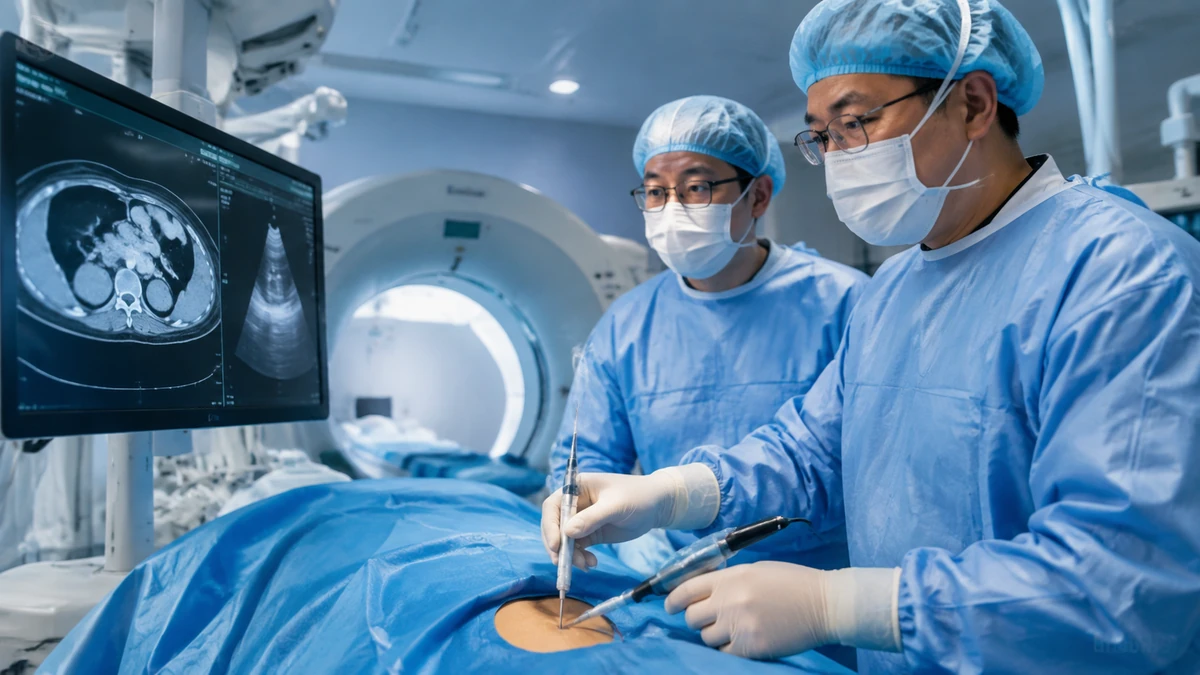
A New Chapter in Cancer Care as South Korean Center Surpasses 100 Cryoablation Procedures
A South Korean cancer center has reached a milestone in the use of cryoablation, a minimally invasive treatment that destroys tumors by freezing them at extremely low temperatures. The Southeast Region Radiation Oncology and Medical Center announced that it has treated 104 cancer patients since introducing the procedure in 2024, surpassing 100 completed cases on Aug. 8, 2026.
The achievement highlights a broader shift taking place in cancer medicine worldwide: moving beyond a one-size-fits-all approach toward treatments designed around each patient's condition, lifestyle and ability to tolerate medical procedures. While surgery remains a major option for many cancers, doctors are increasingly exploring alternatives that can reduce physical stress, shorten recovery periods and preserve quality of life.
For American readers, cryoablation may be familiar as a technology used in certain medical fields, including some heart rhythm procedures and tumor treatments. In cancer care, the technique uses imaging guidance and freezing technology to target specific cancerous tissue while limiting damage to surrounding healthy organs.
How Cryoablation Works: Freezing Tumors Instead of Removing Them Surgically
Cryoablation, sometimes called cryotherapy or tumor ablation, works by inserting thin treatment needles directly into a tumor. Physicians use imaging technologies such as CT scans or ultrasound to identify the exact location of the cancer before delivering extremely cold temperatures, often below minus 40 degrees Celsius, to freeze and destroy cancer cells.
The principle behind the procedure is precision. Rather than making a large surgical incision to physically remove tissue, doctors aim to destroy the targeted tumor from inside the body. The freezing process causes cellular damage that ultimately leads to tumor tissue death.
The Southeast Region Radiation Oncology and Medical Center, located in Busan, South Korea, has positioned the treatment as an option for selected patients who may face challenges with traditional surgery. This can include some older adults or individuals whose overall health makes major operations more difficult.
Medical experts emphasize that cryoablation is not a replacement for every cancer treatment. Like surgery, chemotherapy and radiation therapy, it is one tool among many. Whether it is appropriate depends on factors such as the type of cancer, tumor size, tumor location and the patient's overall health.
Why Minimally Invasive Cancer Treatments Are Gaining Attention
The growth of minimally invasive procedures reflects a major trend in modern healthcare: doctors are increasingly focused not only on treating disease but also on reducing the burden of treatment itself.
Traditional cancer surgery can be highly effective, but it may require significant recovery time and can place physical demands on patients. For people with other medical conditions or reduced physical strength, the recovery process can become an important part of the treatment decision.
Cryoablation offers several potential advantages in carefully selected cases. Because it uses small needles instead of larger surgical openings, it may reduce tissue damage and allow some patients to recover more quickly. The freezing process can also have a local anesthetic effect, which may help reduce discomfort during treatment.
However, doctors caution that every medical procedure involves risks and limitations. Possible concerns include incomplete destruction of tumor tissue, the possibility that additional treatment may be needed, and costs that may not always be fully covered by national insurance systems. In South Korea, the hospital noted that some patients face financial concerns because certain cryoablation equipment costs are not covered by insurance.
Expanding Access to Advanced Cancer Care Outside Major Cities
The milestone also carries significance because of where the treatment is being provided. South Korea has a highly developed healthcare system, but advanced medical technologies are often concentrated in major metropolitan hospitals. Expanding access to specialized procedures in regional medical centers can reduce the need for patients to travel long distances for care.
The Southeast Region Radiation Oncology and Medical Center serves patients in the Busan, Ulsan and Gyeongnam areas, commonly known in South Korea as the southeastern region. By establishing experience with more than 100 procedures, the center has created a local option for patients who might otherwise need to seek treatment at larger hospitals in Seoul or other major cities.
Healthcare access is an important issue in many countries, including the United States. Rural and regional communities often face challenges in obtaining specialized treatments because advanced medical expertise tends to cluster around large urban institutions. South Korea's experience demonstrates how regional hospitals can expand their capabilities through investment in technology and specialist training.
The hospital's achievement is therefore not only about the number of procedures performed. It also represents the gradual spread of advanced cancer care beyond traditional medical hubs.
A Patient-Centered Approach to the Future of Oncology
Cancer treatment has undergone significant changes in recent decades. Earlier approaches often focused primarily on eliminating tumors through aggressive intervention. Today, oncologists increasingly consider a wider range of factors, including survival outcomes, treatment side effects, recovery time and the patient's ability to maintain daily activities.
This patient-centered approach is particularly important as populations age. Older adults represent a growing share of cancer patients worldwide, and many may have additional health conditions that affect treatment decisions. A therapy that reduces physical strain can become an important option when doctors and patients discuss possible paths forward.
Doctors at the South Korean medical center said they plan to continue expanding the use of cryoablation through collaboration among different medical specialties. This multidisciplinary approach, which may involve surgeons, radiologists, oncologists and other specialists, has become a defining feature of modern cancer care.
Instead of relying on a single treatment method, medical teams increasingly combine expertise to determine the most appropriate strategy for each patient. In some cases, minimally invasive treatments may be used alone. In others, they may complement surgery, radiation or systemic therapies such as chemotherapy or targeted drugs.
What South Korea's Cryoablation Experience Means for Global Cancer Care
The development of cancer treatment technologies is a global effort. Hospitals and research institutions around the world are studying ways to improve precision while reducing the physical and emotional challenges associated with cancer therapy.
South Korea has become internationally recognized for its advanced healthcare infrastructure, medical technology sector and rapid adoption of digital and precision medicine tools. The country's hospitals frequently participate in efforts to develop and apply new approaches that combine technology with personalized care.
The 100-case milestone at the Southeast Region Radiation Oncology and Medical Center does not mean cryoablation will replace established cancer treatments. Instead, it illustrates a broader transformation in medicine: patients are gaining access to more options, and doctors are better able to tailor treatments to individual circumstances.
For patients and families facing a cancer diagnosis, the future of care is increasingly about choice. The best treatment may depend not only on removing cancer, but also on helping people preserve their health, independence and quality of life during and after treatment.
As medical technology continues to advance, procedures such as cryoablation represent one part of a larger movement toward precision medicine. The goal is not simply to fight cancer more aggressively, but to do so in ways that better match the needs of each person.
Comments
Post a Comment