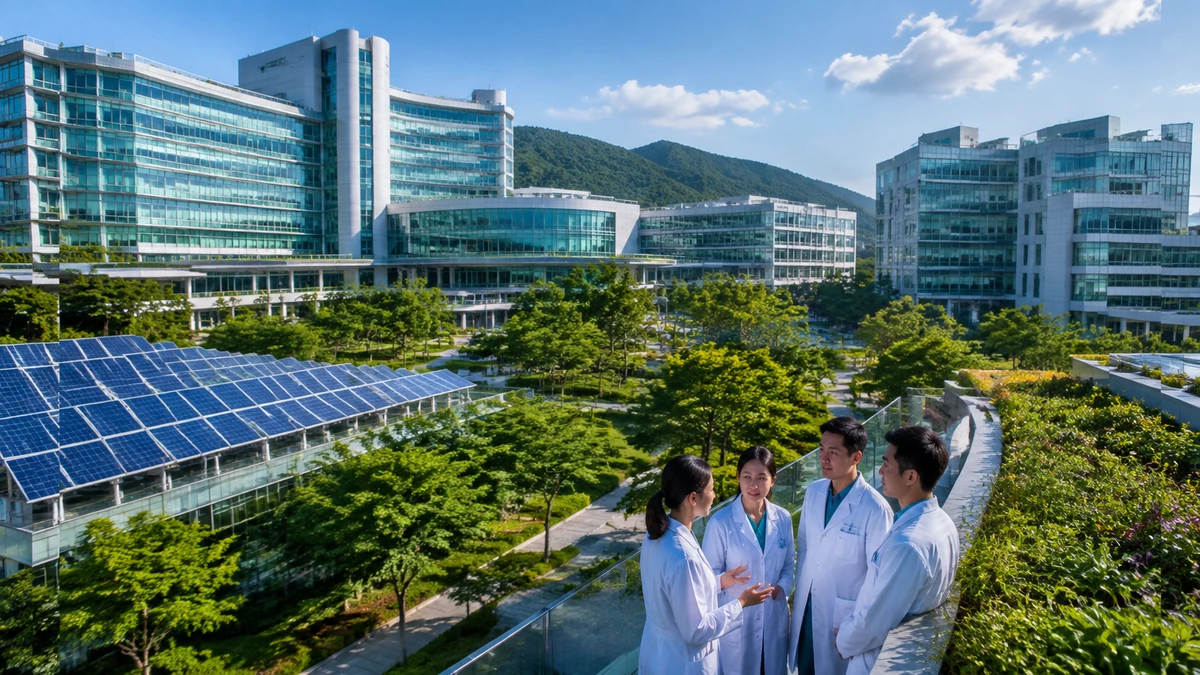
South Korea’s Hospitals Gain Global Recognition for Environmental Leadership
Four major hospitals in South Korea have received the highest rating in Newsweek’s 2026 World’s Greenest Hospitals evaluation, placing the country among the leading examples of sustainable healthcare worldwide. The hospitals recognized are Asan Medical Center, Korea University Guro Hospital, Samsung Medical Center and Severance Hospital.
According to Newsweek’s evaluation, 250 hospitals around the world were reviewed for their environmental performance, and only 34 institutions achieved the highest level of recognition. Twelve of those top-rated hospitals were located in the Asia-Pacific region, including the four South Korean medical centers.
The recognition highlights a broader shift taking place in healthcare systems around the world. Hospitals are no longer judged only by their ability to treat disease, perform complex surgeries or provide advanced medical technology. Increasingly, healthcare institutions are also being evaluated by how responsibly they use energy, manage resources and reduce their environmental impact.
For American readers, the trend reflects a similar movement in the United States, where major medical systems have increasingly focused on reducing carbon emissions, improving energy efficiency and creating healthier buildings. The idea behind the “green hospital” is that the place where people receive care should also contribute to long-term public health.
What Makes a Hospital “Green” in the Modern Healthcare Era
The concept of a green hospital extends far beyond adding plants to a building or installing energy-saving lights. It refers to a comprehensive approach that considers the environmental impact of healthcare operations while maintaining patient safety and quality treatment.
Hospitals are among the most resource-intensive types of buildings. Unlike ordinary offices or commercial facilities, hospitals operate around the clock. They require advanced medical equipment, climate control systems, sterilization facilities, emergency services and strict infection prevention measures. These requirements create significant energy and resource demands.
A sustainable hospital seeks to reduce that impact through strategies such as efficient energy management, environmentally responsible construction, waste reduction, water conservation and improved operational systems. The goal is not simply to create a greener building but to establish a healthcare model that benefits both patients and the communities surrounding the hospital.
South Korea’s achievement is notable because the country’s healthcare sector has traditionally been recognized for advanced technology, high-quality medical services and large-scale hospital infrastructure. The latest recognition suggests that Korean medical institutions are increasingly competing on another dimension: sustainability.
Four Korean Medical Centers Stand Among the World’s Leading Sustainable Hospitals
The four South Korean hospitals recognized by Newsweek are among the country’s largest and most influential medical institutions. Their inclusion reflects growing international attention toward Korea’s approach to combining medical innovation with environmental responsibility.
Asan Medical Center in Seoul is one of South Korea’s largest hospitals and is widely known for its specialized treatment capabilities. Samsung Medical Center and Severance Hospital are also major healthcare institutions with extensive clinical programs and research operations. Korea University Guro Hospital serves as a key medical center in Seoul’s western district and has developed a reputation as a comprehensive healthcare provider.
While each hospital has its own sustainability programs and operational strategies, their shared recognition reflects a common direction in global healthcare: the understanding that medical excellence and environmental responsibility are increasingly connected.
Healthcare systems are major contributors to national economies and public infrastructure. As populations age and demand for medical services rises, hospitals face pressure to provide more care while managing limited resources. Sustainability has therefore become not only an environmental issue but also a long-term operational challenge.
The Growing Global Importance of Sustainable Healthcare
The healthcare industry worldwide is facing a changing landscape. Climate change, population aging and rising healthcare costs are forcing countries to reconsider how medical systems operate.
Climate-related health risks have become especially visible in recent years. Extreme heat, air pollution and changing environmental conditions are increasingly linked to health problems, including heat-related illnesses and respiratory concerns. This has expanded the role of healthcare institutions from treating patients after illness occurs to helping create healthier environments that reduce health risks.
In this context, sustainable hospitals represent a broader philosophy: protecting human health requires protecting the environment where people live. Medical care and environmental policy are no longer separate fields but increasingly interconnected parts of public health strategy.
For many countries, including the United States, hospitals are among the largest consumers of energy in the public sector. Improving efficiency in healthcare facilities can therefore have a meaningful impact on national sustainability goals while potentially reducing long-term operating expenses.
Extreme Weather Highlights the Connection Between Environment and Health
The recognition of Korean green hospitals comes at a time when extreme weather events are becoming a growing health concern. South Korea, like many countries, has experienced periods of intense summer heat that create additional risks for vulnerable populations and outdoor workers.
On the same day as the Newsweek announcement, other examples from South Korea highlighted the importance of protecting public health during extreme temperatures. Workers at a public health center in Daegu continued mosquito control and sanitation activities despite severe heat conditions, using measures such as hydration breaks, adjusted work schedules and reduced exposure during the hottest periods of the day.
Industrial workplaces have also increased attention to heat-related safety. Korea Zinc’s Onsan smelting facility conducted a summer heat illness prevention campaign with labor representatives, implementing measures based on temperature conditions and adjusting work-rest schedules to protect employees.
These examples show that modern health management is expanding beyond hospitals. Preventing illness increasingly involves workplaces, communities and public systems. Hospitals play an important role, but healthier societies require broader approaches that address environmental conditions before people become patients.
Why South Korea’s Healthcare Model Matters to International Audiences
South Korea has become globally recognized for its rapid technological development, from advanced electronics to digital services and medical innovation. The country’s latest green hospital achievements demonstrate another aspect of its modernization: integrating sustainability into essential public services.
For international observers, South Korea’s experience offers a case study in how healthcare systems can evolve. The challenge facing many nations is not simply how to build more hospitals, but how to create healthcare infrastructure that remains effective, affordable and environmentally responsible over decades.
The country’s hospitals are moving toward a model where sustainability is viewed as part of healthcare quality rather than an additional feature. A hospital that uses resources efficiently, reduces environmental harm and supports healthier communities contributes to prevention as well as treatment.
This approach may become increasingly important as healthcare systems worldwide respond to common challenges. Countries are dealing with aging populations, increasing demand for medical services and the need to reduce environmental impacts. Sustainable healthcare offers one possible path toward addressing these pressures together.
The Future of Hospitals: Healing People While Protecting the Planet
The recognition of four South Korean hospitals by Newsweek reflects a larger transformation in the meaning of healthcare. Hospitals are no longer viewed only as places people visit when they are sick. They are becoming important parts of the broader environment that shapes public health.
The future hospital may be defined not only by the sophistication of its medical equipment or the expertise of its doctors, but also by how responsibly it operates. Energy efficiency, sustainable design, responsible resource management and community health initiatives are becoming central elements of modern healthcare leadership.
South Korea’s performance in the 2026 World’s Greenest Hospitals evaluation demonstrates how healthcare innovation is expanding beyond medical treatment. As nations around the world search for ways to improve health outcomes while responding to climate challenges, sustainable hospitals are likely to become an increasingly important benchmark.
The message behind the global green hospital movement is simple: protecting health requires more than treating illness. It requires creating environments where people can live healthier lives. The achievements of South Korea’s hospitals show how the future of medicine may involve not only saving lives, but also protecting the planet that supports them.
Comments
Post a Comment