South Korean Province Reports Growing Toll From Extreme Summer Heat
As a prolonged heat wave continues across South Korea, health officials in the central province of Chungcheongbuk-do, commonly known as Chungbuk, are warning residents to take extreme heat more seriously. The province has recorded 92 cases of heat-related illness this summer, including five additional patients reported in a single day.
The latest cases highlight a broader public health challenge facing South Korea as temperatures remain unusually high. Heat-related illnesses, including heat exhaustion and heat stroke, are becoming a recurring concern during the country’s summer months, when periods of extreme heat can last for weeks. For many Koreans, especially older adults and people working outdoors, the risk is not limited to discomfort but can become a serious medical emergency.
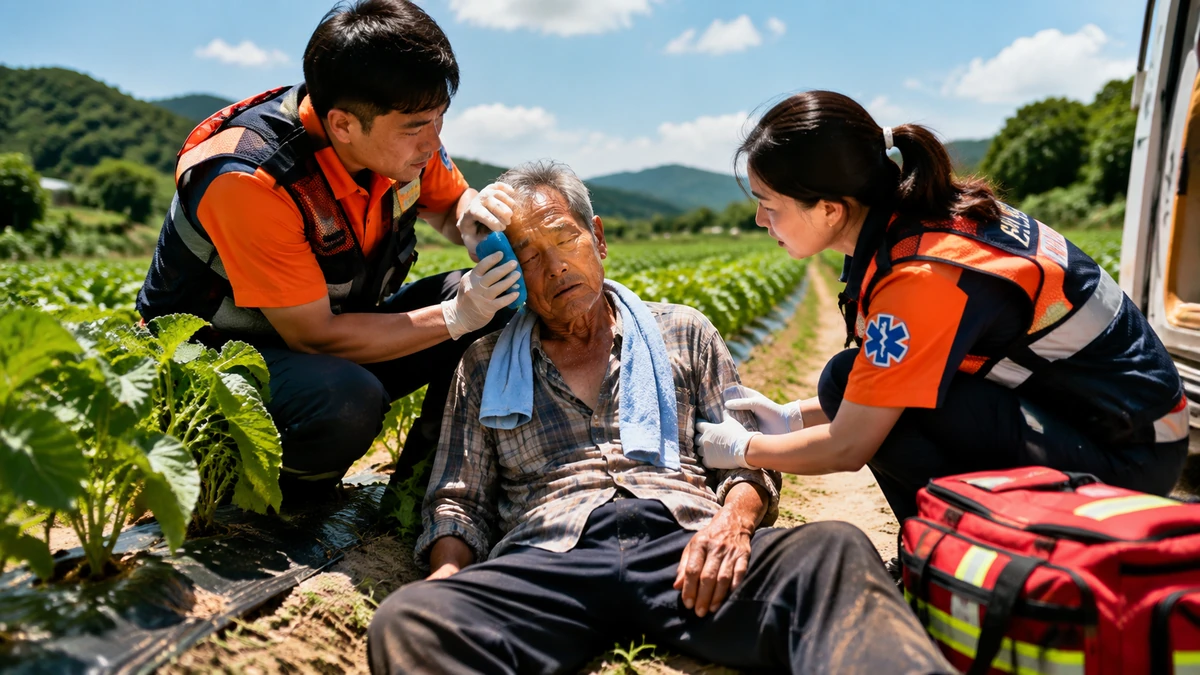
According to South Korean reports, one of the recent patients was a man in his 70s who developed symptoms of heat exhaustion while working on a farm in Jecheon, a city in northern Chungbuk. He was taken to an emergency room for treatment. The case reflects a familiar pattern seen during severe heat events: people engaged in agricultural work or outdoor labor can face dangerous exposure because their daily responsibilities continue even when temperatures reach hazardous levels.
Unlike a short period of hot weather, prolonged heat waves create cumulative stress on the human body. The body relies on sweating and other cooling mechanisms to maintain a stable internal temperature, but extended exposure to high temperatures can overwhelm these systems. Health experts say that even people who consider themselves healthy can suddenly experience symptoms when working or exercising in extreme heat.
Why Heat-Related Illness Is Becoming a Major Public Health Issue
South Korea’s heat-related illness monitoring season began on May 15, earlier than the peak of summer. The increasing number of reported patients demonstrates how heat exposure has moved beyond a seasonal inconvenience and become a significant health issue.
For American readers, the situation is comparable to the heat emergencies experienced in parts of the United States, including the Southwest and Pacific Northwest, where officials increasingly treat extreme heat as a public safety issue rather than simply a weather condition. In South Korea, government agencies and local authorities track heat-related illnesses because early warnings and public awareness campaigns can help prevent severe outcomes.
Heat exhaustion is one of the most common heat-related conditions. Symptoms may include heavy sweating, weakness, dizziness, nausea, headache and fatigue. If a person continues to remain in a hot environment without cooling down, the condition can progress to heat stroke, a potentially life-threatening emergency involving confusion, loss of consciousness or serious damage to internal organs.
The recent Chungbuk cases emphasize the importance of recognizing warning signs quickly. Health officials advise people to drink water regularly, take frequent breaks, avoid strenuous activity during the hottest parts of the day and move to cooler environments when symptoms appear.
These recommendations are especially important for older adults. As people age, the body’s ability to regulate temperature can decline, making seniors more vulnerable during extreme heat. South Korea, like many developed countries, has an aging population, meaning heat waves are creating additional challenges for families, communities and healthcare systems.
Farm Workers and Outdoor Laborers Face Higher Risks
Agriculture remains an important part of many rural communities in South Korea, and farm workers are among those most exposed to extreme summer conditions. Unlike office workers who may have access to air conditioning and controlled indoor environments, agricultural workers often spend hours outside under direct sunlight.
The Jecheon case illustrates why public health officials repeatedly urge farmers to adjust their schedules during heat waves. In many rural areas, early morning or evening work is recommended because temperatures are typically lower. Regular breaks in shaded areas and sufficient hydration are also considered essential safety measures.
This challenge is not unique to South Korea. Around the world, agricultural workers are among the groups most vulnerable to rising temperatures linked to climate change. From California farms to European vineyards, outdoor workers are increasingly affected by longer and more intense heat events.
In South Korea, cultural attitudes toward work can also influence heat exposure. Many older farmers have spent decades maintaining demanding work routines and may be reluctant to stop because of hot weather. Public health officials say that changing this mindset is part of preventing heat-related injuries.
The message from authorities is increasingly focused on prevention rather than emergency response: recognizing that resting during extreme heat is not a sign of weakness but an important health measure.
Heat Wave Conditions Spread Beyond Chungbuk Across South Korea
The health concerns seen in Chungbuk are part of a nationwide pattern. Other regions, including South Gyeongsang Province, known as Gyeongnam, have also experienced severe heat conditions. On Aug. 4, heat warnings remained active throughout the region, with several cities recording temperatures above 35 degrees Celsius, or 95 degrees Fahrenheit.
In Gimhae, morning temperatures reached 36.4 degrees Celsius, while other cities including Sacheon, Yangsan, Uiryeong and Jinju also experienced intense heat. Earlier in the summer, Yangsan recorded a daytime high of 42.5 degrees Celsius, showing the extreme levels that parts of South Korea can experience during heat waves.
South Korea’s weather agency has emphasized that the danger does not disappear immediately when temperatures begin to decline. High humidity can keep the perceived temperature, known as the heat index or “feels-like” temperature, dangerously high even after actual temperatures fall.
For residents, this means that heat safety cannot be based only on checking the daily forecast. People need to consider how long they will be outside, their physical condition, access to water and whether they are in a high-risk group.
The combination of high temperatures and humidity is particularly challenging in South Korea’s summer climate. Unlike dry heat in some parts of the western United States, humid conditions can make it harder for sweat to evaporate, reducing the body’s ability to cool itself.
From Weather Forecasts to Health Alerts: A Changing Approach to Extreme Heat
The rise in heat-related illnesses is changing how governments communicate about extreme weather. Traditionally, many people viewed hot weather warnings as information about discomfort or inconvenience. Increasingly, authorities are treating heat waves as health emergencies requiring the same level of attention given to other natural hazards.
Local governments in South Korea monitor heat-related illness reports to understand where risks are increasing and which communities may need additional support. These efforts include public messaging, emergency preparedness and outreach to vulnerable residents.
For international observers, South Korea’s response reflects a global shift in how societies are adapting to climate-related risks. Extreme heat is now recognized by many researchers as one of the most significant consequences of a warming planet because it directly affects human health, agriculture, energy demand and public infrastructure.
The Chungbuk cases also show that heat safety is not only a government responsibility. Individual decisions play a major role. Choosing to delay outdoor activities, drinking enough fluids and checking on elderly neighbors can reduce the likelihood of serious illness.
In many Korean communities, neighborhood networks remain an important part of caring for vulnerable residents. Local officials often encourage families and neighbors to pay attention to older adults who may live alone, especially during periods of dangerous heat.
Lessons From South Korea’s Heat Wave for a Warming World
The increase in heat-related illnesses in Chungbuk serves as a reminder that extreme heat is becoming a common challenge in many parts of the world. From Asia to North America and Europe, communities are facing questions about how to protect people as summers become hotter and heat waves become longer.
South Korea’s experience offers a broader lesson: heat exposure can affect anyone, not only those who work outdoors or have existing health concerns. A walk outside, a workout session, commuting without enough preparation or household chores performed during peak heat can all create risks.
Health professionals emphasize that prevention remains the most effective tool. Cooling down early, recognizing symptoms quickly and avoiding unnecessary exposure during extreme temperatures can make a critical difference.
As climate patterns continue to change, public awareness of heat safety is becoming an essential part of everyday life. The situation in Chungbuk is not simply a local weather story. It reflects a global reality in which communities must adapt to a hotter environment and develop new habits to protect public health.
For residents of South Korea and people around the world, the message is increasingly clear: extreme heat should be treated as a serious health risk, and preparation before symptoms appear is the best defense.
Comments
Post a Comment