South Korea’s KIST Researchers Explore Gut Microbiome Pathway to Help Fight Cancer-Related Muscle Loss
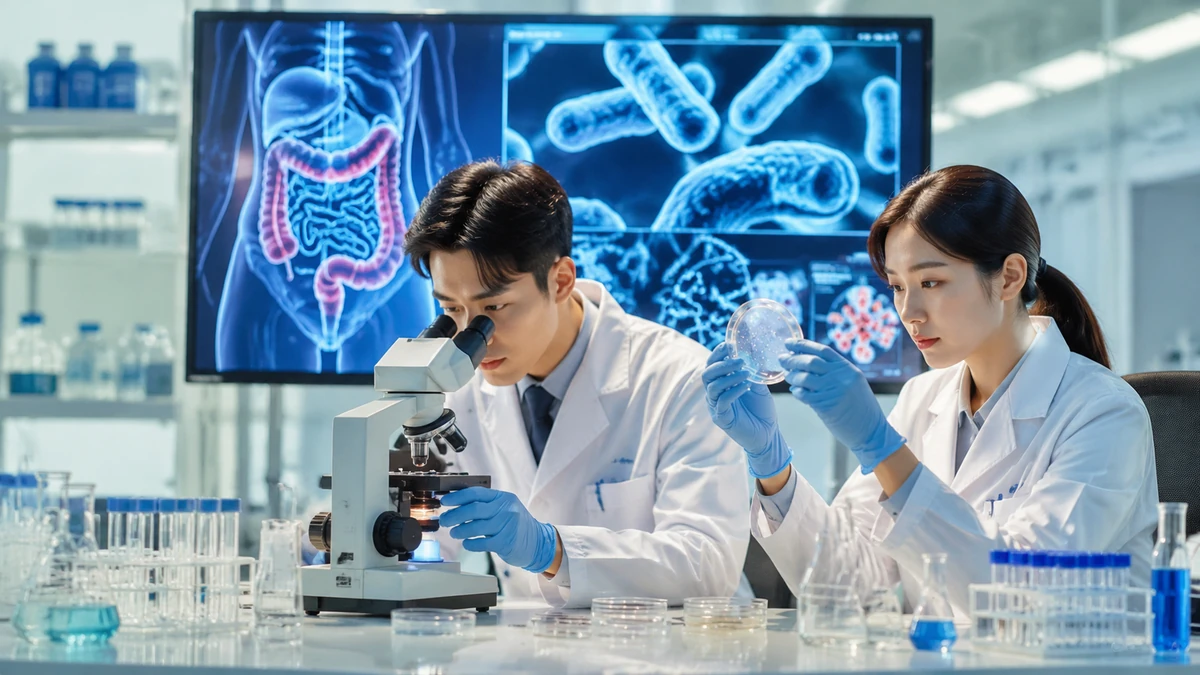
Image to help understand the article
A New Approach to One of Cancer’s Most Dangerous Complications
South Korean researchers are investigating a new way to address a serious but often overlooked challenge in cancer care: cancer cachexia, a condition in which patients lose significant muscle mass and body weight during illness. Scientists at the Korea Institute of Science and Technology (KIST) have identified biological mechanisms involving gut microbes and natural compounds that could eventually contribute to new treatments for this condition.
Cancer cachexia is not simply ordinary weight loss. Unlike dieting-related weight reduction, cachexia involves the breakdown of skeletal muscle as well as fat, weakening patients physically and often making it harder for them to tolerate cancer treatments. The condition is associated with reduced quality of life and has been linked to a substantial share of cancer-related deaths. Researchers estimate that it affects a large proportion of advanced cancer patients, making the search for effective therapies a major global health priority.
The KIST research team, led by scientists from its Natural Product Research Center, studied how changes in the gut microbiome — the community of microorganisms living inside the human digestive system — may influence the biological processes behind muscle loss and inflammation. Their findings suggest that certain microbial communities and the substances they produce could play a role in supporting muscle maintenance and regulating immune responses.
While the research remains at an early stage and is not yet a treatment available to patients, it represents a growing shift in cancer science. Researchers are increasingly looking beyond directly attacking tumors and exploring ways to improve the overall condition of patients so their bodies can better withstand disease and treatment.
Why the Gut Microbiome Has Become a Major Focus in Medical Research
For many Americans, the phrase “gut bacteria” may bring to mind probiotics or digestive health products. But scientists now view the microbiome as a complex biological system that can influence metabolism, immunity and even the body’s response to disease. The human gut contains trillions of microorganisms that interact with food, immune cells and chemical signals throughout the body.
The KIST study focused on a more detailed question: not only which microbes exist in the gut, but what those microbes produce. Researchers analyzed metabolites created by specific bacterial strains and identified 11 cyclic peptides that may be connected to processes involved in muscle formation and inflammation control.
This distinction is important. Earlier microbiome research often focused on whether certain bacteria were present or absent. Newer approaches examine the chemical messages produced by those microbes and how those messages affect human biology. This field, sometimes called microbiome-based therapeutics, is attracting attention from research institutions and biotechnology companies around the world.
Scientists caution, however, that microbiome research is highly complex. Every person’s microbial environment is shaped by diet, age, genetics, medications and health history. A discovery involving one group of patients or laboratory models cannot automatically be applied to everyone. For cancer patients, nutrition decisions and treatment choices remain matters that require professional medical guidance.
South Korea’s Growing Role in Biotechnology and Precision Medicine
The KIST findings reflect South Korea’s broader effort to strengthen its position in advanced biomedical research. Known globally for its technology industries, South Korea has increasingly invested in biotechnology, artificial intelligence-driven healthcare and precision medicine as the country seeks new growth areas beyond traditional manufacturing.
KIST, established as a national research institute, has played a role in developing technologies across science and engineering fields. Research involving natural compounds and microbiomes connects South Korea’s traditional interest in bioactive materials with modern molecular biology techniques.
The combination of natural products and microbiome science is particularly notable because it represents a different strategy from conventional drug development. Instead of creating a single molecule designed to attack one target, researchers are exploring whether naturally derived compounds can reshape biological environments and encourage beneficial interactions between the human body and microorganisms.
For cancer care, this approach reflects a broader international trend toward supportive therapies. Modern oncology increasingly recognizes that successful treatment involves more than shrinking tumors. Maintaining muscle strength, reducing inflammation and preserving patients’ ability to continue therapy are becoming important parts of comprehensive cancer management.
What This Research Could Mean for the United States
The KIST study has relevance for the United States because American healthcare providers and biotechnology companies are also investigating microbiome-based treatments. The U.S. has become one of the world’s largest markets for cancer research, pharmaceutical development and personalized medicine, with institutions studying how microorganisms may influence diseases ranging from cancer to metabolic disorders.
American cancer patients and doctors have increasingly focused on supportive care strategies that improve daily function during treatment. Cancer-related muscle loss remains a significant concern because patients who become physically weaker may face additional challenges during chemotherapy, surgery or other therapies. A future microbiome-based approach could complement existing cancer treatments if researchers are able to demonstrate safety and effectiveness through clinical trials.
The commercial implications could also be significant. U.S. biotechnology companies have invested heavily in microbiome science, while Korean researchers have developed expertise in areas such as molecular analysis, fermentation technology and biomedical engineering. Future collaborations between Korean research institutions and American companies could become part of a larger global race to develop next-generation therapies.
At the same time, the research highlights the importance of realistic expectations. The microbiome industry has already seen public enthusiasm around probiotics and personalized health products, but scientific evidence varies widely among products currently marketed to consumers. A laboratory discovery does not immediately become a medical solution. Regulatory approval, human clinical trials and long-term safety studies are necessary before any new therapy reaches patients.
For U.S. audiences watching advances in Korean biotechnology, the key question is not whether a single breakthrough will transform cancer treatment overnight. Instead, the significance lies in a larger movement toward personalized healthcare, where treatments consider not only the disease itself but also the patient’s biological environment.
From Laboratory Discovery to Future Cancer Treatments
The next stage for the KIST research will require additional validation. Scientists must determine whether the identified microbial metabolites can consistently produce beneficial effects in relevant biological models and eventually in human clinical studies. Many promising discoveries in biomedical research face challenges during the transition from laboratory experiments to real-world medicine.
Researchers also need to understand how microbiome-based treatments could interact with existing cancer therapies. The immune system, medications and gut microorganisms form a complicated network, and changing one part of that system may have unexpected effects elsewhere in the body.
Still, the study offers a promising direction because it addresses a major unmet need in cancer care. While many cancer treatments focus on eliminating cancer cells, patients also need support in maintaining strength, nutrition and overall health throughout their treatment journey.
The global scientific community is increasingly exploring whether the microbiome can become a new platform for medicine. From South Korea to the United States, researchers are examining how microscopic organisms inside the human body could influence major health outcomes. The KIST findings add another piece to that expanding field and demonstrate how cancer research is moving toward a more integrated understanding of human health.
For patients and families affected by cancer, the potential value of this research is ultimately measured not only in laboratory results but in whether future therapies can help people remain stronger, recover more effectively and maintain a better quality of life during treatment.
Comments
Post a Comment