Image to help understand the article
Ukraine’s Anti-Corruption Agencies Open Probe Into Top Government Officials
Ukraine’s wartime leadership is facing a new political challenge after the country’s anti-corruption authorities launched an investigation involving senior officials connected to the presidential office and a sitting lawmaker. The move has drawn international attention because it comes as Ukraine continues its long-running war against Russia and depends heavily on support from Western allies.
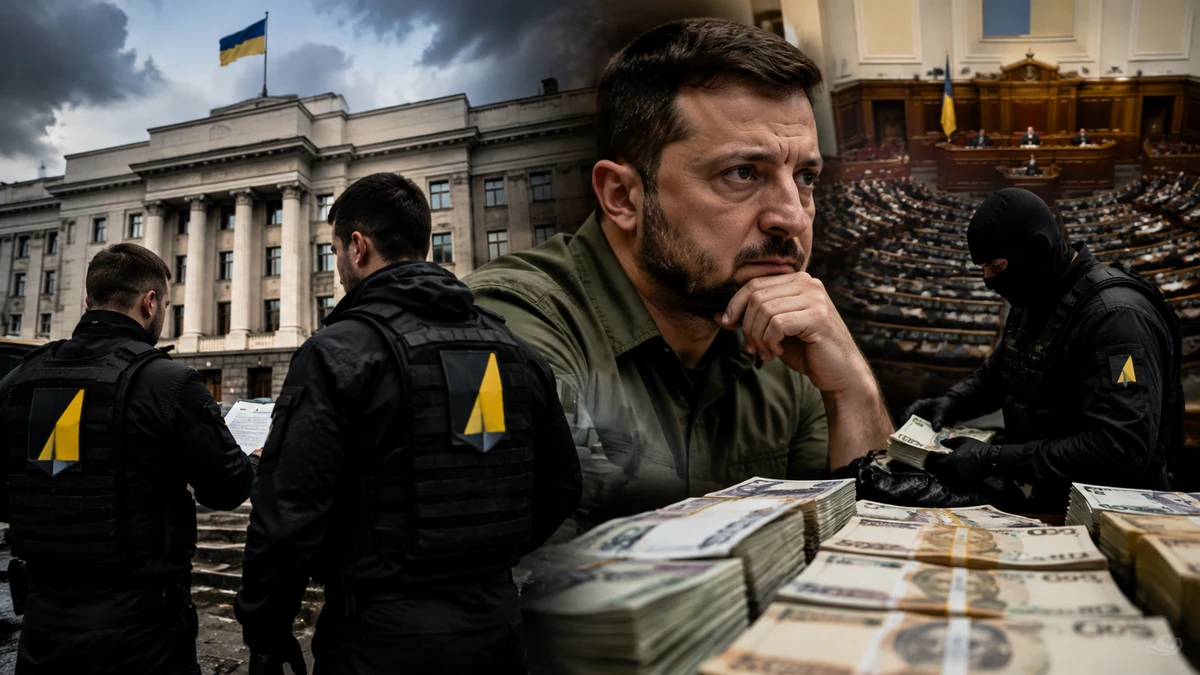
The National Anti-Corruption Bureau of Ukraine (NABU) and the Specialized Anti-Corruption Prosecutor’s Office (SAPO) announced that they were conducting an operation targeting an alleged criminal network involving high-level government figures. Authorities said the investigation concerns suspected money laundering activities, though they have not publicly identified the individuals under investigation or confirmed any criminal wrongdoing.
For American audiences, the significance of the case lies less in the specific allegations at this stage and more in what it represents: a test of whether a country fighting a major war can maintain institutional checks and balances while managing an existential national crisis. In the United States, investigations involving senior officials often become major political events because they raise questions about public trust, accountability and the separation between political power and law enforcement. Ukraine now faces a similar moment.
Why Corruption Allegations Carry Extra Weight During Wartime
Corruption has long been one of Ukraine’s most sensitive political issues. Since gaining independence after the collapse of the Soviet Union in 1991, Ukraine has struggled with entrenched networks of political and business influence. Reforming those systems has been a central demand from Ukrainian civil society and a key expectation of Western partners.
The creation and strengthening of independent anti-corruption institutions such as NABU and SAPO became an important part of Ukraine’s broader reform effort. These agencies were designed to investigate powerful figures, including politicians and officials who might otherwise be difficult to hold accountable. Their ability to investigate people close to the government is often viewed as a measure of institutional independence.
The timing of the investigation adds to its political importance. Ukraine has been fighting Russia’s full-scale invasion since 2022, and the conflict has required enormous sacrifices from Ukrainian citizens. During wartime, governments typically argue that unity and stability are essential. At the same time, citizens and international partners often demand greater transparency because public resources, military aid and reconstruction funds are involved.
Analysts say repeated corruption controversies could create political pressure for President Volodymyr Zelenskyy, whose global image has been closely tied to Ukraine’s resistance effort. While international supporters continue to view Ukraine’s defense against Russia as a major geopolitical issue, concerns about governance and accountability remain part of the conversation among allied governments.
Zelenskyy Faces the Dual Challenge of War Leadership and Domestic Trust
President Zelenskyy’s political position has been shaped by two competing responsibilities: leading the country through war and maintaining confidence in Ukraine’s institutions. His international profile grew significantly after Russia’s invasion, particularly in Europe and North America, where he became a symbol of Ukrainian resistance.
However, wartime leadership does not remove the need for domestic oversight. Governments under pressure often face questions about whether emergency conditions are being used to weaken accountability. Ukraine’s current situation highlights the difficult balance between rapid decision-making during a national emergency and preserving democratic institutions.
The latest investigation follows earlier controversies involving figures close to the Ukrainian presidency. Allegations surrounding senior officials have increased scrutiny of how power is managed within the presidential administration. The issue is politically sensitive because many Ukrainians have supported difficult wartime measures while expecting government officials to meet high standards of integrity.
The case also comes amid visible political tensions inside Ukraine’s leadership circles. Former Defense Minister Mykhailo Fedorov has emerged as a critic of aspects of the government after disagreements involving political and military leadership. His public position reflects broader debates about how Ukraine should organize its leadership structure during a prolonged conflict.
What the Investigation Means for the United States and Western Allies
For the United States, Ukraine’s anti-corruption efforts are closely connected to the broader relationship between Washington and Kyiv. American support for Ukraine has included military assistance, economic aid and diplomatic backing, making governance issues an important part of discussions about long-term partnership.
U.S. policymakers have repeatedly emphasized that democratic institutions and transparency matter alongside battlefield performance. Similar concerns have appeared in other international assistance programs, where donor countries often require accountability systems to ensure that financial support reaches its intended purpose.
The investigation does not mean that Ukrainian officials have been found guilty of crimes. In the American legal system, as in Ukraine, an investigation is a process of gathering evidence rather than a final judgment. The outcome will depend on additional evidence, prosecutorial decisions and possible court proceedings.
For American companies and organizations watching Ukraine’s future, governance will also influence reconstruction opportunities. Ukraine is expected to require major rebuilding efforts after the war, involving infrastructure, technology, energy and investment. International businesses considering participation will pay close attention to whether Ukraine can demonstrate reliable institutions and transparent decision-making.
The issue also resonates with American audiences because it reflects a broader global debate about democracy under pressure. The question is not only whether a country can defend itself militarily, but whether it can maintain public confidence and institutional accountability during a crisis.
A Broader Global Test of Democratic Resilience
Ukraine’s experience illustrates a challenge faced by many countries confronting security threats: how to preserve democratic standards while responding quickly to emergencies. History offers many examples of governments expanding executive power during wars, sometimes temporarily and sometimes permanently. The effectiveness of oversight institutions becomes especially important during those periods.
Ukraine’s anti-corruption agencies are now operating in an environment where every investigation has international consequences. A successful demonstration of independent oversight could strengthen confidence among allies and investors. A perception that corruption is being ignored could create additional political difficulties for the government.
For Ukrainian citizens, the issue is deeply connected to the country’s identity and future direction. Many supporters of Ukraine’s democratic movement have viewed reform as part of the country’s effort to move closer to European political standards. Fighting corruption has therefore become more than an administrative issue; it is linked to questions about national modernization and Ukraine’s place in the world.
What Comes Next for Zelenskyy’s Government
The immediate impact of the investigation will depend on what authorities uncover and whether prosecutors identify specific individuals responsible for wrongdoing. At this stage, the allegations remain under investigation, and no final conclusions about guilt have been established.
Still, the political consequences may arrive before any legal outcome. Governments often face public pressure during investigations involving senior officials, especially when those officials are associated with the country’s central leadership. Zelenskyy’s administration will likely face questions about oversight, appointments and internal controls.
For Washington and other allies, the coming months will be closely watched as a measure of Ukraine’s ability to combine wartime effectiveness with democratic accountability. The country’s struggle is not only against an external military threat but also an internal effort to build institutions capable of supporting a modern democratic state.
Ukraine’s latest anti-corruption investigation serves as a reminder that national security and government transparency are deeply connected. For countries supporting Ukraine, including the United States, the future of the partnership will depend not only on military outcomes but also on confidence that Ukraine’s institutions can withstand the pressures of war.
Comments
Post a Comment