What South Korea’s Top Google Searches Reveal About a Country Balancing Celebrity, Politics, Defense and Data Anxiety
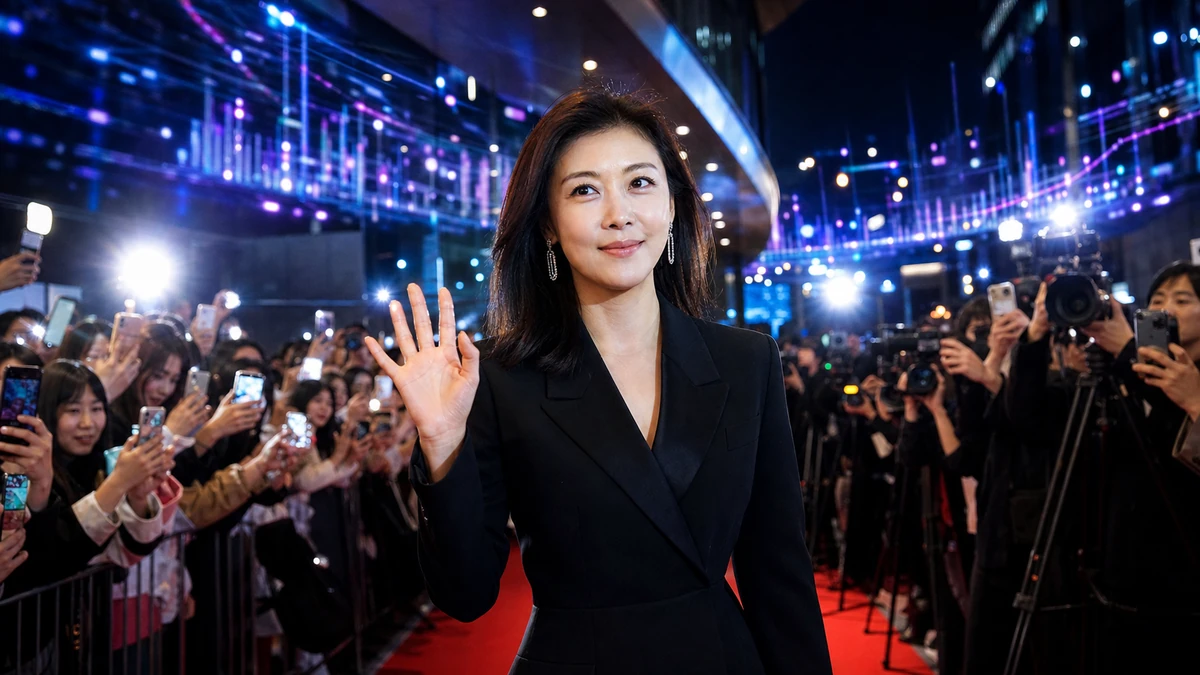
Image to help understand the article
A day in Korean search tells a bigger story
If you want to understand what a country is worried about, excited by or arguing over, you can do worse than look at what people are typing into a search bar. In South Korea on Aug. 31, 2026, the top real-time Google trending searches offered a compact portrait of a society that was not focused on one single crisis or one single blockbuster. Instead, it was toggling rapidly among celebrity culture, parliamentary controversy, arms exports, consumer tech and privacy fears.
That mix matters. South Korea is often flattened in international coverage into a few familiar categories: K-pop, Samsung, North Korea and the latest streaming hit. But the country’s daily information habits show something more textured. The top search term on Google’s South Korea trends list was actress Ha Ji-won, driven by anticipation around the upcoming film “Bigwang,” which was reported to be leading reservations and selling out seats ahead of its release. Elsewhere on the list were a politically charged search involving lawmaker Yong Hye-in, the stock code-like term “000660,” linked to SK hynix, the K9 self-propelled howitzer after a contract in Spain, and searches tied to a personal data leak.
Even the ambiguities are revealing. Some keyword spikes could not be fully explained by the headlines available, including numeric-only terms and a politically loaded phrase involving a lawmaker’s husband. That uncertainty is part of the story too. In the social media and algorithm era, public attention often moves faster than the explanatory journalism around it. A term can surge because people are trying to decode a rumor, react to a clip, verify a claim or make sense of a half-understood scandal.
Google’s figures in this case were relative estimates rather than audited hard counts, and the list reflects only one platform’s real-time data. Still, taken together, the day’s search traffic points to a larger trend in South Korea: entertainment still has enormous pull, but it now competes more visibly with political distrust, export-driven national pride, and growing public concern over how companies handle personal information. For American readers, that combination should feel familiar. The subjects differ in their local details, but the pattern is recognizable from the United States: movie buzz, political outrage, defense-industry headlines and data-breach fatigue all crammed into the same digital moment.
Why Ha Ji-won topped the list
The No. 1 search term was Ha Ji-won, one of South Korea’s best-known actresses, with reports tying the surge to excitement over “Bigwang” ahead of its release. Korean coverage described the film as a family-centered drama with emotional scale and highlighted strong early reservation numbers, including sold-out screenings. Another apparent driver was Ha’s public discussion of her role: a once-glamorous celebrity who has fallen from the top and is now struggling to make a living. That combination, commercial momentum plus a revealing actor interview, is exactly the kind of media pairing that can send a star’s name upward in search.
For Americans unfamiliar with Ha Ji-won, she is not just another performer in the churn of streaming-era celebrity. She belongs to an earlier generation of Korean stars whose careers were built across film and television before the current global K-content boom fully took hold. In the U.S. entertainment industry, the closest comparison might be the way an established actor with long name recognition can suddenly become newly relevant to younger audiences when a prestige project, comeback role or emotionally exposed interview lands at just the right time.
Her rise to the top of the trends list also says something about how Korean entertainment publicity works. In South Korea, as in the U.S., pre-release indicators such as booking rates, sellouts and social media chatter are often treated as signals of whether a film can cut through a crowded market. But Korean media culture tends to be especially fast-moving and tightly integrated. A radio appearance, a teaser story, a booking milestone and fan discussion can all fold into one another within hours. Search traffic becomes a public scoreboard for that momentum.
The substance of Ha’s role may have added another layer. A character described as a former top star struggling to survive taps into a recurring tension in Korean entertainment: the distance between public glamour and private precarity. That is not uniquely Korean, of course. Hollywood has long told versions of the same story, from industry satire to darker cautionary tales about fame, aging and reinvention. But in South Korea, where celebrity images are managed intensely and public expectations can be unforgiving, audiences often respond strongly when a famous actor speaks candidly about playing a character whose star has faded.
So the Ha Ji-won spike was not just fandom. It looked like an intersection of movie economics, celebrity narrative and a broader appetite for stories about what lies behind polished public images. That kind of curiosity drives search behavior everywhere, but in Korea it often arrives with unusual speed and volume.
Politics, scandal language and the search for context
If entertainment supplied the day’s most visible name, politics supplied its most volatile phrase. The third-ranked search term, “Yong Hye-in husband,” reportedly drew the highest approximate search volume on the list, even though the available headlines did not fully clarify why the husband reference itself had become so prominent. Coverage tied the spike to criticism of lawmaker Yong Hye-in over her refusal to resign her proportional-representation National Assembly seat, and to wider partisan attacks wrapped in charged political language.
For non-Korean readers, some context helps. South Korea’s National Assembly includes lawmakers elected not only through local districts but also through proportional representation, a party-list system broadly familiar in many democracies outside the United States. Those seats can become politically sensitive because they are often seen as belonging not just to an individual politician but to the party that placed them on the list. When disputes arise over whether a lawmaker should resign, questions of legitimacy, party survival and personal accountability can all collide at once.
The search term itself is a reminder that online attention does not always follow institutional logic. It often follows the hook that feels most personal, most intimate or most emotionally legible. In both Korea and the U.S., the public frequently searches not for the policy at stake but for the family member, side character or phrase that seems to unlock the controversy. The same thing happens in American politics when a scandal draws attention not to parliamentary procedure or campaign rules but to spouses, texts, leaked chats or a viral sound bite.
What makes this Korean example notable is how much traffic appears to have gathered around a term that the accessible headlines only partly explain. That gap between trend and explanation is now a defining feature of political media ecosystems everywhere. A search spike can tell you there is heat, but not always where the fire started. In that sense, the keyword reflects not just a Korean political dispute but a broader democratic challenge: attention outruns clarity, and people use search engines to fill in the missing context in real time.
That has consequences for journalists and for audiences. It means a newsroom cannot simply report that a term is trending and assume readers know why. It also means trends themselves are increasingly raw material for political framing. A phrase can trend because voters care, because media amplified it, because opponents weaponized it, or because people are trying to determine whether a claim is true in the first place. The Korean search list makes that tension visible in a very compressed form.
Defense exports and the rise of Korea as an arms supplier
One of the clearest policy-linked items on the list was “K9 self-propelled howitzer,” which rose after reports that Hanwha had signed a contract with a Spanish defense company. Korean coverage framed the deal as a significant breakthrough, including the K9 system’s entry into the Western European market and, in one account, the first sale of a finished Korean weapon into that part of Europe. One report put the contract value at 667.5 billion won.
The search interest here is easy to understand. South Korea’s defense sector has become one of the country’s most consequential industrial stories over the past several years. Once seen primarily as a consumer electronics and auto-export powerhouse, South Korea has increasingly positioned itself as a major supplier of advanced military hardware. The K9 howitzer, in particular, has become a recurring symbol of that ambition.
For American audiences, the broader significance is straightforward. South Korea is no longer just a U.S. ally that buys American weapons or hosts American troops. It is increasingly a defense manufacturer with export reach, brand recognition and strategic leverage of its own. That matters in Europe, where governments have re-evaluated procurement timelines and supplier diversification. It matters in Asia, where South Korea’s defense industry is part of a larger regional security architecture. And it matters in Washington, where policymakers and companies alike are paying closer attention to allied defense production capacity.
There is also a national-pride element in Korea’s public reaction to these export stories. Just as Americans may rally around a Boeing order, a major semiconductor expansion or a NASA milestone, many South Koreans read defense export wins as proof that the country has moved into a higher tier of industrial and geopolitical relevance. Search interest in the K9 is not only about military technology. It is about status, markets and the sense that Korean manufacturing can now compete in sectors once dominated by older defense powers.
That makes the K9 trend different from celebrity buzz or political scandal, but no less emotionally resonant. It is a story about Korea’s place in the world, and the public appears increasingly attuned to that question.
What this means for the United States
For Americans, the South Korean search list is more than a curiosity from overseas. It is a snapshot of a close ally whose culture, companies and strategic industries are already deeply entangled with life in the United States. If one lesson stands out, it is that American engagement with Korea can no longer be siloed into entertainment on one side and security policy on the other. The same country producing globally watched stars and dramas is also expanding its defense exports, shaping supply-chain debates and confronting digital privacy controversies that echo concerns in the U.S.
Start with entertainment. American audiences have spent the past decade moving from niche awareness of Korean content to mainstream consumption. K-pop tours sell out U.S. arenas, Korean dramas routinely surface on global streaming charts, and Korean actors now enter American conversations with far less explanation than they once required. A search surge around Ha Ji-won before a domestic film release may look local, but it belongs to the same ecosystem that has made U.S. distributors, streamers and fan communities more attentive to Korean star power. American companies increasingly care about which Korean names can travel, which titles generate pre-release energy and which narratives resonate beyond Korea.
Then there is business and industry. The appearance of “000660,” the stock code associated with SK hynix, is telling even though the available headline does not fully explain the spike. Americans may not instantly recognize Korean stock codes, but they certainly know why SK hynix matters. It is one of the world’s key semiconductor companies, and semiconductors are now central to U.S. economic policy, technology competition and national security planning. When South Korean audiences search around SK hynix, they are not just following domestic corporate news. They are tracking a company tied to the same chip ecosystem that Washington treats as strategically vital.
The K9 trend also lands in a very American frame. The United States has spent years urging allies to shoulder more defense responsibility and strengthen industrial capacity. South Korea’s expansion as an arms exporter fits neatly into that strategic logic, even if it also introduces more competition into global markets. U.S. defense firms, policymakers and analysts have reason to watch Korean contract wins carefully: they signal the growing importance of allied manufacturing networks and the emergence of Korean firms as serious players in sectors once more tightly controlled by U.S. and European companies.
Finally, the privacy angle should feel familiar to anyone in the U.S. who has lived through the endless drumbeat of corporate data breaches. South Korean searches tied to personal-information leaks, including reported penalties related to a breach affecting 1.66 million people, reflect anxieties that cross borders easily. American consumers understand the frustration: another breach, another corporate apology, another set of questions about whether convenience has outpaced accountability. When Korean users search “personal information,” they are participating in a debate that U.S. regulators, consumers and tech companies are also still struggling to settle.
Put differently, this is not just Korea’s digital conversation. It is increasingly part of ours. The markets overlap, the platforms overlap, the fandoms overlap, and many of the policy concerns overlap too.
The quieter signals: privacy, platform competition and social anxiety
Some of the lower-ranked search terms may look less glamorous, but they arguably reveal the most about everyday pressure points in Korean society. “Monimo,” a financial app tied to Samsung Card and broader platform strategy, drew attention amid reports about monthly active users reaching 10 million and competition over so-called super apps. Americans will recognize the concept even if the branding is unfamiliar. In Asia, major companies have long pursued app ecosystems that combine payments, shopping, finance and rewards in a way that U.S. consumers might compare loosely to the overlap among Apple Wallet, PayPal, Cash App, bank apps and retail loyalty programs, though no single American equivalent maps perfectly.
The interest around Monimo suggests that South Korean consumers, like American ones, are increasingly being asked to live inside integrated digital ecosystems. The pitch is convenience. The tradeoff is concentration of data, attention and financial behavior inside a smaller number of corporate platforms. That becomes even more sensitive when the same trend list includes a privacy-related search term tied to a major leak and regulatory penalties.
The “personal information” trend is especially important because it speaks to a maturing digital public. South Korea is one of the most connected societies in the world, with consumers accustomed to fast, app-driven services. But high digital adoption tends to produce higher vulnerability too. When personal data is exposed, the social harm is not abstract. It can involve fraud risk, stalking fears, reputational damage and the erosion of trust in institutions that hold vast quantities of sensitive information.
Another trending term, “YouTuber,” was reportedly linked to coverage of a woman traveling alone in Africa who faced harassment or sexual assault. The details available were limited, and responsible reporting requires caution. But the spike itself points to the way digital audiences now process safety, gender and viral testimony. In both Korea and the U.S., audiences increasingly encounter social issues through platform-mediated personal stories rather than through traditional beats like metro reporting or public policy alone. The danger is that these stories can be sensationalized. The value is that they can force public attention onto risks that might otherwise remain invisible.
Even smaller entertainment and sports terms on the list, including actor-related curiosity around Jeon Wook-min and a sports controversy involving Lee Jung-hyo, reinforce the same point: South Korean search behavior is fragmented across multiple spheres, but those spheres increasingly bleed into one another. Celebrity becomes a labor story. Sports becomes a refereeing and institutional trust story. Finance becomes a platform-governance story. Privacy becomes a consumer-rights story. The trend list is not random noise. It is a map of where those categories intersect.
Why these mixed trend lists matter more now
There was a time when a daily trending list might have been treated mostly as internet ephemera. Today, it is closer to a rough public barometer. Not a perfect one, and certainly not a substitute for reporting, polling or hard economic data. But it offers a quick read on what kinds of stories break through in a hyperconnected society.
The Aug. 31 list from South Korea is especially revealing because it was not dominated by a single emergency. Instead, it showed attention dispersing across entertainment, politics, defense, finance and privacy. That dispersion suggests a country moving through several overlapping transitions at once: from domestic entertainment culture to global content economy, from traditional manufacturing prestige to defense-export ambition, from app convenience to privacy reckoning, and from conventional politics to algorithm-amplified controversy.
Americans should pay attention not because Korean search rankings are inherently exotic or because trend lists are always meaningful, but because South Korea increasingly functions as both a peer and a preview. It is a democracy with intense digital adoption, a cultural exporter with global reach, a manufacturing power with strategic importance and an ally whose internal debates often have external consequences. What rises there can tell us something about where consumer culture, political communication and industrial competition are headed more broadly.
Ha Ji-won at No. 1 may look, at first glance, like a simple movie-star story. In a narrow sense, it is. But the rest of the list complicates that reading. On the same day Korean users searched a beloved actress tied to a hotly anticipated film, they were also looking up a parliamentary controversy, a semiconductor giant, a weapons export, a finance app and a major data leak. That combination is the real story. It shows a public simultaneously consuming culture, judging institutions, watching markets and worrying about security in both the military and personal-data sense.
That is not a uniquely Korean condition. It is increasingly the condition of modern democracies, including the United States. The difference is that South Korea often experiences these collisions with unusual intensity and speed. For journalists, analysts and American readers trying to understand the Korean Wave beyond entertainment headlines, that is worth watching closely. The future of Korea’s global influence will not be decided by music and film alone. It will also be shaped by politics, chips, defense contracts, apps and whether citizens believe the systems around them deserve their trust.
Comments
Post a Comment