Why Korean Shoppers Swear by Kabocha: A Guide to the Squash Behind Soups, Lattes and Weeknight Comfort Food
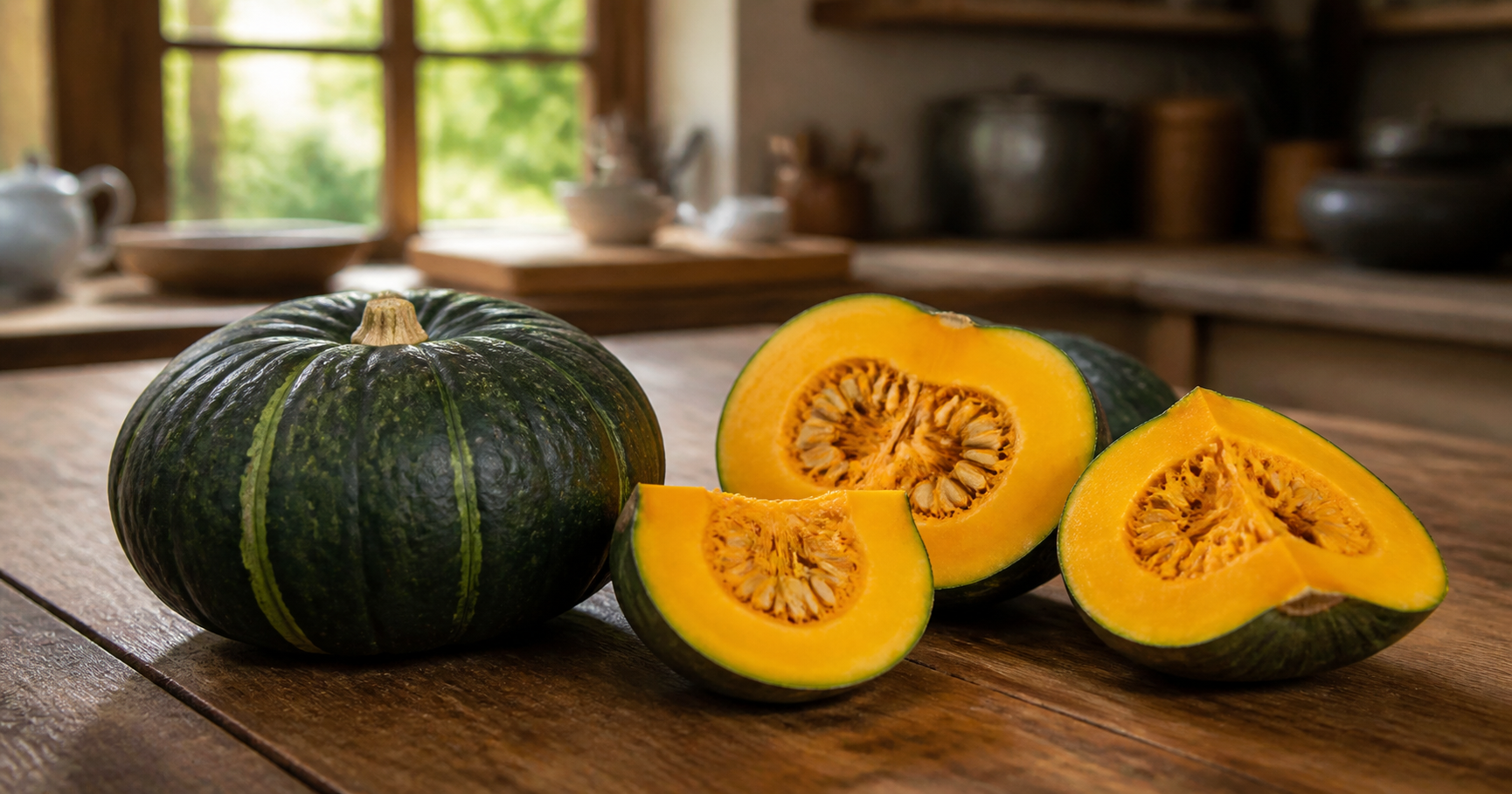
Image to help understand the article
A humble squash with a surprisingly devoted following
In the United States, pumpkin usually gets its big cultural moment in the fall, when grocery stores stack cans of puree near the pie crusts and coffee chains roll out their seasonal drinks. In South Korea, however, another squash often gets the spotlight in home kitchens: danhobak, the Korean name for kabocha squash, sometimes called Japanese pumpkin in English.
It is the kind of ingredient that shows up in ways Americans might recognize and ways they might not. It can be steamed and eaten simply, pureed into a silky porridge, pan-fried into savory fritters, or blended into a latte that feels like a cousin of the pumpkin spice drink familiar to U.S. consumers, but less sugary and more rooted in the squash itself. For many Korean cooks, it is also practical food: easy to portion, filling without being heavy, and versatile enough to move from side dish to snack to breakfast.
A recent Korean lifestyle and food explainer drew attention to the ingredient by laying out what many home cooks want to know: what danhobak is, how it differs from other pumpkins and squash, why it is considered nutritious, and how to choose, store and cook it safely. Although the article was written in an informal, personal style, the underlying information draws on official Korean food and agricultural sources, including South Korea’s food safety database and regional agricultural research materials from Jeju Island, a popular travel destination often compared to Hawaii for its volcanic landscapes, coastal roads and agricultural specialties.
For English-speaking readers unfamiliar with Korean produce terminology, the easiest way to think about danhobak is this: it is a dense, sweet, deep-colored squash roughly in the kabocha family, prized for its chestnut-like flavor and creamy texture. If butternut squash is a common American pantry staple and canned pumpkin is a Thanksgiving shorthand, kabocha occupies a slightly different space. It is starchier, often sweeter and usually sold whole, with a dark green rind and bright orange flesh inside.
Its appeal, according to Korean food authorities and home cooks alike, goes beyond flavor. Danhobak has built a reputation as a nutrient-dense food that can fit into everything from comfort cooking to health-conscious meal planning. That reputation has helped it become a familiar presence in Korean supermarkets, open-air produce markets and increasingly in cafés and social media recipes.
What makes danhobak different from the pumpkins many people know
Part of the confusion for non-Korean readers begins with language. In Korean, several vegetables in the broader squash and pumpkin family are categorized and named in ways that do not map neatly onto English supermarket labels. The Korean summary behind this article explains an important distinction: aehobak and neulgeun hobak are not entirely different crops, but rather refer to related squash harvested at different stages of maturity. Aehobak generally refers to immature squash picked while still tender. Neulgeun hobak refers to a fully ripened, hardened pumpkin or squash, with a tougher skin and more developed sweetness.
Danhobak, by contrast, is treated as a separate variety. In Korea, it is commonly described as a Western-origin or chestnut-type squash that entered the country through Japan and began to be cultivated more widely in the 1970s and 1980s. That history matters because it helps explain why English names around the ingredient can be inconsistent. Many U.S. shoppers will encounter the same or similar vegetable labeled as kabocha, Japanese pumpkin, buttercup squash or simply winter squash, depending on the store and supplier.
In practical terms, the differences are easier to taste than to classify. Danhobak is valued for its dense texture, relatively low water content and concentrated sweetness. Korean growers and consumers often look for fruit with deep ridges and a heavy feel for its size, signs associated with good flavor. Compared with larger carving pumpkins familiar to many Americans, danhobak is usually smaller, firmer and better suited to steaming, roasting and pureeing than to decoration.
The Korean article also cites comparative research suggesting danhobak contains notably higher levels of several vitamins than more mature pumpkin varieties commonly consumed in Korea. It highlights vitamins A, B1, B2 and C, as well as iron, and notes especially high beta carotene levels. While nutritional values can vary depending on cultivar, growing conditions and whether the squash is raw or cooked, the broader point is consistent with how kabocha is understood by cooks and dietitians: it is not just filling, but nutritionally dense for its calorie level.
That helps explain why danhobak has such staying power in Korean home kitchens. It is a seasonal-feeling ingredient that is not trapped in one season, a comfort food that can still be framed as functional, and a traditional-seeming staple that in some forms is relatively modern in Korea’s agricultural history.
Why nutrition experts and home cooks keep coming back to it
Based on South Korea’s official food nutrient database, the Korean summary gives a detailed profile for 100 grams of steamed danhobak. It lists 66 calories, 15.45 grams of carbohydrates, 7.34 grams of sugars, 0.84 grams of fat and 1.72 grams of protein. The same portion contains 5.10 grams of dietary fiber, along with potassium, calcium, phosphorus, iron and magnesium. It also reports significant amounts of vitamin A, beta carotene, vitamin C, vitamin E and folate.
Those numbers matter in the way nutritional numbers often do for modern eaters: not because anyone is likely to memorize them, but because they reinforce the ingredient’s image as a food that offers a lot in a modest serving. Fiber is one of the clearest examples. A serving with around 5 grams of fiber is meaningful for people trying to feel full, support digestion or reduce reliance on highly processed snacks. Potassium is another selling point, especially for consumers who are told to think about blood pressure and balance sodium-heavy diets.
Then there is beta carotene, the pigment that gives danhobak its bright orange flesh. Beta carotene is converted by the body into vitamin A, which supports vision and immune function. That does not make danhobak a miracle food, and responsible nutrition reporting should avoid that trap. But it does help explain why Korean health-oriented media often frame the squash as good for eye health, seasonal immunity and general wellness.
In the U.S., similar nutritional claims are often made about sweet potatoes, carrots and winter squash. Danhobak belongs in that conversation. It is naturally sweet enough to satisfy cravings, yet not so rich that it can only be used in dessert-like recipes. For Americans accustomed to seeing orange vegetables marketed as “superfoods,” kabocha fits comfortably into the same category, though in Korea it is more often treated as an everyday staple than as a trend item.
The Korean summary also notes that some caution is warranted for people monitoring blood sugar. That is a useful corrective to simplistic health claims. Even nutritious foods can affect glucose levels, and danhobak is not carbohydrate-free. The article points out that a 100-gram portion contains a substantial carbohydrate load and suggests moderation, especially for people with diabetes. That advice aligns with what registered dietitians in the U.S. would typically say about starchy vegetables more broadly: they can be part of a healthy diet, but portion size and total meal composition matter.
What stands out in the Korean framing is not a promise that danhobak will solve health problems, but a more modest and credible argument: it is a nutrient-rich, satisfying ingredient that can support a balanced diet when prepared thoughtfully. In an age of wellness hype, that may be the most useful message of all.
How Korean consumers pick, ripen and store it at home
If there is one thing Americans often underestimate about winter squash, it is how much the buying and storing process can shape the final eating experience. Anyone who has brought home an underwhelming acorn squash or a stringy pumpkin knows that appearance alone does not guarantee quality. Korean home-cooking advice around danhobak is practical and specific, reflecting years of everyday familiarity with the ingredient.
The first thing shoppers are told to look for is color. A good danhobak is typically dark green on the outside, sometimes with patches that turn more brownish or corky as it matures. Korean guides often warn against surface discoloration that suggests damage or poor quality, while also noting that a dry, hardened stem is a positive sign. In the Korean summary, an ideal stem is described as dry and firm, almost like a wine cork, indicating that the squash has ripened well after harvest.
Weight is another important clue. For two squash of similar size, the heavier one is usually preferred. That advice would sound familiar at many U.S. farmers markets, where shoppers are often told to pick melons, citrus or avocados that feel heavy for their size. With danhobak, heft suggests denser flesh and often a sweeter, less watery eating experience.
Texture and shape matter as well. Korean consumers often favor squash with pronounced ridges, which are associated with lower moisture content and better sweetness. This is the kind of tactile produce literacy that develops in food cultures where people buy whole vegetables regularly rather than relying on pre-cut produce or canned puree.
Storage advice also reflects Korean cooking habits. An uncut danhobak can be kept in a cool, well-ventilated place to continue ripening naturally. Once cut, however, it becomes more perishable. Korean guidance recommends removing the seeds and stringy interior, drying the cut surface and wrapping it tightly before refrigerating it for several days. For longer storage, steaming first and then freezing in portions is considered one of the most practical methods.
That last step is especially revealing. Korean meal prep often centers on making future cooking easier without sacrificing homemade quality. A pre-steamed and frozen portion of danhobak can be reheated for porridge, blended into a drink or added to a side dish with relatively little effort. It is the same logic behind keeping cooked rice in the freezer or prepped broth in the refrigerator: domestic efficiency built around real ingredients, not just convenience foods.
The safety tip that matters most: soften it before cutting
For all its virtues, danhobak has one major drawback familiar to anyone who has wrestled with a dense winter squash on a cutting board: it is hard. Very hard. Hard enough that a kitchen knife can slip, and hard enough that home cooks regularly swap cautionary stories about nearly cutting themselves while trying to split one open.
That is why one of the most useful pieces of advice in the Korean article concerns prep rather than nutrition. Instead of attempting to cut the squash raw, the recommendation is to microwave it whole for about two minutes first, then let it cool before slicing. That brief heating softens the flesh enough to make the rind easier to cut through and reduces the risk of injury.
It is the kind of tip that deserves a wider audience because it combines simplicity and safety. In American food media, similar advice is often given for spaghetti squash, butternut squash and even dense sweet potatoes. Yet many home cooks still skip the step, either because they do not know it or because they assume it will compromise texture. For danhobak, the Korean guidance is clear: a quick microwave session is not cheating, it is smart kitchen management.
Once softened, the squash is typically split, and the seeds and fibrous interior are scooped out with a spoon. The stem end, which can spoil more easily, is removed. From there, cooks can steam wedges, cube the flesh, or prep it for recipes. Pre-steaming and portioning before freezing is especially popular because it turns a difficult ingredient into an easy one for later use.
This emphasis on practical know-how is part of what makes Korean food writing around produce so useful. The best guides do not simply celebrate an ingredient in abstract terms; they tell readers how to live with it in a real kitchen. That means reducing waste, avoiding accidents and making ingredients more likely to be used rather than forgotten in the refrigerator drawer.
From porridge to lattes: how it is actually eaten
For American readers, the most revealing part of the Korean summary may be the range of suggested preparations. They illustrate how danhobak moves fluidly between savory and sweet applications, often without the sharp category lines common in U.S. cooking.
The most straightforward preparation is steamed danhobak. In Korea, steaming is one of the default ways to cook vegetables while preserving their flavor and texture. A microwaved or partially softened squash is seeded, then steamed until tender. Eaten plain, it can serve as a side dish, a light meal component or a snack. Its natural sweetness does much of the work.
Then there is danhobak juk, or sweet pumpkin porridge. Juk is a broad Korean category of rice porridge or gruel, often eaten when someone wants something gentle, soothing or easy to digest. Americans might think of oatmeal, congee or even a savory cream soup, depending on the texture. In this version, steamed danhobak is mashed smooth and simmered with water, with glutinous rice flour used to adjust thickness. Some versions include jujubes or small rice dumplings. The result is comforting, lightly sweet and deeply associated with home-style care.
Danhobak jeon, or squash fritters, offer another familiar bridge for U.S. audiences. Jeon refers to a wide family of pan-fried battered foods in Korean cuisine, often served as side dishes, snacks or holiday table items. A danhobak version may use a flour mixture to create crisp edges, sometimes with a little milk added for richness. If that sounds vaguely like a cross between a potato pancake and a tempura-style fritter, that is not far off. It is the sort of recipe that can make a hard, sturdy squash feel immediately weeknight-friendly.
Perhaps the most striking example of danhobak’s flexibility is the latte. The Korean recipe summarized in the original piece blends steamed squash with milk, a little syrup and a pinch of salt, then heats the mixture. To American ears, it may sound like an artisanal café drink designed for Instagram. In reality, it also fits a larger Korean pattern of turning grains, beans, sweet potatoes and squash into filling blended drinks that are less coffeehouse indulgence than light meal or nourishing snack. Think less sugar bomb, more drinkable breakfast.
Even the seeds can be used. The summary notes that danhobak seeds are edible and contain vitamin E, zinc, magnesium and unsaturated fats. Cleaned, dried and lightly pan-roasted, they become a snack not unlike roasted pumpkin seeds familiar to many Americans after Halloween. The advice to eat them in moderation because of their calorie density is sensible and familiar.
Taken together, these dishes show why danhobak has endured. It can be elegant or plain, sweet-leaning or savory, traditional or café-friendly. It appeals to people trying to cook cheaply, healthfully or nostalgically. Very few ingredients cover that much ground so easily.
What this says about Korean food culture now
At first glance, a guide to selecting and cooking squash may seem like a small domestic story. In another sense, it says a great deal about contemporary Korean food culture and why it resonates beyond the Korean Peninsula.
One theme is the blending of tradition and modernity. Danhobak may be presented through government nutrient databases, agricultural extension materials and online recipe platforms, but the actual cooking remains rooted in home habits passed between generations. The result is a style of food knowledge that feels both evidence-based and deeply lived-in. It is not unusual in Korea to see official data cited alongside practical advice from everyday cooking.
Another theme is the premium placed on multifunctional ingredients. Korean kitchens, especially in urban apartments where space is limited, often value foods that store well, can be cooked in batches and work across several meals. Danhobak checks every box. It ripens at room temperature, can be frozen after steaming, and transforms into porridge, side dishes, drinks and snacks. In American terms, it is the kind of ingredient meal-prep enthusiasts are always hoping to find.
There is also the matter of wellness culture. South Korea, like the United States, has seen growing public interest in foods associated with immunity, digestive health and balanced eating. But the Korean approach to danhobak tends to stop short of turning it into a miracle cure. The more credible message is that foods with fiber, vitamins and satisfying texture can help people eat better without dramatic lifestyle overhauls. That is a lesson with broad appeal.
Finally, the story points to how global food identities evolve. Danhobak is linked to Western-origin squash, entered Korea through Japan, and is now firmly embedded in Korean domestic cooking. That trajectory complicates simplistic ideas of what counts as “traditional.” Foods become local not only because they are ancient, but because people adopt them, adapt them and build rituals around them. By that standard, danhobak is thoroughly Korean.
For American readers, the takeaway is not merely that kabocha squash is healthy or trendy. It is that an ingredient many shoppers pass by can open a window into how another food culture thinks about seasonality, nourishment, thrift and comfort. In a time when international food coverage often fixates on restaurant spectacle or viral novelty, there is something refreshing about a story centered on the everyday intelligence of home cooking.
And if that story sends more people to the produce aisle looking for a dark green squash to steam, roast or blend into a soup, that may be one of the more useful forms of cultural exchange. Not every cross-border food lesson needs to end in fusion cuisine or a social media challenge. Sometimes it is enough to learn how another household makes dinner, one practical tip and one good vegetable at a time.
Comments
Post a Comment