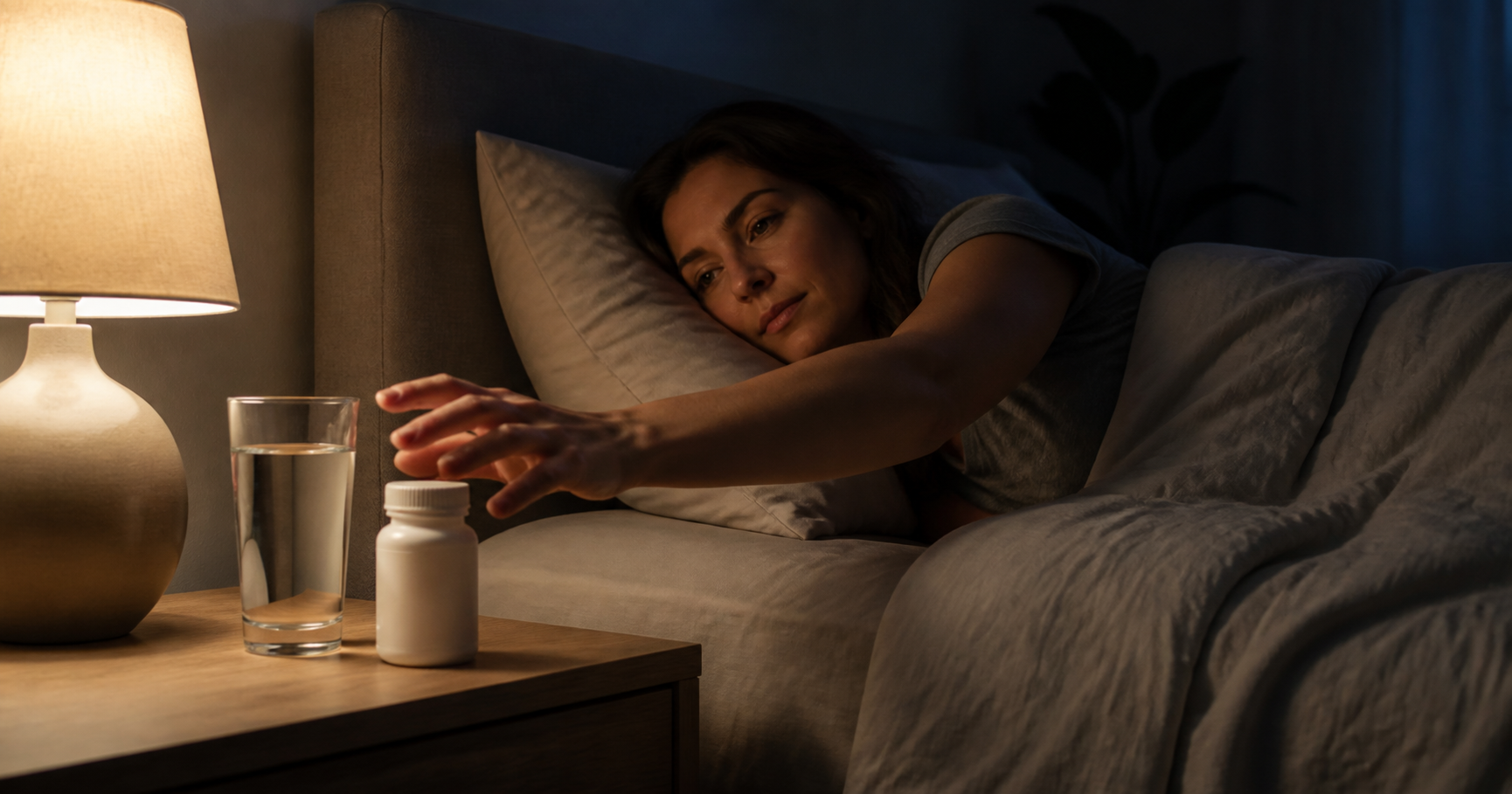
Image to help understand the article
A familiar American sleep aid meets a very different Korean rulebook
For many Americans, melatonin barely registers as a medicine. It sits on drugstore shelves next to vitamins, magnesium gummies and herbal sleep blends, marketed as a gentle way to reset a body clock after a red-eye flight, a stressful work stretch or a late-night scroll habit. Parents buy children’s versions, frequent fliers toss tablets into carry-ons, and college students often treat it as a harmless bedtime shortcut.
That is precisely why many people are surprised to learn that South Korea treats melatonin very differently. In Korea, melatonin is not a casual over-the-counter supplement. It is regulated as a prescription drug, and importing melatonin products for personal use from overseas is, as a rule, not allowed. That includes the kinds of bottles Americans can pick up at big-box stores, pharmacies or airport retailers without a second thought.
The contrast says less about melatonin itself than about how different countries draw the line between supplements, foods and medicines. In the United States, melatonin is generally sold as a dietary supplement under a relatively permissive framework shaped by the 1994 Dietary Supplement Health and Education Act. In South Korea, regulators have taken a more medicalized view, classifying melatonin by its active ingredient and potential safety concerns rather than by the way consumers casually use it abroad.
For American readers used to a supplement-heavy wellness market, the Korean approach can seem striking, even overly strict. But it also reflects a broader pattern in East Asia, where governments often apply tighter controls to hormone-related substances and to products marketed for sleep, a category that can blur quickly into treatment of a medical condition. Understanding Korea’s melatonin rules requires understanding what melatonin actually is, what it does in the body and why Korean regulators decided it should not circulate like a vitamin.
That matters not only for travelers and Korean consumers browsing foreign websites, but also for anyone interested in how the global wellness economy runs into national public health systems. A product that feels routine in Los Angeles or Chicago can be treated very differently in Seoul.
What melatonin is, and why people use it
Melatonin is a hormone naturally produced by the pineal gland, a small structure in the brain. Its main job is to help regulate the body’s circadian rhythm, the roughly 24-hour internal clock that influences sleep and wake cycles. When light fades in the evening, the body typically begins producing more melatonin. Levels usually peak in the middle of the night and then taper off toward morning.
In plain English, melatonin helps tell the brain and body that it is nighttime. It does not work exactly like a classic sedative. It is better understood as a time-setting signal, one reason it is often used for jet lag, shift-work sleep disruption and certain sleep timing problems. Americans often refer to it as a “sleep supplement,” but that shorthand can be misleading. Melatonin is not simply a natural sleeping pill. It is part of the body’s hormonal signaling system.
Scientists generally describe its effects through melatonin receptors in the brain, especially MT1 and MT2 receptors, which are involved in sleep timing and circadian regulation. Darkness promotes natural melatonin release; exposure to light, especially blue-rich light from phones, tablets and laptops, suppresses it. That is one reason sleep specialists so often lecture patients about screens before bed. The issue is not just stimulation or habit. Light itself can interfere with the biological cues that help the body prepare for sleep.
Melatonin has also drawn attention in research for possible antioxidant effects and possible roles in immune regulation, though those claims vary in evidentiary strength. Some studies and public-facing health materials discuss its ability to help neutralize free radicals or influence immune cell activity during sleep. But those areas are more complex than the average supplement label suggests, and experts generally caution consumers not to equate early or mixed findings with proven clinical benefits.
That distinction is important. In the United States, supplement marketing often collapses nuanced science into feel-good claims about “recovery,” “balance” or “cellular support.” Korean regulators, by contrast, tend to separate more sharply between what is recognized as a food, what is approved as a health functional food and what qualifies as a drug with specific medical indications.
Why South Korea regulates melatonin as a prescription drug
The heart of the Korean story is simple: South Korea classifies melatonin itself as a prescription-only medicine. That means consumers cannot legally buy melatonin in Korea the way Americans buy it at CVS, Walgreens, Target or on Amazon. The restriction applies regardless of whether the product is marketed abroad as “natural,” “plant-based” or low-dose.
Korean drug safety authorities, under the Ministry of Food and Drug Safety, or MFDS, have approved melatonin-containing prescription products for limited medical use. One cited example in Korean regulatory materials is a prolonged-release 2-milligram melatonin tablet indicated for short-term treatment of insomnia in patients 55 and older whose sleep quality has declined. Official instructions specify when to take it and limit the duration of use.
That narrow approval reflects a core principle of Korean regulation: if a substance acts as a hormone and is used to treat a medical sleep problem, it belongs in the pharmaceutical system, not the general food or supplement market. Korean authorities have maintained that melatonin should be handled as a professional medical product in part because of safety oversight concerns. Once a product moves into the supplement aisle, authorities have less control over dosing, quality consistency, broad consumer use and interactions with other drugs.
To an American audience, that may sound odd because melatonin’s reputation in the United States is so mild. But the American system is the outlier in some ways. U.S. supplements do not undergo the same premarket approval process required for prescription drugs. Companies are generally responsible for ensuring safety and labeling compliance, while federal regulators step in if products are misbranded, adulterated or associated with safety problems. That structure leaves a great deal of room for consumer access, but it also places a heavier burden on individual shoppers to understand what they are taking.
Korea’s framework is more paternalistic in the classic public health sense: restrict first, allow under clinical guidance. Supporters of that approach would argue it reduces misuse and helps prevent people from treating chronic insomnia, underlying depression, sleep apnea or medication-related sleep problems on their own. Critics would say it is overly rigid for a substance that millions of people elsewhere use without incident. Both arguments exist, but the legal reality in Korea is clear.
Another point of confusion involves the Korean market for sleep-related products that do not contain purified melatonin. Korean consumers can legally buy products containing ingredients such as theanine, magnesium or lactium, a milk protein derivative marketed for relaxation. Those are not treated as melatonin substitutes under the law. They fall into different regulatory categories, and their legal sale does not mean Korea has loosened its stance on melatonin itself.
The overseas shopping trap: Why online imports are generally blocked
The rise of cross-border e-commerce has made national rules easier to bump into and easier to misunderstand. A Korean consumer can open a U.S. shopping site, see melatonin sold freely in colorful packaging and assume personal importation is no big deal. The same assumption is common among Korean Americans, foreign residents and travelers heading back from the United States with luggage full of drugstore purchases.
But according to Korean legal interpretations and food safety guidance, melatonin-containing products are generally barred from personal overseas direct purchases if they are classified as food products abroad. Korean authorities have treated melatonin as an ingredient subject to import blocking because, in the Korean system, it is approved and distributed only as a prescription medicine, not recognized as a generally importable food or supplement.
In practice, that means a bottle of melatonin gummies bought online from the United States may be stopped before it reaches a Korean consumer. It also means bringing melatonin into Korea from overseas can create problems at customs, even if the product was purchased legally in another country and even if the dosage is low. Korean guidance indicates that the barrier applies regardless of whether the melatonin is described as synthetic or plant-derived.
There may be limited exceptions in some cases when medical documentation is provided, such as a doctor’s opinion submitted during customs review, but that does not amount to a general right to import. The final determination rests with the relevant customs authorities and regulators. In other words, this is not a workaround most consumers should count on.
That rule can be jarring for Americans because personal supplement imports often feel trivial, somewhere between ordering skincare and buying protein powder. But Korean regulators are not treating melatonin as a casual wellness product. They are treating it as a controlled therapeutic ingredient, and customs enforcement follows that logic.
The issue also illustrates a broader problem in the global supplement market: a product’s label and legal identity change depending on where it crosses a border. “Dietary supplement” is not a universal category. Neither is “natural.” To an American consumer, a melatonin gummy may look equivalent to a vitamin C chewable. To Korean authorities, the same item can resemble an unapproved drug product entering outside the pharmaceutical channel.
What about so-called plant melatonin products?
One of the murkier corners of the market involves products marketed with phrases like “plant melatonin” or formulas built around ingredients such as tart cherry, pistachio or seaweed extracts. Those products often appeal to consumers who want the aura of melatonin without the legal baggage. In Korea, however, the distinction matters a great deal.
If a product does not contain purified melatonin as an active ingredient, it may be sold under other categories, such as processed foods, depending on the formulation and claims. But that does not mean Korean authorities have recognized it as a functional melatonin product, nor does it mean it has official approval to treat insomnia. Korean food safety messaging has been explicit that there is no food officially recognized as improving insomnia in the way a prescription treatment would.
That is an easy point for consumers to miss because modern wellness marketing thrives on suggestion rather than direct promises. A package may feature a moon graphic, bedtime imagery, words like “night,” “rest” or “calm,” and ingredients associated in popular culture with sleep routines. The result is a commercial gray zone familiar to U.S. shoppers too. Americans see it in everything from sleepy teas to magnesium powders branded as stress relievers.
In Korea, legally sold sleep-adjacent foods and health functional products may contain nonhormonal ingredients that regulators have permitted in those categories. But that should not be confused with approval of melatonin itself. The distinction is technical, but it is central to understanding Korean policy.
For English-speaking readers, a useful comparison might be the difference between buying chamomile tea and buying a prescription sleep medication. Both might be used at bedtime, but regulators do not treat them as interchangeable just because consumers use them with the same goal in mind. Korea applies that kind of distinction more forcefully in the melatonin space than the United States does.
How effective is melatonin, really?
Melatonin’s popularity has outpaced public understanding of what it does best. The strongest and most traditional use is for circadian rhythm adjustment: jet lag, delayed sleep phase issues and situations where the body clock needs nudging. That makes intuitive sense. If melatonin is a time cue, it can be most helpful when timing is the problem.
Its role in ordinary insomnia is more mixed. Some people do report benefit, especially older adults whose natural melatonin production may decline with age. But melatonin is not a cure-all for the sprawling category of “I can’t sleep,” which can include anxiety, depression, chronic pain, poor sleep hygiene, alcohol use, sleep apnea, medication side effects or simple overwork. In those cases, melatonin may help only marginally or not at all.
That is one reason Korean regulators appear to favor narrower, clinically defined use. The approved Korean indication cited in official materials focuses on short-term treatment in adults 55 and older with insomnia-related poor sleep quality, not a blanket endorsement for anyone having a rough week.
Dose also matters. In the U.S. market, consumers can find products in a wide range of strengths, sometimes far higher than the small doses discussed in clinical literature. Some international sources and studies suggest effects can appear at relatively low doses, while higher doses may increase the chance of next-day drowsiness, headache or grogginess without necessarily improving results. The “more is better” instinct that dominates parts of the supplement industry does not map neatly onto melatonin.
That gap between evidence and marketing is not uniquely Korean or American. It is a feature of the modern wellness economy. Consumers want simple answers to a complicated human problem, and sleep problems are among the most common health complaints on both sides of the Pacific. Melatonin is popular in part because it sounds natural, nonaddictive and easy. But even when it is useful, it is not always the right first step.
Risks, side effects and who should be cautious
Melatonin’s low-risk reputation is not entirely undeserved, but “low risk” is not the same as “risk free.” Reported side effects can include sleepiness, dizziness and headache. Some people also report irritability, restlessness, vivid dreams, digestive discomfort, dry mouth, nausea or skin reactions. In some cases, the very effect people want at bedtime can linger into the next day.
Drug interactions matter too. People taking anticoagulants or antiplatelet drugs may face increased bleeding risk when combining them with melatonin. Those taking sedatives, including benzodiazepines, may see excessive sedation when the substances are used together. Anyone on multiple medications, especially older adults, should think twice before treating melatonin as if it were nutritionally equivalent to a multivitamin.
Pregnant women, women trying to become pregnant and people who are breastfeeding are often advised to avoid melatonin unless a clinician specifically recommends it, because safety data are limited. That caution is especially important in a culture where “natural” is frequently mistaken for “safe in every situation.” Poison ivy is natural too; that has never made it universally advisable.
There is also a broader concern that gets less attention in consumer marketing: self-diagnosis. People who struggle with sleep may assume they need a supplement when what they really need is evaluation for sleep apnea, depression, thyroid disease, medication side effects or a behavioral treatment such as cognitive behavioral therapy for insomnia, often considered a first-line option. Korea’s stricter model channels more people toward the medical system. America’s looser model channels more people toward checkout aisles.
What this says about Korea, America and the politics of wellness
The melatonin divide is about more than one hormone. It captures a bigger difference between two consumer cultures. The United States has built an enormous wellness retail economy around consumer choice, broad access and the idea that individuals can assemble their own health routines with powders, pills, teas, tinctures and gummies. South Korea, despite its own booming beauty and health industries, still draws a firmer regulatory line when a substance looks too much like a medicine.
Neither system is perfect. The American model empowers consumers but can leave them navigating exaggerated claims, variable product quality and social media health advice that ranges from simplistic to dangerous. The Korean model can reduce casual misuse but may frustrate consumers who feel they are being denied access to a product widely regarded elsewhere as modest and manageable.
For American readers, the main takeaway is straightforward: do not assume a common U.S. supplement will be treated the same way abroad. In South Korea, melatonin is not a suitcase souvenir or an easy online order. It is a prescription drug under a distinct regulatory philosophy. Travelers, expatriates and anyone shopping across borders ignore that at their own risk.
The second takeaway is more personal. Melatonin may be helpful, especially for jet lag or body-clock disruptions, but it deserves to be understood as a hormone with real physiological effects, not just a bedtime candy. The fact that one country sells it beside fish oil while another places it behind medical oversight should be enough to remind consumers that convenience and clinical caution are not the same thing.
And for people in Korea trying to solve sleep problems, the local advice from regulators is essentially the same advice many American sleep specialists would give, even if the legal systems differ: do not rely on internet folklore or overseas shopping hacks. Start with accurate information, talk to a doctor or pharmacist, and treat sleep trouble as a health issue worth understanding, not just suppressing.
In an age of global e-commerce, viral wellness trends and borderless marketing, melatonin’s Korean status is a case study in how local law still matters. A small tablet that seems ordinary in the United States can take on a completely different meaning once it lands in Seoul.
Comments
Post a Comment