Why ‘Spider-Man: Brand New Day’ Became a Breakout Hit in South Korea — and What It Signals for Hollywood
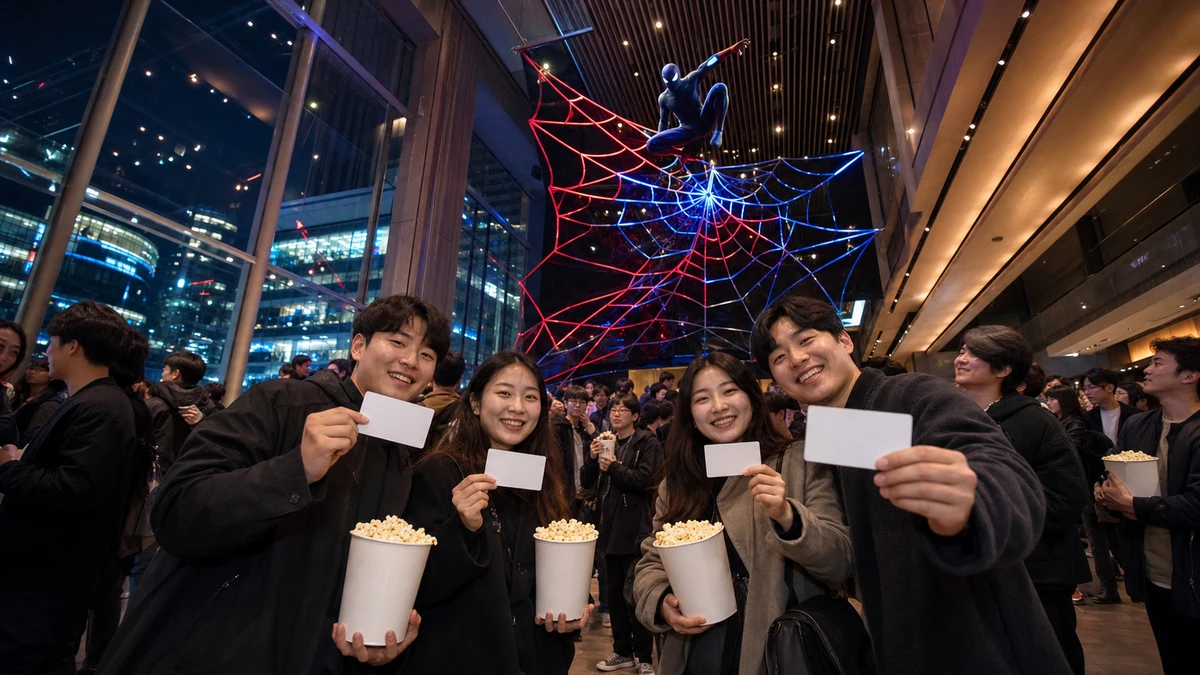
Image to help understand the article
South Korea Gives Spider-Man Another Box Office Milestone
Tom Holland’s latest Spider-Man film, “Spider-Man: Brand New Day,” has crossed 8.05 million admissions in South Korea, becoming the best-performing Spider-Man title of the Holland era in that market. According to distributor figures cited in Korean media, the movie passed the 8 million mark 26 days after release, overtaking the Korean totals for 2019’s “Spider-Man: Far From Home” and 2021’s “Spider-Man: No Way Home.” In a country where moviegoing remains both highly competitive and culturally significant, that is not just another sequel posting a strong opening weekend. It is a sign of staying power.
For American readers, it helps to understand what that number means in local terms. South Korea typically measures theatrical performance in admissions, or tickets sold, rather than emphasizing gross box office alone. That matters because it foregrounds audience scale: how many people actually showed up. A total above 8 million places a film in rare company in the Korean market, especially in an era when streaming has changed viewing habits everywhere and when even major franchise films often burn hot early, then fade quickly.
The achievement is even more notable because “Brand New Day” did not simply arrive with blockbuster force and disappear. Korean reporting emphasizes that the film continued drawing viewers nearly a month into its run, retaining enough momentum to stay near the top of reservation charts despite fresh competition. In other words, this was not only a front-loaded fan event. It became a durable mainstream moviegoing choice.
That distinction is important in South Korea, one of the world’s most sophisticated box office markets. Korean audiences are famously responsive to word of mouth, emotionally resonant storytelling and repeat-viewing franchises, but they are also quick to move on if a film feels disposable. The box office run of “Brand New Day” suggests that audiences saw something more than obligatory franchise maintenance. They saw a familiar superhero given a reset that felt emotionally legible.
It also places the film near the very top of the year’s Korean releases, behind only one homegrown smash hit, according to the summary provided by Korean outlets. That ranking says something broader about the continued strength of Hollywood tentpoles in South Korea, a country with a robust domestic film identity and a movie culture that does not automatically surrender to imported brands.
Why This Story Worked in Korea: A Superhero Reset With a Melodramatic Core
The Korean coverage points to a story reason for the film’s unusually long runway: the emotional aftermath of Peter Parker being erased from everyone’s memory. Rather than building its appeal solely around spectacle, “Brand New Day” appears to lean into loss, isolation and reinvention. For Korean audiences, that can be a powerful combination. Korean popular storytelling, whether in films, TV dramas or webtoons, often places intense weight on relationships, emotional rupture and the long process of rebuilding the self after a break in one’s social world.
That does not mean Korean viewers want only melodrama. It means that even in a franchise built on action, the emotional architecture matters. Peter Parker is not just a superhero in this version of the story; he is a young man cut off from his emotional anchors. The familiar American superhero framework is still there, but what seems to have resonated in Korea is the loneliness underneath it.
That may sound abstract, but it maps onto something concrete in the market. Long-running franchises usually face a common problem by their fourth installment: repetition. Viewers know the rhythms, the supporting cast, the emotional beats and the escalation pattern. The danger is not failure through confusion; it is failure through sameness. Korean critics and entertainment reporters, based on the summary, appear to have read “Brand New Day” as a clever way around that trap. The same actors return, preserving continuity and fan investment, but the relationships themselves have been fundamentally altered by the memory-wipe premise.
That creates a narrative gap that can energize both longtime fans and newcomers. Returning audiences carry emotional memory of Peter, MJ and Ned, while characters inside the movie no longer share that history in the same way. The result is a built-in tension between what viewers know and what the characters feel. In franchise terms, it is a soft reboot without abandoning the investment of earlier chapters.
That may also explain why the film appears to have held up beyond its opening rush. Korean audiences, like audiences everywhere, will turn out early for a major Marvel-adjacent title out of habit, curiosity or fan loyalty. But a monthlong run depends on broader appeal. The story’s emotional accessibility — grief, disconnection, young adulthood, rebuilding identity — likely gave the film an audience beyond the core fan base.
There is a useful American comparison here. Some of the most durable U.S. franchise entries are not necessarily the biggest in scale, but the ones that convincingly reframe a beloved character at a moment of personal crisis. Think of how “Logan” sharpened the Wolverine myth through vulnerability, or how “Creed” refreshed the “Rocky” legacy by shifting the emotional center from nostalgia to inheritance. “Brand New Day,” if the Korean audience response is any indication, may have found a similar formula: keep the recognizable hero, but change the emotional weather around him.
The Bigger Trend: South Korean Audiences Still Reward Event Franchises — If They Evolve
The success of “Brand New Day” also speaks to a larger trend in South Korea’s theater business. Global franchises are still powerful there, but familiarity alone is no longer enough. If this film had merely repeated the pleasures of earlier Spider-Man chapters, it might have opened big and then dropped fast. Instead, Korean coverage suggests that the movie benefited from a sense of genuine progression. Viewers were not just revisiting a brand. They were following a version of Peter Parker who had been stripped down and forced into a new stage of adulthood.
That matters because South Korea is a revealing test market for Hollywood. It is digitally connected, trend-sensitive and highly competitive. Audiences are aware of international pop culture, but they are also deeply loyal to strong local storytelling. Domestic films, especially those driven by Korean stars, local history or emotionally specific narratives, can dominate the market when they capture the public mood. A Hollywood film that breaks through in that environment is not succeeding by default. It is earning attention.
The reservation data cited in Korean reporting underscores that point. Even in its fourth week, “Brand New Day” reportedly held a double-digit reservation share and tens of thousands of booked viewers while a newer title led the chart by a wide margin. In practical terms, that means the film still had meaningful drawing power after the initial event phase had passed. In box office analysis, that is often one of the clearest signs that a movie has become more than a headline release. It has become part of the cultural conversation.
There is another layer here. South Korea has been one of the international markets where superhero storytelling has consistently found an enthusiastic audience, but Korean viewers do not necessarily respond to capes and brands in the same way American audiences do. In the U.S., superheroes are long embedded in the entertainment mainstream, with decades of comics history, TV animation, multiplex programming and merchandising behind them. In Korea, the Hollywood superhero boom arrived through global media circulation, dubbed and subtitled releases, fandom communities and youth-oriented pop culture ecosystems. The attachment is real, but it is also more obviously tied to the quality of each installment.
That helps explain why emotional reinvention can matter so much. Korean audiences have shown repeatedly that they will embrace genre fare — action, fantasy, disaster, science fiction — when it carries strong character motivation and emotional coherence. A spectacle-first approach can open a film; it does not always sustain one. The Korea performance of “Brand New Day” suggests that even globally standardized franchises need local emotional readability.
For Hollywood, that is a useful lesson at a time when sequel fatigue is an open industry concern. The question is no longer whether audiences recognize the intellectual property. Of course they do. The question is whether each new entry gives them a reason to care beyond recognition. South Korea’s response to Spider-Man suggests the answer, at least this time, was yes.
What This Means in the United States
For American studios, exhibitors and audiences, the South Korean run of “Brand New Day” is more than an overseas curiosity. It is a reminder that U.S. film franchises now live or die in a global conversation, and that South Korea remains one of the most influential markets in shaping that conversation. Korean audiences are not just customers at the far edge of Hollywood’s release map. They are trendsetters, especially among younger fans who move fluidly between Marvel films, K-pop, Korean dramas, anime, gaming and social media fandoms.
In the United States, Hollywood has spent the past several years confronting signs of franchise exhaustion. Superhero movies can still open big, but the once-automatic assumption of endless escalation has weakened. Some films arrive with giant awareness and then struggle to maintain momentum. Others find that nostalgia alone is not enough. In that context, the Korean success of “Brand New Day” offers a case study in what still works: continuity, yes, but paired with an emotional reset that makes the character feel newly vulnerable.
That lesson travels directly to the American market. U.S. audiences may respond to Spider-Man through different cultural filters, but they have shown similar preferences when a franchise evolves rather than simply expanding. The strongest comic-book films of the past decade often share a willingness to narrow the focus and let character carry the weight. That is especially true for younger American viewers, who tend to reward authenticity of feeling even within heavily branded entertainment.
There is also a business angle. Sony Pictures, which handles Spider-Man films, operates in a marketplace where international reception can shape marketing, release strategy and long-term franchise planning. A standout performance in South Korea strengthens the case for the character’s enduring global value at a moment when every studio is rethinking how often to deploy major brands and how much risk to take between installments. Strong Korean word of mouth can also feed global prestige around a title, especially online, where fandom chatter crosses borders almost instantly.
American theater chains should also pay attention. One of the clearest messages from Korea is that theatrical longevity still exists when a film becomes an emotional must-see rather than a disposable content drop. That is relevant in the U.S., where exhibitors are hungry for titles that can play beyond opening weekend. If “Brand New Day” demonstrates anything, it is that superhero films do not have to choose between scale and staying power. They can still be event movies with legs — but only if audiences feel they are getting a meaningful new chapter.
Finally, there is a soft-power dimension. U.S.-Korea cultural ties are no longer a one-way flow in which Hollywood exports and Korea imports. American companies now operate in a media environment shaped by Korean consumer taste, Korean online discourse and the global rise of Korean entertainment itself. When a Hollywood film breaks records in Korea, it is happening inside a deeply reciprocal cultural relationship. American studios need Korea, but Korea also helps define what global relevance looks like.
Why Korea Matters More Than Ever to Hollywood
South Korea’s importance to American entertainment has grown for reasons that go well beyond box office. Over the past decade, Korea has become one of the most influential exporters of pop culture in the world, from BTS and Blackpink to “Parasite,” “Squid Game” and a streaming ecosystem that has pushed Korean storytelling into the center of global viewing habits. For U.S. audiences, Korea is no longer a niche cultural source. It is part of the mainstream media diet.
That shift changes the significance of a result like this one. When Korean audiences strongly endorse a Hollywood film, it is not just another international market checking in. It is one of the world’s most media-literate, trend-sensitive entertainment publics signaling that a global franchise has retained cultural relevance. In practical terms, that matters to American studios deciding where to invest, how to localize campaigns and which stories can travel.
Korea is especially valuable because it blends commercial power with outsized cultural influence. A movie that performs well there can benefit from sophisticated fan engagement, lively critical conversation and social-media amplification that reaches beyond the country’s borders. K-pop fandoms, drama fandoms and comic-book fandoms often overlap in ways American marketers increasingly understand but do not fully control. That makes Korea both a lucrative market and an interpretive one: a place where audiences do not simply consume global content, but actively rank, remix and narrate it.
There is an irony here that American readers may appreciate. At a time when Korean entertainment has forced Hollywood to pay attention to subtitles, serialized melodrama, ensemble storytelling and morally complex popular art, a Hollywood superhero film appears to have succeeded in Korea by delivering some of those same emotional satisfactions back to Korean audiences. The exchange is not about East versus West. It is about a global entertainment language shaped by both.
That is one reason this Spider-Man result matters now. Hollywood can no longer assume that the rest of the world will simply follow domestic U.S. taste. Increasingly, the opposite is also true: American audiences absorb judgments formed overseas, especially in culturally influential markets. If a film catches fire in Korea, American fans hear about it, circulate clips, debate its themes and sometimes revisit their own assumptions about what works.
For U.S.-Korea cultural relations, that is a healthy sign. The alliance between the two countries is usually discussed in military, diplomatic or trade terms. But entertainment is one of the most visible everyday expressions of that relationship. Spider-Man’s Korean milestone is small compared with geopolitics, but it reflects a larger truth: the U.S. and South Korea are now deeply entangled in how global popular culture is made, marketed and understood.
What to Watch Next
The most immediate question is how far “Brand New Day” can go in South Korea before its run ends. The summary makes clear that it is still attracting reservations even after surpassing the earlier Tom Holland Spider-Man titles. That suggests the record it just set may continue to grow, though the available data does not support any precise prediction about a final total. What can be said with confidence is that the film has already reordered the Holland-era Spider-Man ranking in one of the world’s most important overseas markets.
The deeper question is whether Hollywood learns the right lesson. Studio executives often see franchise success and conclude that brand familiarity is the key. But the Korean response here points in a more demanding direction. Familiarity opened the door; emotional reconfiguration appears to have kept audiences inside. If future superhero films want similar endurance, they may need to stop thinking only in terms of bigger stakes and start thinking again about clearer inner lives.
There is also a generational angle worth watching. Korean media framed the film in part as evidence that long-running franchises can still expand across audiences when they preserve character continuity while creating a fresh emotional point of entry. That has implications for Hollywood properties beyond Spider-Man. Younger viewers who did not grow up with the early phases of the superhero boom may still join a franchise if each installment works as an emotionally accessible chapter rather than a closed fan-service loop.
American companies, from studios to theater chains to consumer brands tied to blockbuster marketing, should treat this performance as a signal rather than a one-off. Korea remains a place where mainstream popularity and fan discernment meet. A record there is not accidental. It usually means the product connected on multiple levels: commercial, emotional and conversational.
For now, the clearest takeaway is that Spider-Man still travels — but not because he is invincible. In South Korea, at least, the newest chapter appears to have landed because Peter Parker felt more fragile, more alone and therefore more human. In a global film culture saturated with franchises, that may be the most bankable superpower left.
Comments
Post a Comment