Image to help understand the article
A Hollywood superhero is once again proving his power in South Korea
South Korean moviegoers have given another emphatic answer to a question that has hovered over the global film business in the streaming era: Can a long-running franchise still persuade people to leave home, buy a ticket and show up in force for a familiar character? In the case of Tom Holland’s latest Spider-Man film, the answer in Korea is yes.
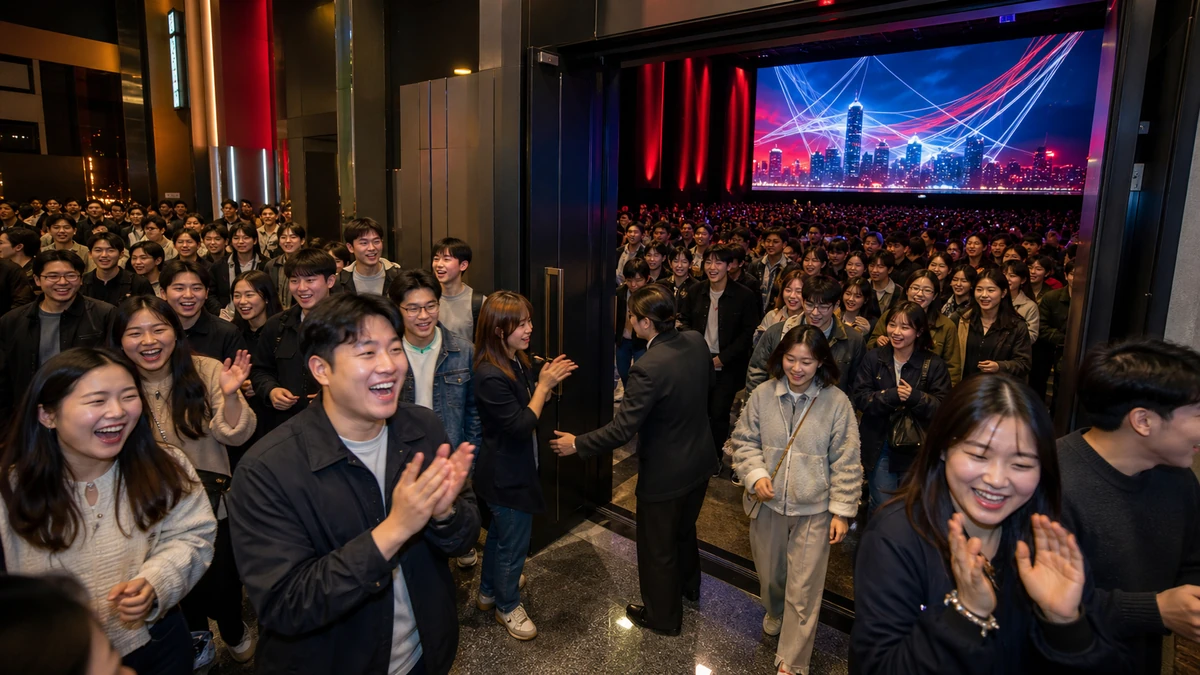
“Spider-Man: Brand New Day” has passed 7 million admissions in South Korea just 19 days after its release, according to distributor figures cited in Korean media. That makes it the fastest movie in the Korean market this year to reach that benchmark, a pace that says as much about staying power as opening-weekend hype. In American box office coverage, grosses usually dominate the conversation. In South Korea, admissions are also a standard way to measure a film’s reach, and 7 million tickets is not a niche achievement. It signals a true mainstream hit.
What stands out here is not simply that another superhero movie opened big. It is that the film appears to have kept drawing audiences for nearly three weeks, suggesting a broader and more durable appeal. That matters in a country with one of the world’s most sophisticated moviegoing cultures, where audiences are highly engaged, quick to form strong opinions and often willing to support both local films and major global tentpoles.
The number also reinforces a larger truth about the Korean theatrical market: Hollywood franchises may face fatigue in some places, but in South Korea they can still become event cinema when the material feels emotionally resonant and culturally legible. Spider-Man, for years one of the more relatable figures in the Marvel orbit, seems especially well suited to that test.
This is not just a victory lap for one title. It is a revealing moment for how blockbuster storytelling works now, how Korean audiences are shaping global release strategies and why American studios should be paying close attention to what happens in Seoul as much as in Los Angeles or New York.
Why 7 million admissions means more in Korea than the raw number suggests
For American readers, the easiest comparison is to think of a Korean admissions milestone the way U.S. media treats crossing a major domestic box office threshold, except with an even sharper sense of how many individual people actually showed up. South Korea has a population of roughly 52 million, so 7 million admissions represents a striking level of penetration in a relatively compact national market. No one should assume every ticket equals a unique viewer; repeat viewings happen everywhere, especially with fandom-driven films. Still, the scale is unmistakable.
Korean theaters also occupy a distinctive place in the country’s entertainment economy. South Korea is globally known for exporting culture — K-pop, dramas, films, beauty brands and fashion trends — but it is also a fiercely competitive home market. Local films often perform strongly, and Korean audiences are accustomed to high production values and emotionally detailed storytelling. A Hollywood release does not automatically win by virtue of brand recognition alone.
That is why the speed of this run matters. The film reportedly reached 7 million admissions five days faster than another Korean hit released this year, even though the genres are very different. The point is not that the two movies compete on identical terrain. It is that “Spider-Man: Brand New Day” expanded quickly across a crowded marketplace and did not collapse after the opening rush. That combination — velocity and endurance — is the real box office story.
There is also historical context within the Spider-Man franchise itself. The new film has already come close to the final Korean admission totals of “Spider-Man: Homecoming” and “Spider-Man: No Way Home,” according to the figures cited in the Korean press. That suggests this installment is not merely coasting on nostalgia. It is operating in the same commercial league as earlier franchise peaks and doing so fast enough to invite bigger questions about why this chapter is connecting now.
For studios, the distinction matters. A giant opening weekend can be manufactured by marketing, premium-screen pricing and fan urgency. A film that keeps adding viewers over multiple weeks points to stronger word of mouth, broader demographic appeal or a story that reaches beyond core franchise loyalists. In South Korea, this Spider-Man release appears to have earned that wider runway.
A reset story for a franchise age: Why this version of Spider-Man may be clicking
The Korean reporting points to a narrative reason for the film’s appeal. “Brand New Day” centers on Peter Parker after the collapse of the relationships that once anchored him — a version of the character who has been erased from the memories of the people closest to him and must rebuild a sense of self. For a fourth film in a major franchise, that is a meaningful recalibration.
In Hollywood terms, this is a recognizable survival tactic for long-running intellectual property: keep the iconography, but change the emotional premise. Audiences know what Spider-Man looks like, how he moves and what moral universe he inhabits. The challenge is getting them to feel that the stakes are new. According to the Korean summary, this film does that by putting memory, loss and identity at the center, rather than relying only on the mechanics of superhero spectacle.
That is a smart shift for a character who has always been more grounded than many of his caped counterparts. Spider-Man has long worked as the superhero version of a coming-of-age story. In the U.S., the character has endured because he can carry both fantasy and vulnerability: he is powerful, but often lonely; funny, but anxious; heroic, but financially and emotionally strained. When a franchise returns to those core traits, it tends to feel refreshed even if the brand itself is decades old.
The idea of being forgotten by everyone you love is also unusually universal for blockbuster material. It can be read as a high-concept genre device, but it also taps into more contemporary anxieties: social disconnection, fractured identity and the fear that relationships can vanish overnight. Those themes travel well across borders because they are legible without heavy cultural translation. Korean audiences do not need to share every American reference embedded in Spider-Man lore to understand the emotional hook of a young man trying to recover his place in the world after being severed from the people who knew him.
That may explain why the film’s success looks like more than a routine sequel bump. The Korean coverage frames the movie as both familiar and new — a “brand new day” not just as a slogan, but as the narrative logic of the series starting over without actually rebooting. That is the kind of balance franchises chase constantly and rarely achieve cleanly.
In the United States, the closest comparison might be when a series such as “Creed,” “Top Gun: Maverick” or even the best Spider-Man entries themselves finds a way to turn legacy into emotional forward motion. Viewers will accept familiarity if they believe the story is not merely recycling plot but re-examining the character. Korea’s response suggests this film may have found that formula.
What this says about South Korea’s moviegoing culture in 2026
The most interesting part of the Korean box office moment may be what it says about audiences, not just about one superhero. Korean theaters are showing signs that large-scale event films still matter when they offer distinct value. On the same day “Spider-Man: Brand New Day” crossed 7 million admissions, Christopher Nolan’s “Odyssey” reportedly moved past 4 million after 12 days in theaters. These are very different propositions: one is a globally familiar superhero franchise, the other a filmmaker-driven prestige blockbuster from a director whose name itself has become a brand.
Taken together, the numbers suggest Korean audiences are not funneling all their energy into a single phenomenon. They are rewarding different kinds of cinematic events at the same time. That is a healthy sign for theaters, because it shows demand can spread across multiple forms of largescale storytelling rather than depending on one all-consuming juggernaut.
There is a tendency in global film commentary to talk about “franchise fatigue” as if it were universal and evenly distributed. The Korean market complicates that story. Fatigue may be real when sequels feel stale, interchangeable or emotionally empty. But a recognizable brand attached to a clear emotional hook remains a powerful draw, especially in a market where audience response can be swift and decisive.
South Korea also has a strong culture of fan engagement that can accelerate momentum for films perceived as must-see communal experiences. That does not mean Korean viewers consume Hollywood products passively. Quite the opposite: they often bring intense standards and close attention to continuity, performance and tone. A film that keeps performing after the first wave is usually doing something that resonates beyond marketing blitz.
It is worth noting, too, that Korean audiences are accustomed to serialized storytelling in other forms, including television dramas and web-based storytelling ecosystems. A franchise chapter that revisits relationships, memory and identity can tap into viewing habits shaped by long-form emotional investment, even within a blockbuster format. In that sense, Spider-Man’s success in Korea may reflect a convergence between Hollywood franchise engineering and a local audience’s appetite for character-driven stakes.
If that reading holds, the lesson is not simply that Koreans like superhero movies. It is that they still respond to giant franchise entries when those movies offer emotional re-entry points for both longtime fans and relative newcomers. That is a more useful insight for the industry than any headline about one box office number.
What it means for the United States: studios, fans and the Korea connection
For the United States, this story matters on several levels. First, South Korea is not just another overseas territory in a studio ledger. It is one of the most influential movie markets in the world, a tastemaking environment where audience behavior is watched closely by Hollywood distributors, theater chains and streaming companies. When an American franchise performs this strongly there, U.S. studios gain more than revenue. They get market intelligence.
For Sony Pictures, which distributed the film, Korea’s response is evidence that Spider-Man remains one of the most globally reliable pieces of American intellectual property. In a business increasingly dependent on a handful of characters with true cross-border recognition, that matters. It strengthens the case for continued investment in theatrical releases, premium formats, global marketing and long-horizon franchise planning.
Second, the result speaks to the durability of the U.S.-Korea entertainment relationship. Americans often think about Korean cultural exports flowing westward — BTS filling U.S. stadiums, “Squid Game” dominating streaming conversation, “Parasite” winning best picture, Korean beauty brands taking shelf space at American retailers. But the exchange goes both ways. South Korea remains a major consumer and interpreter of American pop culture, and Hollywood’s biggest brands still rely on Korean audiences to validate their global reach.
That reciprocal dynamic has become more important as the two countries’ cultural industries grow more interconnected. Korean actors, directors and producers are increasingly active in U.S.-linked projects. American studios track Korean trends closely because Korea can function as both a major market and a signal amplifier in Asia. A hit there can strengthen a film’s global prestige, shape press narratives and help sustain momentum across the region.
Third, American fans should read this as a reminder that franchise success is no longer defined only by domestic opening weekend numbers. The modern life of a superhero movie is transnational. Debate around Spider-Man now unfolds simultaneously among U.S. comic-book fans, Korean moviegoers, European critics and social media communities everywhere in between. That makes local reception abroad part of the American story, not a footnote to it.
There is also an industrial comparison worth making. In the United States, recent years have shown that not all superhero films are equal, and brand recognition alone is no guarantee of endurance. Some comic-book titles still open big and fade quickly; others break through because they reestablish a character’s emotional core. Korea’s embrace of “Brand New Day” suggests that when Spider-Man is positioned less as an invincible franchise machine and more as a young man rebuilding his life, the property regains the human scale that made it one of America’s most exportable myths in the first place.
For U.S. companies, that has practical implications. Marketing built around spectacle may be enough to launch a film, but sustained audience interest — in America and abroad — may depend on selling emotional stakes as clearly as visual ones. Korea appears to be rewarding exactly that mix.
The bigger trend: global blockbusters now need emotional specificity, not just scale
If there is a broader lesson here, it is that blockbuster cinema is entering a more selective phase. Audiences have not abandoned event movies. They have become more demanding about which ones deserve event status. The Korean response to “Spider-Man: Brand New Day” suggests that scale still matters, but scale alone is no longer the headline. Emotional specificity is.
That may sound counterintuitive in an era of vast cinematic universes, multiverse logic and interconnected IP strategy. But many of the franchise entries that break through most clearly do something simple: they make viewers care again about one person’s predicament. In this case, Korean coverage emphasizes Peter Parker’s isolation, lost relationships and search for identity. Those are not side notes to the action. They are the engine of audience investment.
American studios have been wrestling with this for years. The streaming boom trained viewers to expect abundance and convenience. Theatrical releases now have to justify not only their budgets but their necessity. One route is pure spectacle — the kind best experienced in a packed auditorium. Another is emotional singularity — the feeling that this chapter matters because the character is genuinely at a crossroads. The strongest performers often combine both.
South Korea’s box office is offering an unusually clear case study of that dynamic. A fourth Spider-Man film could easily have felt overfamiliar. Instead, by resetting Peter Parker’s human connections and asking audiences to follow him into an altered emotional landscape, the movie appears to have generated both fan curiosity and broader public interest.
That is also why comparisons to earlier Spider-Man installments matter. The key question is not only whether the new movie will surpass the final totals of “Homecoming” or “No Way Home.” It is what kind of franchise management it represents. If the film sustains momentum because it found a new way into an old character, Hollywood executives will notice. So will competing studios deciding how to handle their own aging brands.
Viewers, meanwhile, may simply recognize a more basic truth: even in an age of giant universes and endless sequels, people still show up for stories about memory, belonging and second chances. Those themes may be wrapped in superhero imagery, but they are not niche or juvenile. They are precisely the kind of emotional material that can travel across languages and markets.
What to watch next
The next phase of this story is less about the symbolic victory of reaching 7 million admissions than about what comes after. The Korean reporting notes that the film is already closing in on the final local totals of earlier Tom Holland Spider-Man entries. Whether it eventually passes them will help determine if this is merely a strong franchise performance or one of the defining theatrical runs of the year in Korea.
But even before the final number is known, a few conclusions are already visible. One is that Spider-Man remains unusually resilient in South Korea, even as audience tastes evolve. Another is that Korean moviegoers continue to reward major Hollywood releases when those films offer a persuasive reason to return to theaters. And a third is that American studios should think of Korea not simply as a lucrative export market, but as a place where global franchise strategy is tested in real time.
There is also a more subtle possibility worth tracking. If both “Brand New Day” and “Odyssey” continue drawing large crowds, Korea could become an especially useful counterpoint to more pessimistic narratives about theatrical decline. Not every market behaves the same way, and not every audience wants the same thing. South Korea is showing that there is still room for multiple kinds of movie events at once: the corporate franchise, the director-driven spectacle and the emotionally reset sequel that finds a fresh pulse inside a familiar costume.
For American readers, that makes this more than a foreign box office curiosity. It is a window into the future of the movie business — one in which Hollywood’s biggest brands live or die not only by domestic hype, but by how convincingly they connect with audiences in places like South Korea, where fandom is global, standards are high and a blockbuster still has to earn its place one ticket at a time.
Comments
Post a Comment