‘12.12: The Day’: How South Korea’s Blockbuster Historical Drama Revisits a Pivotal Night in Democracy’s History
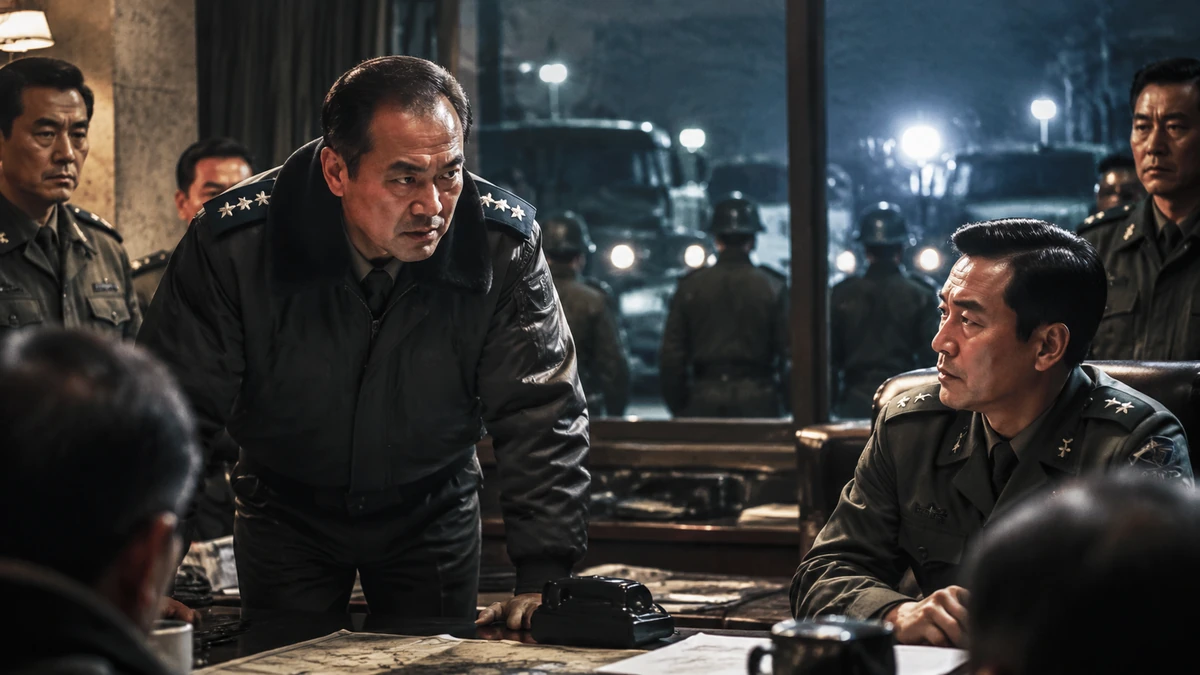
Image to help understand the article
A Korean Historical Thriller Turns One Night Into a National Conversation
When South Korean audiences filled theaters for 12.12: The Day, they were not simply watching a political thriller. They were revisiting one of the most consequential moments in the country’s modern history. The 2023 film, known in Korea as Spring of Seoul, transformed the events of Dec. 12, 1979, into a tense cinematic drama about power, loyalty and the choices made during a national crisis.
Directed by Kim Sung-su and starring Hwang Jung-min and Jung Woo-sung, the film depicts the military power struggle that followed the assassination of South Korean President Park Chung-hee. At the center of the story is the Dec. 12 military rebellion, when a group of officers moved to seize control within the armed forces during a period of political uncertainty.
For American audiences, the closest comparison may be a historical political drama that combines the urgency of a crisis film with the weight of a national reckoning. Rather than focusing only on political leaders, the movie examines how institutions respond when individuals inside them challenge established authority.
The film became a major cultural event in South Korea, becoming the country’s 31st movie to surpass 10 million theater admissions. In South Korea, the “10 million viewer” milestone is more than a box-office achievement; it is often considered a symbol that a film has connected deeply with the public.
The Historical Background: Understanding the 1979 Military Power Struggle
To understand why 12.12: The Day resonated so strongly with Korean viewers, it is necessary to understand the historical period it portrays. South Korea in 1979 was experiencing political uncertainty after decades of authoritarian rule under President Park Chung-hee, who had led the country through rapid economic development while limiting political freedoms.
After Park’s assassination, the country entered a fragile transition period. Martial law was declared, and tensions grew within the military leadership. The film focuses on the confrontation between officers seeking greater control and those who believed the military should remain outside political affairs.
The movie follows approximately nine hours of events, from around 7 p.m. on Dec. 12, 1979, until early the following morning. It compresses those hours into a 141-minute drama, emphasizing the rapid decisions, conflicting loyalties and institutional paralysis that shaped the outcome.
Because the film is based on real events, Korean viewers recognize the historical references behind many characters. However, the filmmakers changed the names of some real-life figures for dramatic purposes. The character Jeon Do-gwang is based on Chun Doo-hwan, the military leader who later became South Korea’s president, while Lee Tae-shin is based on Jang Tae-wan, a commander who opposed the military takeover.
This approach reflects a common practice in historical cinema: filmmakers use real events as a foundation while adapting details to create a stronger dramatic structure.
Why the Film Connected With Korean Audiences
The success of 12.12: The Day was driven not only by its historical subject but also by its focus on human decisions inside a powerful institution. The film does not present history as a simple timeline of events. Instead, it shows how individual choices, hesitation and ambition can influence the direction of a country.
Hwang Jung-min plays Jeon Do-gwang, a military security commander whose character represents the pursuit of power during a chaotic period. Jung Woo-sung portrays Lee Tae-shin, a commander who attempts to resist political intervention by the military.
The supporting cast includes Lee Sung-min as Army Chief of Staff Normal Ho, Park Hae-joon as No Tae-gun, Kim Sung-kyun as Kim Joon-yeop, and other prominent Korean actors. Their performances helped create the film’s atmosphere of pressure and uncertainty.
One reason the movie attracted wide attention is that many South Koreans view modern history as closely connected to current debates about democracy, government institutions and accountability. The country’s democratic development is relatively recent compared with many Western democracies, and memories of authoritarian periods remain part of public discussion.
The title, Spring of Seoul, refers to the period of hope and political change that followed Park Chung-hee’s death. However, the film explores how those expectations collided with a sudden shift in power.
What This Means for the United States: Korean History Finds a Global Audience
For American audiences, 12.12: The Day offers another example of how South Korean entertainment is expanding beyond traditional K-pop and television dramas. Over the past decade, Korean films and series have increasingly introduced international viewers to complex social and historical themes.
The global success of Korean entertainment, including films such as Parasite and series such as Squid Game, has created a larger audience willing to explore stories rooted in Korean history and society. A film like 12.12: The Day represents a different side of the Korean Wave: historical storytelling that requires cultural context but addresses universal themes of power and responsibility.
The film also provides American viewers with insight into the historical foundations of modern South Korea, a key U.S. ally in Asia. The United States and South Korea have maintained a close security relationship since the Korean War, and American policymakers, businesses and audiences have long followed South Korea’s transformation from an authoritarian state into a major democratic economy.
For U.S. viewers, the movie can be understood alongside American historical dramas that revisit moments of institutional crisis, such as films about Watergate, political scandals or military decision-making. The specific events are Korean, but the questions are universal: What happens when institutions are tested? How do individuals respond under pressure? And how does a society remember difficult chapters of its past?
The growing international interest in Korean historical content may also create opportunities for streaming platforms, distributors and cultural organizations in the United States. As audiences become more familiar with Korean history, there is potential demand for stories that go beyond entertainment trends and explore the country’s political, social and cultural evolution.
Recognition From Critics and the Korean Film Industry
The film’s commercial success was matched by significant recognition from Korean and international film organizations. At the 2023 Cine21 Film Awards, Jung Woo-sung was named Actor of the Year. At the 2024 Directors Cut Awards, director Kim Sung-su received Director of the Year honors, while the screenplay team was recognized for writing.
At the 60th Baeksang Arts Awards, one of South Korea’s most respected entertainment ceremonies, the film received major awards including Best Film, the Film Grand Prize for director Kim Sung-su, and Best Actor for Hwang Jung-min.
The movie also earned multiple awards at the Blue Dragon Film Awards, including Best Film, Best Actor for Hwang Jung-min, Editing, and the Audience Choice Award for Most-Watched Film.
Additional recognition came from events including the Asian Film Awards, Buil Film Awards, Korean Association of Film Critics Awards and Korean Film Producers Association Awards. These honors highlighted not only the performances but also the film’s direction, editing, cinematography, lighting and music.
Why ‘12.12: The Day’ Matters Beyond the Screen
Historical films often serve two purposes: they preserve memories and encourage new generations to examine the past. In South Korea, 12.12: The Day became part of a broader conversation about how history is remembered and interpreted.
The film does not simply recreate a military confrontation. It explores themes that audiences around the world recognize: ambition, institutional responsibility, personal courage and the consequences of political decisions.
For international viewers, including those in the United States, the film provides a window into a defining moment in South Korea’s journey toward democracy. It shows a country confronting the difficult parts of its past while continuing to shape its identity in the present.
As Korean cinema continues to gain global attention, films like 12.12: The Day demonstrate that the Korean Wave is not limited to music, romance dramas or entertainment trends. It is also becoming a vehicle for historical storytelling, allowing audiences worldwide to better understand the experiences that shaped modern Korea.
Comments
Post a Comment