A Korean Reality Show’s ‘Spontaneous’ Trip Exposes the Carefully Planned Business Behind Unscripted TV
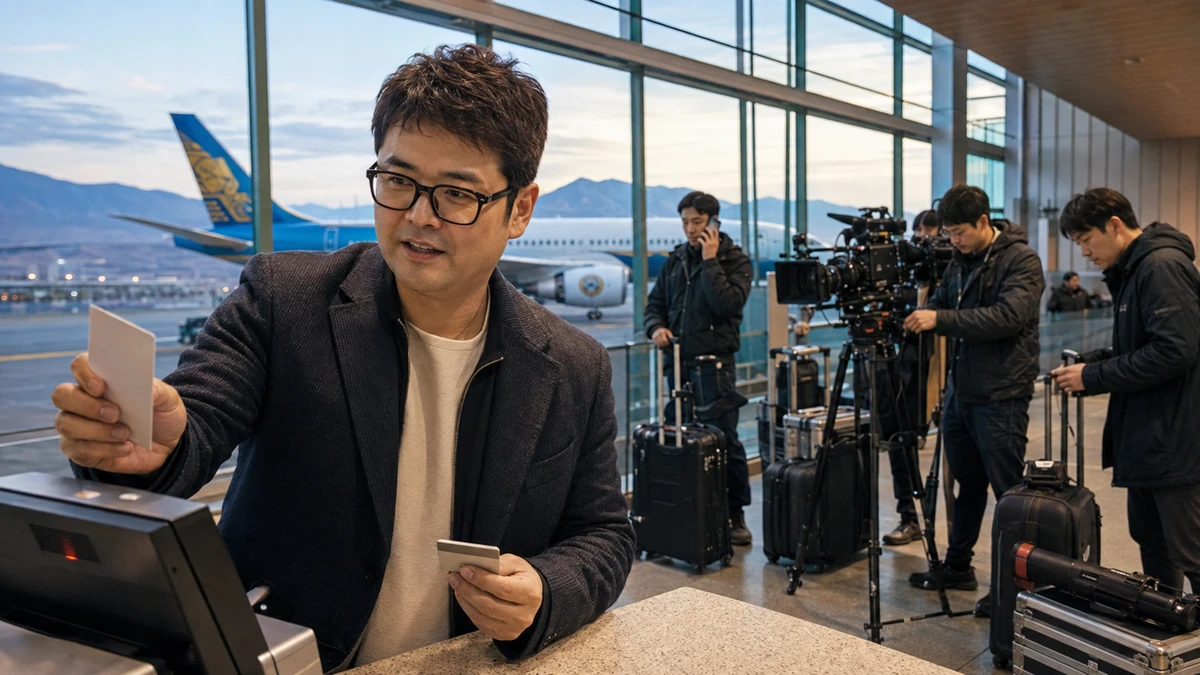
Image to help understand the article
A Surprise Trip That Was Not Entirely a Surprise
A controversy involving one of South Korea’s best-known reality programs has opened a broader debate about what television producers mean when they promise viewers spontaneity. The production team behind MBC’s “I Live Alone” apologized after acknowledging that it had purchased airline tickets for staff members and contacted local officials before filming television personality Jun Hyun-moo’s supposedly impromptu trip to Kazakhstan.
The episode showed Jun arriving at an airport, choosing a destination and buying a ticket to Almaty, Kazakhstan’s largest city. The program emphasized the uncertainty of the decision, presenting the journey as an adventure born from a last-minute choice. Jun then traveled around the city and rented a car, with the show drawing humor and suspense from the idea that neither he nor the audience knew exactly what would happen next.
Behind the scenes, however, the production was not starting from zero. MBC said the crew had considered destinations Jun had previously expressed interest in, reviewed available flights and concluded that Kazakhstan was a likely choice. To ensure that camera operators and other staff could follow him if he selected it, the team booked their transportation in advance and requested assistance for filming in Almaty.
The network stressed that Jun personally purchased his own Kazakhstan ticket at the airport on the day of departure. According to MBC’s account, his final selection had not been predetermined. The preparation was intended as a contingency plan rather than proof that the star had been handed a script telling him where to go.
That distinction is central to the dispute. The question is not simply whether Jun made a real choice. It is whether the program’s editing and promotional language encouraged viewers to believe that the entire production — including an international camera crew, transportation arrangements and government coordination — had been assembled with no advance notice. MBC conceded that it had not adequately considered how viewers would interpret the repeated emphasis on an “impromptu trip.”
Why Korean Viewers Questioned the Logistics
Suspicion grew because the episode contained signs of preparation that seemed difficult to reconcile with a completely unplanned overseas journey. Viewers raised questions about the documents needed to drive in Kazakhstan after seeing Jun rent a vehicle by presenting what appeared on screen to be his passport and international driving permit. Critics argued that additional paperwork, including documents prepared or certified in advance, could be necessary, prompting questions about how those requirements had been handled if Kazakhstan had truly been selected only at the airport.
The available explanation does not establish that Jun’s every action was decided beforehand. Television editing compresses long administrative exchanges into a few seconds, and viewers often see only the documents or conversations relevant to the story producers are trying to tell. But because the episode made its lack of planning part of the entertainment, information omitted from the screen became evidence in the audience’s effort to determine what was real.
Questions intensified when the city of Almaty said on its official website that the filming had received support from the city’s tourism authorities. Such cooperation is not unusual for an overseas television shoot. A large production may need location access, transportation guidance, safety assistance and permission to film in public or controlled spaces. A tourism agency also has an obvious interest in helping a popular foreign program showcase its city.
Still, the existence of official support complicated the show’s premise. If viewers are told they are watching a celebrity make an unpredictable choice, learning afterward that a destination’s tourism office was involved can make the trip look more like a coordinated promotional production. MBC’s acknowledgment that it had sought local cooperation was therefore significant, even if that cooperation did not determine Jun’s decision.
The controversy illustrates how an ordinary production necessity can become a credibility problem when it conflicts with a show’s storytelling. Booking backup tickets and alerting local contacts may be responsible planning. Presenting the resulting trip as though no one had anticipated it is a separate editorial decision. The first protects the production; the second shapes what the audience believes.
How Korean Variety Television Constructs Reality
“I Live Alone,” whose Korean title is “Na Honja San Da,” is a long-running observational entertainment program built around celebrities who live by themselves. Its appeal comes from placing familiar public figures in ordinary settings — at home, eating meals, pursuing hobbies or taking trips — and allowing a studio panel to react to the footage. The structure combines reality television, celebrity talk show and situational comedy.
For American viewers, the closest comparison is not one specific series but a blend of Bravo-style celebrity observation, a late-night reaction panel and the polished travel segments common on lifestyle television. Korean variety shows often make the production process visible through captions, sound effects, replays and cast commentary. Audiences understand that editors are aggressively shaping the material for laughs. That playfulness, however, does not eliminate expectations of honesty about a segment’s basic premise.
The Korean term “variety show” covers a broad category that includes travel programs, competitions, celebrity games, talk segments and unscripted observation. Unlike a conventional American sitcom, these programs do not generally claim that every line is fictional. Unlike a documentary, they also make no promise to present events without comedic manipulation. Their success depends on a negotiated trust: The situations may be arranged, but the reactions and consequential choices should feel genuine.
That is why the meaning of “spontaneous” matters. To a production team, spontaneity may mean that the featured personality made the final decision on camera while crews prepared for several probable outcomes. To viewers, the same word may suggest that no destination, transportation or local support had been lined up. Both interpretations can coexist until logistical details expose the gap between them.
MBC’s statement effectively narrowed its claim. The network said the final choice belonged to Jun, while the staff had prepared for Kazakhstan because it appeared likely. In that version, the authentic element was the moment of selection, not the absence of production planning. The controversy arose because the episode did not make that boundary sufficiently clear.
The Universal Tension in ‘Unscripted’ Television
The dispute will be familiar to anyone who follows American reality television. A program can be unscripted without being unplanned. Producers select locations, secure releases, arrange transportation, check insurance requirements and position cameras before participants arrive. Competition shows build challenges long before contestants see them. Dating programs schedule elaborate outings that are presented as personal romantic gestures. Home renovation series coordinate permits, contractors and shooting schedules even when the participants’ emotional responses are genuine.
The industry’s preferred term, “unscripted,” is more accurate than “unproduced.” It usually means participants are not performing every sentence from a conventional screenplay. It does not mean cameras happened to discover a complete television episode by accident. Producers create the conditions under which unpredictable behavior can occur, then editors transform hours of footage into a coherent story.
Problems emerge when a program’s marketing depends on viewers believing that normal production safeguards do not exist. If the attraction is a contestant’s surprise, audiences may accept that cameras were ready. If the attraction is that no one knew where an international trip was heading, advance plane tickets and government cooperation become more consequential. The more emphatically a show sells randomness, the more precisely it must explain what was actually random.
American reality programs have faced similar skepticism for years, particularly when editing suggests a chronology or motivation that participants later dispute. Viewers have become more literate about techniques such as reconstructed scenes, reaction shots inserted out of sequence and producer-prompted conversations. Social media has accelerated that scrutiny. A location’s public announcement, a participant’s post or an administrative detail can challenge a television narrative before the next episode airs.
The lesson is not that advance planning automatically makes reality television fraudulent. International filming would be unsafe and potentially impossible without preparation. Rather, producers need language that reflects how their programs are actually made. “Jun chose among possibilities at the airport while the crew prepared for likely outcomes” is less dramatic than “a completely unplanned trip,” but it is also more defensible.
What It Means for the United States
For the American entertainment industry, the MBC dispute offers a case study in how quickly local production controversies can become global trust issues. Korean television is no longer consumed only within South Korea. American viewers encounter Korean series through streaming platforms, licensed clips, fan communities and social media, often without the cultural or industrial context that domestic audiences bring to them.
That international reach raises the stakes for Korean broadcasters and for U.S. companies that distribute, license or adapt Korean content. Descriptions, subtitles and promotional copy must communicate not only what happened on screen but also what the program is claiming about authenticity. A Korean phrase suggesting a flexible, last-minute decision may be translated or marketed in English as “totally unplanned,” creating a stronger promise than the production can support.
American audiences are already accustomed to highly engineered reality television, but that familiarity does not necessarily make them more forgiving. Viewers may accept that a crew has secured a restaurant or travel permit while still objecting if the show implies those arrangements appeared instantly. For distributors, the risk is reputational: A small dispute about one episode can reinforce the belief that “reality” is simply another word for fiction.
There is also a practical lesson for American productions filming in South Korea or elsewhere in Asia. Cooperation from tourism boards and local governments can provide access and reduce costs, but the arrangement should be disclosed when it materially affects the story being told. Support can range from basic permitting assistance to a more substantial role in selecting locations or designing an itinerary. Those are not equivalent, and viewers should not be left to assume the most expansive version after discovering the partnership on their own.
The episode also touches the broader U.S.-Korea cultural relationship. Entertainment has become one of South Korea’s most visible forms of international influence, alongside the country’s economic and security ties with the United States. Korean music, film, television and food programming help shape how Americans imagine the country and its neighbors. When Korean productions travel to places such as Kazakhstan, they extend that influence further, introducing destinations that receive relatively little exposure in mainstream American entertainment.
For American fans, greater transparency could deepen rather than diminish that appeal. Showing how a Korean crew coordinates with Almaty officials, manages cross-border logistics and prepares for multiple destinations would offer insight into the sophistication of the industry. The machinery behind the trip can be interesting in its own right. U.S. producers have increasingly turned behind-the-scenes access into companion podcasts, reunion specials and digital features; Korean broadcasters could use similar formats to explain how apparent spontaneity is safely produced.
Tourism Promotion and the Need for Disclosure
The involvement of Almaty’s tourism authorities highlights another trend extending well beyond Korean television: Entertainment and destination marketing are becoming increasingly intertwined. Cities and national tourism organizations seek exposure through music videos, streaming dramas and celebrity travel programs. Productions, in turn, benefit from local expertise and access.
For a city, an appearance on a popular Korean program can function much like placement in an American travel series or a major Hollywood film. Viewers see streets, restaurants, landscapes and transportation through the experience of a personality they already know. The emotional connection can be more persuasive than a conventional commercial because the destination is embedded in a story.
That promotional value does not mean the experience is necessarily false. A host can have genuine reactions while receiving logistical support. A destination can be chosen freely even if officials later help coordinate filming. The key question is whether assistance shaped the events in a way viewers would consider relevant.
A brief on-screen disclosure could resolve much of that ambiguity. Programs routinely identify sponsored products, paid partnerships and provided accommodations. Similar language could explain that local authorities assisted with filming while the participant retained control over the destination or itinerary. Such disclosures need not interrupt the narrative; they can establish the ground rules that allow viewers to enjoy it.
This approach would also protect tourism partners. Without context, an agency’s announcement may be interpreted as evidence that the entire trip was arranged in advance. Clear disclosure allows officials to receive appropriate credit for practical assistance without unintentionally undermining the program’s credibility.
What MBC Must Show Next
MBC said it regretted causing misunderstanding and confusion and acknowledged that it had not responded quickly or clearly enough when questions emerged. The production team also said it would reconsider its methods and attitude from the beginning. That apology addresses the immediate criticism, but the more meaningful response will appear in future episodes.
The program does not need to abandon spontaneous travel. It needs to define spontaneity with greater precision. If a celebrity makes the final choice among destinations for which crews have prepared, the show can say so. If local agencies provide transportation or filming support, a caption can identify that role. If administrative steps occurred off camera, the program can avoid editing that implies they were unnecessary.
Transparency does not have to drain entertainment from the format. In fact, preparation can generate a second layer of suspense. Viewers may enjoy learning that crews planned for several possible cities, knowing that most of those arrangements would be discarded once the participant decided. The race to mobilize staff after the choice could become part of the story rather than something hidden outside it.
The larger issue is the durability of audience trust. Reality television survives because viewers accept a degree of construction while believing they can still identify the authentic core. In this case, that core may have been Jun’s airport decision. By emphasizing a broader version of spontaneity, the program made its legitimate logistical planning look suspicious.
As Korean entertainment reaches larger audiences in the United States and around the world, those distinctions will matter more. International fans may not know the conventions of Korean variety television, the role of municipal tourism offices or the practical demands of sending a production crew across borders. Programs that explain those elements clearly will be better positioned to preserve both the excitement of the unexpected and the credibility on which unscripted entertainment depends.
Comments
Post a Comment