A Wartime Statesman’s Warning: Why Ryu Seong-ryong’s Record of Korea’s 16th-Century Crisis Still Matters
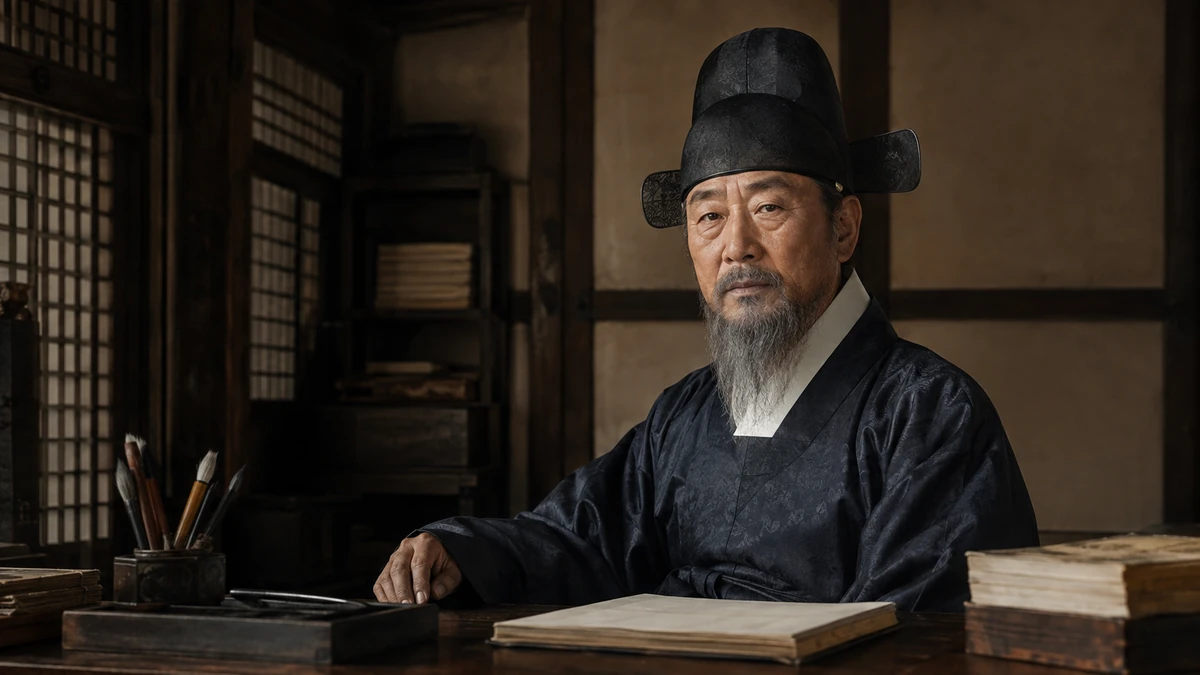
Image to help understand the article
A Scholar Shaped for Government
More than four centuries before South Korea became a close U.S. ally and a global exporter of music, television and technology, the Korean Peninsula endured a war that nearly destroyed the state ruling it. At the center of that national emergency stood Ryu Seong-ryong, a scholar-official whose career combined political judgment, bureaucratic skill, personal loyalty and consequential mistakes. He helped direct the government during the Japanese invasions of Korea in the 1590s, promoted commanders who became national heroes and later recorded the crisis in “Jingbirok,” commonly rendered in English as “The Book of Corrections” or “The Book of Warnings.”
Ryu was born in 1542 in Uiseong, in what is now North Gyeongsang province. He belonged to the Pungsan Ryu clan, an elite lineage associated with the Confucian governing class of the Joseon dynasty, which ruled Korea from 1392 to 1910. In Joseon society, family background mattered enormously, but high office also depended on demanding civil service examinations built around Confucian classics, literary composition and administrative knowledge.
Accounts describe Ryu as a child prodigy who read the Confucian text “The Great Learning” at age 3. Such stories served not only as biographical color but also as evidence of moral and intellectual promise in a society that treated mastery of classical texts as preparation for public leadership. As a young man, Ryu studied under Yi Hwang, better known by his pen name, Toegye, one of Korea’s most influential Neo-Confucian thinkers. Toegye’s standing in Korea can be compared, loosely, to the combined intellectual and civic stature of a founding-era American political philosopher and a revered university teacher.
Neo-Confucianism was more than an academic specialty. It supplied Joseon with its language of ethics, family order, education and legitimate government. Officials were expected to cultivate themselves morally and then apply that discipline to administration. Ryu’s scholarly training therefore prepared him for both philosophical debate and the practical business of governing: appointments, diplomacy, court ritual, taxation, military supply and relations with neighboring powers.
Politics in a Court Divided by Factions
Ryu passed preliminary state examinations in 1564 and a higher civil service examination two years later. He then advanced through a series of central government posts, including positions connected to royal records, diplomacy, personnel and ceremonial affairs. During a mission to Ming China, the regional superpower to which Joseon maintained a tributary diplomatic relationship, he reportedly earned respect among Chinese intellectuals.
For American readers, the word “faction” may suggest a congressional caucus or an ideological wing of a political party. Joseon’s factions were more personal, philosophical and institutional at once. They grew from disputes over appointments and policy, but they also reflected scholarly networks, regional ties and rival views of political legitimacy. Because officials could be exiled, stripped of office or executed when power shifted, factional conflict carried stakes far beyond losing an election.
Ryu aligned with the Easterners when the political elite divided into Eastern and Western factions in the 1570s. Yet he often took a comparatively moderate position. When the Easterners later split over whether a former senior official should be executed, Ryu argued for exile rather than death. That dispute helped produce two new camps: the hard-line Northerners and the more moderate Southerners, with Ryu emerging as a leading Southern figure.
His moderation did not make him politically neutral. He defended allies, opposed rivals and operated within the same factional system that shaped decisions at court. That point became especially important when Joseon faced reports that Japan might invade. Ryu’s career illustrates a familiar problem in government: An official may be prudent in one crisis and partisan in another, sometimes with national consequences.
The Warning Joseon Failed to Heed
Japan was undergoing dramatic political consolidation under Toyotomi Hideyoshi, the warlord who had brought much of the country under his control after generations of internal conflict. Hideyoshi sought passage through Korea for a campaign against Ming China. Ryu argued that Joseon should inform the Ming government about Japan’s message rather than ignore it. That decision later helped counter Chinese suspicions that Korea and Japan might have secretly coordinated the invasion.
Ryu also demonstrated an eye for military talent. When King Seonjo asked officials to recommend capable commanders, Ryu put forward Kwon Yul, Sin Chung-won and Yi Sun-sin. Yi, known in English as Admiral Yi Sun-sin, became the most celebrated naval commander in Korean history. Ryu had personal ties to Yi and Yi’s family, but the recommendation proved extraordinarily important. Yi’s victories helped protect Korea’s sea routes and disrupt Japanese operations during the war.
In modern South Korea, Yi occupies a place comparable to the most revered figures in American military history, although even that analogy understates his cultural presence. His statues, films, television dramas and biographies make him familiar across generations. Ryu is often remembered as the senior official who recognized Yi’s ability and helped place him in a position where that ability could shape the war.
But Ryu also shared responsibility for one of the government’s gravest failures. Joseon sent an embassy to Japan to assess the threat. When the envoys returned, the senior envoy, Hwang Yun-gil, warned that an invasion was coming. The deputy envoy, Kim Seong-il, said there was little reason for alarm. Ryu supported Kim, a fellow member of the Eastern faction, and the court moved away from urgent preparations.
The Japanese invasion began in 1592. Whether factional loyalty alone determined Ryu’s judgment cannot be established from the episode, but the choice became a defining example of how political alignment can distort threat assessment. Americans may recognize the broader pattern from later intelligence failures: Officials receive conflicting reports, interpret them through institutional assumptions and discover only afterward which warning deserved greater weight.
Managing a Government in Flight
Japanese forces advanced rapidly after landing in the southeast, overwhelming defenses and driving King Seonjo’s court north toward the Chinese border. Ryu accompanied the king to Uiju. During the retreat, he briefly lost office amid criticism that he had supported the assessment minimizing the danger. He soon returned to the center of government and eventually served as chief state councilor, a role roughly comparable to prime minister, while also exercising broad authority over military and provincial affairs.
Ryu’s wartime contribution was not based on battlefield command. He worked through administration: selecting personnel, coordinating forces, obtaining grain, studying military organization and communicating with Ming commanders. At Anju, he questioned residents directly about local conditions and worked to prepare supplies. He provided a map of Pyongyang to the Ming general Li Rusong, supporting the allied campaign to retake the city.
This was the unglamorous infrastructure of survival. Armies require food, maps, transport, intelligence and chains of authority. Refugees require protection, and devastated provinces require functioning officials. Ryu’s reputation as a statesman who helped “reconstruct the mountains and rivers” reflects the scale of the collapse he confronted. The expression does not mean he literally rebuilt the landscape. It conveys the idea of restoring a shattered country.
His conduct during the retreat also showed his awareness of morale and appearances. After one defeated commander arrived poorly clothed and wearing straw shoes, Ryu arranged for him to be properly dressed before appearing before the king. The gesture can be read as compassion, but also as political management. In a court struggling to maintain authority, the sight of a senior military officer reduced to rags would have dramatized the government’s humiliation.
Ryu’s wartime record nevertheless resists a simple heroic narrative. He helped elevate Yi Sun-sin, but historical records conflict over his response when the admiral was arrested in 1597 on accusations of disloyalty. In “Jingbirok,” Ryu wrote that he defended Yi before the king and faced attacks because he had originally recommended him. The official court chronicle, however, includes an account suggesting that Ryu acknowledged having misjudged Yi and joined the criticism. Other officials helped prevent Yi’s execution. Yi later returned to command and won the Battle of Myeongnyang despite facing a far larger Japanese fleet.
Writing a National Failure Into Memory
Ryu’s political fortunes collapsed again in 1598, the final year of the war. A Ming official accused Joseon of conspiring with Japan against China, and Ryu’s rivals attacked him for not personally traveling to explain the matter. He was removed as chief state councilor and stripped of office on the same day as the Battle of Noryang, the war’s final major naval clash and the battle in which Yi Sun-sin was killed.
After leaving government, Ryu turned to writing. “Jingbirok” became his most enduring work. Its title draws on a classical idea of looking back on past trouble so that future danger can be prevented. It is not simply a memoir of personal achievement. It records diplomatic warnings, court debates, military breakdowns, logistical problems and the conduct of officials during the invasion.
That purpose makes the work recognizable to an American audience accustomed to congressional investigations, presidential commission reports and after-action reviews following military or intelligence failures. Yet “Jingbirok” is also rooted in Confucian political culture. For Ryu, history was a moral instrument. Recording failure was a way to discipline future leaders, preserve institutional memory and turn catastrophe into instruction.
The work’s importance lies partly in Ryu’s willingness to preserve evidence of decisions that reflected badly on the government and, by implication, on himself. He had warned Ming China about Japan’s intentions and promoted outstanding commanders. He had also backed the envoy who discounted the invasion threat. The resulting portrait is more useful than a flawless patriotic legend because it shows how capable officials can make disastrous judgments.
Modern readers should still approach such a record critically. Ryu wrote from his own perspective after political defeat, and his description of disputed events, including his handling of Yi Sun-sin’s arrest, does not always align with other sources. The tension between memoir and official chronicle is not unusual. American history contains similar conflicts between public records and the recollections of Cabinet members, generals and intelligence officials defending decisions after a crisis.
What Ryu’s Story Means for the United States
For Americans, Ryu’s legacy offers more than background for understanding a famous Korean admiral or a popular historical drama. It provides a window into the long strategic history behind the modern U.S.-South Korea relationship. The alliance created after the Korean War is a 20th-century institution, but Korean security debates have for centuries involved larger neighboring powers, contested intelligence and the challenge of preserving autonomy while seeking outside military support.
During Ryu’s time, Joseon depended on assistance from Ming China to reverse Japan’s invasion. Today, South Korea’s security rests in significant part on its alliance with the United States, including the presence of American troops and extensive military coordination. The circumstances are radically different, and Ming tributary diplomacy should not be equated with a modern treaty alliance. Still, Ryu’s experience underscores a durable strategic question: How does Korea prepare for threats while managing relationships with more powerful states?
The story also has relevance for U.S. national security institutions. Ryu’s failure to act on the more alarming embassy report resembles the recurring problem of warning intelligence. Governments rarely lack information altogether. More often, they struggle to distinguish a credible warning from noise, especially when evidence is politically inconvenient or analysts disagree. The lesson is not that leaders should always accept the bleakest forecast. It is that factional identity and bureaucratic preference must not substitute for testing assumptions and preparing for high-cost risks.
American cultural interest matters as well. The expansion of Korean film, television, literature and web-based entertainment has made historical Korean settings more accessible to U.S. audiences. Productions about Yi Sun-sin and the Japanese invasions can attract viewers through naval battles and court intrigue, but figures such as Ryu provide the institutional story behind the spectacle. He represents the officials who turned scholarship into administration and who fought wars through appointments, memoranda and supply systems rather than swords.
For American publishers, museums, universities and entertainment companies, that history offers material extending well beyond the familiar categories of K-pop and contemporary television. The Joseon period contains political rivalries, invasion narratives and debates over loyalty that can be understood internationally if the cultural framework is explained carefully. The risk is reducing Korean history to exotic costumes or treating Yi as an isolated warrior hero. Ryu’s life shows why the bureaucracy, Confucian education system and regional diplomacy are essential to understanding the drama.
His record also complicates the kind of streamlined hero story favored by commercial entertainment. Ryu made a career-defining recommendation that helped save his country, supported a faulty assessment that left it vulnerable and later wrote the account through which generations would study both achievements and failures. For U.S. audiences accustomed to reassessments of wartime presidents, generals and intelligence chiefs, that combination should feel strikingly familiar.
A Legacy Built on Accountability, Not Perfection
Ryu Seong-ryong is remembered as a scholar, senior official, medical thinker and writer, but his lasting significance comes from the collision between expertise and crisis. He had deep training, broad administrative experience and access to the king. None of those advantages guaranteed sound judgment. His political alliances influenced his choices, the government underestimated an external threat, and the state paid an enormous price.
At the same time, Ryu proved highly effective once war began. He identified talented commanders, worked with Ming forces, managed supplies and helped restore governing capacity. His career demonstrates that the officials who fail to prevent a crisis may still be indispensable in containing it. That reality is uncomfortable, but it is common in public life, where expertise is rarely distributed neatly between heroes and villains.
The most important trend in Ryu’s modern relevance is the widening international audience for Korean history. As global interest in Korea moves beyond pop culture, foreign readers are encountering the institutions, philosophical traditions and historical traumas that shaped the country. “Jingbirok” belongs in that conversation because it explains not only what happened during the invasions but how a government understood its own breakdown.
What deserves attention next is how historians, translators and storytellers present the contradictions in Ryu’s record. Celebrating him only as Yi Sun-sin’s patron overlooks his role in dismissing invasion warnings. Condemning him only for that failure ignores his central contribution to wartime recovery. The conflict between his memoir and the royal chronicle also invites continuing study of how powerful people construct accounts of their actions.
Ryu’s deepest lesson is therefore not a simple warning to predict the next war. It is a case for institutional memory, intellectual humility and honest review. A government must preserve dissenting assessments, protect talented professionals from factional retaliation and study its failures without turning history into self-defense. That argument, formed in the aftermath of a 16th-century East Asian war, remains relevant in Seoul and Washington alike.
Comments
Post a Comment