Image to help understand the article
From mass protest to underground resistance
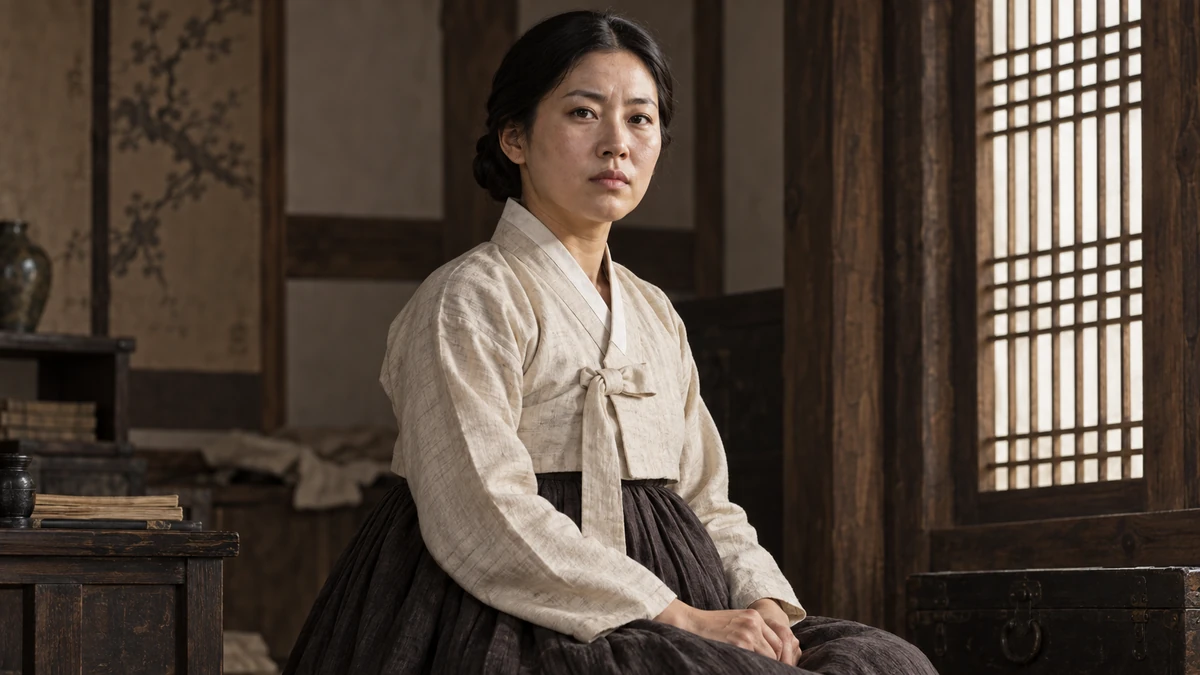
An Kyung-shin was born July 22, 1888, in Daedong, in what is now North Korea. A Christian who attended a girls’ secondary school in Pyongyang for two years, she became active in Korea’s independence movement during Japanese colonial rule.
In 1919, An joined a demonstration in Pyongyang during the March First Movement, a nationwide uprising against Japanese rule. She was arrested and detained for a month. After her release, she helped establish the Korean Patriotic Women’s Association with fellow Methodist women, including Oh Shin-do and An Jeong-seok.
The organization grew to more than 100 members across eight regional branches. An worked in communications at its Pyongyang headquarters and handled finances for its Kangso branch. The group collected about 2,400 won for the Korean Provisional Government, the independence movement’s government-in-exile in Shanghai, before Japanese police uncovered the network.
Joining an armed independence unit
After Japanese authorities arrested 106 of her colleagues in early 1920, An fled to Shanghai and joined the Liberation Army General Headquarters, a military organization affiliated with the provisional government. The group sought to disrupt Japanese colonial administration by bombing government buildings and attacking key officials.
An argued that petitions and negotiations had failed to secure independence. According to testimony from her colleagues, she believed armed retaliation — including bombings and targeted attacks — offered a more effective course.
When news arrived that a delegation of U.S. lawmakers would visit Shanghai and the Korean Peninsula in 1920, the provisional government saw an opportunity to draw international attention to Korea’s struggle. It pursued diplomacy while also planning bombings inside Korea that it hoped would ignite broader demonstrations.
The military organization divided 13 operatives into teams assigned to Seoul, Pyongyang and Sinuiju. An joined the Pyongyang team alongside Jang Deok-jin, Park Tae-yeol, Moon Il-min and Woo Deok-seon. Their 12 bombs were made by a roughly 40-member group whose members had learned explosives techniques from British and Cantonese instructors.
An’s team secretly entered Korea and worked with a Pyongyang branch of another independence organization. She transported explosives to Pyongyang and hid at a supporter’s home in Daedong County on Aug. 1, 1920.
The Pyongyang bombing operation
Before the attack, independence activists distributed warnings across Pyongyang urging Koreans to leave government jobs, stop informing for Japanese authorities, contribute money to the movement and unite behind the independence cause.
On the night of Aug. 3, the participants split into three groups. After one bomb thrown toward the South Pyongan provincial police headquarters failed to explode, Moon and Woo threw additional explosives. The blast brought down a wall of a newly built section, shattered windows and killed two Japanese police officers. A bomb thrown at the Pyongyang municipal government building did not detonate.
An, who was pregnant at the time, was assigned with Jang and Park to attack the Pyongyang police station. She tried to light a bomb’s fuse outside the station, but rain prevented it from igniting. She spent the night hiding in a melon field and later obtained another bomb, but heightened police security prevented another attempt. She eventually took shelter at a home in South Hamgyong province.
Japanese colonial authorities initially blocked news reports about the attack. On Aug. 19, the Maeil Shinbo newspaper told readers that officials had lifted the ban, allowing it to report on the bombing and the turmoil it had caused in Pyongyang.
A death sentence, commutation and uncertain fate
Police arrested An on March 20, 1921, shortly after she gave birth. Six days later, she was taken to prosecutors at the Pyongyang District Court while holding her roughly 12-day-old baby. The court sentenced her to death.
Leaders of the provisional government attempted to save her. After a meeting in Shanghai’s French Concession that included prominent independence leader Kim Gu, they sent Japanese colonial authorities a jointly signed letter stating that the bombing had been ordered by the provisional government and carried out under military command, and that An was not responsible.
An appealed. When questioned in court, she rejected the accusation that she had committed an act she had not carried out. The provisional government’s letter was taken into consideration, and her sentence was reduced to 10 years in prison.
Records say An was paroled during her seventh year of imprisonment and went to live with her brother in Pyongyang. Her later whereabouts are unknown.
After leaving prison, An learned that her mother had died, her son had a disability and her colleague Jang had been killed. In an interview with the Dong-A Ilbo newspaper, she said each loss brought grief, but hearing of Jang’s violent death left her in tears and made the world seem like an enemy.
In 1962, the South Korean government posthumously awarded An the Order of Merit for National Foundation, Independence Medal. She is remembered as a woman who moved from mass demonstrations and fundraising into the armed wing of Korea’s independence struggle.
Comments
Post a Comment