Image to help understand the article
A Korean Album With a Familiar American Question
A television remote, a birthday greeting and a few ripe persimmons are not the usual building blocks of a global pop campaign. For South Korean singer-songwriter Ahn Chi-hwan, however, they provide the material for a larger question: What makes a life worth paying attention to when there is no spectacular achievement to celebrate?
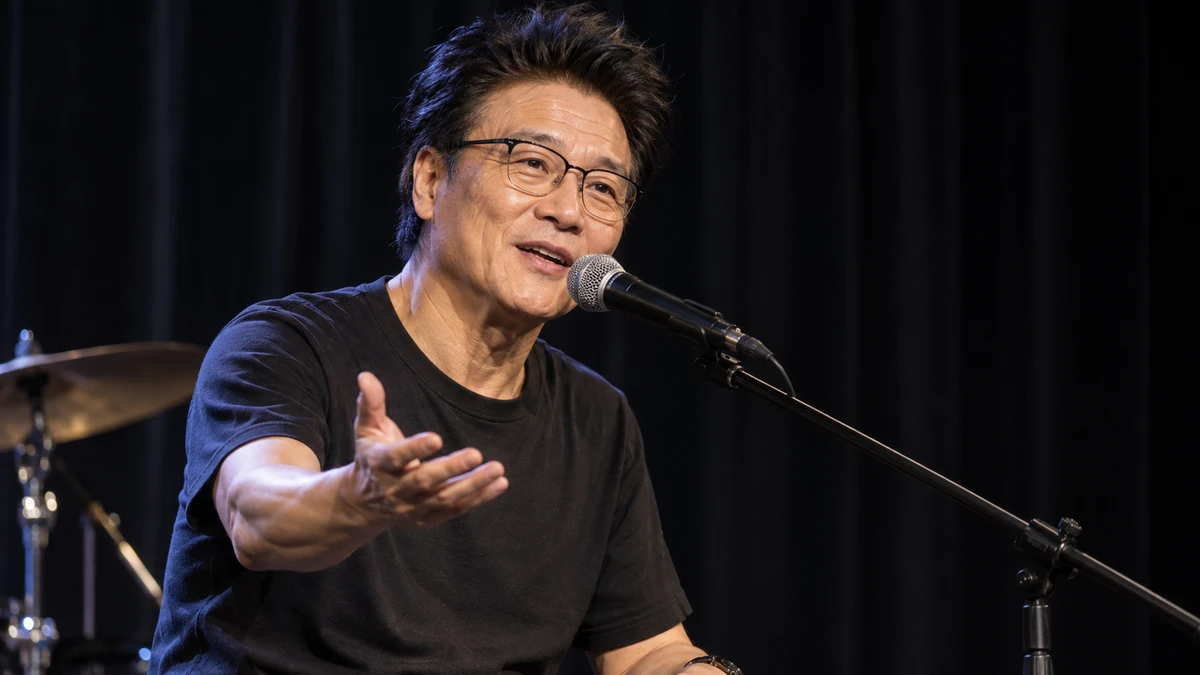
On his 15th studio album, “Seize the Day,” Ahn turns toward the comforts and complications of ordinary living. Introducing the project at a showcase held on the eighth of the month at Yeonnam Space in Seoul’s Mapo district, he described wanting to make songs with a different, more inward-looking character and to convey the importance of the present moment.
For American listeners whose encounters with Korean music have come primarily through BTS, Blackpink or the highly organized world of idol fandom, this is a different entry point. The subjects are less about celebrity than about the experiences listeners bring home with them: marriage, gratitude, second thoughts and the small pleasures that can disappear into routine.
The album’s significance is not that it establishes a new export phenomenon. There is no evidence here of an American breakthrough or a U.S.-focused rollout. Instead, it offers a useful corrective to a narrow understanding of Korean popular music — and a connection to an American singer-songwriter tradition that also finds meaning in kitchens, living rooms and imperfect lives.
Seizing the Day Without Erasing the Past
The album’s English title invokes “carpe diem,” the Latin expression commonly rendered as “seize the day.” For many Americans, the phrase carries echoes of the classroom exhortations in “Dead Poets Society,” or the broader cultural insistence that a meaningful life requires acting before time runs out.
Ahn’s choice of material suggests a less dramatic application. Seizing the day need not mean quitting a job, embarking on an adventure or making a grand declaration. It might mean recognizing the person whose birthday has arrived, the spouse sharing the television or the fruit that has ripened enough to eat.
That distinction matters because the 15-track album also makes room for regret. One song, whose Korean title can be rendered as “It Could Have Been Otherwise,” concerns looking back on life’s choices. Its presence complicates any reading of the project as a collection of uncomplicated affirmations. The past does not disappear simply because someone resolves to value the present.
On the basis of the songs and intentions described at the showcase, the album’s central idea is better understood as acceptance than relentless optimism. Happiness and remorse can occupy the same day. A person does not need to settle every old disappointment before finding something worth celebrating now. That is a recognizable proposition for audiences far beyond Korea, particularly listeners who have lived long enough to question the promise that accomplishment alone will bring contentment.
A Lead Song Built on Another Writer’s Words
The lead track, “I Only Live for Today,” using an English rendering of its Korean title, was written and composed by Song Bong-ju of the Korean music group Jajeongeo Tan Punggyeong. Song is a close friend and younger musical colleague of Ahn’s. The selection places another songwriter’s work at the center of an album by an established singer-songwriter.
In American music, that arrangement is hardly a contradiction. Country, folk and pop have long depended on the exchange between writers and interpreters. Bonnie Raitt’s recording of John Prine’s “Angel From Montgomery,” for example, illustrates how a singer can make another writer’s perspective central to an artistic identity. That is a comparison of creative roles, not a claim that Ahn’s new song sounds like Raitt’s recording.
As described in the showcase account, Ahn’s lead track repeats its buoyant title phrase to deliver encouragement. Rather than constructing a complicated argument about time, it offers a concise statement listeners can apply to their own circumstances.
Read in isolation, “I Only Live for Today” might sound like a rejection of responsibility — a Korean counterpart to the American shorthand “YOLO.” Within an album that also considers past decisions and intimate relationships, however, the phrase takes on another possibility: today deserves attention even when yesterday remains unresolved. Song’s contribution gives that idea a direct, repeatable form, while Ahn’s decision to feature it shows that an album’s artistic direction need not depend entirely on who holds the songwriting credit.
What a Remote Control and Persimmons Can Explain
“TV Remote” uses a household object as a metaphor for the joys and difficulties of married life. An American listener needs little cultural preparation to recognize the potential: a shared screen, competing preferences and a small device that can become an unexpectedly potent symbol of living together.
The available description does not establish the song’s particular scenes or lyrical resolution. It would be a mistake to supply an argument over channels that has not been documented. What is clear is the songwriting choice: Ahn’s album approaches a relationship through an object familiar enough to require almost no introduction.
Persimmons ask slightly more of many American listeners. The orange fruit is a familiar part of autumn in Korea and can be eaten in different forms, including soft and ripe or dried. It is not exclusive to Korea; persimmons also grow in the United States. But its everyday cultural visibility differs. An American songwriter might similarly reach for peaches or apples as an immediately recognizable seasonal pleasure, without those fruits being exact substitutes for the Korean image.
Such details are valuable precisely because they are both specific and accessible. Listeners do not have to pretend that Korean domestic life is identical to their own. They can recognize the pleasure of something ripe, or the emotional weight of a household routine, while learning what gives the image its local texture. The cultural bridge is strongest when the details remain intact rather than being stripped away in pursuit of a supposedly universal message.
A Journey to Kyoto Adds Historical Depth
Not all of the album’s subjects remain inside the home. “Dongju and Jiyong in Kyoto,” another English rendering of a Korean track title, grew out of encounters with poetry monuments associated with Korean poets Yun Dong-ju and Jeong Ji-yong in the Japanese city.
The Korean term for such a monument, “sibi,” refers to a stone memorial inscribed with poetry. For an American reference point, imagine encountering a writer’s words on a commemorative stone or along a literary walking route: The poem is no longer only something read in a book. It becomes part of a physical place, connecting a visitor’s present experience with a writer’s remembered life.
Both poets belong to the history of Korean literature during Japan’s colonial rule over Korea, which lasted from 1910 to 1945. Yun, especially, holds an important place in Korean cultural memory. He died in Japanese custody in 1945. That background helps explain why the presence of Korean poets’ words in Japan can carry associations beyond literary tourism.
Still, context is not the same as evidence about the song. The showcase description identifies the monuments as an inspiration but does not provide enough lyrics or musical detail to establish a particular historical or political argument. What can be said is that the track expands the album’s field of attention. A remote control, ripe fruit and a poetry memorial are very different objects, yet each can prompt an encounter with memory, attachment or the passing of time.
What This Means for the United States
For the American market, Ahn’s album raises a question about what gets included when Korean music crosses the Pacific. Idol groups have given many U.S. audiences an accessible introduction through touring, choreography, music videos and intensely participatory fandoms. But the visibility of that model can make a diverse national music culture appear more uniform than it is.
Ahn offers another frame: a veteran songwriter’s album organized around adult relationships and reflection. American listeners already have reference points for that approach in folk, country and Americana. The connection lies in the attention paid to ordinary experience, not in a demonstrated similarity of instrumentation or vocal style. Without a full account of the recordings, assigning this album an American genre label would go beyond the evidence.
For U.S. music companies, streaming editors and cultural presenters interested in broadening discovery, the practical implication is the value of context. Reliable lyric translations, clear songwriting credits and explanations of literary references could help listeners engage with an artist who does not arrive through the familiar idol framework. Those are potential approaches, not announced elements of Ahn’s release strategy. The supplied account identifies no U.S. label agreement, American tour, domestic sales figures or specific distribution arrangements.
The U.S.-Korea connection here is therefore cultural rather than diplomatic or commercial in any measurable sense. A single album does not alter a bilateral relationship. It can, however, give American audiences a more varied picture of the people and artistic traditions behind a country often discussed through technology, security and entertainment exports. Learning to hear Korean music beyond its most internationally visible stars is one modest way that familiarity can deepen.
The Artist, the Camera and the Question of Reach
Ahn said at the showcase that he intends to trust the songs themselves and follow his own path in presenting the new material. He also described stiffening up in front of television cameras. For an American audience accustomed to musicians maintaining an almost continuous public presence, that admission points to a familiar tension: The skills required to write or deliver a song are not necessarily the same skills required to promote it.
U.S. artists face their own versions of that problem through demands for social media posts, short videos and a readily marketable personal story. Ahn’s comments belong in that wider discussion, though they should not be inflated into a wholesale rejection of publicity. He was, after all, introducing the album at a showcase.
His hope that the new music will mark a turning point in his musical life is also best treated as an aspiration, not a forecast. The available reporting supplies no audience data that would establish whether such a shift is underway.
Nor does this release, by itself, prove that Korean audiences are moving away from spectacle or that international listeners are suddenly embracing a new wave of veteran songwriters. Its value as a case study is more precise: It shows a different artistic proposition existing alongside the Korean music most heavily promoted abroad. Whether that proposition travels will depend on discovery, access and listeners’ responses — matters that remain open.
Listening Beyond a Simple Message of Comfort
Ahn also resisted drawing a firm line between songs about everyday life and songs about the times in which a person lives. His explanation emphasized the many complicated emotions within an individual. That is an important guardrail against presenting “Seize the Day” as an uncomplicated retreat into private happiness.
A marriage does not exist outside society, and an encounter with a poet’s memorial does not stop being personal because it carries historical associations. Birthday wishes, regret and cultural memory can belong to the same consciousness. The album’s range of subjects, as introduced at the showcase, suggests that its coherence comes from that shared human perspective rather than from keeping every song in the same emotional register.
For English-speaking audiences, language will still matter. Recognizing a remote control is not the same as understanding the wordplay or emotional shading of a Korean lyric. Familiar subject matter opens a door; it does not eliminate the need for thoughtful translation and patient listening. Any deeper assessment of the album must ultimately turn to the recordings and the words themselves.
What Ahn has offered so far is an invitation that needs little explanation: Do not reserve attention only for the exceptional day. There may be meaning in a celebration, friction in a shared room, pleasure in ripe fruit and sorrow in an old decision. For Americans looking beyond the most visible edges of the Korean Wave, that invitation presents Korean music not merely as a global entertainment success, but as another place to encounter the unfinished business of ordinary life.
Comments
Post a Comment