Image to help understand the article
The catcher: baseball’s defensive leader behind home plate
The catcher, known as “poseu” (포수) in Korean, is the player positioned behind home plate to receive pitches from the pitcher. In baseball scorekeeping, the catcher is assigned defensive number 2 and is commonly abbreviated as “C.” The position has recently drawn attention in Korea as reports about professional baseball catchers led to increased online searches.
A key role in controlling the game
A catcher’s primary responsibility is receiving pitches, but the position involves much more than catching the ball. Catchers must block pitches that bounce in front of the plate, understand their pitchers’ tendencies and help guide defensive decisions throughout the game.
When runners are on base, preventing stolen bases becomes another important duty. Because runners often attempt to steal second base by timing a pitcher’s delivery, catchers need the ability to make quick, accurate throws. A weaker throwing ability can encourage opposing runners to attempt steals more aggressively.
Catchers also communicate pitch selections through hand signals between their legs before each pitch. They can also direct defensive positioning for infielders and outfielders, which is why catchers are sometimes described in Korea as the “field commander” of the defense.
Other responsibilities include catching foul balls near home plate and tagging runners attempting to score after a hit.
Protective equipment designed for a high-impact position
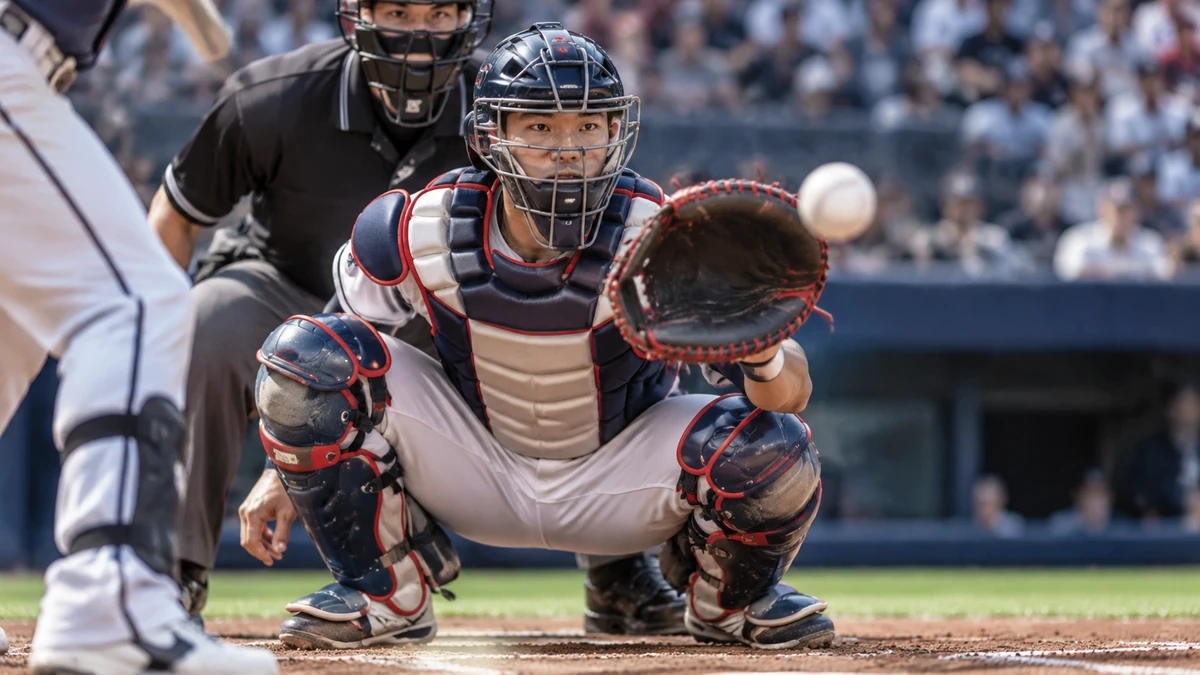
Because catchers face repeated exposure to fast pitches and foul balls, they wear specialized protective equipment. This includes a helmet and mask, chest protector, knee and shin guards, and a catcher’s mitt.
The helmet and mask protect the head and face from fast pitches and foul tips. Traditional masks are made with metal bars, while newer designs combine the helmet and mask into a single unit. The chest protector covers a large portion of the body and helps protect catchers when blocking missed or bouncing pitches.
Knee and shin guards are typically made with materials such as plastic or thin aluminum and are especially important when pitchers lose control or throw more balls that bounce before reaching the plate.
Catchers may also wear protective gear for sensitive areas to reduce injury risks from pitches or batted balls. Additional padding behind the calf area of the leg guards, known as a knee cushion or knee saver, is used to provide more comfort during the long periods spent in a crouched position.
Comments
Post a Comment