Image to help understand the article
Beijing calls for stability in US-China relations
Chinese state media called for steadier relations with the United States on the eve of President Xi Jinping’s visit, while also warning Washington against crossing Beijing’s red lines on Taiwan and other sensitive issues.
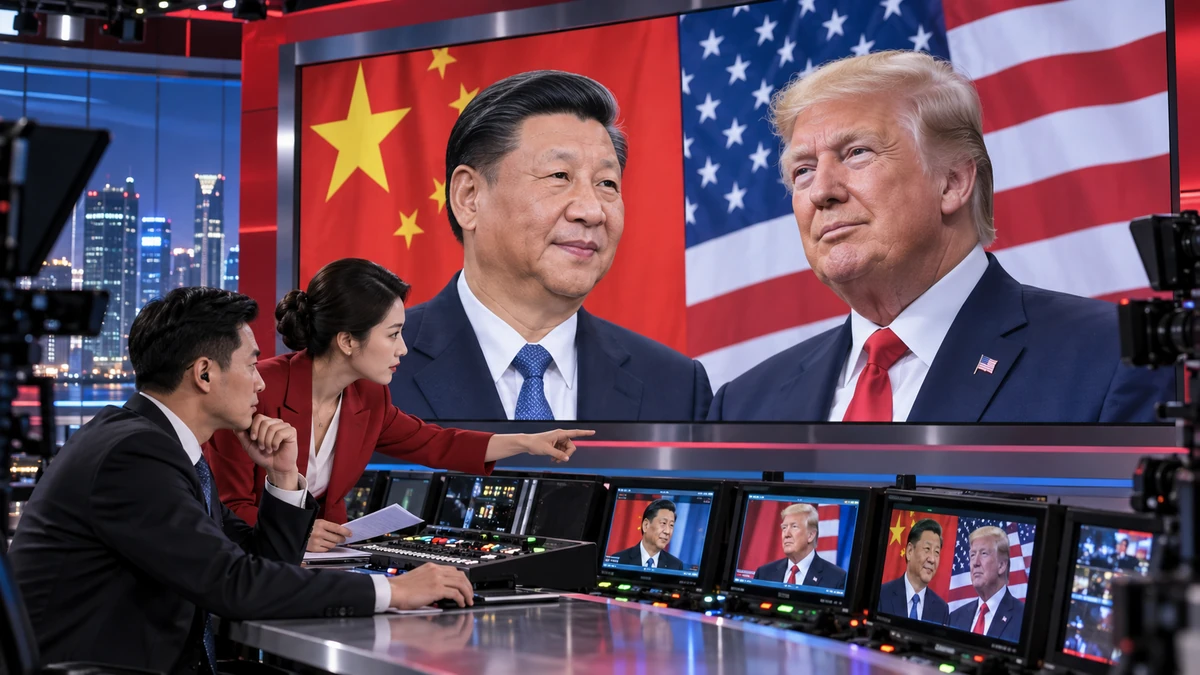
Xi is scheduled to visit the United States from the 23rd through the 25th at President Donald Trump’s invitation. In commentaries published on the 22nd, China’s major state-run outlets portrayed the trip as an opportunity for the world’s two largest powers to begin a “new journey” under their leaders’ direction.
The official Xinhua News Agency described the relationship as one of the world’s most consequential bilateral ties and said China and the United States have repeatedly found ways to move forward despite more than five decades of upheaval. It argued that China’s goal of national rejuvenation and Trump’s “Make America Great Again” agenda could advance at the same time.
Xinhua also revisited the idea of the “Thucydides Trap,” a theory that conflict can become likely when a rising power challenges an established one. Beijing has frequently rejected the notion that such a confrontation between China and the United States is inevitable, instead emphasizing coexistence and shared responsibility.
State outlets point to trade and broader cooperation
To support the case for engagement, Xinhua reported that bilateral trade rose 13.7% in the second quarter from a year earlier. It also said more than 84,000 American companies had been established in China as of July.
An editorial in the state-run Global Times said cooperation had expanded since Xi and Trump met in Beijing in May, citing politics, diplomacy, trade, people-to-people exchanges and counternarcotics efforts. But it said the relationship would continue to face risks and challenges, and argued that progress would depend on whether the United States turns agreements between the two leaders into action, manages disputes and addresses practical problems.
The People’s Daily, the flagship newspaper of China’s ruling Communist Party, said the leaders’ second meeting in four months could provide strategic direction for what it called a constructive and stable relationship. It described 2026 as a potentially historic and symbolic year for ties between the countries.
The newspaper also reviewed the shifting language used to characterize relations since the founding of the People’s Republic of China in 1949 — from hostility and quasi-alliance to strategic partnership, cooperation, competition and friction.
Warnings over Taiwan and US sanctions
Alongside its appeals for cooperation, Chinese state media criticized U.S. sanctions as contrary to efforts to stabilize and improve relations. The People’s Daily described the measures as reflecting a misunderstanding of China’s development and a misjudgment of the relationship’s fundamental nature.
The commentary identified four areas that Beijing considers nonnegotiable: Taiwan, democracy and human rights, China’s political system and development path, and its right to development.
It called Taiwan the most important issue in U.S.-China relations, warning that careful management could help preserve broader stability but mishandling it could lead to confrontation or conflict. The combination of conciliatory language and firm warnings underscored Beijing’s message before the summit: China wants cooperation with Washington, but on terms that respect what it defines as its core interests.
Comments
Post a Comment