Image to help understand the article
Gen.G Turns an Early Deficit Into a Statement
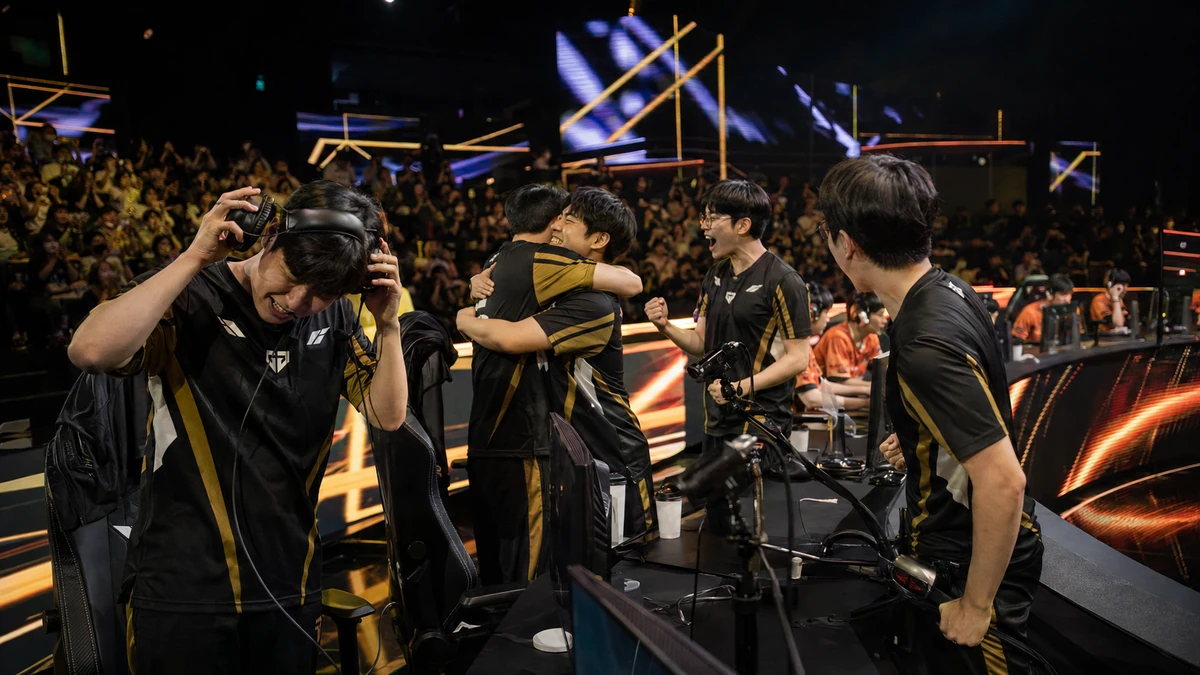
Gen.G, the defending champion of South Korea’s premier League of Legends competition, overcame a difficult opening game to defeat Hanwha Life Esports 3-1 and advance to the 2026 League of Legends Champions Korea final. The victory, secured on the fifth day of the month at Chzzk LoL Park in Seoul’s Jongno district, offered another example of why Gen.G has become one of the most closely watched organizations in global esports: The team did not simply recover from a loss. It changed the terms of the series.
Hanwha Life controlled the first game through long-range pressure, quick item development and an aggressive approach that prevented Gen.G from comfortably organizing team fights. Gen.G responded by leaning into coordinated combat, stronger objective control and the individual playmaking of top laner Kim “Kiin” Gi-in and mid laner Jeong “Chovy” Ji-hoon. By the third game, Gen.G had shifted from reacting to Hanwha Life’s attacks to dictating where and when the decisive battles would occur.
For viewers accustomed to American sports, the best-of-five format rewards adjustments in much the same way an NBA playoff series does, only at a compressed pace. Coaches and players must diagnose problems between games rather than between nights, rethink character selections and decide whether to challenge an opponent’s strategy directly or move the contest elsewhere. Gen.G’s turnaround showed the value of that adaptability. Hanwha Life won the opening tactical argument, but Gen.G won the broader strategic debate.
The result sends Gen.G directly to the LCK final through the playoff winners’ bracket. It also adds another chapter to a rivalry featuring some of the most recognizable players in Korean League of Legends. Hanwha Life, backed by the financial services and insurance conglomerate Hanwha, entered the matchup with a roster capable of challenging Gen.G at every position. Yet after an impressive start, it could not stop the defending champion from gaining control of the map and the series.
Why the LCK Carries Global Weight
League of Legends is a five-on-five strategy game developed by Riot Games, the Los Angeles-based company behind one of the world’s largest esports ecosystems. Each player controls a character, known as a champion, with a distinct set of abilities. Teams compete to destroy the opponent’s central structure, called the Nexus, while accumulating gold, improving equipment and fighting over neutral objectives that provide lasting advantages.
The LCK is South Korea’s top professional league for the game and functions, in global terms, less like a regional curiosity than one of soccer’s elite domestic competitions. Its best teams are judged not only by results at home but also by whether they can defeat leading organizations from China, Europe, North America and other regions at international events. Korean teams and players have long influenced how League of Legends is practiced worldwide, from training routines and scouting to map strategy and mechanical technique.
That status reflects South Korea’s broader gaming culture. Competitive video games developed a mainstream following there earlier than in the United States, helped by widespread high-speed internet access, densely populated cities and the popularity of PC bangs. A PC bang is a gaming cafe where customers rent computer time, often playing multiplayer titles alongside friends. The venues became social spaces as well as training grounds, making competitive gaming visible and accessible to generations of young Koreans.
LoL Park, located in central Seoul, symbolizes the professionalization that followed. Rather than treating esports as an improvised event in a convention hall, the arena presents League of Legends as a recurring spectator product with dedicated production, commentary and fan rituals. Player nicknames such as Chovy, Kiin and Canyon are not merely online aliases. They operate much like the names on the back of a jersey, forming brands that follow competitors through trades, roster changes and international tournaments.
Gen.G’s place within that culture is especially relevant to American audiences. The organization has roots and business connections extending beyond Korea, and its games circulate through a media environment that is inherently international. A fan in California can watch the same Korean match as a viewer in Seoul, study the same draft choices and debate the same mistakes within seconds. Few traditional Korean sports properties reach American viewers with so little delay or cultural filtering.
Hanwha Life’s Opening Plan Works
Hanwha Life entered the series with a composition built around “poking,” an esports term for repeatedly damaging opponents from long range before a full fight begins. The basic idea is familiar to anyone who has watched a basketball team use outside shooting to stretch a defense: Force the opponent to absorb pressure from a distance, then exploit the space and weakened position that pressure creates.
Top laner Choi “Zeus” Woo-je helped make that plan effective with Jayce, a champion known for powerful ranged attacks. After collecting early kills and accelerating his in-game development, Zeus repeatedly struck Gen.G before the defending champion could establish the close-range engagements it wanted. Each successful attack made it more dangerous for Gen.G to move through contested areas or begin a major objective.
Gen.G attempted to answer through Kim “Canyon” Geon-bu, whose Cho’Gath offered durability and a potential front line in group fights. But Hanwha Life’s damage continued to scale. Lee “Gumayusi” Min-hyeong, playing Lucian, completed crucial items despite receiving sustained attention from Gen.G. Once Hanwha Life had created a meaningful advantage, Gumayusi helped convert it into the first win of the series after 39 minutes.
The opening game mattered beyond the score. It forced Gen.G to reveal how it would respond when denied its preferred rhythm. In League of Legends, an early deficit affects more than confidence. A team that falls behind may lose access to parts of the map because entering unlit territory becomes dangerous. It may also have to surrender neutral objectives or gamble on a fight before its champions have reached their strongest stage.
Hanwha Life’s performance suggested that the series could become a test of Gen.G’s patience. Instead of panicking, however, the defending champion changed its approach in the second game and prepared for a longer, more chaotic contest.
Chovy and Kiin Lead the Counterattack
Gen.G placed greater emphasis on full team fights in Game 2. Hanwha Life again recorded the first kill, but Kiin and veteran marksman Park “Ruler” Jae-hyuk answered, preventing the early setback from turning into another runaway game. Kills began occurring across multiple lanes, producing a back-and-forth contest in which neither side could easily impose a stable formation.
Chovy gradually established control in the middle of the map, while Kiin’s Rumble added an important layer to Gen.G’s team-fighting power. Rumble can cover an area with sustained damage, punishing opponents who group too closely or attempt to move through a narrow corridor. In a game defined by fights around objectives and base entrances, that kind of space control can be as important as a spectacular individual elimination.
The turning point came around the 26-minute mark near Hanwha Life’s base. Gen.G collected three kills in succession and converted the exchange into a durable advantage. The game still lasted close to 45 minutes, a relatively long contest that left room for mistakes or a comeback, but Gen.G did not surrender the lead. It closed out the game and tied the series.
That victory changed the emotional and tactical balance. Hanwha Life had shown it could pressure Gen.G with range and tempo, but Gen.G demonstrated it could survive a volatile game and remain organized deep into the late stages. In conventional sports language, the defending champion had absorbed the challenger’s best early punch and answered without abandoning its identity.
The contribution from Chovy and Kiin also underscored the value of star players whose influence extends beyond raw kill totals. Mid and top laners often shape how a League of Legends team can approach the map. If they gain control of their lanes or arrive first to a key area, teammates have more freedom to secure objectives. Their advantages can create the equivalent of favorable field position, limiting where the opposing team can safely move.
Dragon Control Breaks Open Game 3
The third game began cautiously, with few kills through the middle stages. That did not mean little was happening. In professional League of Legends, quiet stretches often involve teams trading information, positioning around vision and deciding whether an objective is worth the risk of a major fight. The tension comes from the knowledge that one misstep can erase several minutes of careful preparation.
The central contest became control of dragons, neutral monsters that grant permanent teamwide bonuses when defeated. Securing several dragons can create a compounding strategic edge and eventually force the opposing team to fight, even from an unfavorable position. For American viewers, the closest analogy may be accumulating advantages that alter late-game decision-making: controlling possession and field position while also moving toward a bonus the opponent cannot ignore.
Gen.G secured the second and third dragons despite Hanwha Life’s attempts to interfere. That control gave the defending champion leverage over the pace of the game. Hanwha Life could no longer wait indefinitely for an ideal engagement because allowing Gen.G to continue collecting dragons would create an increasingly severe disadvantage.
At about 26 minutes, Kiin delivered the decisive individual play, recording a triple kill. Gen.G then took a fourth dragon without a meaningful answer. The sequence combined the two elements that defined the team’s comeback: preparation around an objective and execution once the fight began.
With stronger champions and control of the map, Gen.G attacked Hanwha Life’s base and ended the game in 31 minutes. The win placed Gen.G ahead 2-1 and one game from the final. It also illustrated a marked contrast with Game 2. Gen.G had first proved it could win a long, disorderly battle; it then showed it could build a methodical advantage through objectives and finish much more quickly.
Hanwha Life’s Final Push Falls Short
Facing elimination from the winners’ bracket, Hanwha Life returned to a composition designed for coordinated team fights. Kim “Zeka” Geon-woo attacked the bottom lane to secure the first kill, and Gumayusi added two kills during a fight near a dragon. The challenger was not passive and did not simply wait for Gen.G to close the series.
Those early successes, however, were not enough to reverse the larger trajectory. Gen.G completed the fourth game and sealed the series 3-1. The Korean account of the match did not provide a full play-by-play of the closing sequence, but the result reflected the defending champion’s ability to withstand another aggressive opening and find a path to victory.
Hanwha Life’s defeat should not obscure the pressure it applied throughout the match. Zeus created the foundation for the Game 1 victory, Gumayusi remained dangerous even when targeted, and Zeka helped initiate the team’s final attempt to extend the series. The roster repeatedly forced Gen.G to solve different problems rather than relying on one plan.
Gen.G’s advantage was its range of answers. The team survived poke, won a long team-fighting game, controlled dragons in a slower contest and then closed the series after Hanwha Life attacked early again. That progression is why the match is more significant as evidence of a trend than as a single playoff result. Elite League of Legends increasingly rewards teams that can move between styles within one series. Mechanical skill remains essential, but flexibility in champion selection, objective setup and communication often separates contenders from champions.
What the Result Means for the United States
For the American esports market, Gen.G’s run is another reminder that the competitive center of League of Legends cannot be understood through U.S. results alone. The game is produced by an American company, but many of its most influential tactical ideas, star players and training standards come from South Korea. That relationship makes League of Legends a notable example of two-way cultural exchange: American technology and entertainment infrastructure helped create the platform, while Korean competitors helped define its highest level of play.
American fans who follow the LCK are not merely watching a foreign league out of curiosity. They are watching a competition whose strategies can shape international tournaments and influence teams in North America. Draft priorities, lane assignments and objective setups displayed in Seoul are quickly analyzed by English-language broadcasters, coaches, content creators and players. In that sense, the LCK resembles a top overseas basketball league stocked with players and systems that NBA organizations study, except the underlying game is identical across borders and the tactical transfer can happen immediately.
The match also carries lessons for U.S. esports companies. Gen.G and Hanwha Life are attached to large organizations with ambitions extending beyond a single domestic audience. Their ability to build recognizable player brands shows why personality and continuity matter in a digital sport. American viewers may initially arrive for an international championship, but enduring interest often depends on understanding rivalries, roster histories and strategic identities.
There is also a broader Korea-U.S. dimension. The two countries’ relationship is usually discussed in Washington through security, trade and technology, but popular culture has become another durable connection. K-pop, Korean television dramas, movies, beauty products and food have expanded Americans’ familiarity with South Korea. Esports belongs in that same Korean Wave conversation, even if it developed through different institutions and appeals to a somewhat different audience.
Unlike a subtitled drama or a song that may require cultural interpretation, League of Legends gives American and Korean fans a shared rulebook. The cultural context still matters — including Korea’s PC bang tradition and its long acceptance of professional gaming — but the match itself needs no remake for the U.S. market. American audiences can watch the original competition and understand the stakes through the game’s common global language.
That does not guarantee commercial growth in the United States. Esports organizations have faced persistent questions about profitability, media rights and how to convert large online audiences into stable revenue. Gen.G’s victory does not resolve those structural issues. What it does show is the continued value of elite competition as a global product. For American teams, sponsors and broadcasters, the challenge is not simply to imitate Korea. It is to learn from the LCK’s competitive credibility while finding business models and storytelling approaches suited to U.S. audiences.
What to Watch in the Final
Gen.G now enters the final with evidence that it can recover under pressure. That may be more useful than an easy sweep. The opening loss exposed vulnerabilities against long-range compositions, while the next three games allowed Gen.G to test its responses in different situations. Coaches will have material to review, but they also have proof that the roster can adjust without unraveling.
Kiin’s performance will be central to the final’s strategic conversation. His Rumble helped Gen.G equalize the series, and his triple kill in Game 3 transformed a controlled objective advantage into a commanding lead. Opponents must now decide whether to limit his champion options, devote more resources to the top side of the map or accept the risk that he can determine a major fight.
Chovy’s ability to establish influence through the middle lane will receive similar attention. Mid lane sits near many of the game’s most important pathways, allowing a player with control there to assist both sides of the map and arrive quickly at neutral objectives. Ruler and Canyon add extensive experience in high-pressure matches, giving Gen.G several possible focal points rather than one star an opponent can isolate.
The final should also test whether Gen.G can avoid another slow start. Falling behind 1-0 can be recoverable in a best-of-five, as this series proved, but repeatedly conceding the opening game increases the margin for error. A future opponent will study how Hanwha Life’s range and early growth disrupted Gen.G and may attempt a similar approach with different champions.
For now, Gen.G has earned the most important reward available in the winners’ bracket: a place in the championship match. The 3-1 score captures the outcome but not the full story. Hanwha Life landed first, forced the defending champion to adapt and threatened again in the final game. Gen.G advanced because it responded at every level — composition, team fighting, objective control and late-game discipline. In a league that helps set the global standard for League of Legends, that versatility is what makes the defending champion formidable not only in Seoul, but also to every international rival watching from abroad.
Comments
Post a Comment