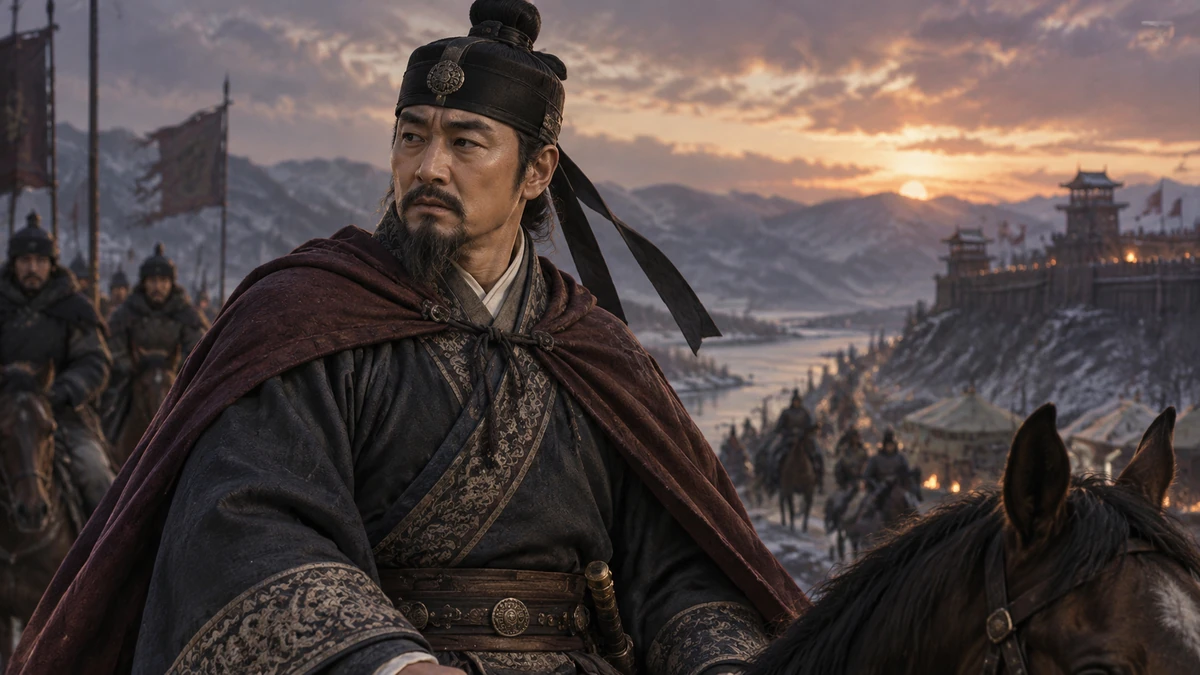
Image to help understand the article
A Forgotten Korean Figure Who Faced an Empire Through Diplomacy
Long before modern South Korea became known for technology, entertainment and global cultural influence, the Korean Peninsula was home to powerful kingdoms that navigated conflicts among larger neighboring states. One of the lesser-known figures from this period is Ha Gong-jin, a Goryeo-era military official whose name remains connected to one of Korea’s most dramatic examples of wartime diplomacy.
Ha Gong-jin lived during the early Goryeo dynasty, a period that lasted from 918 to 1392 and played a central role in shaping Korean political identity. Unlike later Korean historical figures who became famous through battlefield victories, Ha is remembered largely because he entered an enemy camp and attempted to negotiate an end to a devastating invasion.
For English-speaking audiences, his story can be compared to historical examples of diplomats who operated during wartime crises, such as envoys who negotiated between rival powers while their own countries faced existential threats. His legacy reflects a recurring theme in Korean history: survival often depended not only on military strength but also on political judgment, communication and strategic negotiation.
Ha Gong-jin was a military official by background, holding positions connected to both defense and government administration. His career placed him at the intersection of two worlds that frequently shaped medieval East Asian politics: armed conflict and diplomacy.
His most famous role came during the second invasion of Goryeo by the Khitan-led Liao dynasty in the early 11th century. At a moment when the kingdom faced military pressure and political uncertainty, Ha became a representative tasked with negotiating with the invading forces.
Goryeo, the Khitan Empire and a Crisis of Survival
To understand Ha Gong-jin’s importance, it is necessary to understand the international environment of medieval East Asia. Goryeo was located on the Korean Peninsula, between powerful neighbors including the Liao dynasty to the north and China’s Song dynasty to the west. Diplomatic relationships, military alliances and border disputes were constant challenges for rulers in the region.
The Khitan people established the Liao dynasty, a major regional power that controlled large territories in northern China and surrounding areas. Their conflicts with Goryeo were part of a broader competition for influence in Northeast Asia, much like rival great powers competing for strategic advantage in later eras.
During the second Khitan invasion of Goryeo, the Korean court faced a dangerous situation. King Hyeonjong was forced to move south while the invading army advanced. In this moment of national emergency, Ha Gong-jin followed the king’s movement and later volunteered for a diplomatic mission aimed at encouraging the Khitan army to withdraw.
Ha traveled as an envoy with Go Yeong-gi and a small group of soldiers. Rather than leading a large military force, he entered negotiations with the opposing side, a decision that carried enormous personal risk. Medieval diplomatic missions were often dangerous because envoys could become targets if negotiations failed.
His mission demonstrates an important feature of premodern diplomacy: representatives were not simply messengers. They often needed to make difficult judgments, interpret political situations and persuade leaders who had little reason to compromise.
The Negotiation That Became Ha Gong-jin’s Historical Legacy
According to historical records, Ha Gong-jin met with Emperor Shengzong of the Liao dynasty as Goryeo’s representative. He proposed conditions connected to ending the conflict, including the possibility of King Hyeonjong personally appearing and Ha himself remaining as a hostage.
The situation was complicated. The Liao forces had entered Goryeo under the justification of punishing political developments inside the Korean court, particularly after General Gang Jo’s coup. However, continuing the campaign also created logistical difficulties. Maintaining supply routes during a long military operation was challenging, and Goryeo resistance continued.
Ha’s negotiations became part of a broader combination of diplomatic pressure, military resistance and practical battlefield considerations that contributed to the eventual withdrawal of the Liao forces.
For modern readers, the episode highlights how wars are often shaped by more than battles alone. Military historians frequently examine logistics, political objectives and negotiation efforts when explaining why campaigns succeed or fail. Ha Gong-jin’s story fits into that larger pattern: a single diplomat’s actions existed alongside military events, but they influenced the course of the crisis.
After the negotiations, Ha and Go Yeong-gi were taken to the Liao court as hostages. Historical accounts describe the Liao ruler as recognizing Ha’s education, character and abilities as both a military official and diplomat. However, the Liao court also attempted to persuade him to become a servant of its government rather than return to Goryeo.
A Prisoner Who Refused to Abandon His Homeland
Ha Gong-jin’s story did not end with diplomacy. While living under Liao control, he reportedly attempted multiple plans to escape and return to Goryeo. Historical records describe efforts to purchase a fast horse and arrange a route home, but these plans were discovered.
In 1011, Ha faced interrogation and pressure from the Liao ruler. Records state that he was repeatedly encouraged to become a Liao subject but refused. Eventually, he was executed after continuing to reject demands that he abandon his allegiance to Goryeo.
Modern historians often approach medieval loyalty stories with attention to the values of the period in which they were created. Concepts such as loyalty to a ruler and commitment to one’s state were central political ideals in East Asian societies of the time. Ha Gong-jin became remembered because later generations viewed his actions as representing devotion to his kingdom during a national crisis.
His reputation continued after his death. The Goryeo government recognized his contributions, granted honors to his descendants and later elevated his memory as part of the kingdom’s official historical tradition. His descendants continued to hold government positions for centuries, and he became regarded as the founder of the Sirang branch of the Jinju Ha clan.
How Korea Preserves Historical Memory Through Culture and Memorials
Ha Gong-jin’s legacy is also an example of how Korea preserves historical figures through public memory. In Korea, historical remembrance is often maintained through ancestral sites, memorial halls, local traditions and cultural performances.
The government of Goryeo later honored Ha by granting him posthumous titles and placing his portrait among respected officials. He is also associated with Gyeongjeolsa, a shrine in Jinju, where he is commemorated alongside other historical figures.
Another unusual part of his legacy is the existence of performances based on his story. Historical records mention a theatrical performance known as Ha Gong-jin Nori during the Goryeo period. Such performances served not only as entertainment but also as a way for communities to remember important figures and values.
For American readers, this tradition has parallels with how the United States preserves figures from its own history through monuments, museums, reenactments and educational programs. The details differ, but the purpose is similar: societies use stories from the past to discuss identity, sacrifice and national experience.
Ha Gong-jin’s story also reflects a broader Korean historical theme frequently seen in films, television dramas and literature: individuals facing overwhelming forces through determination, intelligence and personal conviction.
What Ha Gong-jin’s Story Means for the United States and Global Korean Interest
For American audiences, Ha Gong-jin’s story offers a window into a part of Korean history that is far less familiar than modern Korean culture. Many Americans know South Korea today through K-pop, Korean cinema, food and technology companies. However, understanding Korea’s historical experiences provides deeper context for the resilience and identity often reflected in contemporary Korean culture.
The United States and South Korea maintain a close relationship today, particularly through economic, cultural and security ties. While Ha Gong-jin lived nearly a thousand years before the modern U.S.-Korea relationship existed, his story represents historical themes that continue to appear in Korean society: adaptation, diplomacy and survival between larger powers.
American universities, museums and cultural organizations have shown growing interest in Korean history as global attention toward Korea expands. The same audiences discovering Korean dramas and music are increasingly encountering broader aspects of Korean heritage, including historical figures, traditional culture and ancient kingdoms.
For American companies involved in entertainment, education and cultural exchange, stories like Ha Gong-jin’s demonstrate the depth of Korean historical storytelling beyond modern pop culture. Korean historical narratives often combine personal sacrifice with national challenges, creating themes that can connect with international audiences familiar with historical dramas from other countries.
As interest in Korean culture continues to expand in the United States, historical figures from eras such as Goryeo may become more visible to global audiences. Their stories help explain why themes of perseverance, loyalty and negotiation remain powerful elements in Korean storytelling today.
A Medieval Diplomat Remembered Beyond the Battlefield
Ha Gong-jin was not remembered because he conquered territory or won a decisive battle. His legacy comes from a different kind of action: entering a dangerous political situation and attempting to protect his kingdom through negotiation.
His career included military responsibilities, government service and political uncertainty. He experienced both controversy and recognition during his lifetime, but later generations focused on his role during the Khitan invasion and his refusal to abandon Goryeo while held abroad.
More than a thousand years later, Ha Gong-jin remains a figure in Korean history because his story captures a universal question: how do individuals respond when their societies face overwhelming challenges?
For modern readers outside Korea, his life provides a reminder that diplomacy has always been a critical part of international affairs. Behind many historical conflicts are individuals who attempt communication when violence appears unavoidable. Ha Gong-jin’s name survives because Korea chose to remember one such person.
Comments
Post a Comment