Image to help understand the article
From Buddhist monk to battlefield commander
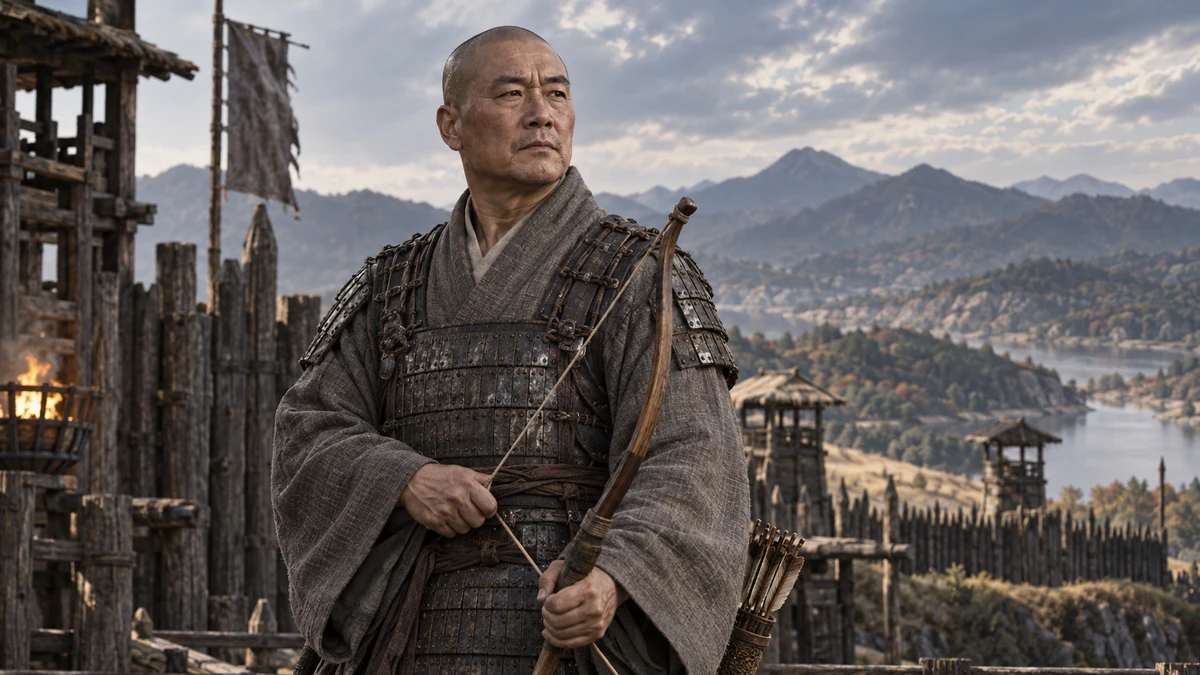
Kim Yun-hu was a former Buddhist monk who became a military official during the final centuries of Korea’s Goryeo Dynasty. Although details of his birth, death and family remain unknown, historical accounts remember him for two victories against Mongol forces in the 13th century.
Kim lived at Baekhyeonwon, a temple in what is now Pyeongtaek, south of Seoul. When Mongol forces invaded in 1232, he fled to Cheoin Fortress in present-day Yongin. During the battle there, Kim shot and killed the Mongol commander Sartai with an arrow, helping Goryeo forces defeat the attackers.
The royal court offered Kim the senior military rank of sangjanggun, but he declined and accepted a lower-ranking appointment. After the victory, Cheoin Bugok — a community whose residents held lower social status and faced additional obligations under Goryeo’s administrative system — was elevated to a regular local jurisdiction.
Centuries later, Joseon-era scholars An Jeong-bok and Jeong Yak-yong praised the monk of Baekhyeonwon for leaving religious life, taking the name Kim Yun-hu and joining the front line of resistance against the Mongols.
A 70-day defense of Chungju
Kim again confronted Mongol forces in 1253 as the defense commander of Chungju Mountain Fortress. After more than 70 days under siege, food inside the fortress was nearly exhausted and its defenders were worn down.
Kim promised official titles to those who continued fighting, regardless of social rank. He burned the documents that marked government slaves as bonded laborers and distributed captured cattle and horses among the defenders. Soldiers and civilians then fought desperately and ultimately drove back the Mongol forces.
The victory became a prominent example of government officials and ordinary people joining together in Goryeo’s resistance. Kim was appointed a senior general after the battle. Other participants, including government slaves and members of marginalized communities, received official positions according to their status. Chungju was elevated the following year and renamed Gukwongyeong.
Later service and legacy
Kim was appointed military commander of Goryeo’s northeastern frontier in 1258, but he could not take up the post because the region had already fallen under Mongol control. He continued rising through the government, receiving senior civil and military titles in 1262 and 1263 before retiring.
Kim was not frequently discussed during the later Joseon Dynasty, but references to him remained favorable. His example was cited during the reign of King Yeongjo in debates about appointing capable officials, and his name was invoked when the scholar Jo Heon organized volunteer fighters during Japan’s late 16th-century invasions of Korea.
Kim’s story returned to popular culture in 2012, when actor Park Hae-soo portrayed him in the MBC historical drama “God of War.” His legacy rests not only on resisting the Mongols, but also on rallying people across the rigid social divisions of medieval Korea.
Comments
Post a Comment