
Image to help understand the article
A Weeknight Dinner Question With Global Resonance
For many Korean office workers, the evening meal begins with a familiar calculation: After a long commute, what can be assembled quickly enough to feel manageable but complete enough to feel like dinner? That question will sound familiar to Americans deciding between takeout, leftovers and a hurried grocery-store meal. The difference is that a conventional Korean table often includes several components rather than one all-in-one dish. Rice may anchor the meal, while a soup and one or more banchan — the small shared side dishes central to Korean dining — supply warmth, contrast and variety.
Three recipes drawn from a public recipe database maintained by South Korea’s Ministry of Food and Drug Safety offer a practical version of that structure: a mild doenjang soup thickened with blended tofu and potato; a shiitake and bok choy soup made with anchovy-kelp stock; and a chicory salad dressed with olive oil, vinegar, sugar and garlic. The most sensible weeknight approach is not necessarily to serve all three. A home cook can choose one soup according to appetite, then add the crisp salad as a counterpoint.
That simple formula — one warm bowl plus one fresh side — also illustrates a larger trend in how Korean food is reaching international kitchens. American interest was once concentrated heavily on restaurant barbecue, fiery instant noodles and fermented specialties such as kimchi. Those foods remain important, but Korean cooking is broader and often quieter: vegetable-forward soups, restrained broths and small dishes designed to balance a meal rather than dominate it. These recipes belong to that everyday tradition.
They also carry a warning relevant on both sides of the Pacific. A recipe may use techniques intended to reduce dependence on salt while still containing a substantial amount of sodium. Flavor strategy and nutrition data are related, but they are not interchangeable. The numbers must be read dish by dish.
Doenjang Soup, Explained Beyond the Miso Comparison
Doenjang is a fermented soybean paste that occupies a foundational place in Korean cooking. Americans encountering it for the first time may compare it with Japanese miso, and the comparison is useful as a starting point. Both are fermented soybean seasonings that can turn water or stock into a savory soup. But doenjang is generally associated with a more assertive, earthy and rustic flavor. Korean households use it in soups, stews, dipping sauces and vegetable dishes.
Doenjang-guk, or soybean paste soup, is an especially familiar form of Korean comfort food. It is not usually treated as a special-occasion production. Depending on the household and season, it may contain greens, squash, potatoes, tofu, mushrooms or other vegetables on hand. That flexibility makes it comparable less to a single standardized American recipe than to the role of chicken soup, vegetable soup or beans at a family table: recognizable in spirit, but highly variable in execution.
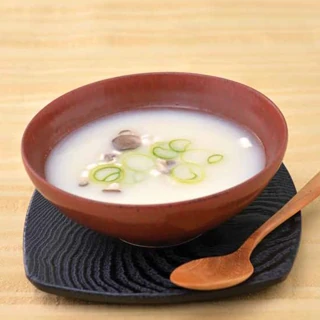
The recipe here takes an unusual but practical route to a lighter-tasting broth. It calls for 20 grams of tofu, 10 grams each of potato, onion and green onion, 20 grams of young oyster mushrooms, 5 grams — about 1 teaspoon — of doenjang and 300 milliliters, or roughly 1 1/4 cups, of water. The potato and onion are sliced, and the mushrooms are cooked in a hot pan. The doenjang is dissolved in water, then the potato, onion and tofu are simmered until tender.
At that point, the cooked solids are removed, blended and returned to the pot. The puree gives the soup body and a sense of fullness without requiring a larger amount of fermented paste. The browned mushrooms and green onion are added near the end. For an American cook, the closest technique may be blending some of the beans into a bean soup or pureeing potatoes to thicken a chowder without cream. The goal is not to conceal the vegetables. It is to make their texture do work that might otherwise be assigned to more seasoning or fat.
The listed nutrition information for one serving is 20 calories, 3 grams of carbohydrates, 2 grams of protein, no fat and 260 milligrams of sodium. As with any recipe database, serving definitions and ingredient calculations matter, and cooks should evaluate the finished portion they actually prepare. Still, among these three dishes, the doenjang soup presents the clearest example of a lower-sodium technique matched by a comparatively modest listed sodium figure.
Shiitake, Bok Choy and the Architecture of Umami
The shiitake and bok choy soup depends on a different method: building a stock from ingredients naturally rich in savory character. In Korean cooking, dried anchovies and dashima — the Korean word for the dried kelp commonly known in the United States by its Japanese name, kombu — form a widely used broth base. It serves a function similar to chicken stock in many American kitchens, although its flavor is distinctly marine and its ingredients can be stored in a pantry.
The recipe combines three soup anchovies, a narrow piece of dried kelp, onion and a shiitake stem with 300 milliliters of cold water. The anchovies are prepared by removing their heads and innards, a step that can help keep the broth from becoming overly bitter or fishy. The ingredients simmer over medium heat for about 10 minutes and are then strained out. Sliced shiitake caps, chopped bok choy, minced garlic and a teaspoon of guk-ganjang, or Korean soup soy sauce, finish the bowl.
Guk-ganjang may require explanation for American shoppers. It is not simply ordinary soy sauce in a differently labeled bottle. Traditionally associated with the liquid produced during soybean-paste fermentation, Korean soup soy sauce is prized for seasoning broths while preserving a relatively clear appearance. It can be intensely salty, so substitutions and measurements require care. A home cook using a different soy sauce should not assume a one-to-one replacement will produce the same flavor or sodium level.
The recipe also encourages cooks to use the shiitake stem in the stock rather than discard it. That is both economical and flavorful. The tougher stem may not offer the same pleasant bite as the cap, but it can contribute aroma and depth during simmering. In an American kitchen increasingly attentive to reducing food waste, the approach resembles saving Parmesan rinds for soup, freezing vegetable trimmings for stock or simmering herb stems in sauces.
Dried and fresh shiitakes also have different nutritional characteristics. The source material notes that sun-dried shiitakes can contain vitamin D produced during drying, while fresh shiitakes contain little. The broader point is useful: Ingredient form and processing can change nutritional value. Consumers should still consult package information because growing, drying and storage methods vary.
The striking issue is sodium. The database lists one serving at 45 calories, 7 grams of carbohydrates, 2 grams of protein, 1 gram of fat and 2,441 milligrams of sodium. That sodium figure is dramatically higher than the soup’s modest calorie count might lead a diner to expect. It also sits above the U.S. Food and Drug Administration’s Daily Value of 2,300 milligrams of sodium for adults and children age 4 and older. If the database figure is accurate for the stated serving, one small bowl would exceed that benchmark.
This does not mean anchovy, kelp and mushroom are poor tools for developing flavor. They can deepen a broth without simply pouring in table salt. It does mean that a low-salt idea cannot be evaluated from technique alone. Soup soy sauce, processed ingredients, database assumptions or portion calculations can substantially affect the final figure. Until a cook understands why the listed sodium is so high, the prudent response is to treat the number seriously, measure seasoning carefully and compare labels when buying packaged ingredients.
The Salad Is a Side Dish, Not a Nutritional Eraser
The third recipe shifts away from hot broth to a crisp side dish made with chicory, red cabbage, onion and carrot. Its dressing combines 10 grams of olive oil, 5 grams each of vinegar, sugar and garlic. The vegetables are sliced thinly, while the chicory is refreshed in cold water, drained and cut into bite-size pieces before serving.
American readers may know chicory through New Orleans coffee, Belgian endive or bitter salad greens, but the term covers several related plants used in different ways. In a Korean salad, its pleasantly bitter edge can cut through the richness of grilled or braised meat. That contrast reflects a central logic of Korean meals: Side dishes do not merely add volume. They change the rhythm of eating by alternating fermented, fresh, spicy, nutty, bitter and savory flavors.
The salad is listed at 170 calories, 13 grams of carbohydrates, 3 grams of protein, 12 grams of fat and 74 milligrams of sodium per serving. Most of its fat comes from the olive oil dressing. That is not inherently a drawback, but it is another reminder that categories such as “salad” and “soup” do not reveal a dish’s complete nutritional profile. The salad has the highest listed calorie and fat totals of the three recipes while carrying by far the lowest sodium number.
Chicory also provides fiber and potassium, qualities that can make vegetables valuable alongside meat or a sodium-heavy meal. Potassium plays a role in sodium balance and blood pressure regulation. But no salad can cancel out an otherwise excessive sodium intake. Nutrition does not operate like a ledger in which one virtuous ingredient automatically erases another ingredient’s impact. The more responsible way to use the dish is as part of an overall pattern: Add vegetables, vary textures, moderate highly salted components and watch portions.
That distinction matters because wellness language often compresses complicated dietary questions into slogans. A dish may be described as supporting heart health or helping the body handle sodium, but those claims should not replace attention to the complete meal. Here, the chicory salad works best as a fresh, low-sodium companion, especially next to meat or a deeply seasoned soup. It is a complement, not a cure.
What This Means for American Cooks and Food Companies
For the United States, these recipes point to an opportunity beyond the most visible phase of the Korean Wave. K-pop, television dramas and movies helped create an American audience curious about Korean culture, and food followed through restaurant dining, social media and supermarket shelves. Yet the next stage of growth may depend less on novelty and more on routine. A cuisine becomes deeply established when consumers stop treating it only as an occasion and begin using its ingredients on an ordinary Tuesday night.
Doenjang, dried anchovies, kelp and Korean soup soy sauce are well suited to that transition because they are building blocks rather than finished trends. They can help American cooks understand how Korean home meals are assembled. But companies selling those products in the United States face a responsibility familiar to the broader American food industry: Labels, serving sizes and recipe claims must be clear enough for consumers to make informed decisions, particularly about sodium.
The tension is comparable to debates surrounding canned soup, instant ramen, deli meat and other convenient foods in the United States. A product can be low in calories, packed with vegetables or marketed around traditional ingredients while still delivering substantial sodium. American shoppers have learned, sometimes through public health campaigns, not to mistake “light” for low-sodium. Korean recipes entering the U.S. market will be judged by the same standard.
There is also room for adaptation without stripping the food of its identity. American cooks can measure doenjang and soup soy sauce rather than seasoning by instinct, use mushrooms and browned vegetables to broaden flavor, and serve smaller portions of broth alongside rice and vegetables. Food manufacturers can provide sodium comparisons among products, offer clearly formulated reduced-sodium options and publish recipes whose nutrition calculations match realistic household portions. Those steps would make Korean pantry staples easier to integrate into American dietary needs.
At the same time, adaptation should not reduce Korean cooking to a health trend. Doenjang soup is culturally meaningful because it is familiar, economical and tied to a long tradition of fermentation, not because it can be promoted as a wellness shortcut. Anchovy-kelp broth matters because it is a foundational taste in Korean homes, not merely an exotic alternative to salt. The strongest U.S.-Korea food connection will emerge when American consumers appreciate both dimensions: the cultural history and the practical cooking knowledge.
For Korean exporters and American retailers, that means education may be as important as shelf space. A jar of doenjang becomes more useful when the shopper understands how it differs from miso, how much to add and what vegetables pair with it. Dried anchovies become less intimidating when instructions explain preparation and straining. Soup soy sauce becomes safer and more effective when customers know it is concentrated and should be measured cautiously. Context can turn a specialty purchase into a repeat purchase.
A Better Way to Read a “Healthy” Recipe
Together, the three dishes show why nutrition should be assessed through both technique and data. The doenjang soup reduces reliance on fermented paste by pureeing tofu and potato into the broth. The shiitake soup draws complexity from mushrooms, anchovies and kelp. The salad uses bitterness, acidity and garlic to create contrast without much sodium. Each strategy is useful. None makes the nutrition panel optional.
For time-pressed diners, the most practical decision tree is straightforward. Choose the milder doenjang soup when warmth and a relatively restrained listed sodium level are priorities. Consider the shiitake and bok choy soup for its layered broth technique, but investigate and account for its unusually high stated sodium. Add the chicory salad when the meal needs freshness, crunch and vegetables, particularly alongside meat or a salty main dish.
Portion awareness is especially important with soup. Korean meals can include broth as one element among rice and side dishes, but diners may consume every drop. In the United States, where restaurant bowls are often large, the distinction between a listed serving and an actual bowl can be even greater. Home cooks should calculate from the amount of seasoning used in the full pot and the number of portions actually served rather than relying on a recipe title or calorie count.
Storage also matters for weeknight practicality. Soup and salad should be refrigerated separately so the greens do not wilt in broth or dressing. Reheat only the amount of soup needed, and discard stored food if its smell, appearance or texture has changed unexpectedly. Dress the vegetables shortly before eating for the best texture. These are ordinary precautions, but they make modular meals easier to carry into the next day.
What to Watch as Korean Home Cooking Travels
The wider significance of these recipes lies in their ordinariness. Korean food’s international profile has often been built around intensity: sizzling barbecue, bubbling stews, fiery noodles and dramatic fermentation. Everyday soups and bitter greens offer a subtler picture. They show a cuisine structured around balance, reuse of ingredients and the interaction of several modest dishes.
What comes next will depend on whether American consumers move from recognition to fluency. Recognition means knowing the word doenjang or buying bok choy. Fluency means understanding how a fermented paste behaves in broth, why a mushroom stem belongs in stock, how banchan functions within a meal and when a nutrition number should override a reassuring recipe description.
That learning process could deepen cultural exchange between the United States and South Korea in a way that entertainment alone cannot. Music and television may inspire curiosity, but cooking brings cultural habits into the home. The act of choosing one soup, preparing a fresh side and thinking about balance offers a more intimate understanding of Korean daily life than a viral food challenge does.
The takeaway is not that one of these dishes is categorically healthy and another is not. It is that smart cooking requires two kinds of literacy. The first is culinary: knowing how fermentation, browning, dried seafood, kelp, mushrooms, bitterness and acidity create flavor. The second is nutritional: checking sodium, fat, calories and serving size rather than trusting a technique or label at face value. For American cooks exploring Korean food, those lessons are as useful as any single recipe — and likely to last much longer than the latest food trend.


0 Comments