Image to help understand the article
A privacy-focused design
Meta unveiled camera-free smart glasses Tuesday in California, presenting a slimmer device designed to address privacy concerns surrounding wearable technology.
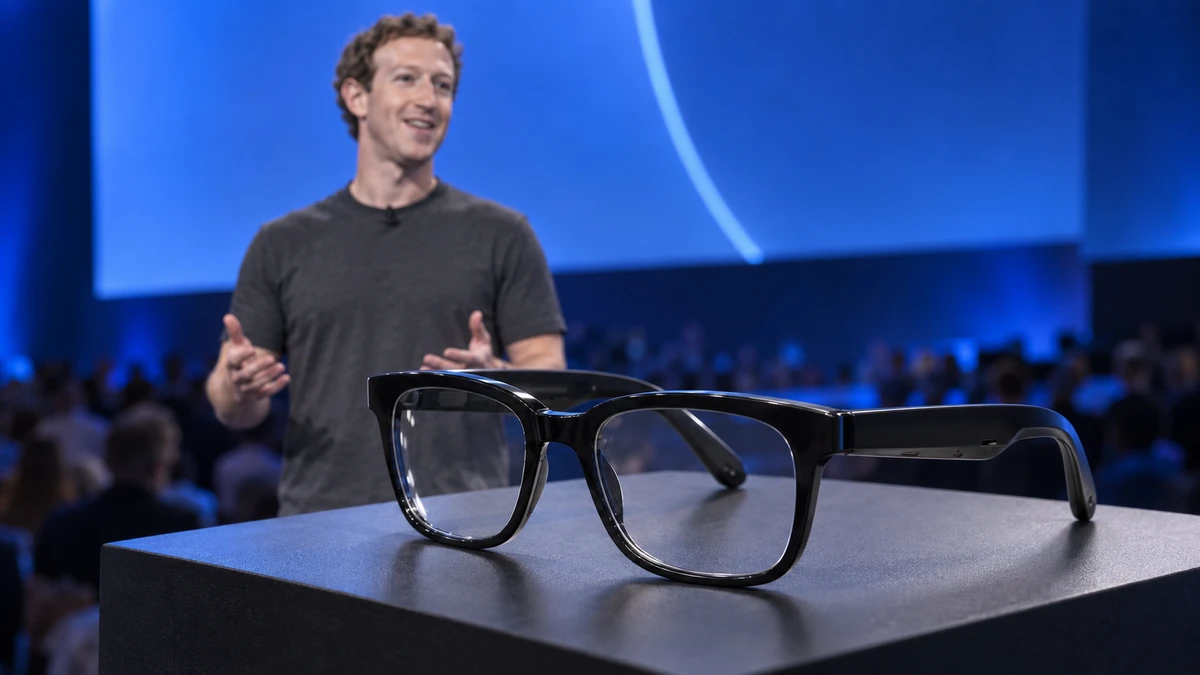
The Ray-Ban Meta Audio glasses debuted at Meta Connect 2026, the company’s annual developer conference at its Menlo Park headquarters. Unlike Meta’s earlier smart glasses, the new model focuses on voice features and artificial intelligence without including a camera.
Removing the camera allowed Meta to reduce the thickness of the frames and bring the weight down to 43 grams, making them the lightest AI glasses the company has introduced. Meta said the product combines the familiar Ray-Ban look with wireless-earbud functions and AI technology.
CEO Mark Zuckerberg said eliminating the camera opened up new design possibilities and allowed the device to resemble ordinary eyeglasses. The glasses include an AI agent called Muse, which can carry out everyday tasks through voice commands.
Ray-Ban Meta Audio will start at $349 and go on sale Oct. 13.
More wearable devices on the way
Meta also announced the third generation of its camera-equipped Ray-Ban Meta glasses. The updated model has six microphones to reduce background noise during calls and offers longer battery life.
The company plans to release Meta VR Glass, a glasses-shaped virtual reality device, next spring. By moving the battery and computing hardware into an external pack, Meta reduced the headset’s weight to about 100 grams.
Meta also plans to introduce Muse Charm, an egg-sized AI device resembling a Tamagotchi, by the end of the year.
Meta bets on AI glasses
Zuckerberg said nearly 2 billion people worldwide wear prescription glasses, with an even larger potential audience when sunglasses users are included. Meta expects most of those consumers to adopt AI glasses within the next several years.
Market research firm Omdia recently estimated that Meta held 81.3% of the global AI glasses market during the first half of this year. Zuckerberg said the company is shifting its hardware strategy toward devices that give users access to what he described as personal superintelligence.
Comments
Post a Comment