
Image to help understand the article
A Korean Box Office Miracle Built Around a Universal Story
In 2013, a modestly positioned Korean comedy-drama achieved something that only a small number of films in South Korea have accomplished: it crossed the 10 million admissions mark, a benchmark comparable to reaching blockbuster status in the United States. Miracle in Cell No. 7 became one of the defining Korean films of the early 2010s, drawing audiences with a story about a father, a daughter and the devastating consequences of a wrongful accusation.
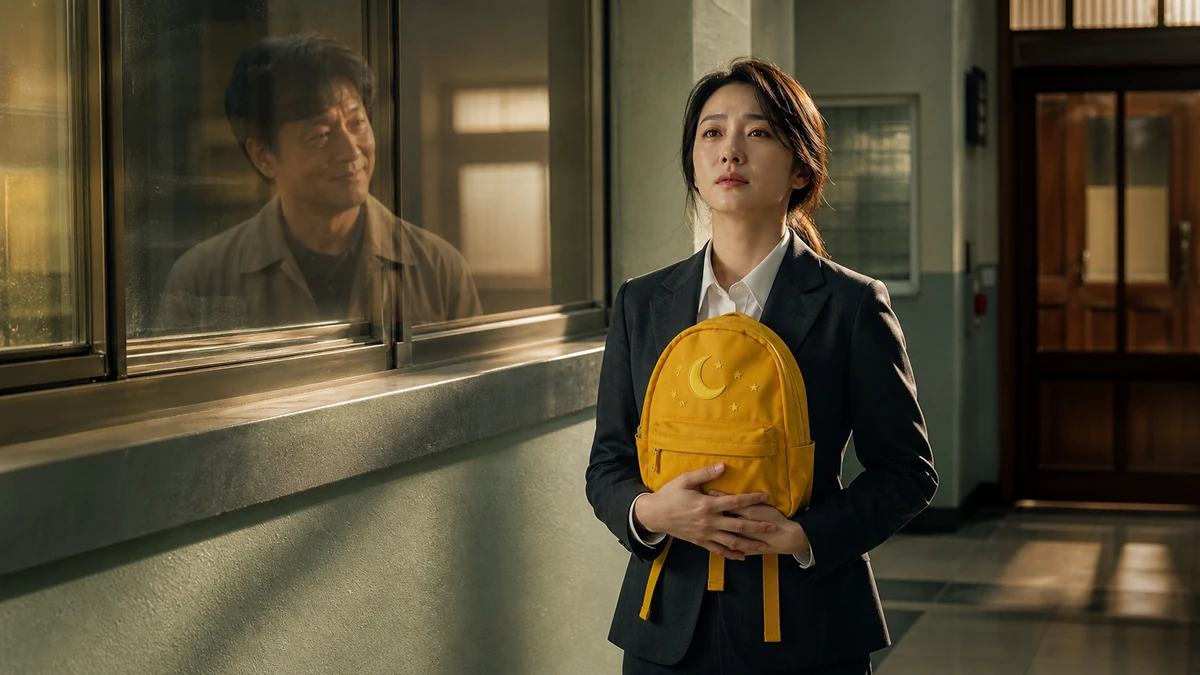
Directed by Lee Hwan-kyung, the film centers on Lee Yong-gu, a man with an intellectual disability who works as a parking attendant in Seongnam, a city south of Seoul. Yong-gu’s life revolves around his young daughter, Ye-seung. His simple wish is to buy her a yellow Sailor Moon-themed backpack, a popular character product that symbolizes a child’s everyday happiness.
However, a tragic accident and a chain of misunderstandings change his life completely. Yong-gu is falsely accused of a serious crime involving a child and, unable to effectively explain himself or defend his innocence, receives a death sentence. He is sent to Seongnam Prison’s Cell No. 7, where he initially faces suspicion from other inmates.
The film’s emotional engine comes from the unlikely relationship that develops inside the prison. The other prisoners gradually recognize Yong-gu’s innocence and his deep devotion to his daughter. They begin working together to help reunite the father and daughter, transforming a harsh prison environment into an unexpected community of compassion.
For American audiences, the film may appear at first glance to follow familiar themes: a wrongful conviction story, a parent-child bond and a fight against an imperfect justice system. Yet its distinct Korean approach comes from combining intense melodrama with broad comedy, a storytelling style often seen in Korean popular culture where laughter and tears frequently exist side by side.
How a Prison Drama Became One of South Korea’s Biggest Hits
Miracle in Cell No. 7 was released in South Korea on Jan. 23, 2013, after completing approximately four months of filming and post-production. Its audience growth was unusually rapid. The movie attracted 1 million viewers within seven days, reached 4.5 million admissions after two weeks and passed 7.5 million by its 22nd day in theaters.
Just one month after release, on Feb. 23, the film surpassed 10 million admissions, becoming the eighth Korean movie at the time to reach that milestone. It continued its theatrical run, eventually reaching 12 million viewers and becoming one of the most successful Korean films of its era.
The importance of the 10 million mark in South Korea is different from the box office measurements commonly used in Hollywood. Because South Korea has a smaller population than the United States, a domestic film attracting more than 10 million moviegoers represents an extraordinary level of cultural penetration. These films become shared national experiences, similar to how major Hollywood franchises or cultural phenomena can dominate public conversation in America.
The movie’s success was not driven by spectacle or expensive visual effects. Instead, it relied on emotional accessibility. The central question was simple: What happens when a devoted parent is separated from a child under circumstances beyond their control?
That emotional foundation helped the film connect with a broad audience, including families and older moviegoers who were drawn to its themes of sacrifice, injustice and unconditional love.
The Korean Storytelling Tradition of Mixing Comedy With Tragedy
One of the reasons Miracle in Cell No. 7 became memorable is its unusual balance between serious social issues and comedic moments. The film addresses wrongful conviction, disability and institutional failure, yet it also creates humorous scenes among the prisoners who share Cell No. 7.
The inmates are not presented simply as criminals. Instead, they become a group of complicated individuals who discover empathy through their relationship with Yong-gu. Their transformation reflects a recurring theme in Korean dramas and films: ordinary people finding humanity in unexpected circumstances.
The film features a large ensemble cast, including Ryu Seung-ryong as Yong-gu, child actress Kal So-won as young Ye-seung and Park Shin-hye as the adult Ye-seung. Supporting actors including Oh Dal-su, Park Won-sang, Kim Jung-tae, Jung Man-sik and Kim Ki-cheon helped create the distinctive group dynamic inside the prison.
Ryu’s performance became one of the most recognized elements of the film. He received major Korean acting honors, including the Grand Prize at the Baeksang Arts Awards’ film category and Best Actor at the Daejong Film Awards. Kal So-won was also recognized for her performance as the young daughter, highlighting the emotional impact of the father-daughter relationship at the center of the story.
The film’s awards success demonstrated that its popularity was not based only on audience sentiment. Industry recognition also acknowledged the work of the screenplay, direction, supporting performances and overall production.
A Story Inspired by a Real Korean Justice Controversy
Although Miracle in Cell No. 7 is a fictional film, its wrongful accusation storyline was inspired by a real Korean criminal justice controversy. The movie drew from the 1972 Chuncheon sexual assault and murder case, in which an innocent man named Jung Won-seop was falsely convicted after investigators used coercive methods to obtain a confession.
The film does not recreate that historical case directly. Instead, it transforms the broader issues surrounding it into a personal story about a vulnerable person facing a powerful system. Yong-gu’s intellectual disability becomes an important part of the narrative because it highlights how difficult legal procedures can be for individuals who struggle to communicate or defend themselves.
For American viewers, the theme may recall discussions around wrongful convictions and criminal justice reform in the United States. Cases involving coerced confessions, inadequate legal representation and wrongful imprisonment have also shaped American debates about the reliability of the justice system.
The movie also reflects Korean concerns about social responsibility. The official institutions in the story fail Yong-gu, but individual acts of kindness from unexpected people provide hope. The film suggests that compassion from communities can become a powerful force when formal systems fail.
Director Lee Hwan-kyung incorporated personal experiences into the screenplay. He began developing the story years before production and used conversations with his own daughter as inspiration for the character of Ye-seung. The emotional details surrounding the father-daughter relationship helped make the fictional story feel intimate and personal.
What "Miracle in Cell No. 7" Means for the United States and Korean Entertainment’s Global Reach
For American audiences, the lasting importance of Miracle in Cell No. 7 extends beyond one Korean film’s box office success. The movie represents an earlier stage of the Korean entertainment wave that has since expanded dramatically in the United States through K-pop, streaming dramas and internationally recognized films.
Today, American viewers are far more familiar with Korean storytelling than they were in 2013. The global success of Korean films and series has been accelerated by streaming platforms, changing audience habits and growing interest in stories from outside Hollywood. Films such as Parasite, which won the Academy Award for Best Picture in 2020, helped demonstrate that Korean cinema could attract mainstream American attention.
Miracle in Cell No. 7 offers insight into why Korean entertainment has traveled successfully overseas. While the cultural details are specifically Korean — including the prison setting, family expectations and emotional style — the core themes are internationally understandable. A parent’s love, fear of losing family and the search for justice do not require translation.
The film also reflects opportunities and challenges for U.S. companies involved in global entertainment. American streaming services and distributors have increasingly invested in Korean content because international audiences are willing to engage with stories that are not based in American cultural settings. Korean creators, meanwhile, have shown that local stories can become global when they focus on strong emotional experiences.
For Korean-American communities and Korean entertainment fans in the United States, films like Miracle in Cell No. 7 are part of a broader cultural bridge. They introduce American viewers to Korean social issues, family relationships and storytelling traditions while also showing how similar human experiences exist across borders.
The Legacy of a Film That Made Millions Laugh and Cry
More than a decade after its release, Miracle in Cell No. 7 remains significant because it represents both the strengths and debates surrounding Korean mainstream cinema. Supporters praise its emotional power, memorable performances and ability to bring audiences together. Critics have also questioned whether some parts of the story rely too heavily on familiar emotional formulas.
That combination of popularity and debate is common among major cultural works. Successful films often become discussion points because they reveal what audiences value at a particular moment in history.
The film’s greatest achievement may be the way it transformed a difficult subject into a widely accessible story. Through the relationship between Yong-gu and Ye-seung, it explored disability, justice and family separation while maintaining the warmth and humor of a crowd-pleasing drama.
For viewers discovering Korean cinema today, Miracle in Cell No. 7 offers a window into an important period before the full global explosion of Korean entertainment. It shows why Korean films have resonated internationally: they combine culturally specific stories with emotions that audiences everywhere recognize.


0 Comments