NCT 127 Brings Seoul Concerts to Global Movie Screens, Expanding the Future of K-Pop Live Experiences
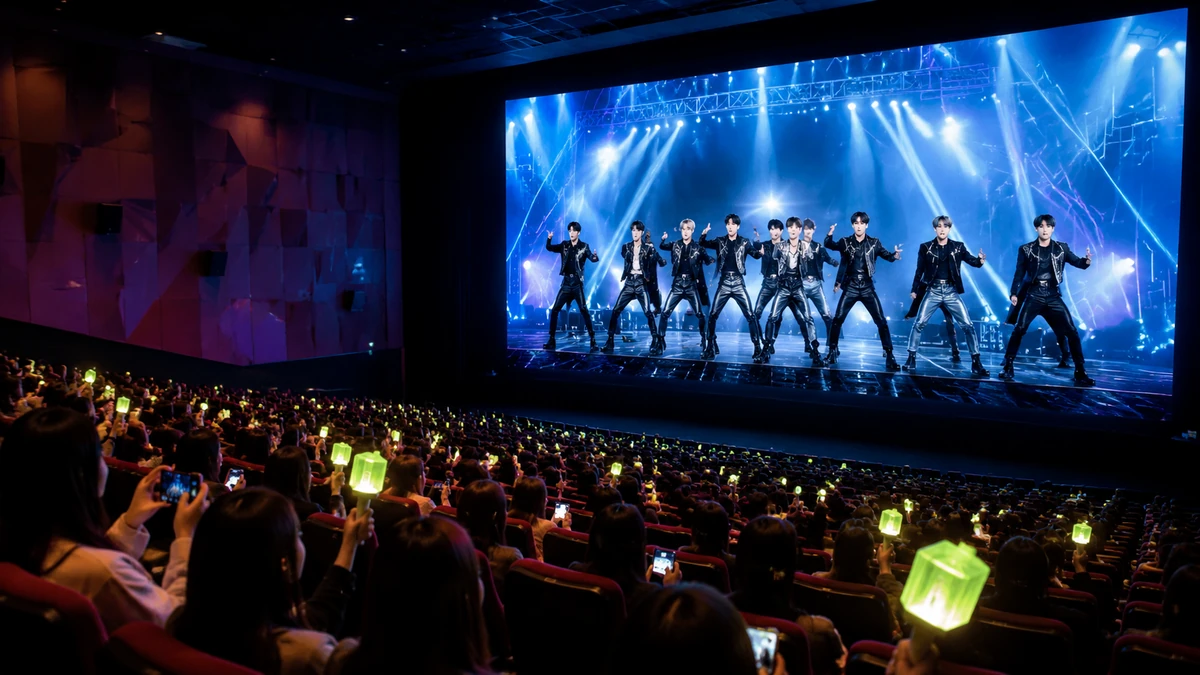
Image to help understand the article
NCT 127’s Seoul Concert Will Reach Fans Beyond the Stadium
For many music fans around the world, seeing a major Korean pop concert in person can require thousands of miles of travel, expensive flights and the challenge of securing limited tickets. NCT 127, one of South Korea’s leading K-pop groups, is taking a different approach: bringing its Seoul stage to movie theaters across the globe.
SM Entertainment announced that the group’s upcoming Seoul concert will be broadcast live in cinemas across 40 regions, allowing international fans to experience the performance at the same time as audiences inside the venue. The live viewing event will feature the third day of NCT 127’s fifth concert series, “Neo City: Seoul - The Red Line,” which will take place from Sept. 18 to Sept. 20 at KSPO Dome in Seoul’s Olympic Park.
The event will be shown at 1,030 theaters worldwide, including locations in South Korea, Japan, the United States, Canada, Brazil, Thailand and Malaysia. While concert films and recorded performances have long been part of the entertainment industry, a simultaneous cinema broadcast creates a different type of experience: fans in different countries can share the same performance moment without physically being in Seoul.
This reflects a broader transformation in K-pop, where concerts are no longer limited to the people who can enter a stadium. Instead, performances are becoming global media events that combine live entertainment, digital distribution and international fan communities.
Why K-Pop Concerts Have Become Cultural Events, Not Just Music Shows
To understand why this development matters, it is important to understand the role of concerts in Korean pop culture. In the United States, a concert is often viewed primarily as a live version of an artist’s music. In K-pop, the concert experience often includes a much deeper relationship between artists and fans.
K-pop fandom is built around ongoing interaction. Fans follow artists through music releases, behind-the-scenes videos, online content, fan communities and special events. A concert becomes a gathering point where fans celebrate not only the music but also their shared identity as part of a global community.
Many K-pop concerts include elements unfamiliar to some Western audiences, such as coordinated fan chants, official fan light sticks and carefully designed stage storytelling. A “fan chant” is a planned response from audiences during songs, often involving specific words or names shouted at certain moments. These traditions create a sense of participation rather than passive viewing.
NCT 127’s cinema broadcast fits into this culture by allowing fans who cannot travel to Korea to participate in a shared experience. A fan in Los Angeles, Toronto or São Paulo may not be inside KSPO Dome, but they can still watch the same performance as it happens and share the excitement with other local fans.
The move also highlights how entertainment companies are adapting to a global audience. Instead of relying only on physical venues, companies are building multiple ways for fans to connect with artists.
From Seoul’s KSPO Dome to a Worldwide Audience
KSPO Dome is one of South Korea’s most recognizable indoor concert venues. Located inside Seoul’s Olympic Park, the arena has hosted major performances by some of the country’s biggest artists. For K-pop groups, performing at large Seoul venues is often considered an important milestone because it represents strong domestic popularity and the ability to attract large audiences.
NCT 127’s three-day concert run at KSPO Dome demonstrates the group’s continued position within the K-pop industry. The decision to distribute one of those performances internationally through movie theaters expands the meaning of the venue itself. The Seoul stage is no longer only a physical location; it becomes the center of a global event.
The concert also follows the release of NCT 127’s seventh studio album, “BLINGY,” which arrived on Aug. 24. The timing connects the group’s album promotion with a broader performance strategy. In modern K-pop, albums, online content and live events are often designed as connected parts of one larger fan experience.
For global fans, the path from discovering a song online to attending a concert has changed dramatically. Many international fans first encounter K-pop through streaming platforms, social media clips or online communities. Cinema broadcasts provide another step between digital discovery and traditional concert attendance.
The model also addresses one of the biggest challenges in global entertainment: demand that exceeds physical capacity. Even the largest arenas can only hold a limited number of people. A worldwide cinema event allows more fans to participate without requiring artists to add dozens of additional tour dates.
What NCT 127’s Cinema Event Means for the United States
The United States has become one of the most important international markets for K-pop, and NCT 127’s global cinema strategy reflects how Korean entertainment companies are increasingly thinking about American audiences.
For U.S. fans, the appeal is not only access to a Korean concert but also participation in a global fan moment. Many American K-pop fans have built communities through local fan groups, social media platforms and concert gatherings. A theater screening creates a shared event that can bring together fans who may not have been able to attend a traditional arena show.
The approach also connects with trends already familiar in the American entertainment industry. Movie theaters have increasingly experimented with alternative content, including concert screenings, special event broadcasts and sports programming. The idea of turning theaters into venues for live entertainment is not entirely new in the U.S., but K-pop adds a unique element through its highly organized international fandom culture.
For American entertainment companies and theater operators, the growth of K-pop cinema events shows the value of global fan communities. Korean music companies are demonstrating that international audiences are willing to participate in experiences beyond traditional streaming and album purchases.
The United States is also a key market for K-pop touring. Major Korean artists have increasingly included American cities in international tours, and U.S. audiences have become an important part of the global K-pop economy. Events like NCT 127’s live viewing suggest that future entertainment strategies may combine concerts, cinemas and digital platforms rather than relying on a single format.
The U.S.-Korea cultural relationship has expanded significantly through entertainment. K-pop is now one of the most visible examples of Korean cultural influence overseas, alongside Korean film, television and food. A Seoul concert projected onto American movie screens represents a new form of cultural exchange: a performance created in Korea but experienced simultaneously by audiences around the world.
The Changing Business Model Behind Global K-Pop
The rise of live viewing events shows how the economics of music are changing. Traditional concert revenue has depended heavily on ticket sales, merchandise and venue capacity. Global broadcasts create additional opportunities by allowing companies to reach fans who are geographically distant from the original event.
For artists, this means a single performance can generate multiple forms of value. A concert can become a live event, a cinema experience and potentially a long-term digital product. For fans, it creates more flexible options based on location, budget and availability.
This does not replace the importance of attending concerts in person. The atmosphere of a stadium or arena remains one of the defining parts of music fandom. However, live cinema broadcasts provide another layer of access, especially for international audiences.
K-pop companies have increasingly focused on building global communities rather than simply exporting songs. The success of Korean artists overseas has been driven by strong fan engagement and the ability to connect with audiences across languages and borders.
NCT 127’s upcoming event represents that larger shift. The group’s Seoul performance will still be centered on the artists and fans inside KSPO Dome, but technology allows that moment to become part of a worldwide cultural experience.
A New Era of Shared Experiences Between Korea and Global Fans
NCT 127’s cinema broadcast is a snapshot of how the global entertainment landscape is evolving. The distance between an artist’s home country and international fans is becoming less important as new distribution methods create more opportunities for connection.
For fans outside Korea, especially those who have followed K-pop from afar, events like this provide a way to participate in the culture beyond listening to songs online. They offer a shared experience that brings together communities across continents.
The significance of the event extends beyond one concert or one group. It reflects a larger trend in which Korean entertainment companies are developing new ways to reach global audiences while maintaining the cultural elements that make K-pop distinctive.
As Korean music continues to grow internationally, the future of concerts may not be defined only by where a performance happens. A stage in Seoul can now become a worldwide gathering place, connecting fans in theaters, homes and communities across different countries at the same moment.
NCT 127’s “Neo City: Seoul - The Red Line” live viewing event shows how K-pop is expanding from a music industry into a global experience industry. For American and international audiences, it offers another example of how Korean pop culture continues to reshape the way people discover, celebrate and participate in entertainment.
Comments
Post a Comment