South Korea Expands Practical Training Programs as Cities Invest in AI, Startups and Industry Skills
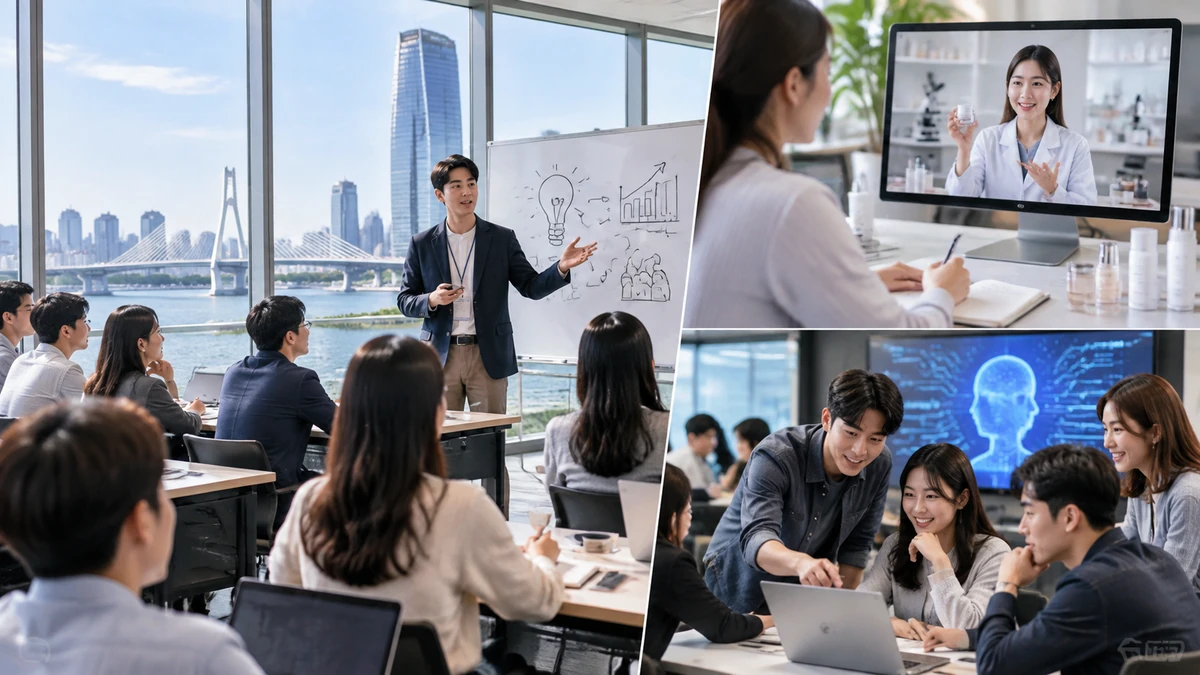
Image to help understand the article
South Korean Cities Turn Public Training Into a Pipeline for Future Businesses
South Korea is expanding a wave of government-supported education programs designed to help entrepreneurs, workers and citizens build practical skills in fast-changing industries. From artificial intelligence and cosmetics manufacturing to intellectual property-based startups and youth entrepreneurship, local governments and public agencies are opening new training opportunities across the country.
The programs reflect a broader South Korean strategy: combining regional development with workforce training. Unlike traditional academic courses, many of these programs focus on immediately usable skills, such as creating AI tools for business, understanding manufacturing standards or turning an idea into a commercial product.
For international readers, these initiatives are part of a distinctive feature of South Korea’s economic model. Local governments often work alongside public agencies, universities and industry groups to provide training programs aimed at strengthening regional economies. These efforts are especially important as South Korea faces challenges including an aging population, pressure on traditional industries and growing competition in emerging technologies.
Startup Education Moves Beyond Business Plans Toward Intellectual Property
One of the featured programs is the 51st session of Incheon’s IP Startup Zone, an education program focused on helping prospective entrepreneurs use intellectual property, or IP, as part of their business strategy.
In many countries, startup support programs often emphasize pitching, fundraising and market research. South Korea’s IP-focused approach places additional attention on patents, trademarks and other forms of legal protection that can help a company build long-term value.
The Incheon Intellectual Property Center is organizing the program for participants connected to early-stage entrepreneurship initiatives, including people preparing to launch businesses. The course is scheduled for Oct. 1-7, 2026.
For American readers, the concept is comparable to entrepreneurship programs offered through organizations such as small business development centers, university incubators and innovation hubs. The difference is that South Korean programs frequently integrate government-backed intellectual property education as a core part of startup preparation, reflecting the country’s manufacturing and technology-driven economy.
AI Training Targets Everyday Business Use, Not Just Technology Specialists
Artificial intelligence education is another major focus of the upcoming programs. The Yongin City Industry Promotion Agency is recruiting participants for the eighth session of its AI Digital Practical Skills Academy.
The program is designed for company employees and residents who want to apply AI tools in their daily work. Topics include building AI chatbots, producing digital content and using AI-based data analysis methods.
This type of training reflects a shift in how governments view artificial intelligence. Instead of treating AI as a specialized field limited to software engineers, many workforce programs now focus on helping ordinary employees incorporate AI into existing jobs.
South Korea has invested heavily in digital transformation, and local governments have increasingly positioned AI literacy as a basic workplace capability. Similar discussions are taking place in the United States, where companies across industries are exploring how generative AI can affect productivity, customer service, marketing and administrative work.
The Yongin program will run from Sept. 28 to Oct. 13, 2026. Its structure highlights a growing international trend: governments are attempting to prepare workers for AI adoption before technological change creates larger gaps in workplace skills.
Cosmetics Manufacturing and Youth Entrepreneurship Reflect Korea’s Diverse Innovation Economy
Other programs show the range of industries receiving public support. A nationwide online webinar on cosmetics Good Manufacturing Practice, commonly known as GMP, will provide free training for domestic cosmetics manufacturers on Oct. 6-7, 2026.
GMP refers to production standards designed to ensure consistent quality and safety in manufacturing. In South Korea’s cosmetics industry, where brands compete globally through products ranging from skincare to beauty technology, manufacturing credibility is a key part of international expansion.
The country’s beauty sector, often associated internationally with the term “K-beauty,” has grown into one of South Korea’s most recognizable cultural and commercial exports. Behind consumer-facing brands is a network of manufacturers, researchers and suppliers that require technical expertise and quality management systems.
Meanwhile, Ulsan’s Nam-gu Job Support Center is recruiting participants for its fourth Youth Entrepreneur Development Training program. The course targets prospective and early-stage founders aged 39 or younger and will run from Oct. 7-20, 2026.
Ulsan is traditionally known as an industrial city, home to major manufacturing sectors including automobiles and shipbuilding. Programs supporting younger entrepreneurs represent an effort by industrial regions to diversify their economies and encourage new types of businesses.
What South Korea’s Training Push Means for the United States
For the United States, South Korea’s expanding public training ecosystem offers a window into how another advanced economy is responding to rapid technological change. American companies and policymakers are also examining ways to improve workforce readiness, particularly as artificial intelligence reshapes industries.
There are clear parallels between South Korea’s programs and U.S. efforts involving community colleges, workforce development grants and startup incubators. Both countries are looking for ways to help workers gain practical skills without requiring lengthy traditional education pathways.
The connection is also relevant for American businesses operating in Korea. Companies in technology, healthcare, manufacturing and consumer goods increasingly depend on workers who understand both industry knowledge and digital tools. Training programs focused on AI, manufacturing standards and entrepreneurship could influence the future talent pool available to domestic and international companies.
Korean startup and technology ecosystems have also attracted attention from American investors and companies seeking partnerships in areas such as artificial intelligence, advanced manufacturing and consumer technology. While the programs described here are primarily domestic education initiatives, they reflect broader efforts to strengthen the foundation supporting Korea’s innovation economy.
A Growing Trend: Regional Governments as Innovation Partners
The collection of programs illustrates a larger change in South Korea’s approach to economic development. Regional governments are increasingly acting not only as administrators but also as partners in developing specialized skills and supporting emerging industries.
The available programs cover fields ranging from hydrogen energy workforce training in Samcheok to virtual convergence industry forums, medical device regulatory seminars and fashion technology content creation education. Together, they show how public institutions are attempting to connect training opportunities with industries expected to shape future growth.
For participants, however, access often depends on eligibility requirements, application deadlines and selection procedures. Organizers recommend reviewing official announcements carefully because some programs may require documents, screening processes or limited-capacity registration.
As economies around the world adjust to AI adoption and changing industrial demands, South Korea’s approach provides an example of how targeted training programs can serve as a bridge between government policy, regional development and private-sector innovation.
Comments
Post a Comment