Image to help understand the article
SEOUL, South Korea — South Korea’s Unification Ministry has drawn up a plan to provide 1,431 pieces of medical equipment to a hospital in Kangdong County, Pyongyang, as part of an effort to modernize regional hospitals in North Korea.
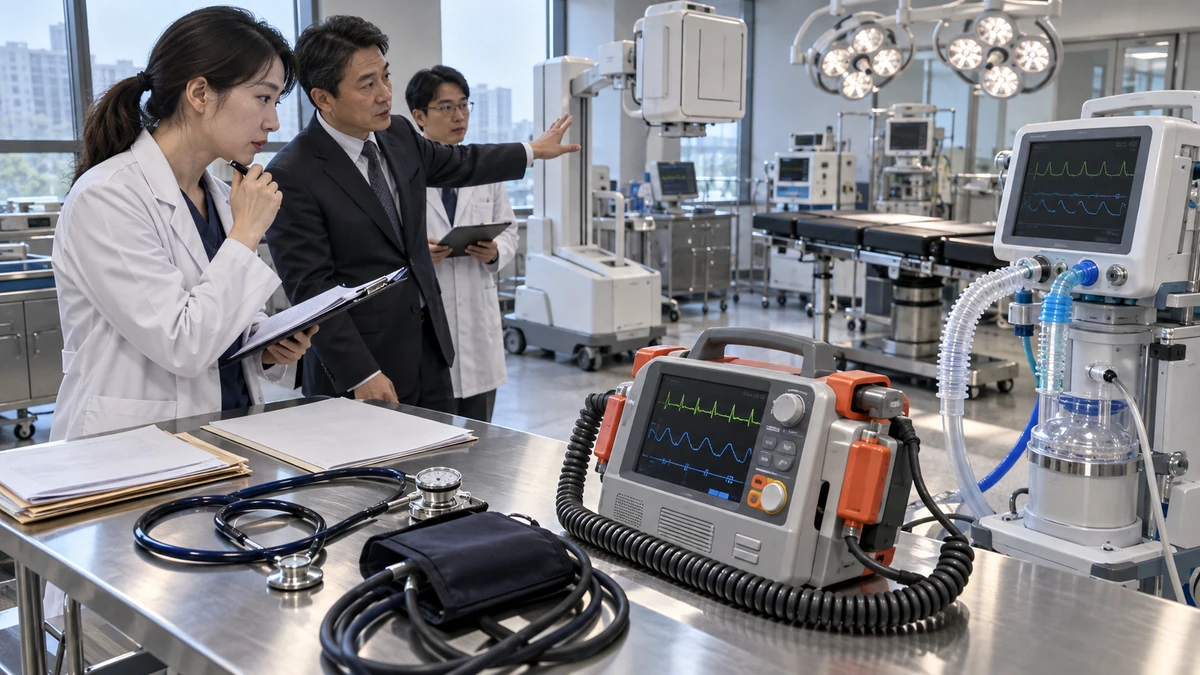
The proposed package covers 166 types of equipment, including diagnostic X-ray machines, stethoscopes, blood pressure monitors, operating tables, surgical lights, defibrillators and ventilators. The ministry estimates the total cost at $6.75 million, or about 9.3 billion won.
The plan was disclosed in information the ministry submitted on the 20th to the office of Rep. Kim Dae-sik of the governing People Power Party, a member of the National Assembly’s Foreign Affairs and Unification Committee.
Details Remain Subject to Negotiations
The ministry said it selected the equipment with assistance from the Korea Foundation for International Healthcare and consulted medical experts about essential devices and supplies used across hospital departments in South Korea.
Officials emphasized that the list is not final. Manufacturers and models have not been selected, and specific products and prices could change during negotiations with North Korea and the purchasing process.
Direct communication between the two Koreas remains suspended, leaving it unclear whether North Korea will accept the proposal. The United Nations Security Council committee overseeing sanctions against North Korea approved an exemption for the assistance in May.
Lawmakers Raise Diversion Concerns
The proposal has prompted debate in South Korea over whether some equipment could be diverted for military purposes. Rep. Park Chung-kwon of the People Power Party, who attended North Korea’s Kim Jong Un University of National Defense before settling in South Korea, said Kangdong County is home to the Second Economic Committee, which oversees North Korea’s defense industry.
At a Foreign Affairs and Unification Committee meeting on the 17th, Park argued that some of the proposed medical devices could potentially be used in the development or production of biological and chemical weapons.
Unification Minister Chung Dong-young defended the need for humanitarian assistance, saying criticism of North Korea’s nuclear and military policies should not be tied to whether ordinary residents receive treatment for illnesses.
Shin Young-jeon, a North Korean public health specialist and professor at Hanyang University’s medical school, called for a gradual approach. He said demanding immediate verification of how every device is used while inter-Korean relations are frozen would effectively mean abandoning the assistance.
Kim, whose office received the ministry documents, said the National Assembly would closely review the project and its spending to ensure taxpayer money is not used for poorly justified or one-sided aid to North Korea.
Comments
Post a Comment