South Korean Singer Lim Young-woong Celebrates 10 Years With Stadium Spectacle That Honors Fans and a New Beginning
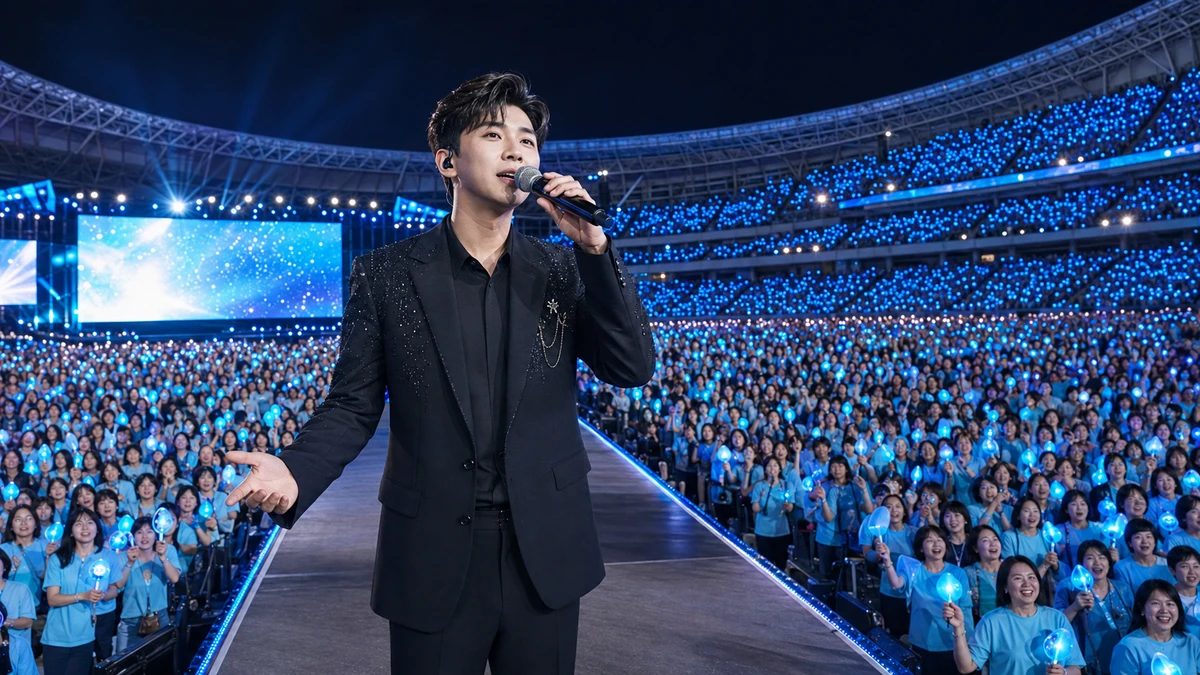
Image to help understand the article
Lim Young-woong Turns a 10th Anniversary Concert Into a Celebration of His Journey
South Korean singer Lim Young-woong marked a decade in music with a three-day stadium concert that blended nostalgia, fan culture and a preview of his next chapter. The event, titled “I’m Hero - The Stadium 2,” concluded at Goyang Stadium in Gyeonggi Province with approximately 95,000 fans attending across the three performances, according to his agency, Fish Music.
For audiences unfamiliar with South Korea’s entertainment landscape, Lim represents a different side of the Korean Wave than the globally dominant K-pop groups that have driven much of the country’s international pop culture influence. While idol groups such as BTS and BLACKPINK are known for elaborate choreography and global youth fandoms, Lim has built his career around vocal performance, emotional storytelling and a deeply loyal audience that spans generations.
His fandom, known as “Hero Generation,” filled the stadium with light blue cheering sticks and matching shirts, transforming the venue into a sea of his signature color. In South Korea, organized fan communities often play a major role in an artist’s identity, creating traditions, symbols and collective experiences that go beyond simply listening to music.
The concert’s opening moment captured the theme of the entire celebration. Instead of beginning with one of his biggest recent hits, Lim opened with “I Hate You,” the song that launched his career in 2016. The choice was intentional: the singer said he wanted to approach the stage with the mindset of debuting again.
That decision reflected a broader message. The performance was not only about celebrating 10 years of success but also about returning to the beginning and recognizing the path that brought him to one of South Korea’s largest concert stages.
A Different Model of Korean Stardom Built on Trust and Longevity
Lim Young-woong’s rise offers an important look at how success is defined in South Korea’s music industry. His career developed through a combination of television exposure, live performances and a powerful connection with listeners who value traditional Korean ballad and trot influences.
Trot, a genre with roots dating back decades in Korea, is often associated with older generations but has experienced renewed popularity in recent years. Lim helped modernize the genre’s image by combining traditional emotional vocal styles with contemporary production and a polished stage presence.
His popularity among older audiences is particularly notable in a market often associated internationally with younger K-pop fans. Many of his supporters are middle-aged or older listeners, including couples and families who attend concerts together. The sight of spouses wearing matching light blue shirts at the stadium reflected how his music has become part of everyday family culture for many fans.
The scale of the concert also demonstrated the commercial strength of Korea’s domestic music market. Stadium shows require not only a large fan base but also significant production resources, including ticket demand, venue management and large-scale technical planning.
Lim previously performed at Seoul World Cup Stadium in 2024, making this his second stadium-level concert. His ability to fill major venues highlights the durability of his audience relationship rather than a short-term surge driven by a single viral moment.
A Stadium Show That Combined New Music With a Career Retrospective
The concert also served as a launchpad for Lim’s upcoming special digital album, “I’m Hero 10,” scheduled for release on Sept. 8. Rather than revealing only one or two new songs, Lim performed all 10 tracks from the album before their official release.
The approach reflects a growing trend in the music industry: live performances are increasingly becoming major platforms for introducing new material. Instead of relying only on streaming services or online promotions, artists can create a shared first experience where fans encounter new songs together.
Alongside the new material, Lim performed some of his best-known songs, including “Love Always Runs Away,” “Grains of Sand,” “Like a Moment Forever” and “Can We Meet Again.” These songs have become central parts of his connection with fans and represent different stages of his career.
The show also highlighted his versatility. During “Rainbow,” he performed choreography with dancers, while other songs emphasized his vocal strength. He also included a cover of “Can’t Take My Eyes Off You,” adding an international pop standard to a set built around Korean emotional ballads.
By combining past successes with unreleased songs, the concert positioned the anniversary not as a conclusion but as a transition. The message was clear: 10 years of achievement mattered, but the next era had already begun.
What Lim Young-woong’s Stadium Success Means for the United States
For American audiences, Lim Young-woong’s milestone provides another example of how South Korea’s entertainment industry has expanded beyond the traditional image of K-pop. The Korean Wave, or Hallyu, now includes a wide range of music genres, television formats, food, fashion and cultural exports.
In the United States, Korean music consumption has grown significantly over the past decade, with streaming platforms, concerts and online communities helping introduce American audiences to artists beyond mainstream idol groups. While Lim’s fan base in the U.S. is not comparable in size to the global audiences of BTS or BLACKPINK, his success represents the broader diversity of Korean music that international markets are beginning to discover.
The concert model also reflects trends familiar to the American entertainment industry. Legacy artists in the United States, from country musicians to pop performers, often use anniversary tours and large-scale concerts to celebrate long-term relationships with fans. Lim’s decision to revisit his debut song while introducing new music follows a similar approach: honoring history while creating anticipation for what comes next.
For U.S. companies involved in entertainment, streaming, live events and cultural partnerships, the continued growth of Korean artists offers opportunities to explore a wider range of Korean talent. The American market has traditionally been one of the most important destinations for Korean entertainment exports, but future growth may come from artists who represent different genres and generations.
The story also reflects the continuing strength of the U.S.-South Korea cultural relationship. Music has become one of the most visible areas of exchange between the two countries, alongside technology, film and business partnerships. As Korean artists continue reaching international audiences, American consumers are increasingly encountering a broader picture of Korean culture.
Technology and Production Turn a Large Venue Into a Shared Emotional Experience
Large stadium concerts create a unique challenge: the physical distance between performer and audience. At smaller venues, fans can see facial expressions and feel closer to the artist. In a stadium filled with tens of thousands of people, production design becomes essential to maintaining emotional connection.
Lim’s concert used large-scale visual elements, including water screens, fireworks and a drone show. During “Life’s Song,” a water screen added a dramatic visual layer, while the performance of “Hero” featured fireworks that transformed the stadium atmosphere.
However, the production was not focused only on spectacle. Lim also used moving platforms and extended stages to travel closer to fans throughout the venue. The combination of technology and physical interaction helped reduce the sense of distance created by a stadium setting.
This balance between scale and intimacy has become a defining feature of modern concert experiences worldwide. From American stadium tours to global K-pop productions, artists are increasingly using advanced technology to make large venues feel more personal.
A 10-Year Celebration That Looks Toward the Future
Lim Young-woong’s Goyang concert was more than an anniversary event. It was a carefully designed statement about identity, loyalty and renewal. Beginning with his debut song, performing new music before its official release and sharing the stage with nearly 95,000 fans created a narrative that connected his past and future.
The phrase “starting again like a debut” was not simply a reflection on his first steps as a singer. It represented a philosophy shared by many long-running artists: success depends not only on reaching the top but on continuing to build a relationship with audiences.
For Korean entertainment observers around the world, the concert offers another example of why the Korean Wave continues to evolve. Its influence is no longer limited to one style of music or one generation of fans. Instead, it is expanding through artists who bring different histories, audiences and cultural experiences to global stages.
Lim Young-woong’s stadium celebration showed that a decade-long career can become not just a look back at achievements, but a platform for a new beginning.
Comments
Post a Comment