Image to help understand the article
Google Trends in South Korea Captures a Fast-Moving Mix of National Interests
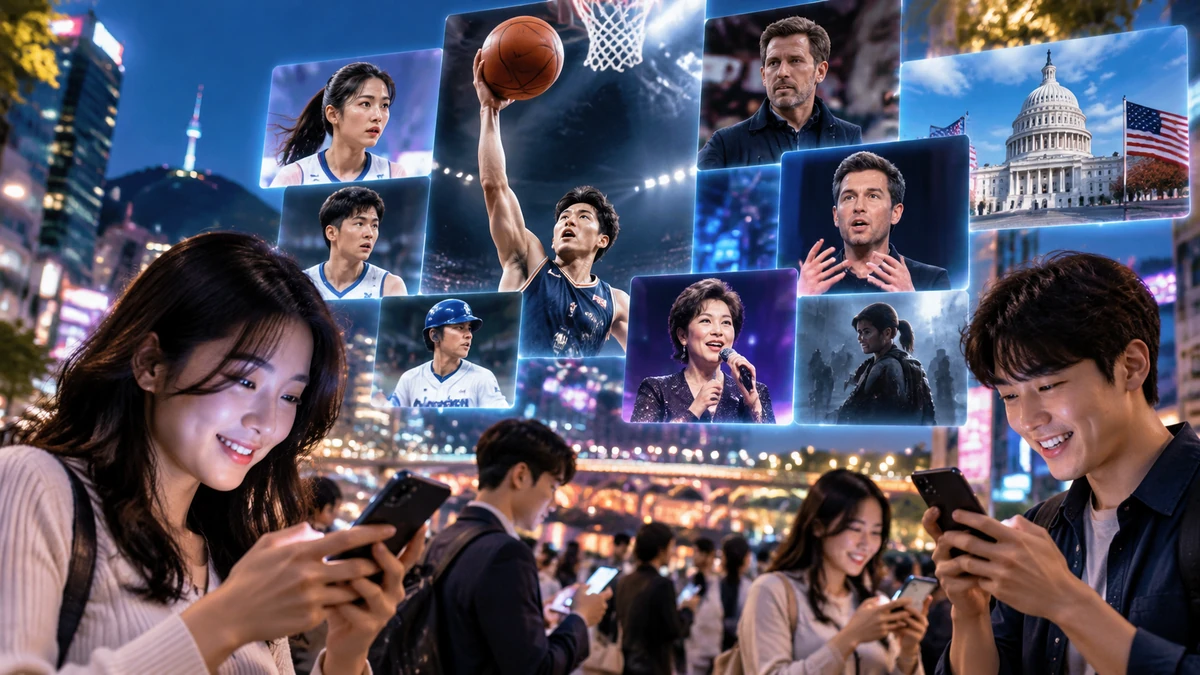
South Korea’s real-time Google trending searches on Sept. 16 showed how quickly public attention can move between sports, politics, entertainment and technology. The list included athletes, government figures, global technology leaders and cultural content, offering a snapshot of what Korean internet users were following at a particular moment.
Unlike traditional audience surveys, real-time search rankings measure sudden increases in interest rather than overall popularity. A topic with a smaller total audience can rise quickly if many people begin searching for it at once. Google Trends data therefore often reflects breaking news, viral moments and online conversations rather than a simple ranking of the country’s biggest concerns.
The top search term was “basketball player,” followed by “Lee So-young,” a nominee for South Korea’s Ministry of SMEs and Startups, while baseball player Koo Ja-wook, former Major League Baseball prospect Jo Won-bin, artificial intelligence leader Sam Altman and U.S. midterm elections also appeared among the day’s rising topics.
Sports Searches Highlight Korea’s Growing Global Athletic Connections
The No. 1 rising search term, “basketball player,” reflected interest in both international and domestic basketball stories. Search activity followed headlines involving a former U.S. women’s basketball player attending the U.S. Open tennis tournament as well as coverage surrounding South Korea’s national basketball team and upcoming Asian Games-related attention.
For American readers, the Asian Games may be less familiar than events such as the Olympics or NCAA basketball tournaments. The multi-sport competition brings together athletes from across Asia and is considered a major regional sporting event. In South Korea, performances by national teams often attract significant online attention because sports are closely connected with national representation and international recognition.
Search results also included Korean basketball players such as Lee Jung-hyun and Lee Hyun-joong, whose careers represent the increasing movement of Korean athletes into international leagues and competitions. Korean fans have increasingly followed athletes competing overseas, similar to how American audiences track NBA players competing internationally.
Baseball remained another major driver of online interest. Koo Ja-wook, an outfielder for the Samsung Lions, became a trending topic after coverage of his return and lineup appearance. Baseball has a particularly strong cultural position in South Korea, where the Korea Baseball Organization has built a passionate fan base comparable in intensity to Major League Baseball fandom in the United States.
Jo Won-bin also drew attention after reports about his performance in the minor leagues. His reported success in Double-A competition and overseas opportunities connected with Puerto Rico’s winter league reflected a broader trend: Korean baseball players increasingly view international development paths as part of their professional careers.
Political Attention Focuses on Government Appointments and Public Hearings
The second-highest rising search term was Lee So-young, connected to her confirmation hearing as a candidate for South Korea’s Ministry of SMEs and Startups. In South Korea, ministerial nominees undergo parliamentary confirmation hearings where lawmakers question candidates about qualifications, past activities and potential controversies.
The process is different from the U.S. Senate confirmation system but serves a similar public accountability function. Korean hearings often become major news events because opposition and ruling parties use them to debate a nominee’s background, policy views and public record.
Coverage surrounding Lee’s hearing included disputes involving allegations related to political donations, climate-related organizations and property issues. Supporters and critics presented different interpretations of the issues discussed, making the hearing a focus of online searches and political debate.
Another politically related search term was “U.S. midterm elections.” Although the election takes place in the United States, Korean audiences often follow American political developments because U.S. decisions can influence issues important to South Korea, including security cooperation, trade policy and technology regulation.
For many Korean internet users, American elections are not simply foreign political events. The United States is South Korea’s major security ally and one of its largest economic partners, meaning changes in Washington can affect Korean businesses, markets and diplomatic discussions.
AI and Entertainment Show the Expanding Reach of Global Digital Culture
Technology also played a role in South Korea’s trending searches. Sam Altman, CEO of OpenAI, appeared on the list after reports about upcoming artificial intelligence product developments. South Korea has become one of the world’s most active markets for technology adoption, with major companies investing heavily in semiconductors, cloud computing and AI services.
The country’s technology industry has a special connection with the global AI race because South Korean firms are major suppliers of advanced memory chips used in artificial intelligence systems. Interest in AI leaders such as Altman reflects both consumer curiosity and business concerns about how rapidly changing technology may reshape industries.
Entertainment topics also remained central to Korean online culture. Singer Shim Soo-bong, known for decades of influence in Korean popular music, became a trending topic after television content featuring her personal life and home was released. In Korea, long-running entertainment figures often maintain strong public interest across generations.
The horror film franchise “Resident Evil” also appeared among trending searches through interest surrounding “Resident Evil 0: Night.” Korean audiences frequently follow Hollywood and Japanese-origin entertainment franchises alongside domestic films and dramas, demonstrating how global media ecosystems overlap.
What These Trends Mean for the United States and the Korean-American Connection
For American audiences, South Korea’s search trends provide a window into how closely connected the two countries have become through sports, technology, politics and entertainment. The topics appearing on Korea’s trending list were not limited to domestic stories; several were linked directly to American culture and industries.
The appearance of U.S. basketball-related searches highlights the continued influence of American sports in Korea. The NBA, NCAA basketball and U.S. professional sports culture have long attracted Korean fans. At the same time, Korean athletes and teams have expanded their presence in international competition, creating a two-way exchange between American and Korean sports markets.
Technology represents another major area of connection. American AI companies and Korean semiconductor manufacturers operate in an increasingly interconnected ecosystem. Developments involving AI leaders can quickly become relevant in South Korea because Korean companies play a critical role in producing hardware needed for artificial intelligence systems.
Entertainment provides perhaps the most visible cultural bridge. Korean music, television and film have gained large audiences in the United States through streaming platforms and social media. Meanwhile, American films, sports and technology brands continue to shape Korean consumer culture. The search trends show that Korean audiences are not separating “domestic” and “international” interests; they often follow both at the same time.
The U.S. political search trend also reflects the importance of bilateral relations. American elections and policy debates are closely watched in Seoul because decisions made in Washington can influence defense cooperation, economic agreements and global technology rules. However, search rankings alone do not indicate public opinion or political preferences; they only show changes in online attention.
A Digital Snapshot of a Country Balancing Local Identity and Global Influence
South Korea’s Sept. 16 trending searches reveal a society where domestic issues and international developments constantly overlap. A baseball player, a government nominee, an AI executive and an American election can all become part of the same online conversation within a single day.
This pattern reflects South Korea’s position as both a highly connected digital society and a country with strong cultural traditions. Domestic sports leagues, political institutions and entertainment figures remain important, while global events and foreign industries increasingly shape everyday discussions.
For companies, media organizations and international audiences watching Korea, real-time search trends offer clues about emerging conversations but require careful interpretation. A rise in searches does not necessarily represent approval, popularity or long-term significance. Instead, it shows where public curiosity is concentrated at a specific moment.
As South Korea continues to expand its influence in technology, entertainment and sports, these digital signals provide another way to understand how Korean audiences respond to a rapidly changing world.
Comments
Post a Comment