Image to help understand the article
Google’s Rising Searches Offer a Snapshot of South Korea’s Public Attention
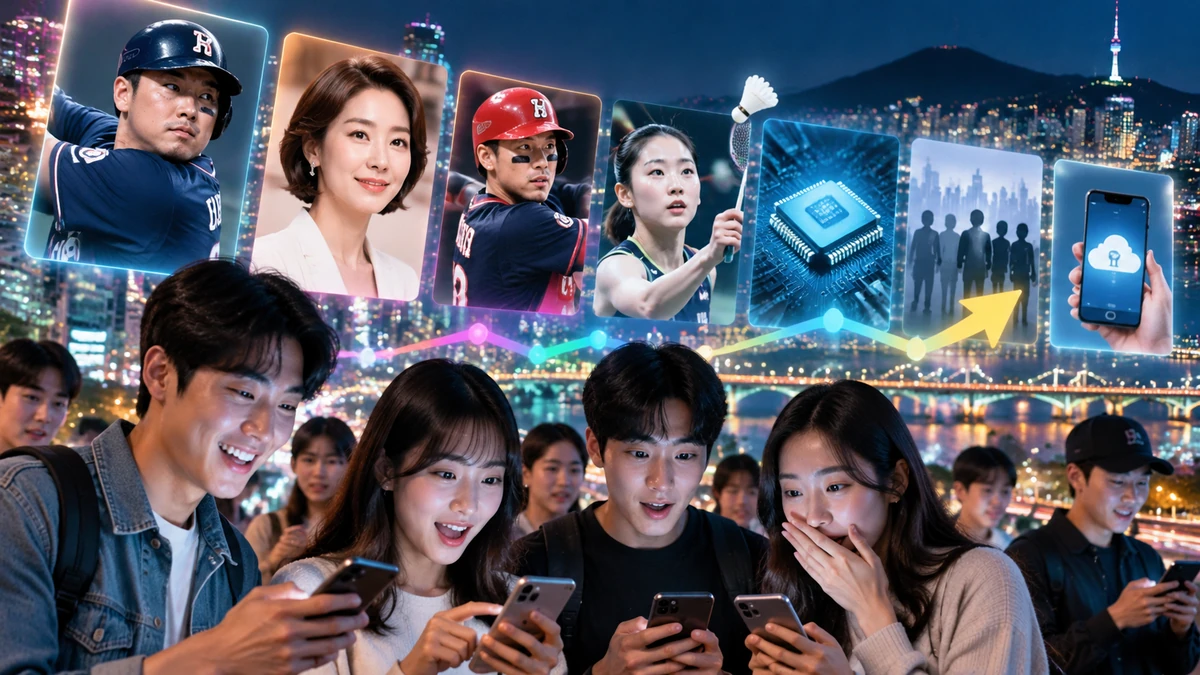
South Korea’s top Google search trends on Sept. 4, 2026, reflected a wide range of public interests, from baseball and badminton to semiconductor business developments, entertainment news and demographic challenges. Unlike markets where trending searches are often dominated by a single celebrity controversy or breaking political event, South Korea’s search landscape frequently captures multiple layers of society at once — a reflection of the country’s fast-moving digital culture.
The day’s most searched terms included baseball player Choi Ji-man, actress Gyeon Mi-ri, baseball player Ha Joo-seok, semiconductor company Solidigm, the Ministry of Culture, Sports and Tourism, badminton player Shim Yu-jin, a nationwide strike, Kakao Membership, soccer coach Roberto Moreno and aging-related issues.
Google Trends data provides approximate indicators rather than exact measurements of public opinion. The reasons behind search spikes are generally connected to news coverage and online discussions surrounding each keyword. The Sept. 4 results show how South Koreans move between entertainment, sports fandom, economic concerns and long-term social issues in real time.
Sports Figures Drive Online Interest as Baseball and Badminton Remain Major Cultural Forces
Sports occupied a significant portion of South Korea’s trending searches, highlighting the country’s deep connection with competitive athletics. Baseball, in particular, remains one of South Korea’s most popular spectator sports, with professional teams attracting highly engaged fan communities similar to Major League Baseball fandom in the United States.
Choi Ji-man became the top trending search term after reports highlighted his selection as an August Most Valuable Player by his team. The South Korean first baseman has built an international profile through his career in both Korean and American baseball, including his time in Major League Baseball. His name continues to attract attention because he represents a group of Korean athletes who have crossed between domestic leagues and major global sports markets.
Another baseball-related search involved Ha Joo-seok, whose recent performance after a trade to the Kia Tigers generated discussion among fans. Korean baseball supporters often closely follow player transfers, team chemistry and individual performances, creating online attention around even short-term changes in a player’s form.
Badminton player Shim Yu-jin also entered the top search rankings after coverage involving South Korean star An Se-young’s tournament performance in China. Badminton has become increasingly visible in Korea following An’s rise as one of the world’s leading players. For American audiences, the phenomenon is comparable to how a major Olympic athlete can elevate interest in an entire sport beyond its traditional fan base.
Entertainment Searches Reflect Korea’s Celebrity Culture and Digital Lifestyle
Entertainment remained another major source of online attention, with actress Gyeon Mi-ri becoming a trending keyword alongside coverage involving her daughter, actress Lee Yu-bi. Reports focused on lifestyle-related content, including Lee’s independent living arrangements and comments about relationships and dating-related programs.
South Korea’s entertainment industry operates differently from Hollywood in several ways. Korean celebrities often maintain a closer connection with audiences through television appearances, social media platforms and variety programs that reveal aspects of their personal lives. Lifestyle content, such as a celebrity showing a home or discussing daily routines, can quickly become a major online conversation.
This type of interest is also part of the broader Korean Wave, or Hallyu, that has expanded from K-pop and television dramas into global lifestyle and consumer culture. International audiences familiar with shows such as Korean reality programs and celebrity-focused content may recognize the importance of personality-driven media in Korea’s entertainment ecosystem.
Semiconductors and Digital Platforms Show Korea’s Economic Priorities
Beyond entertainment and sports, several trending searches reflected South Korea’s position as a technology-driven economy. Solidigm, a U.S.-based semiconductor company owned by South Korea’s SK hynix, gained attention due to reports discussing possible initial public offering plans and concerns surrounding a potential duplicate listing structure.
The semiconductor industry is strategically important for South Korea because companies such as SK hynix and Samsung Electronics are major players in the global memory chip market. Developments involving semiconductor companies can attract attention from investors, technology workers and policymakers because chips are central to artificial intelligence, cloud computing and advanced electronics.
For American readers, the discussion around Solidigm connects to broader U.S. debates about semiconductor supply chains and technology competition. The United States has increasingly focused on strengthening domestic chip production through industrial policies, while South Korean companies continue expanding their global role in advanced semiconductor manufacturing.
Another technology-related search involved Kakao Membership, following reports that Kakao was preparing a paid subscription service priced around 4,900 Korean won. The move was viewed as competition with services such as Naver Membership, highlighting a growing battle among South Korea’s major digital platforms to build subscription-based ecosystems.
What South Korea’s Trends Mean for the United States
The Sept. 4 search trends provide a window into issues that increasingly connect South Korea and the United States. Sports, entertainment, technology and demographic change are not separate categories in modern Korea; they are interconnected industries that influence global markets.
For American companies and audiences, South Korea’s digital behavior offers insight into consumer trends that often spread internationally. Korean entertainment companies have demonstrated their ability to build global fan communities, while Korean technology firms remain important partners in areas such as semiconductors, artificial intelligence infrastructure and digital services.
The popularity of Korean sports figures also reflects growing cultural exchange. Korean baseball players have long participated in American professional leagues, while American audiences have become more familiar with Korean athletes through international competitions and streaming platforms.
At the same time, social issues appearing in search rankings show challenges shared by both countries. The rise of “aging” as a trending topic reflects concerns about demographic change. South Korea is among the fastest-aging societies in the world, and discussions about shrinking populations, workforce changes and elderly care have become increasingly important policy issues.
The United States faces its own demographic pressures, although the scale and speed differ from South Korea’s experience. American policymakers, businesses and researchers increasingly study East Asian demographic trends because they offer possible lessons about healthcare systems, labor markets and economic adaptation.
Korea’s Cultural Export Strategy Continues Beyond K-Pop
The appearance of South Korea’s Ministry of Culture, Sports and Tourism as a trending keyword highlighted government efforts to expand Korean cultural influence overseas. Reports discussed overseas Korean cultural centers promoting K-lifestyle experiences and supporting cultural exports.
For many Americans, Korean culture is often associated with K-pop groups, films and television dramas. However, South Korea’s cultural strategy now extends into food, beauty products, fashion, tourism and digital content. This broader approach reflects an effort to turn cultural popularity into long-term economic opportunities.
The United States remains one of the most important overseas markets for Korean cultural products. From streaming platforms carrying Korean dramas to retailers selling Korean beauty and food products, the Korean Wave has become part of mainstream American consumer culture rather than a niche interest.
A Digital Mirror of a Changing Nation
South Korea’s Sept. 4 search rankings reveal a country balancing global influence with domestic challenges. A baseball player’s performance, a celebrity lifestyle story, a semiconductor business decision and an aging population issue all competed for public attention within the same digital space.
For observers outside Korea, these trends demonstrate how a highly connected society processes change. South Korea’s internet culture moves quickly, but the themes behind those searches often reflect deeper forces: global competition, cultural expansion, economic transformation and demographic uncertainty.
As Korea continues to play a larger role in technology, entertainment and international culture, monitoring these digital signals provides a useful perspective on what issues are capturing public attention — both inside Korea and increasingly around the world.
Comments
Post a Comment