South Korea’s Trending Searches Reveal a Nation Focused on Military Service, Holidays and Everyday Life
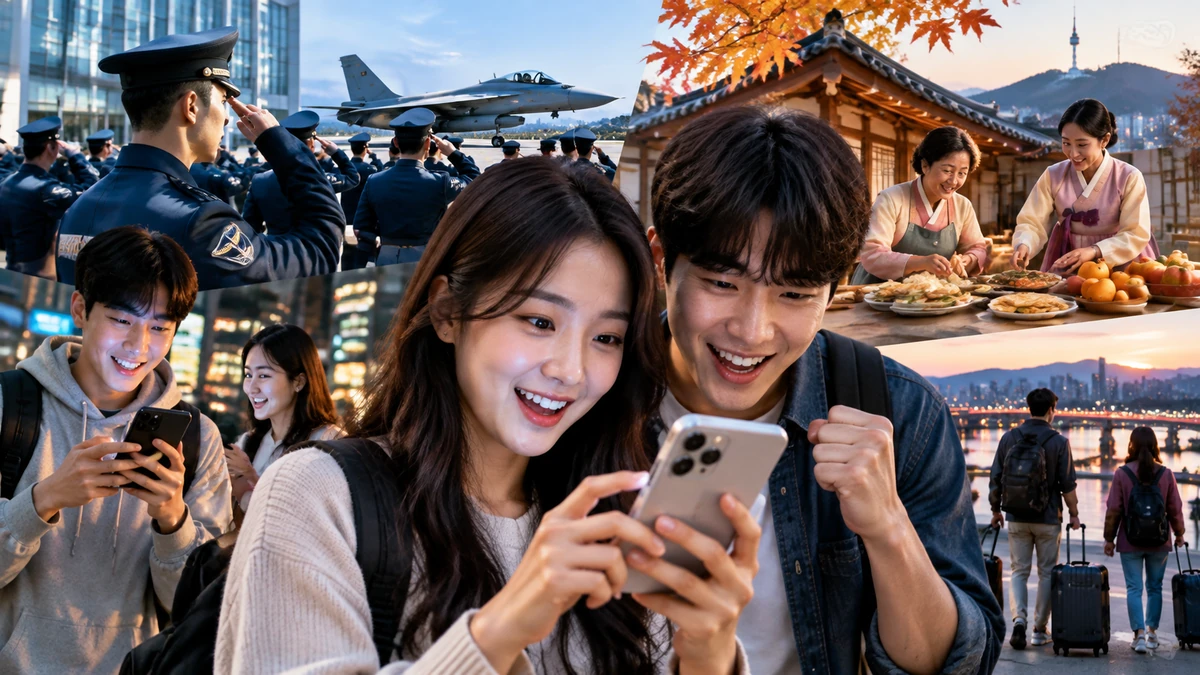
Image to help understand the article
Google’s Rising Searches Offer a Snapshot of South Korea’s Daily Concerns
South Korea’s top Google trending searches on Sept. 8, 2026, reflected a mix of national institutions, holiday preparation, labor issues, entertainment news and local tourism. Unlike search trends in some countries that are often dominated by breaking political events or global celebrity stories, South Korea’s daily search patterns frequently reveal practical concerns tied to family schedules, public services and major cultural moments.
The leading search term was “Military Manpower Administration,” the government agency responsible for overseeing South Korea’s mandatory military service system. The keyword rose sharply after news reports covered the first-round selection results for next year’s Air Force general enlisted recruits. According to the reports connected to the search trend, 3,662 applicants were selected in the first round, with competition reaching 12.5 applicants per available position.
For many Americans, South Korea’s military system requires additional context. South Korea maintains mandatory military service because of its decades-long security tensions with North Korea. Most able-bodied South Korean men are required to complete military duty, usually for roughly 18 months to two years depending on branch and assignment. Decisions about timing, branch selection and recruitment results can therefore become major life events for young men and their families.
The surge in searches for the Military Manpower Administration was not simply curiosity about government policy. It reflected thousands of people checking practical information about enlistment, selection results and future plans. Military service remains one of the most important transitions in the lives of many young South Koreans.
Chuseok Holiday Preparations Drive Consumer and Family Searches
The second-highest trending keyword was “holiday,” linked largely to preparations for Chuseok, one of South Korea’s most important traditional holidays. Often compared with Thanksgiving in the United States because of its emphasis on family gatherings and gratitude, Chuseok is a major travel and shopping period in Korea.
During Chuseok, many Korean families visit relatives, prepare traditional foods and honor ancestors through ceremonies known as “charye.” Although customs vary widely among households, the holiday remains deeply connected to family relationships and cultural traditions.
Search interest increased as news outlets reported on the expected cost of Chuseok preparations. One report cited an estimated average cost of about 313,000 Korean won for a traditional holiday table, with rising prices for items such as beef and vegetables drawing attention. Other related coverage focused on financial support programs for small businesses and discounts through agricultural gift certificate programs.
The trend illustrates how Korean consumers often turn to search engines for practical decisions before major holidays. People use online information to compare prices, find government support programs and plan travel. In this way, Google search trends provide a window into household concerns, especially during periods when inflation and living costs affect family budgets.
Labor, Entertainment and Regional Tourism Share Attention
Economic concerns also appeared among the top searches. The keyword “minimum wage” gained attention after reports about regional living wage increases. The stories were not about a nationwide minimum wage decision but about local governments adjusting their own living wage policies.
For example, reports connected to the trend highlighted increases announced by local governments including Gapyeong County and Hwaseong Special City. Living wages are policies often designed to provide higher pay standards for certain public-sector workers or contracted employees. They are separate from South Korea’s national minimum wage system.
This distinction is important for international audiences. In the United States, discussions about minimum wage often focus on federal and state laws. South Korea also has a national minimum wage, but local living wage programs can become newsworthy because they reflect regional economic conditions and policy choices.
Entertainment remained another major source of search activity. Singer and entertainer Hong Seo-bum became one of the most searched names after reports about his return to public performance, including an appearance connected to a memorial music event honoring former South Korean President Park Chung-hee. Search interest appeared linked to public discussion about his comeback after a period away from activities.
Actor Choi Soo-jong also appeared among trending entertainment keywords. Reports focused on recent photos and updates involving Choi and his wife, actress Ha Hee-ra, a well-known celebrity couple in South Korea. Long-running interest in celebrity families and personal updates is a common feature of Korean entertainment culture, where audiences often follow stars across decades.
Local Experiences and Pet-Friendly Travel Reflect Changing Korean Lifestyles
Several trending keywords highlighted changing leisure habits in South Korea. “Unaksan,” referring to a mountain destination in Pocheon, gained attention after reports about the opening of a new 129-meter-long sky walkway known as the Unaksan Cloud Path. The attraction was promoted as a new tourism landmark connected to the mountain’s natural landscape.
South Korea has invested heavily in regional tourism as local governments seek to attract visitors beyond major cities such as Seoul and Busan. New trails, observation platforms and cultural attractions are frequently promoted as ways to encourage domestic travel and support local economies.
The keyword “dogs” also ranked highly, reflecting growing interest in pet-friendly activities. Reports highlighted a pet tour program operated by Imsil County that allows visitors to travel with companion animals.
The growth of pet tourism reflects a broader demographic and lifestyle change in South Korea. As the country experiences declining birth rates and changing household structures, pets have become increasingly important members of many families. Businesses and local governments have responded by creating more services designed for pet owners, including travel programs, accommodations and recreational spaces.
What South Korea’s Search Trends Mean for the United States
For American audiences, South Korea’s search trends provide another example of how closely connected technology, culture and everyday life have become in one of the world’s most digitally connected societies. The United States often views South Korea through the lens of major exports such as K-pop, films, electronics and automobiles, but domestic search behavior shows another side of the country: a society focused on family obligations, public systems, regional identity and economic pressures.
The military recruitment trend is particularly relevant to Americans because South Korea’s security environment remains closely tied to U.S. foreign policy in Asia. The United States maintains a longstanding security alliance with South Korea, including the presence of American forces on the Korean Peninsula. Understanding how military service affects ordinary Korean citizens helps explain an important social institution that is sometimes overlooked by international observers.
The Chuseok-related searches also offer insight into Korean consumer behavior that matters for American companies operating in the country. U.S. brands in food, retail, travel and technology increasingly compete in markets where cultural events shape purchasing decisions. Holiday periods in Korea can influence demand for gifts, premium foods, transportation services and online commerce.
For the American entertainment industry, Korean search trends continue to demonstrate the importance of understanding local celebrity culture rather than viewing Korean audiences only through global K-pop success. Korean entertainment companies have expanded internationally, and U.S. media companies have increasingly collaborated with Korean creators. However, domestic popularity often depends on cultural connections that are specific to Korean audiences.
The rise of pet tourism and regional attractions also mirrors trends seen in the United States, where pet-friendly travel and experiential tourism have grown. While the Korean and American markets differ, both countries are seeing consumers place greater value on personalized experiences rather than traditional forms of leisure alone.
A Broader Picture: Search Data as a Window Into Korean Society
Google’s real-time trending searches should not be interpreted as a complete measure of public opinion. Search rankings show what people are looking for at a specific moment, not necessarily what issues they support or oppose. A sudden increase can result from a single news report, a viral discussion or practical information needs.
Still, the Sept. 8 trends reveal several important themes in contemporary South Korea. Young people and families remain deeply engaged with military service decisions. Consumers continue to monitor prices and financial support programs before major holidays. Entertainment figures maintain strong public interest, while regional tourism and pet-related activities reflect changing lifestyles.
For global observers, including Americans, these trends show why South Korea cannot be understood only through its international cultural exports. Behind the global popularity of Korean music, television and technology is a society navigating traditions, demographic changes and economic challenges in real time.
As South Korea continues to play a larger role in global culture and business, everyday indicators such as search trends provide a useful perspective on what matters to ordinary people. They show a country balancing long-standing traditions with rapidly changing lifestyles, creating a social landscape that is increasingly relevant to audiences around the world.
Comments
Post a Comment