Image to help understand the article
Trump says decision on Iran is near
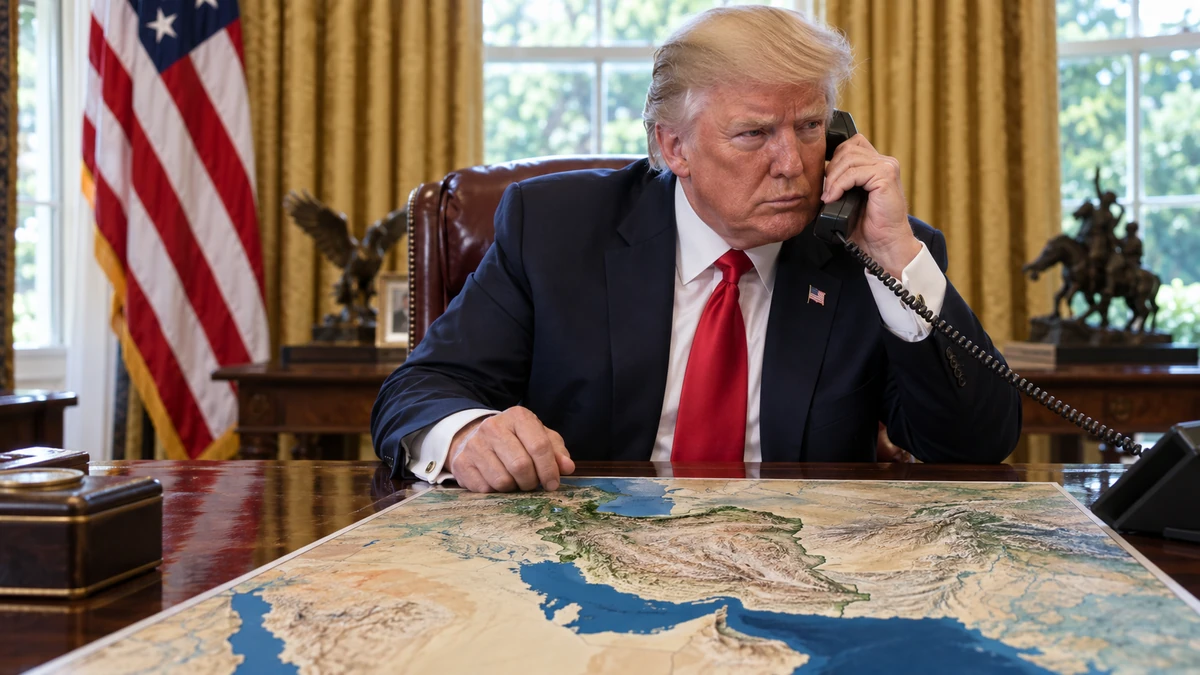
President Donald Trump said he was deciding how the United States should respond to Iran, raising the possibility of a major military attack while also leaving open economic pressure or a negotiated agreement.
In a phone interview with a Fox News reporter, Trump said the question was when to “blow up the whole country” and warned that Iran must behave. He added that “something very big” would happen in the near future.
Trump said he would probably be open to meeting Iranian President Masoud Pezeshkian. Iran, working through mediators, has sent Washington a list of demands and said renewed negotiations would depend on the United States fulfilling its commitments.
Iranian parliament speaker Mohammad Bagher Ghalibaf said Tehran would not return to its previous negotiating position or reopen the Strait of Hormuz until the United States honored its promises. Mohsen Rezaei, secretary of Iran’s Supreme National Security Council, told Al Jazeera that Iran was prepared to resume talks aimed at ending the war. Tehran’s demands include an end to fighting on all fronts, the release of frozen funds and the lifting of a maritime blockade.
Iran warns of retaliation across the region
Iran’s central military command claimed the United States had decided to resume action against the country and urged other governments in the region not to support Washington.
Iran’s Islamic Revolutionary Guard Corps warned that another U.S. attack would make every American military base in the Middle East a target. It said retaliation could also extend to U.S. naval forces in the Indian Ocean and other American personnel and assets.
The State Department issued a new security alert for Americans in the Middle East, warning of possible unexpected escalation and urging heightened caution. Trump cut short his stay at Camp David by one day and returned to the White House.
Diplomacy shifts to the United Nations
The 81st session of the U.N. General Assembly is scheduled to hold its general debate from Sept. 22 through Sept. 28 at U.N. headquarters in New York. Brazilian President Luiz Inácio Lula da Silva is set to speak first on Sept. 22, followed by Trump.
Trump is expected to reaffirm his “America First” approach and doctrine of “peace through strength,” while calling for changes at the United Nations. Pezeshkian is scheduled to address the assembly Sept. 23, focusing attention on whether the two presidents could meet. Israeli Prime Minister Benjamin Netanyahu is due to speak Sept. 24 and plans to visit New York despite dismissing a warning from Mayor Zohran Mamdani that he could face arrest.
Conflict threatens key oil routes
The U.S.-Iran war began Feb. 28 and has included repeated rounds of attacks and retaliation. A memorandum of understanding intended to end the conflict, signed in June, has effectively collapsed. With U.S. midterm elections approaching in November and the political burden of the war growing, Washington has been cautious about committing additional military forces to Yemen.
The Iran-aligned Houthi movement attacked Saudi Arabia, and smoke was seen near fuel storage facilities at King Khalid International Airport in Riyadh on the 19th. Oil tank fires were reported in the Saudi capital, and numerous flights were canceled.
The Houthis’ growing influence around the Bab el-Mandeb Strait, combined with Iran’s effective closure of the Strait of Hormuz, has intensified concerns about crude oil supplies moving through two of the Middle East’s most strategically important maritime routes.
Comments
Post a Comment