Image to help understand the article
L-theanine, a naturally occurring amino acid found in tea leaves, is recognized by South Korea’s Ministry of Food and Drug Safety as a functional ingredient that may help ease tension caused by stress. But Korean health guidance also cautions that concentrated supplements are not medicines and may require extra care when combined with caffeine, sedatives or other drugs.
What is L-theanine?
L-theanine is a nonprotein amino acid found naturally in the leaves of the tea plant, Camellia sinensis. Also known by the chemical name N⁵-ethyl-L-glutamine, it is rarely found in plants other than tea, though it has been identified in some mushrooms.
The compound accounts for roughly 1% to 2% of the dry weight of green tea leaves and about half of tea’s total amino acids. A 200-milliliter cup — about 6.8 fluid ounces — contains an estimated 24 milligrams in black tea and 8 milligrams in green tea. Shade-growing tea plants can increase the amount that accumulates in the leaves.
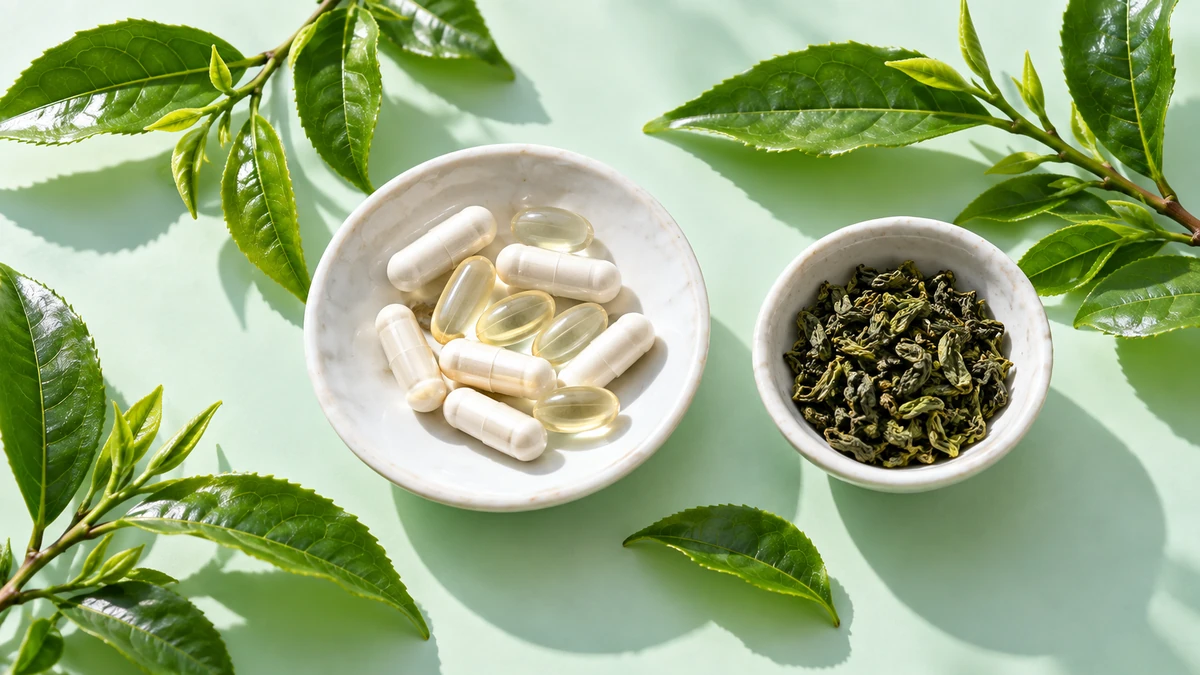
Supplements are commonly sold as capsules, tablets or powders, sometimes with added caffeine. Natural theanine occurs in the L-form. Chemical synthesis can also produce the D-form, and studies have found higher proportions of that form in some commercial products exposed to prolonged heating or improper storage.
South Korea’s approved claim and dosage
South Korea’s food safety ministry recognizes L-theanine as an ingredient that “may help relieve tension caused by stress.” The ministry lists a daily intake of 200 to 250 milligrams.
Pregnant or breastfeeding people should avoid it. Consumers are advised to use caution when taking it with caffeinated drinks such as coffee, black tea or green tea. People undergoing surgery should consult a health professional, and anyone who experiences an adverse reaction should stop taking the product and seek professional advice.
A separate ingredient combining green tea extract and theanine carries different guidance. South Korean regulators say it may help improve memory in adults, though confirmation in humans is still needed. Its listed daily intake is 1,680 milligrams.
Children and people who are pregnant or breastfeeding should avoid the combination product. Those who have a medical condition, take medication or are near the time of surgery should consult a health professional. Excessive intake may cause gastrointestinal problems or dizziness, while people sensitive to caffeine should watch for restlessness or insomnia. The product should be taken after a meal, with attention to other sources of caffeine.
U.S. medical guidance
Memorial Sloan Kettering Cancer Center in New York considers the amount of theanine typically consumed in tea to be generally safe. Because supplements contain more concentrated doses than food or drinks, however, the center recommends consulting a health care provider before taking them.
The center says L-theanine may increase drowsiness when used with sedatives including lorazepam, diazepam and zolpidem. Animal research has also suggested that its effects could overlap with those of midazolam, though it remains unclear whether the same interaction occurs in people.
The guidance is based on public information about health functional foods from South Korea’s Ministry of Food and Drug Safety. Such supplements are not medicines, and people with medical conditions or those taking medication should consult a qualified health professional before use.
Comments
Post a Comment