Image to help understand the article
Osaka Bets on a More Intimate K-Pop Economy
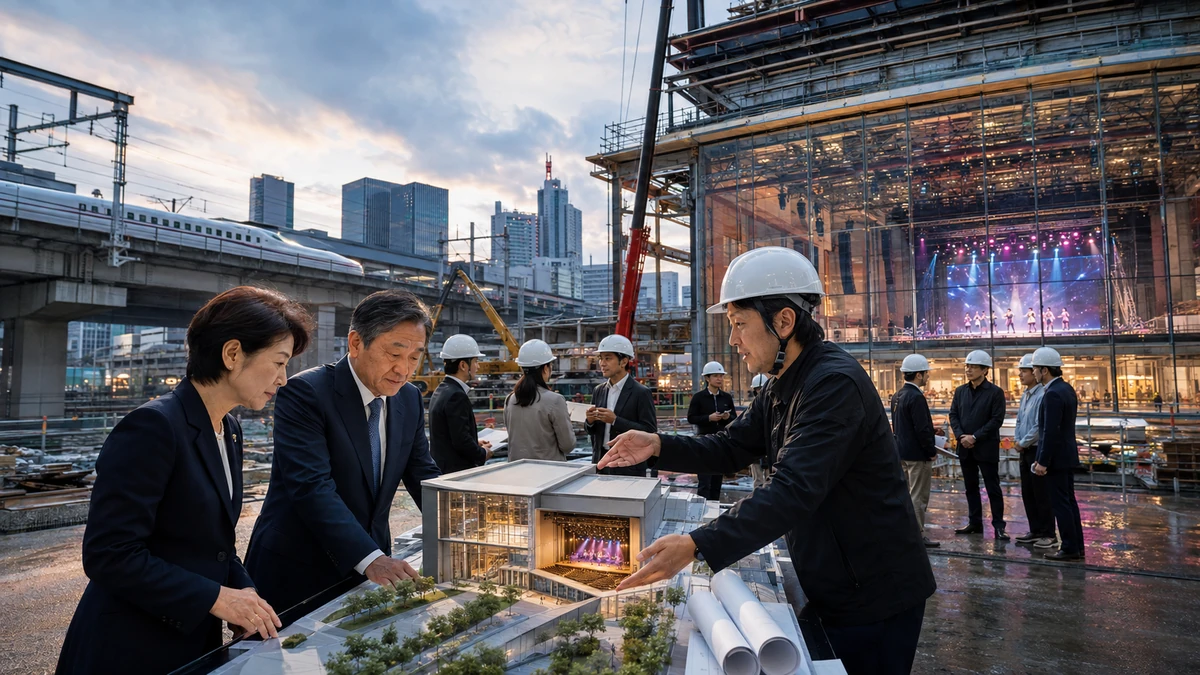
A planned 1,600-capacity concert venue near Osaka’s Shin-Osaka Station offers a window into the next phase of K-pop’s international expansion: smaller than a stadium, more permanent than a touring stop and designed to turn fandom into a year-round business. Japan’s Lotte Holdings and Nomura Securities announced plans to open the venue, called Beat Park, in March 2028. The companies say it will host K-pop and Japanese performers while also serving as a site for corporate programs and community events. Their stated goal is to attract more than 300,000 visitors annually.
That capacity places Beat Park in the middle of the live entertainment market. It will not compete directly with the domes and arenas used by K-pop’s biggest acts, where tens of thousands of fans can attend a single show. Instead, it resembles the kind of midsize theater or large music club familiar to American audiences: big enough to create demand and spectacle, but small enough to offer a closer connection between artists and fans. Such rooms are important to the music business because they can host emerging performers, fan meetings, showcase events and special appearances that would not make financial or logistical sense in an arena.
The project also reflects an effort to build more than a stage. Plans call for a large ultra-high-definition screen, upgraded sound systems, food areas and dedicated spaces where fans can gather. That combination matters in K-pop, where the event surrounding a performance can be nearly as important as the concert itself. Fans often arrive early to exchange homemade photo cards, distribute banners, buy merchandise and meet people they know through online communities. By designing for those activities, Beat Park is effectively treating fandom as a social experience rather than simply a ticketed transaction.
Why Japan Remains Essential to Korean Entertainment
For Korean music companies, Japan is not just another overseas destination. It is a neighboring market with a large recorded-music industry, a deep concert culture and decades of experience supporting highly organized fan communities. Korean performers commonly release Japanese-language versions of songs, record original material for the country and conduct tours built specifically for Japanese audiences. Some groups include Japanese members, helping them move more naturally between the two entertainment systems.
K-pop’s rise in Japan has also unfolded within a broader flow of Korean popular culture that includes television dramas, movies, beauty products, food and fashion. In Korea, this international spread is often called “hallyu,” or the Korean Wave. The term describes not one isolated craze but an interconnected export economy: A viewer who discovers a Korean drama may later listen to its soundtrack, buy a beauty product used by its star or travel to Seoul. Concert venues can become physical hubs for that same ecosystem.
Beat Park’s planned location near Shin-Osaka Station is significant because the station is one of western Japan’s major transportation gateways. It is served by the Shinkansen bullet train network, making it accessible to visitors traveling from other cities. Osaka itself is a major commercial and cultural center with a reputation for food, nightlife and a less formal public personality than Tokyo. For international visitors, it can also function as a base for travel throughout the Kansai region, including Kyoto and Kobe.
The venue’s Korean-Japanese identity is central to the proposal. Lotte Holdings and Nomura say they want it to become a gathering point for artists from both countries, with assistance from South Korea’s Lotte Group in attracting K-pop performances. Lotte is widely recognized by Korean consumers as a sprawling corporate group associated with retail, food, hospitality and entertainment. Its Japanese and Korean operations give the Beat Park project a built-in cross-border network that a conventional property developer might not possess.
A Venue Designed for the Full Fan Experience
The 1,600-person scale may prove to be one of Beat Park’s biggest advantages. Global coverage of K-pop tends to focus on stadium tours, chart records and viral releases, but the industry depends on many performers who have devoted audiences without the ability to fill a baseball stadium. A midsize venue can provide those acts with a commercially realistic way to enter Japan, build a fan base and demonstrate demand before moving to larger rooms.
It can also accommodate activities that are distinctive to Korean and Japanese pop culture. A “fan meeting,” for example, is usually more structured than a typical American artist question-and-answer session. It can include games, interviews, short performances, video presentations and carefully organized interactions between performers and fans. These events reinforce loyalty between album releases and often allow artists to present a more informal side of themselves.
Showcase concerts serve another purpose. They can introduce a new group, promote a comeback or give industry professionals and fans an early look at a developing act. In the United States, the nearest comparison might be a record-label showcase combined with a convention-style fan event. Beat Park’s screen, sound system and gathering areas could allow it to shift among conventional concerts, multimedia programs and branded experiences.
The annual attendance target of more than 300,000 suggests the operators envision frequent use rather than occasional headline concerts. At maximum capacity, reaching that figure through performances alone would require the equivalent of roughly 188 sold-out events a year. In practice, attendance would likely be spread across concerts, corporate functions, regional programs and other gatherings, with individual events drawing different crowd sizes. That diversified calendar could reduce dependence on a small number of touring stars.
Food and social spaces may also keep visitors on the property longer. American sports and entertainment companies often describe this strategy in terms of turning a venue into a destination rather than a room that opens shortly before showtime. The K-pop version is particularly well suited to that model because fans frequently organize their own gatherings around concerts. A venue that makes those gatherings easier can generate repeat traffic even when the performer onstage is not a global superstar.
What Beat Park Means for the United States
No American company has been identified as a participant in the Osaka project, and Beat Park is being built primarily for the Japanese market. Still, the plan should interest U.S. promoters, venue operators and music companies because it addresses a challenge they increasingly face: K-pop demand is broader than the small number of groups capable of booking America’s largest arenas, but many acts still need venues equipped for visually demanding productions and highly engaged fan events.
In the United States, midsize concert spaces are often general-purpose rooms. They host rock bands one night, comedy the next and private events on other days. Beat Park appears to adapt that flexible model to the habits of Asian pop fandom, adding space for fan interaction and food while emphasizing high-end video and audio presentation. If the Osaka venue succeeds, American operators could study which features translate to markets such as Los Angeles, New York, the San Francisco Bay Area, Chicago, Dallas and Atlanta, all cities with substantial Asian American communities and established audiences for international pop.
The lesson for the U.S. industry is not necessarily that every city needs a K-pop-only building. A dedicated venue could face scheduling and demand risks, particularly in a country where performers must travel much greater distances between cities than they do in Japan or South Korea. The more transferable idea is to design or program midsize venues for fan participation. That could mean allowing longer preshow access, creating safe trading areas for collectibles, offering culturally relevant food, improving merchandise operations and scheduling fan meetings or dance events around the main concert.
American fans may also encounter Beat Park as part of music-driven tourism. Some U.S. K-pop followers already plan overseas trips around concerts, festivals and visits to entertainment districts. Osaka’s transportation links could make the venue a practical stop for travelers combining a performance with tourism elsewhere in Japan. Beat Park would not need to draw most of its audience from abroad for international visitors to become a valuable premium segment.
The project also sits within the wider U.S.-Korea cultural relationship. Korean entertainment is now a routine part of American streaming, touring and retail markets, while U.S. music and performance traditions remain influential in South Korea. Japan provides another essential link: It is a major market where Korean artists can refine cross-border strategies before or alongside expansion into North America. A venue built expressly to connect Korean and Japanese talent could therefore become a testing ground for production concepts, collaborations and fan-engagement formats that later appear on U.S. tours.
For American labels and promoters, the broader message is that Asian entertainment infrastructure is becoming more specialized. K-pop’s international growth is no longer measured only by whether a Korean act can sell out a famous U.S. arena. It is also visible in permanent spaces, local partnerships and business models that support artists at multiple levels of popularity. That maturation resembles the development of genre-based touring circuits in the United States, where clubs, theaters, festivals and arenas each play a different role in building careers.
Business Partners From Outside the Traditional Music Industry
Nomura Securities’ involvement is another sign that live entertainment is attracting companies beyond record labels and concert promoters. Nomura is best known as a major Japanese financial institution, not as a K-pop agency. Its partnership with Lotte Holdings places the venue at the intersection of finance, real estate, consumer business and entertainment.
That type of alliance has parallels in the United States, where banks, telecommunications companies and other large corporations frequently attach their names to arenas, sponsor tours or finance entertainment districts. Beat Park’s model is different in its details, but the underlying logic is familiar: Live events can draw reliable foot traffic, create sponsorship inventory and support nearby food, retail and hospitality businesses.
Lotte’s role may be particularly important because K-pop bookings depend on relationships as much as physical infrastructure. Building a technically impressive room does not guarantee access to sought-after artists. The operators will need a steady pipeline of acts, local promotion capabilities and schedules that fit performers’ album releases and international tours. Lotte’s connections in South Korea could help bridge that gap, while the Japanese partners provide local market knowledge and financing.
The planned use of Beat Park for corporate and regional events also offers a hedge against the volatility of pop culture. Music trends change quickly, artists cancel appearances and touring economics can shift with currency movements, travel costs or consumer spending. A room that can host business presentations, public events and community programs has more options when the concert calendar is light.
A Cultural Bridge With Real-World Constraints
The language of Korean-Japanese cultural exchange carries weight because the two countries share close economic and security interests while continuing to navigate disputes rooted in Japan’s colonial rule of Korea from 1910 to 1945. Political relations can become tense even when consumers remain enthusiastic about one another’s food, travel and entertainment. Popular culture does not erase historical conflict, but it can sustain person-to-person contact during periods when official ties are strained.
A venue regularly presenting both Korean and Japanese artists could make that exchange routine rather than symbolic. Joint bills, guest appearances and industry showcases could introduce fans of one country’s performers to the other’s. The most meaningful measure would not be a single high-profile collaboration but whether Beat Park develops a stable calendar in which cross-border programming becomes normal.
There are also practical questions. A March 2028 opening remains several years away, leaving time for construction costs, consumer tastes and touring patterns to change. The operators have announced a capacity, facilities and attendance goal, but the eventual programming mix will determine whether the project functions primarily as a concert hall, a branded entertainment complex or a multipurpose event center.
Competition will be another factor. Osaka already belongs to a sophisticated live entertainment market, and K-pop artists have options ranging from small clubs to major arenas. Beat Park will need to offer performers and promoters something distinctive, whether that is production quality, favorable economics, convenient transportation, fan amenities or access to Lotte’s broader business network.
What to Watch Before the 2028 Opening
The first test will be the booking strategy. If Beat Park announces a steady mix of established K-pop acts, rising performers and Japanese artists, it could occupy a useful position between small promotional events and arena tours. If it relies too heavily on a few famous names, the 300,000-visitor target may be harder to sustain.
The second will be how the venue defines “fan exchange.” Dedicated gathering areas sound appealing, but execution will matter. Fans will judge whether the spaces are comfortable, accessible and open long enough to be useful. Merchandise lines, crowd control, multilingual information and policies on trading collectibles can shape the experience as much as the sound system.
The third will be whether Beat Park becomes part of a larger entertainment district around Shin-Osaka rather than an isolated building used only on event days. Food programming, local partnerships and corporate bookings could help establish regular traffic. The companies’ ambition to draw more than 300,000 visitors a year indicates that they are thinking beyond a conventional concert schedule.
Most of all, the project bears watching as a measure of K-pop’s transition from touring phenomenon to permanent international infrastructure. Stadium sellouts demonstrate exceptional demand at the top of the market. A purpose-built, 1,600-capacity venue tests something broader: whether Korean pop culture can support a durable cross-border gathering place for midlevel artists, corporate partners, local communities and fans who want more than a two-hour show.
If Beat Park opens as planned in March 2028, its importance will not rest solely on which star performs first. The more consequential question will be whether it creates a repeatable business model — one that connects music, travel, food, technology and fandom in a space sized for regular use. Success in Osaka could offer lessons not only for Japan and South Korea but also for American entertainment companies seeking to understand what the next generation of global pop venues should look like.
Comments
Post a Comment